
A livestock farm can use the same tractor to move feed pallets before breakfast, load dry hay in the afternoon and tow a trailer the following day. The difficulty is not finding three attachments in a catalogue. It is knowing whether the tractor, front loader, forks, hydraulics and counterweight will work together at the required load and height, inside the actual yard.
On European farms, the wrong combination tends to fail in costly, ordinary ways: a pallet cannot reach its storage platform; a bale spear punctures wrapped silage; a coupler needs an unplanned adapter; or a wider tractor cannot manoeuvre between an old barn and a feed store. Each problem consumes labour and ties up equipment even if the engine itself performs reliably.
This guide explains how to specify tractor front loader attachments as a complete, job-based system. It focuses on the choices that affect farm owners, procurement teams and machinery dealers: the load, the worksite, the attachment interface, the operating cycle and the verified limits of the equipment.
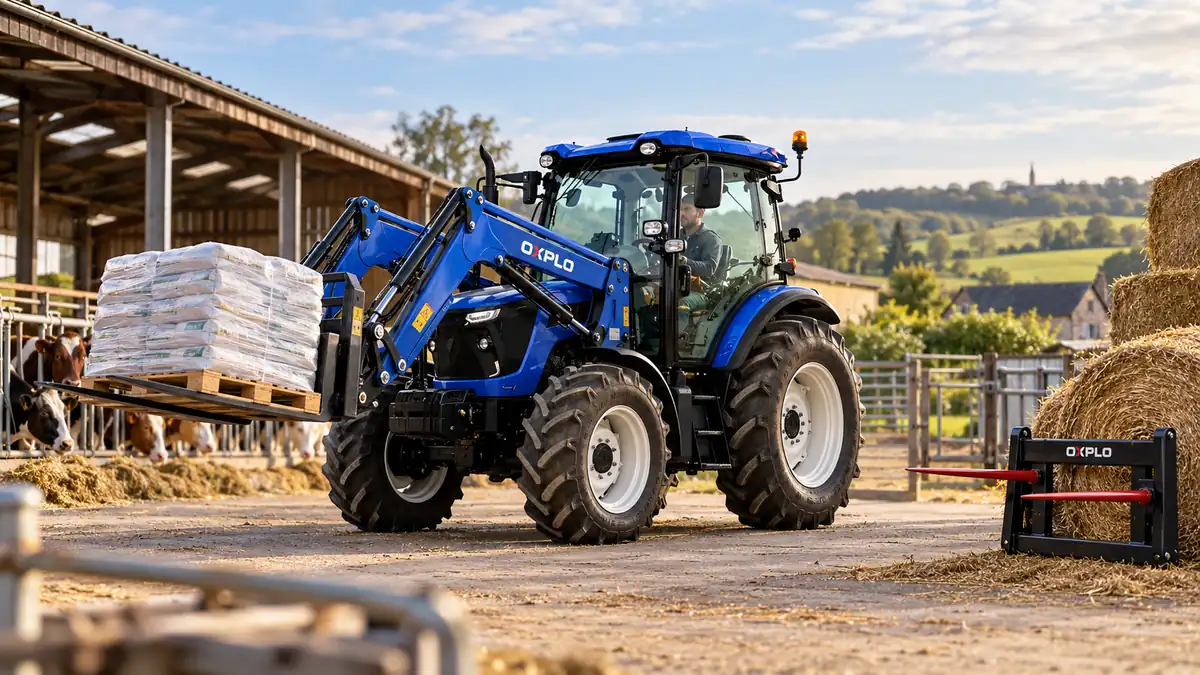
Figure 1. An OXPLO-style tractor package for pallet, feed and bale-handling tasks on a European livestock farm.
I. Begin With the Jobs That Consume Time and Money
Separate daily work from occasional work
Before comparing tractors, list the jobs the machine is expected to do over a normal week and during the busiest harvest period. Three categories usually emerge: high-frequency pallet movements, seasonal hay or silage handling, and general field or transport work. These tasks compete for the same tractor but have different performance constraints.
A livestock unit moving feed pallets 30 times a day benefits from reliable fork alignment, useful visibility and controlled low-speed manoeuvring. A hay producer handling bales in a narrow weather window is more exposed to unsuitable bale retention, excessive attachment-change time and limited stacking height. A mixed farm also needs the tractor to operate suitable rear implements when the loader is not in use.
Consider two hypothetical buyers. One runs a compact cattle farm with a 1.9 m gateway and moves moderate pallet loads over a short paved route. The other manages larger grassland fields, handles heavy wrapped bales and routinely tows a trailer. They should not receive identical quotations simply because both request a 60 HP tractor.
The first buyer may be restricted by width and turning geometry. The second must establish the heaviest bale, approved attachment and stability on wet ground. For detailed bale-specific risks, see this bale-handling and ballast checklist.
Build a one-page workload brief
Record the maximum verified payload, pallet dimensions, bale type, daily cycles, distance travelled, target lifting height, site width and ground condition. Also identify who will operate the tractor, whether hydraulic grabs are planned later, and which rear implements the customer already owns.
Do not specify capacity from the average load. The heaviest normal load and the most demanding approved lift position establish the buying boundary. Conversely, there is no reason to pay for a specialised attachment that will be used only once a year without first comparing rental or contractor options.
II. Match Pallet Forks and Bale Forks to Different Load Behaviour
Pallet forks: centre of gravity matters more than the headline number
A pallet of feed, seed or fertiliser is usually a regular load, but its centre of gravity may move significantly depending on its dimensions and packing. The fork’s own capacity is only one limit. The selected front loader, tractor, tyres, axles and ballast must also permit the entire combination to handle that load.
For a simple comparison, take two 500 kg pallets. If the load centres lie 0.50 m and 0.75 m forward of the fork-frame reference face, their mass-distance products are 250 and 375 kg·m. The second is 50% higher, even though the pallets weigh the same. This illustrates the effect of an increased lever arm; it is not a lifting-capacity formula or an approved stability test.
In a real procurement decision, ask for the allowable payload at the actual load centre and required lift height, with the proposed fork frame installed. Pivot-pin lift ratings, ground-level ratings and fork-tip capacities are not interchangeable. The front-loader lift-capacity guide explains why these quoted figures cannot be compared casually.
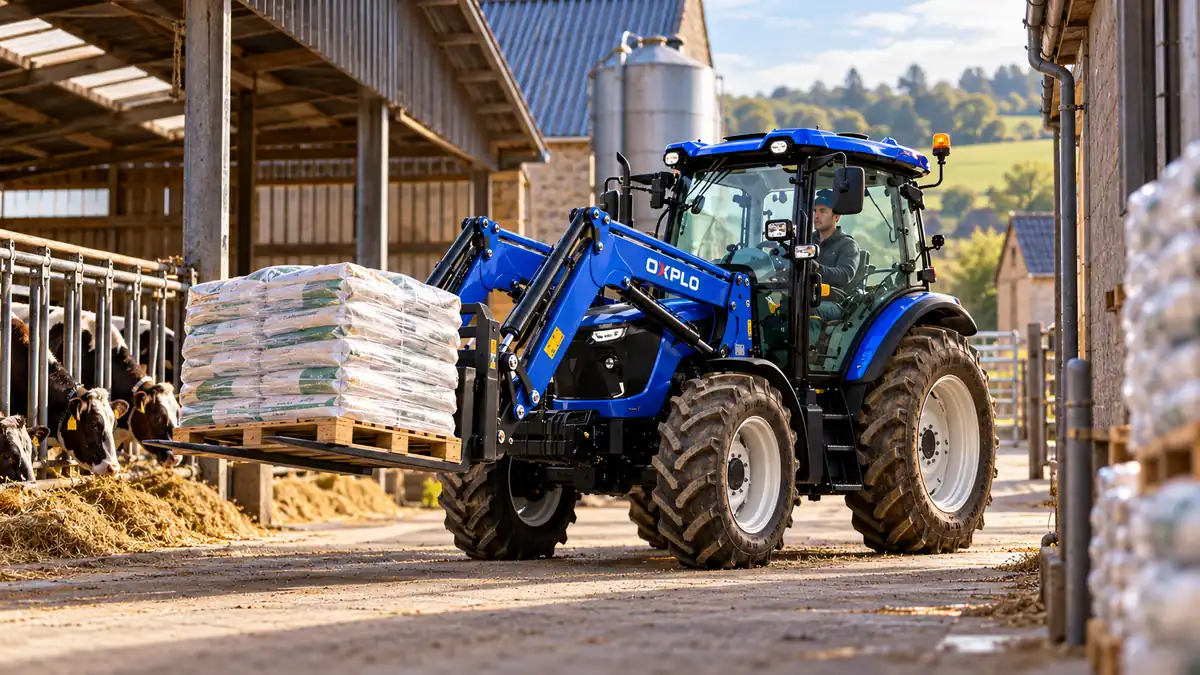
Figure 2. Pallet-fork work in a narrow farmyard: verify load centre, clearance and rated capacity at the required height.
Bale forks: dry hay and wrapped silage are not the same job
A bale fork for tractor loader use should be selected for the exact bale shape and handling method. A purpose-designed spear or rated multi-tine fork can be appropriate for particular unwrapped dry bales, subject to its attachment rating and retention arrangement. Wrapped silage typically calls for a suitable non-puncturing grab when the film must remain intact. Piercing the film can damage the crop’s storage protection.
Large square bales may need a different tine pattern and load support from round bales. A fork that happens to fit the front coupler is not necessarily designed to retain the bale during turning or braking. Inspect the approved carrying orientation, tine spacing, visibility and the possibility of a bale rolling back towards the operator.
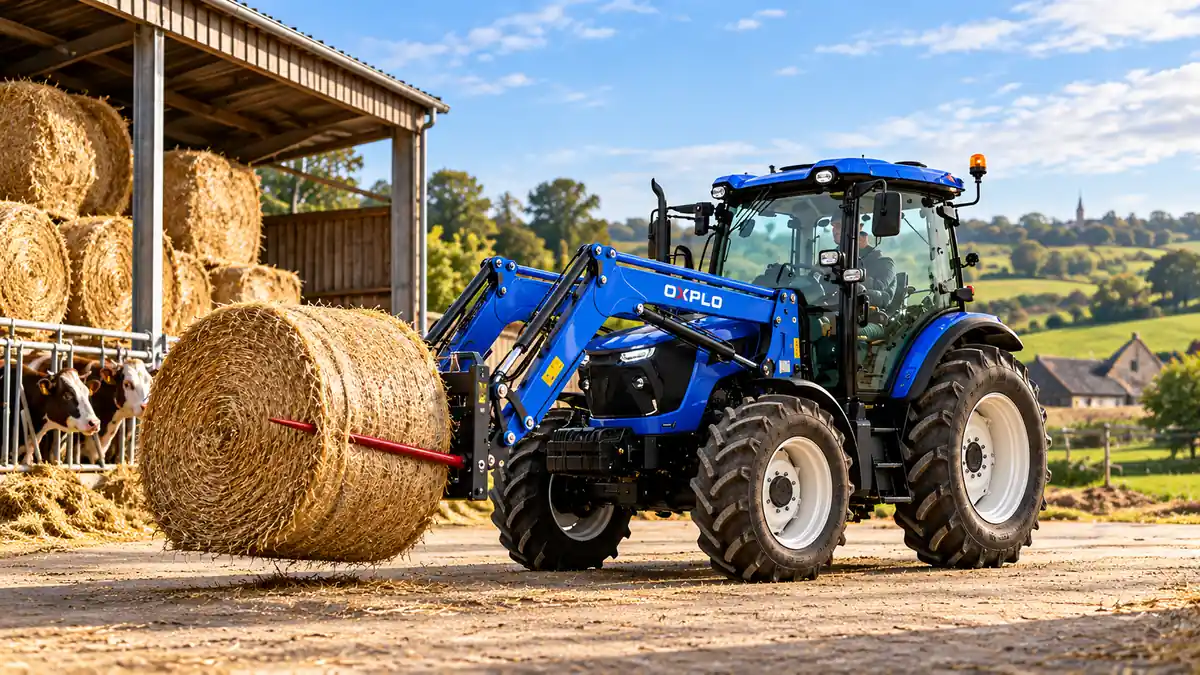
Figure 3. Dry round-bale handling with a front-loader spear attachment; exact bale and attachment ratings still require verification.
A practical attachment decision matrix
Daily or seasonal job | Attachment to assess first | What must be verified |
Feed, fertiliser or seed on pallets | Rated pallet fork and fork frame | Actual load centre, fork spacing, fork length, lift chart and stacking height |
Unwrapped round or square hay bales | Suitable rated bale spear or bale fork | Bale mass and size, retention, tine geometry and approved transport position |
Wrapped silage bales | Non-puncturing bale grab or clamp | Bale dimensions, clamp rating, auxiliary hydraulics and film protection |
Frequent switching between tasks | Compatible quick-attach carrier | Exact interface, locking method, adapter effects and inspection procedure |
A tractor loader attachment package therefore starts with two questions: what is the load, and how must it be supported? Only then should the buyer decide which implements to purchase together.
III. Specify the Loader, Ballast and Hydraulics as One System
The usable lifting envelope is the real specification
A brochure may highlight a front loader’s maximum lifting number without identifying where that number is measured. In practice, loader capacity changes with boom geometry, lift height and the location of the payload. Heavy pallet forks, adapter plates or a long bale spear can move the load farther forward and reduce the useful working margin.
Ask for the exact loader model and its manufacturer-approved capacity data, with the intended attachment and payload centre. The supplier should identify the loader mounting frame, machine variant and any operating restrictions. A test that simply proves a load can be raised off the ground does not prove that it can be transported across a yard or placed safely on a tall trailer.
The tractor-with-front-loader buyer’s guide provides a complementary explanation of geometry, hydraulics and working cycles. For this package, use that information to verify a specific commercial task rather than to compare isolated numbers.
Rear ballast solves a balance problem, not a loader-rating problem
A raised front load changes axle loading and machine stability. Correctly specified rear ballast can improve the operating balance and traction of an approved tractor-loader combination. However, adding weight to the rear cannot increase the structural rating of the loader, the fork or the front axle. Excess ballast can also overload tyres or the rear axle.
The correct ballast arrangement depends on the tractor model, mounting position, wheelbase, tyres and intended load. Request the approved setup and tyre-pressure instructions for the whole assembly. During transport, keep loads at the height specified by the manufacturer, operate at a suitable speed and avoid sharp turns, particularly on uneven or sloping ground.
Understand when extra hydraulics are actually necessary
Simple mechanical pallet forks and some bale spears do not require a separate powered attachment function. A bale clamp or hydraulic grab normally does. Before ordering a future-proof package, confirm the additional function circuit, control valves, rated pressure and flow, coupler types, hose routing and the attachment manufacturer’s requirements.
A third-function hydraulic option may be worthwhile where wrapped silage is handled frequently. If the farm only moves occasional dry hay, buying and maintaining unnecessary hydraulic options may provide little return. This is a procurement trade-off, not a reason to specify the most complex arrangement by default.
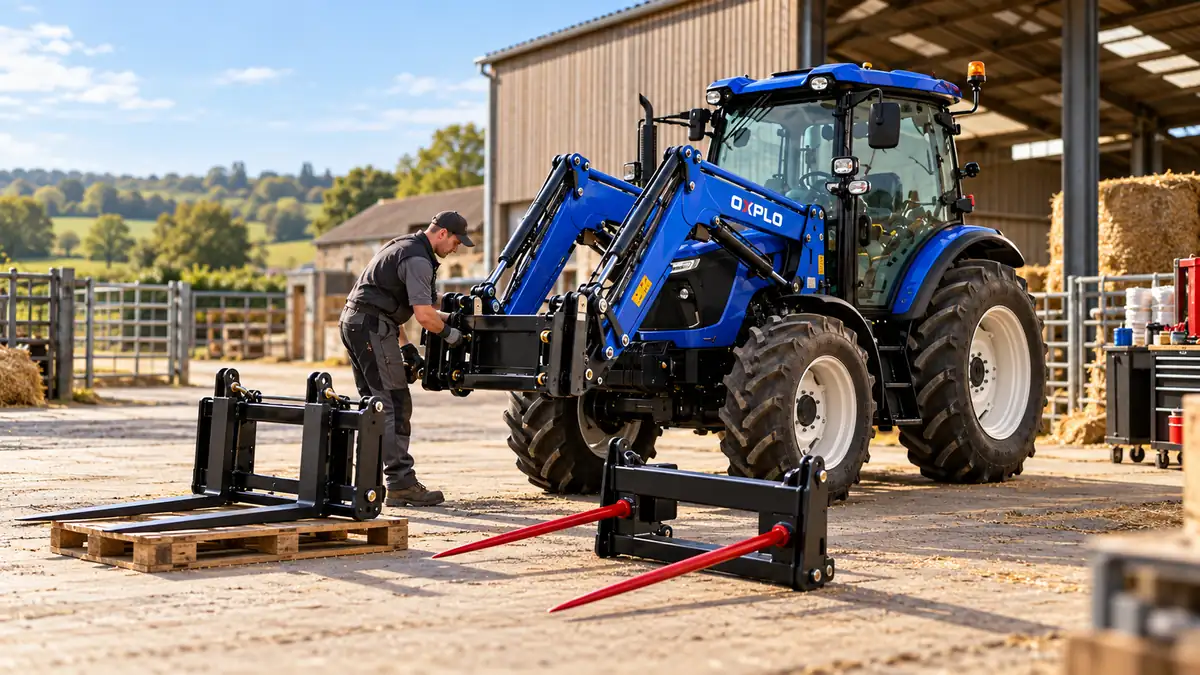
Figure 4. Attachment changeover: check the coupler, locking mechanism and stability before putting either fork into service.
IV. European Farm Conditions Change the Correct Tractor Choice
Older farmyards create geometric limits
A quoted tractor width does not show the full working envelope of a loader-equipped machine. Measure doorways and yard passages allowing for tyres, mirrors, cab height, loader brackets, attachment width and forward projection. Turning space becomes especially important when the forks are carrying a long pallet.
In horse properties and older livestock facilities, the limiting factor may be an overhead beam or a tight approach into a feed room rather than engine power. For a related example of how barn access and bale handling interact, read the horse-property tractor planning guide.
Wet yards and grassland demand a ground-condition check
Four-wheel drive can improve traction, but it does not remove the effect of soft ground, cross-slope, raised loads or worn tyres. A machine that handles a pallet on level concrete may behave differently on rutted tracks after rain. Survey the actual route and choose the tyre and ballast arrangement against those conditions.
If the work involves intensive elevated stacking or long forward reach, the safest economic answer may be a dedicated handling machine, not a larger agricultural tractor. Buying extra horsepower will not overcome an unsuitable lift geometry or an unsafe traffic layout.
Compliance is configuration-specific, not a marketing label
European machinery dealers need to separate job suitability from market eligibility. Confirm what rules apply to the exact tractor, attachments, destination country and intended road use. Engine emissions information, machinery-related conformity documents and a vehicle-specific Certificate of Conformity (CoC), where required, serve different purposes and should not be treated as interchangeable.
The United Kingdom and EU member states may have different registration and market-entry requirements. A supplier should identify what documents are available for the actual type, variant, engine, operator station and attachments. For a focused explanation, see the tractor CoC and EU registration questions.
V. Do the Numbers: Changeover Time, Downtime and Total Cost
A worked quick-attach calculation
Suppose a farm changes between pallet forks, a bale fork and another implement 12 times a week. Its current process averages eight minutes per change. A correctly matched, safely operated quick-attach arrangement reduces the measured average to three minutes.
Time released per week = 12 x (8 – 3) / 60 = 1 hour. Over 50 operating weeks, that becomes 50 hours. At an illustrative composite labour value of EUR 30/hour, the released time represents EUR 1,500 per year.
These are hypothetical teaching inputs, not measured performance claims. The financial benefit becomes cash savings only if the hours reduce paid work or are productively redeployed. A compatible quick-attach system also requires regular checking of latches, wear surfaces and hydraulic connections.
Calculate the cost of the wrong adapter or missing circuit
The cheapest combination at purchase may not be the least expensive over five years. An incompatible fork carrier can trigger a coupler adapter, added inspection and a reduction in usable load due to extra mass and forward offset. A missing auxiliary hydraulic circuit can create workshop labour and parts costs after shipment. A badly chosen silage handler can damage wrapping repeatedly.
A basic total-cost-of-ownership model is: TCO = purchase + installation/adaptation + fuel + maintenance + labour + downtime – residual value. Avoid counting hypothetical productivity gains as guaranteed cash income. For a mixed-use tractor, allocate operating cost across fieldwork, handling and transport rather than charging every expense to the loader.
When not to expand the package
A 50–70 HP tractor with front loader and pallet forks can be a sensible multi-job investment when handling duties fit its approved work envelope and do not constantly interrupt essential fieldwork. Where high stacking, long reach or hundreds of loading cycles dominate the schedule, compare a dedicated forklift or telehandler. The correct outcome may be two machines with distinct roles, even when the tractor can technically accomplish some of the moves.
VI. Turn the Working Brief Into an Order and Acceptance Checklist
Before the quotation: give suppliers a job, not just a horsepower target
An RFQ should specify destination country; farm type; maximum verified pallet and bale weights; load centre; required stacking height; yard width and clearance; ground conditions; daily work cycles; existing rear implements; and desired attachment-change frequency. Add photos or a simple dimensioned yard sketch if possible.
Ask for a proposed 50 HP tractor loader package or 70 HP tractor bale handling configuration only after the job requirements are documented. The answer may reveal that a smaller model fits the site, that a heavier-duty loader must be investigated, or that a specialised handler is more appropriate.
Before order release: freeze the interfaces and documents
A responsible supplier should confirm the precise tractor model and specification, loader model and mounting kit, each attachment’s part number and rating, coupler type, approved load chart, hydraulic functions, ballast instructions, tyres and applicable documents. Confirm included items and exclusions in the pro forma invoice.
For dealer purchases, also establish service parts, warranty responsibilities, pre-delivery inspection and how fitment errors will be resolved. These issues matter as much as the headline unit price. A separate European dealer trial-order checklist explains how to freeze a sample order before stock is committed.
At delivery: test the configured machine, not an empty tractor
Check installed parts against the signed specification and inspect pins, locks, hydraulic hoses, tyres and protection systems. Under the manufacturer’s safe test procedure, validate appropriate low-level functions and any agreed tests with approved loads, with personnel kept clear. Verify actual fork changeover, visibility, clearance and operator instructions. Do not increase weight progressively until the tractor tips or the loader stalls; that is not a capacity test.
For recurring work, train operators to park implements on stable stands, relieve hydraulic pressure only as the maker specifies, confirm positive lock engagement and inspect attachment condition before use. A written acceptance checklist reduces disagreement between the importer, dealer and end customer.
VII. Where OXPLO Fits a 50–70 HP Tractor Package
Compare the working platform, not simply the engine number
Once the required load, site and attachments are defined, buyers can evaluate the OXPLO 25–70 HP tractor range. The OXPLO OXT504, OXT604 and OXT704 offer three distinct starting points for mixed farms, livestock operations and equipment dealers. Their published base specifications are useful for shortlisting, but they are not ratings for any particular installed loader and fork combination.
Published base specification | OXPLO OXT504 | OXPLO OXT604 | OXPLO OXT704 |
Rated engine output | 50 HP | 60 HP | 70 HP |
Drivetrain | 4WD | 4WD | 4WD |
Transmission | 8F + 8R | 12F + 12R | 12F + 12R |
Wheelbase | 1,800 mm | 2,010 mm | 2,010 mm |
Listed overall width | 1,560 mm | 1,760 mm | 1,760 mm |
Rear three-point linkage | Category I | Category II | Category II |
Initial buying consideration | Compact access and compatible lighter-duty work | Larger utility platform and frequent mixed-farm work | More engine output for broader seasonal duties |
The table reflects currently published base-machine information and is not an attachment capacity chart. Final loader fitment, permissible payload, tyres, cab, hydraulics and destination-market documents must be confirmed in the order specification.
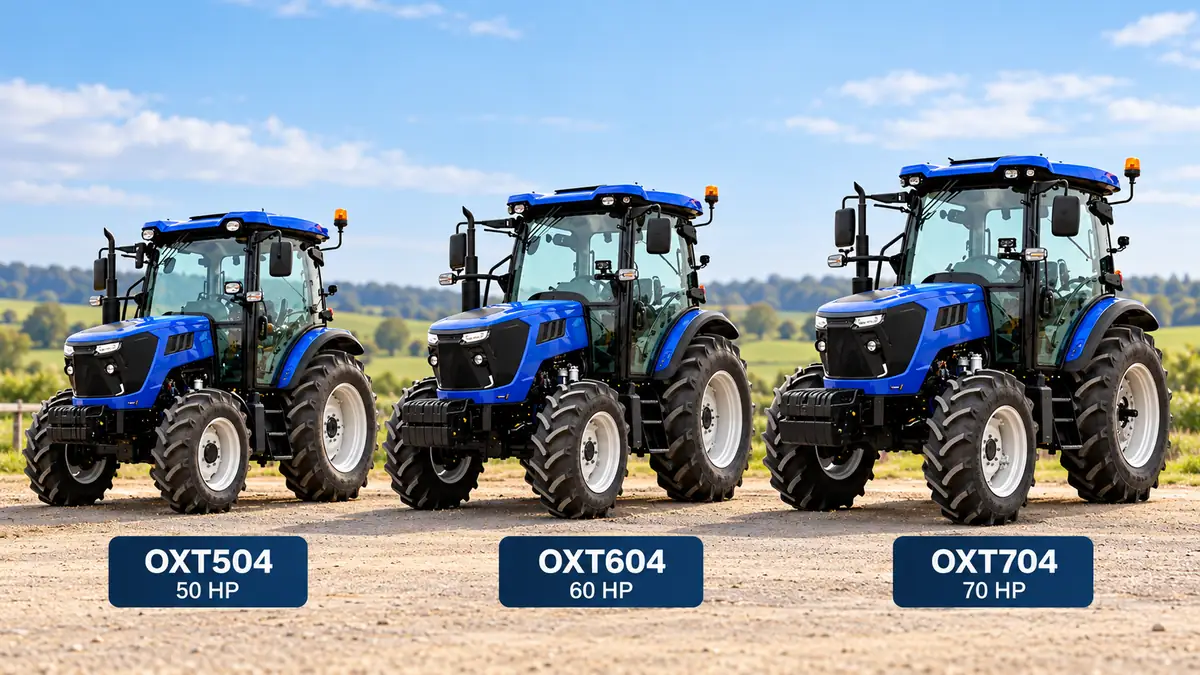
Figure 5. Illustrative lineup of OXPLO OXT504 (50 HP), OXT604 (60 HP) and OXT704 (70 HP); compare confirmed specifications, not appearance alone.
OXPLO OXT504: preserve access where space is the constraint
The OXPLO OXT504 50 HP tractor has a listed width of 1,560 mm, 1,800 mm wheelbase, 8F + 8R transmission and Category I rear linkage. This makes it a useful starting point when existing compact implements and tight barn access matter. Its value is preserving an appropriately sized working platform, not a promise that every bale or pallet can be lifted.
An OXPLO OXT504 buyer should still measure height and loaded turning space, and ask for the complete installed loader width and rated load data. A tractor body that fits a gate may become unsuitable when configured with a wide attachment.
OXPLO OXT604: plan around a larger utility platform
The OXPLO OXT604 60 HP tractor moves to a published 2,010 mm wheelbase, 12F + 12R transmission and Category II linkage. The broader choice of forward and reverse ratios can help match approach speeds to repeated yard tasks. Its rear linkage category is also relevant if the farm already uses compatible, larger implements.
For OXPLO OXT604 quotations, ask which specific front loader, coupler and ballast system are proposed. Its larger published chassis does not remove the need to establish approved fork load capacity at the required height.
OXPLO OXT704: evaluate the added engine power across the whole year
The OXPLO OXT704 70 HP tractor shares the larger published 2,010 mm wheelbase and Category II platform, while offering 70 HP rated power. This may be relevant where the customer needs additional engine output for field implements, transport and other seasonal duties alongside material handling.
OXPLO OXT704 is not automatically the better pallet truck simply because it has 10 HP more than OXT604. The published width and wheelbase of the two models are similar; the actual lift comparison must use their specified loaders, attachments, hydraulics, ballast and approved ratings.
What OXPLO can help confirm—and what remains conditional
The OXPLO tractor configuration options discuss front loaders, bale forks and other agricultural attachments. OXPLO can use a buyer’s application brief to discuss model choice, tyres, PTO and linkage needs, proposed loader fitment, selected attachment compatibility and available market-specific documents. The exact pallet-fork offering and attachment ratings should be confirmed in writing rather than assumed from a general attachments catalogue.
The OXPLO parts and technical-support page outlines a path for spare-parts and service enquiries. For European dealers in particular, the benefit is a documented pre-order conversation about compatibility, inspection and subsequent support—not a blanket claim that every optional attachment fits every model or that every vehicle configuration is road-registration ready.
Buyers can also review OXPLO’s equipment and service approach to understand how application requirements are handled before shipment. For a useful quotation, send OXPLO the maximum payload, load-centre distance, target height, barn access measurements, bale type, annual workload and destination country together.
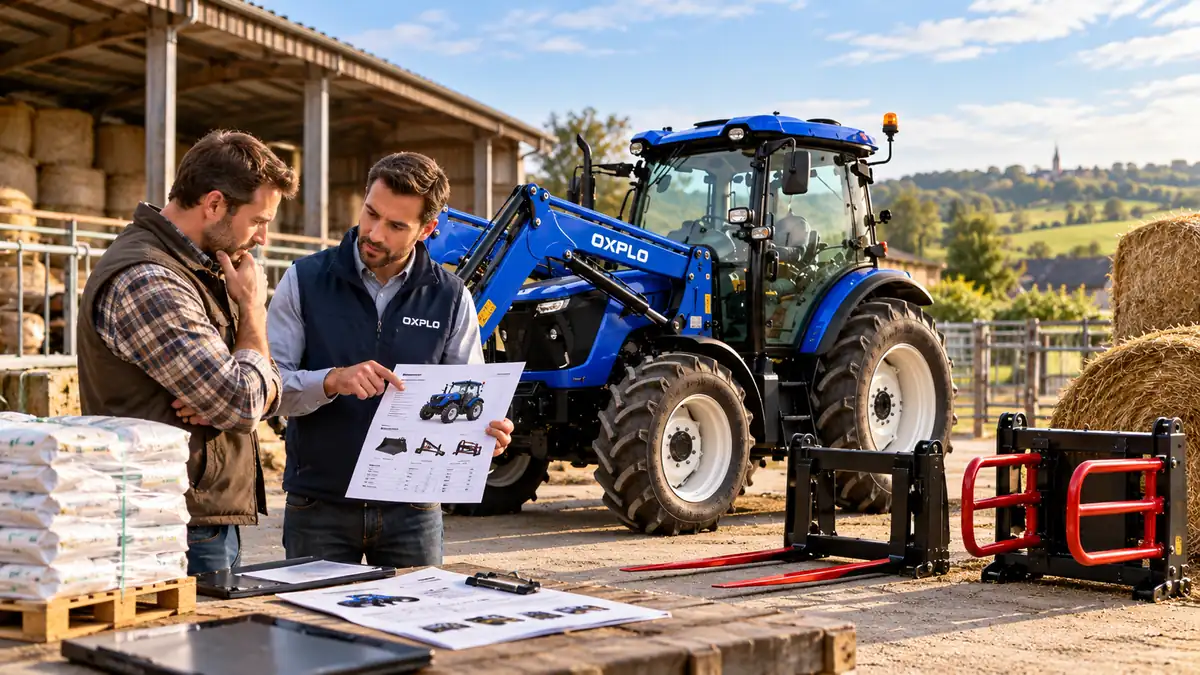
Figure 6. Configuration planning: review the equipment, load, site constraints and documentation before finalising an OXPLO order.
VIII. Frequently Asked Questions
Q1. Can a 50 HP tractor use a front loader, pallet forks and a bale fork?
Yes, a compatible package can be evaluated, but its capacity depends on the approved tractor-loader-attachment system. A 50 HP engine rating is not proof that the tractor can handle a particular pallet or bale. An OXPLO OXT504 enquiry should identify the actual loader and required payload before the quotation is finalised.
Q2. Are pallet forks and bale forks interchangeable on the same quick-attach carrier?
They may use a common interface where their couplers, locks and load ratings are verified. Euro/Global, skid-steer-style and proprietary systems must not be presumed interchangeable. An adapter can add both cost and front-end offset.
Q3. Should I buy a bale spear for wrapped silage?
Not when protecting the wrap is essential. A purpose-designed non-puncturing bale grab is generally the option to investigate, subject to payload, clamp characteristics and auxiliary hydraulic compatibility.
Q4. Does a 70 HP tractor lift more than a 60 HP tractor?
Not necessarily. Tractor horsepower affects engine output; approved loader capacity depends on different structural and hydraulic factors, including the fitted attachment and lift position. Compare verified lift charts, not engine ratings alone.
Q5. What should a European machinery dealer ask for before ordering?
Request the exact configured build, interface and capacity documentation, ballast guidance, destination-market approval status, service parts, inspection evidence and clearly stated commercial exclusions. OXPLO can discuss these items against an identified model and application, while the buyer should independently verify the legal approval route where needed.
Q6. How many attachments should a farm buy at the beginning?
Start with those used frequently enough to justify ownership. Add specialised bale clamps or hydraulic options when the work schedule requires them. It is better to confirm a smaller, compatible setup than to purchase unused or incompatible attachments.
IX. Conclusion: Buy a Working System, Not Three Unrelated Attachments
The right tractor front loader attachments package begins with measured loads, actual yard dimensions and the tasks completed most often. A pallet fork must suit the load centre and height. A bale fork must suit the bale. The loader, axle loads, tyres, hydraulics and ballast must work as one approved system.
For European farms, that approach helps avoid incompatible couplers, unsuitable equipment widths, crop damage and expensive retrofits. For equipment dealers, it also makes quotations easier to verify and deliveries easier to support.
OXPLO offers 50–70 HP tractor platforms that can be evaluated against these requirements. To discuss a specific OXPLO package, prepare your maximum pallet and bale weights, working height, site dimensions and destination country, then contact OXPLO through its official website. Ask for a written, configuration-specific proposal rather than an unqualified lifting promise.