
Warehousing and Logistics Solutions
Efficient material handling solutions for receiving, storage, order fulfillment and dispatch.
Warehousing and Logistics Solutions
Efficient material handling solutions for receiving, storage, order fulfillment and dispatch.
Warehousing and Logistics Solutions
Efficient warehouse operations depend on consistent material flow at every stage—from unloading and receiving to storage, replenishment, picking and dispatch.
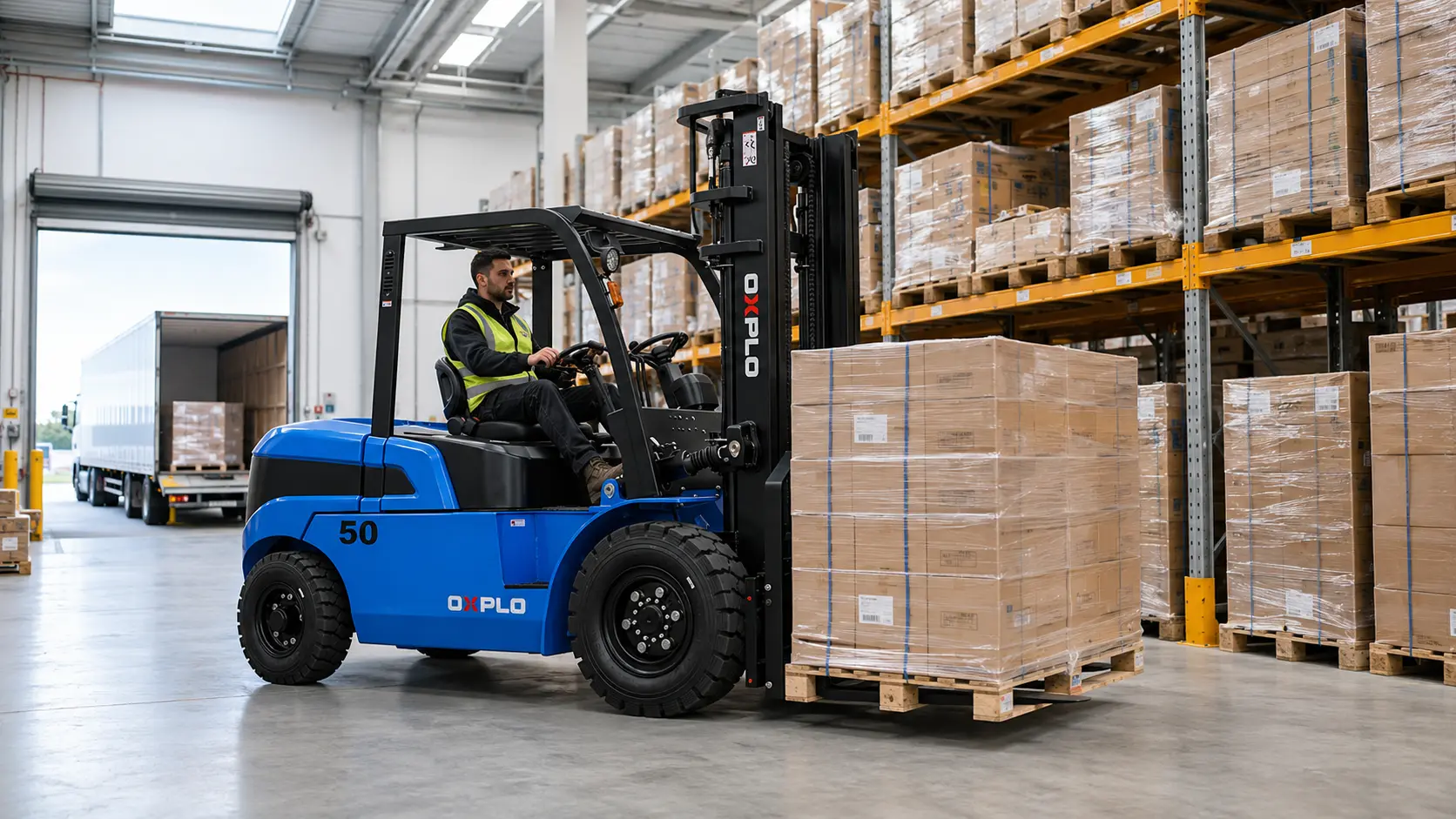
OXPLO forklifts support pallet handling and internal transport across warehouses, distribution centres, logistics hubs and manufacturing facilities. By matching the forklift capacity, mast, dimensions and attachment configuration to the actual operating conditions, businesses can improve handling efficiency while reducing unnecessary waiting and equipment downtime.
Designed Around Everyday Warehouse Challenges
Efficient Operation in Restricted Spaces
Warehouse layouts vary significantly. By matching the forklift dimensions, turning radius and mast specification to the available aisle width and racking layout, OXPLO helps operators handle pallets more efficiently in space-limited working areas.
Faster Movement of Goods
From vehicle unloading and put-away to picking and dispatch, stable travel and lifting performance helps reduce unnecessary handling time and maintain a smoother flow of goods through the warehouse.
Handling Different Types of Loads
OXPLO forklifts can be configured for standard pallets, cartons, wooden crates, bagged materials and production components. Different capacities, mast heights and attachment options are available to suit specific load dimensions and handling requirements.
Reliable Support for Daily Operations
For businesses operating forklifts throughout the day, structural durability, service accessibility and routine maintenance are important considerations. OXPLO focuses on practical equipment configurations designed to support consistent daily warehouse operations.
From Receiving to Dispatch
OXPLO Forklifts for Warehouse Operations
Rated capacity alone does not determine whether a forklift is suitable. Lift height, load dimensions, attachment weight and load centre can all affect the forklift’s residual capacity.
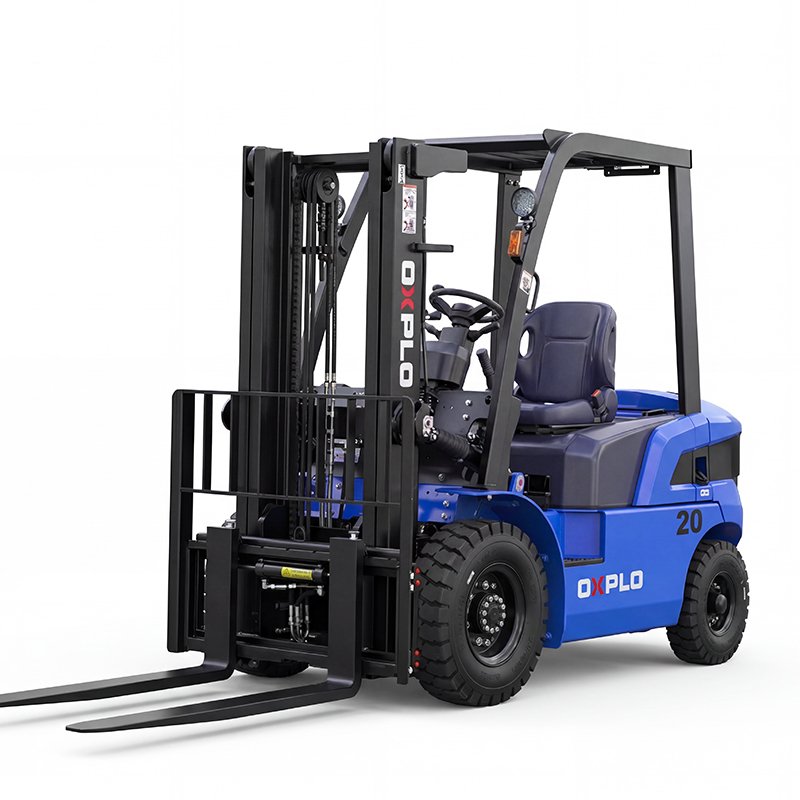
1–3.5 Tonne Forklifts
Suitable for many general warehouse applications, including pallet transfer, goods receiving, rack replenishment and truck loading or unloading.
3.5–5 Tonne Forklifts
Designed for heavier industrial loads such as machinery components, large wooden crates, production materials and other high-weight goods.

What to Consider When Choosing a Warehouse Forklift
Maximum Load Weight
Include the weight of the goods, pallet and attachment
Load Dimensions and Load Centre
Longer or uneven loads may require a different capacity configuration.
Lift Height
Check both the required height and residual capacity at that height
Aisle Width and Turning Space
Compare the forklift dimensions with the actual warehouse layout
Indoor and Outdoor Conditions
Consider floor quality, gradients, ventilation and weather exposure
Daily Operating Hours
Select the appropriate power type and maintenance arrangement for the required workload