
A livestock farm needs to place a 620 kg fertiliser pallet onto a raised storage platform. The quotation lists a front-loader lift capacity of 1,000 kg. On paper, the equipment looks more than adequate. Yet the figure might have been measured at the loader pivot pin, close to the ground, without the intended pallet forks. It says little about the load that can be handled at the pallet’s actual centre of gravity or at the required height.
This is where an apparently straightforward tractor purchase becomes expensive. A loader that can raise a test weight may still be unsuitable for repetitive pallet handling, high bale stacking or travel over an uneven yard. For European farm buyers, the right question is not “How many kilograms does the brochure promise?” It is “Can the complete tractor-loader-attachment system perform my heaviest real task within the manufacturer’s approved operating limits?”
This guide explains how to interpret tractor loader lift capacity, test a quotation against real farm work and avoid paying for either an underspecified or unnecessarily large machine.
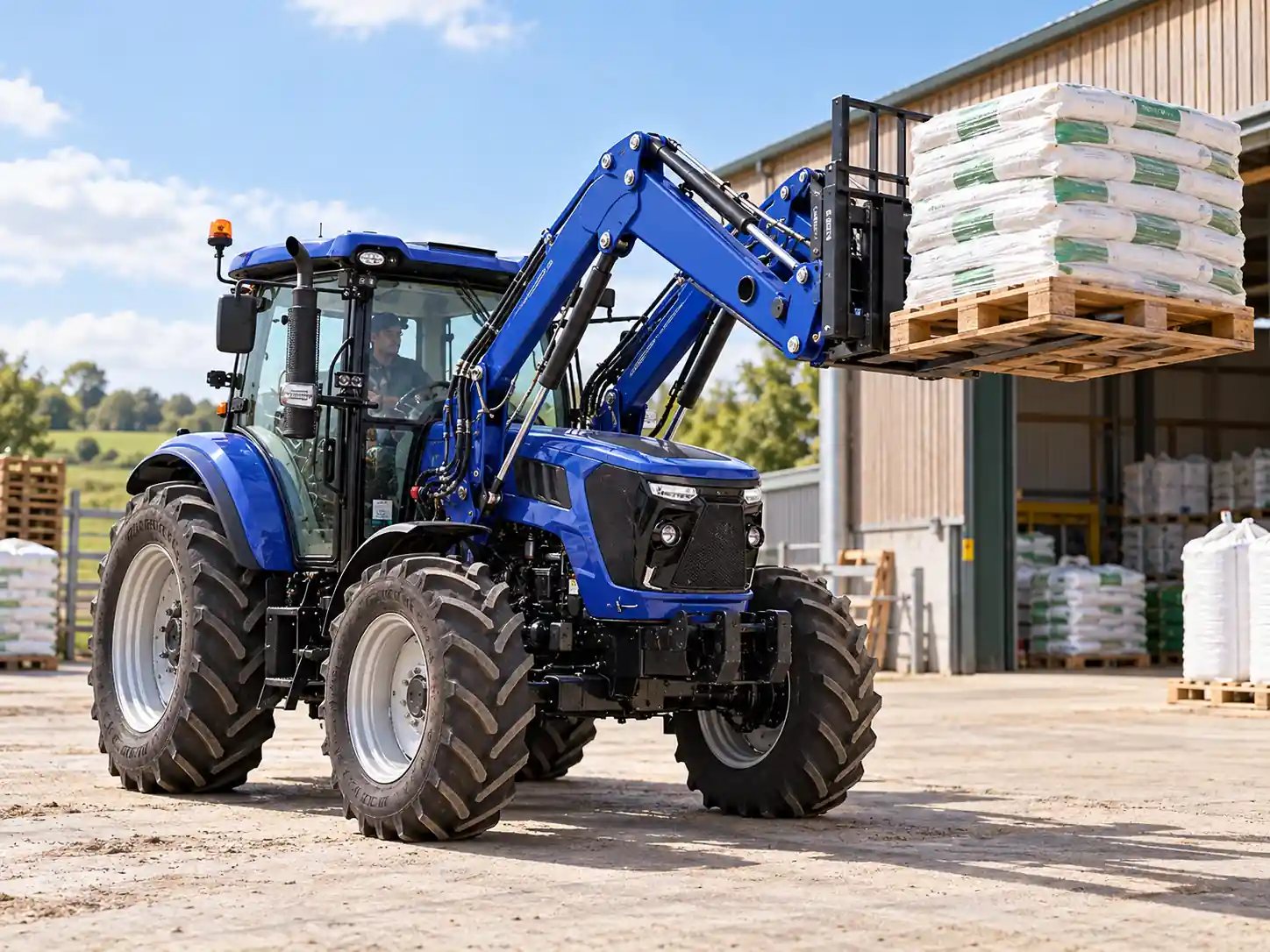
Figure 1. Front-loader pallet work: compare the rated capacity with the actual fork load centre and working height.
I. Why a Rated Lift Figure Is Not a Safe Payload Promise
A number without its measurement point is incomplete
Manufacturers may quote lift force at the loader’s pivot pin, at a set distance forward of that pin, or at a specified boom height. These are distinct measurements. A payload carried on pallet forks normally acts farther forward than a reference load at the pivot pin. Increasing that distance raises the load moment even when the pallet weight remains the same.
Published term | What it normally describes | What the buyer should request |
Lift capacity at pivot pin | Capacity at a defined loader pivot reference point | Height, attachment and test conditions |
Lift capacity 500 mm forward | Capacity at a point ahead of the pivot | Whether that point matches the intended load centre |
Loader capacity at full height | Capacity at a specified maximum boom position | Maximum-height figure for the actual attachment |
Maximum lift height | Height of a defined part of the loader | Effective pallet-placement or bucket-dumping height |
Breakout force | Force in a digging or rollback test configuration | Do not substitute it for lifting capacity |
In a published equipment specification, two lift capacities for the same machine can differ substantially simply because the measurement point moves forward. That is not a contradiction. It is a reminder that advertisements must be compared on identical terms. Do not rank two suppliers by the largest number until both provide the same measurement distance, height and attachment assumptions.
Safe working load is a system limit, not a universal discount
The expression safe loader working load is sometimes used casually, but agricultural loader literature does not always publish a separate universal SWL figure. The usable payload must be established from the manufacturer’s instructions and limitations for the actual tractor, loader, attachment and operating configuration. It cannot be created reliably by multiplying a headline lift rating by 80% or another convenient percentage.
Hydraulic capability is only one constraint. Loader arms and mounting frames, quick couplers, fork or bale-spear ratings, front axle, tyres, ballast and vehicle stability may impose lower limits. A tractor can have enough hydraulic force to lift a load without being suitable to carry it safely. The permitted task is governed by the relevant limiting condition, not the most impressive specification.
II. Calculate the Load That the Farm Must Really Handle
Start with an actual task, not horsepower
Consider an illustrative fertiliser-handling job. The farm moves a 620 kg pallet using a 110 kg fork carriage and associated attachment. The pallet centre of gravity is estimated 650 mm forward of the loader’s designated pivot reference. The goods must be placed at a working position 2.2 m above the ground.
Task input (illustrative, not a product rating) | Value |
Pallet including fertiliser | 620 kg |
Fork carriage and attachment | 110 kg |
Combined suspended mass | 730 kg |
Assumed pallet load-centre distance | 650 mm from specified reference |
Required placement position | 2.2 m |
Main operating surface | Level concrete, with outdoor approach route |
A brochure’s “1,000 kg lift” does not settle this case. First ask if that rating is measured at the pivot, 500 mm forward or elsewhere. Then ask whether attachment mass is already included in the published rating. The 620 kg payload and 110 kg fork carriage act at different positions; a correct engineering check uses their relevant load moments, not an unqualified comparison of 730 kg with 1,000 kg.
Understand tractor loader load centre
For a simplified static comparison, load moment = load force × horizontal distance from the chosen reference point. If an identical pallet’s centre moves from 500 mm to 800 mm, its moment about that reference increases by 60%. This does not prove that the loader’s rated capacity decreases by 60%: cylinder geometry, linkage forces, boom position and tractor stability also matter.
The practical lesson is clearer than the equation. Deep pallets, long forks, oversized round bales and partly engaged forks can put the payload farther forward than the supplier’s assumed test position. Give the manufacturer both the pallet dimensions and the real load-centre distance; request a rating or written suitability assessment for that condition. Never extrapolate an approved capacity curve beyond the values the manufacturer provides.
Check tractor loader lift height against the operation
Tractor loader lift height can mean pivot-pin height, bucket-bottom height, height with a level bucket, or clearance with the bucket dumped. For a 2.2 m platform, the critical question is whether the forks can place and withdraw the pallet without striking the structure, at an approved load and with adequate visibility. For tipping into a hopper, effective dump clearance and reach matter more than maximum pivot height.
Similarly, loader capacity at full height may be lower than capacity near ground level because lifting geometry changes throughout the movement. Ask for the lift-capacity curve at the required position, not just the maximum-height dimension. Verify clearance around beams, door lintels and stacked goods in older European barns before selecting the loader arm geometry.
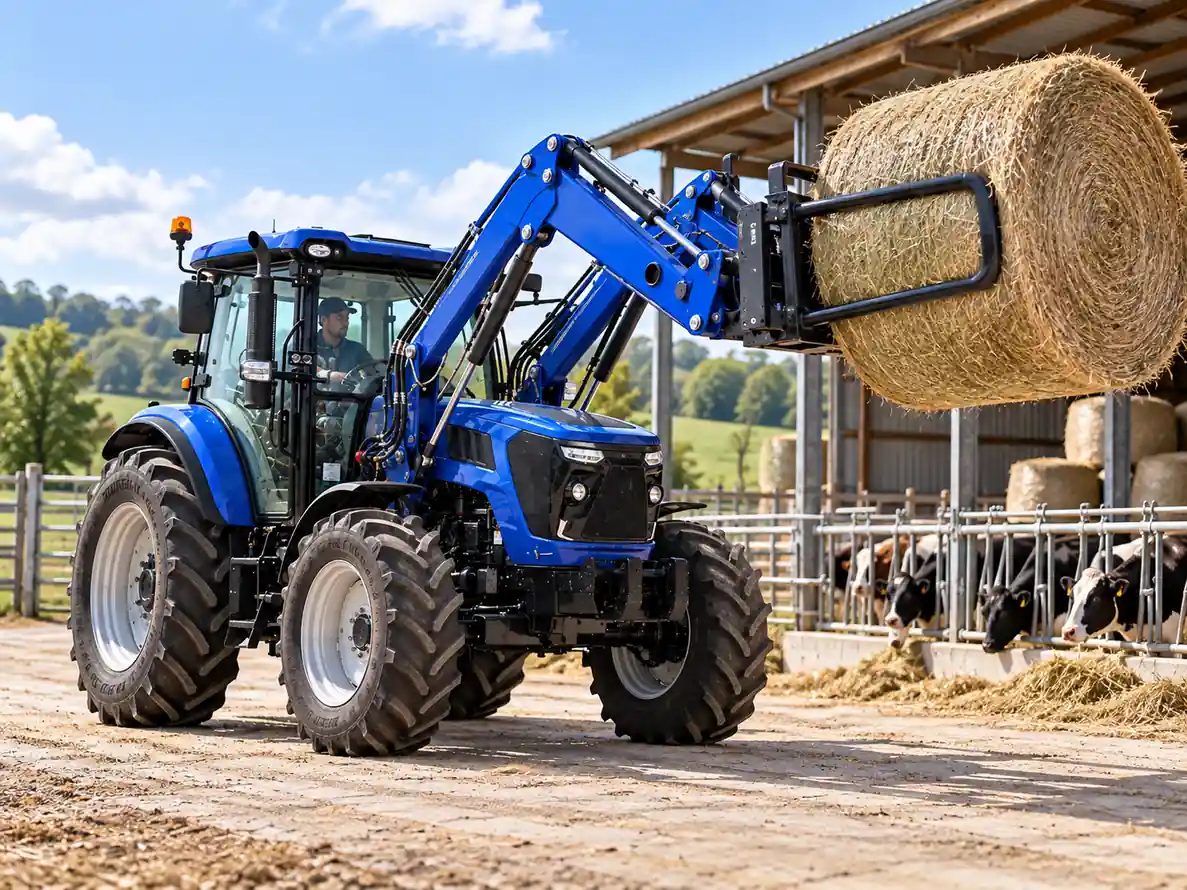
Figure 2. High-level pallet placement requires confirmation of full-height lift capacity, fork position and clearance.
Confirm the whole machine and the working route
A successful stationary lift on level concrete is not an approval to carry a raised load over a rutted farm track. Actual work brings braking, steering, bumps and side slopes into the stability assessment. A suitable rear ballast arrangement can improve weight distribution but cannot increase the loader frame’s, fork’s or hydraulic system’s certified limits. Front-axle and tyre loading still require checking. The operator should travel with the loader lowered where practicable, follow the approved ballast instructions and avoid sudden turns or stops with an elevated load. The UK HSE advice on front-loader travel illustrates why visibility and avoiding travel with a raised attachment matter, particularly on public roads.
The purchasing outcome for this example is a verified configuration and permitted task, not a promise that every 1,000 kg loader can handle a 730 kg suspended assembly.
III. Three European Farm Jobs, Three Different Failure Modes
Round bales: weight, diameter and falling-load risk
Livestock farms in Germany, France, Poland and other European markets often need one tractor for pasture maintenance and bale movement. Bale mass varies with moisture, crop and density. A larger diameter also moves the load centre farther forward; the attachment must restrain the bale rather than simply balance it. High stacking brings the additional risk of material falling towards the operator.
For bale work, collect the maximum bale mass and diameter, the bale spear or grab model, the intended stacking height, and the yard gradient. Ask for the manufacturer’s load assessment with the actual bale attachment and protective arrangements. A low-level feed-yard transfer is a different job from placing wrapped bales on an elevated stack. Where stacking frequency or reach is high, a purpose-built telehandler may be the safer and more productive choice.
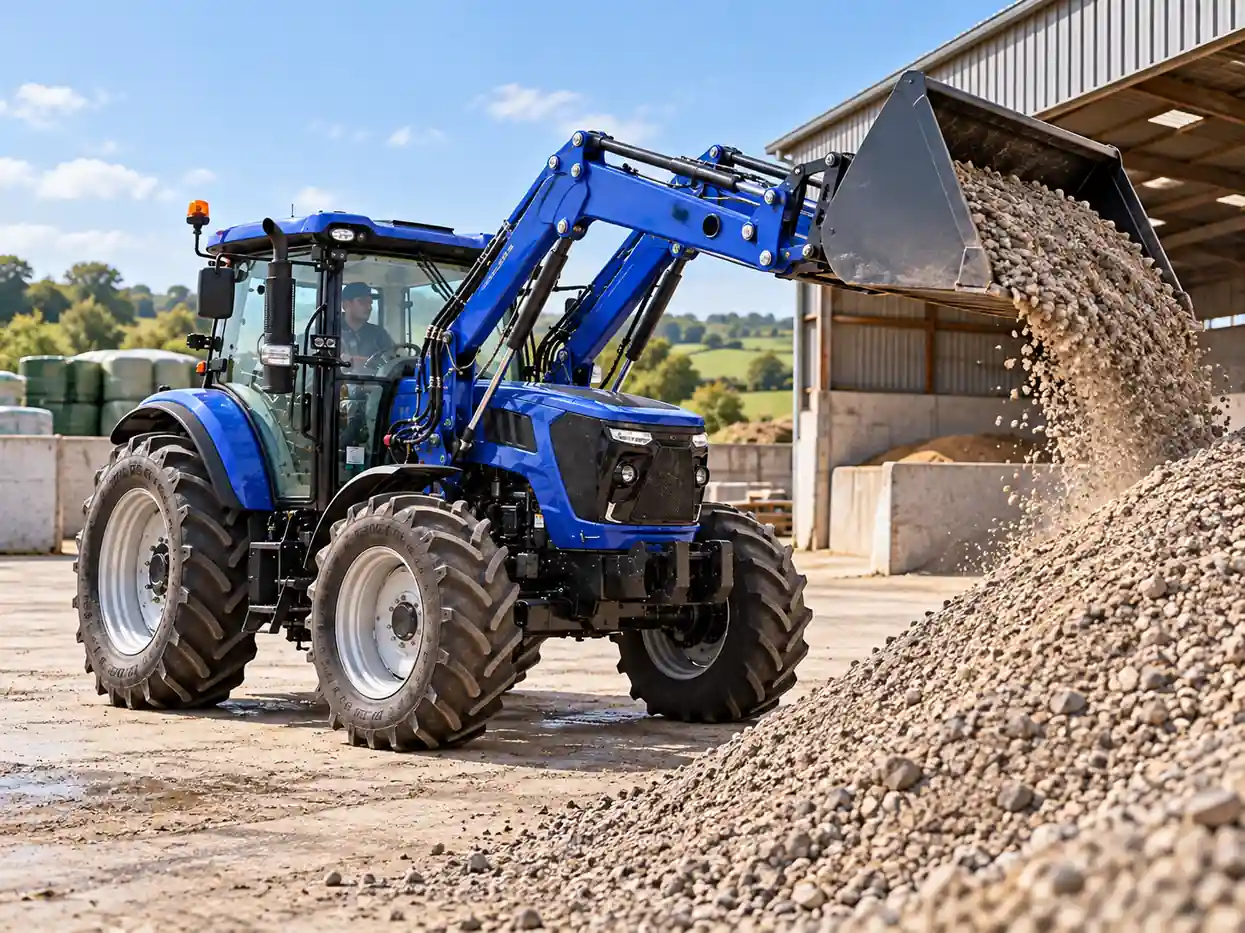
Figure 3. For round bales, check bale mass, attachment, load centre and falling-load protection.
Fertiliser pallets: precise placement can be harder than lifting
A mixed farm may use the same tractor to move bagged fertiliser in the morning and pull a mower later. Pallet forks make this flexibility attractive, but forks also introduce attachment mass and a forward load centre. Uneven bag distribution, incomplete fork insertion and damaged pallets can change the real condition. The operator needs good forward visibility, room to manoeuvre and sufficient vertical and horizontal clearance at the destination.
Specify the heaviest fully loaded pallet, fork length and rated capacity, fork-carriage mass, target placement height and number of lifts per day. If the work consists mainly of dense pallets in high racking, compare a dedicated forklift rather than forcing a farm tractor to perform a warehouse machine’s job. The trade-off is capital tied up in another machine versus cycle time, safe placement accuracy and utilisation of the existing tractor.
Feed, manure and gravel: bucket volume hides payload mass
Bulk materials should be calculated from actual filled volume and material density. If 0.5 m³ of material has a bulk density of 1,600 kg/m³, the contained material weighs about 800 kg before including the bucket. Wet soil or aggregate may reach the working limit well before a large bucket is full. Light loose feed may fill the same bucket at far less mass.
This is why a bigger bucket is not always a better productivity upgrade. The buyer should check bucket mass, density at realistic moisture content, fill factor, lifting position and dump clearance. A smaller matched bucket can move more usable material per hour than a nominally larger bucket that must repeatedly be underfilled to remain within operating limits.
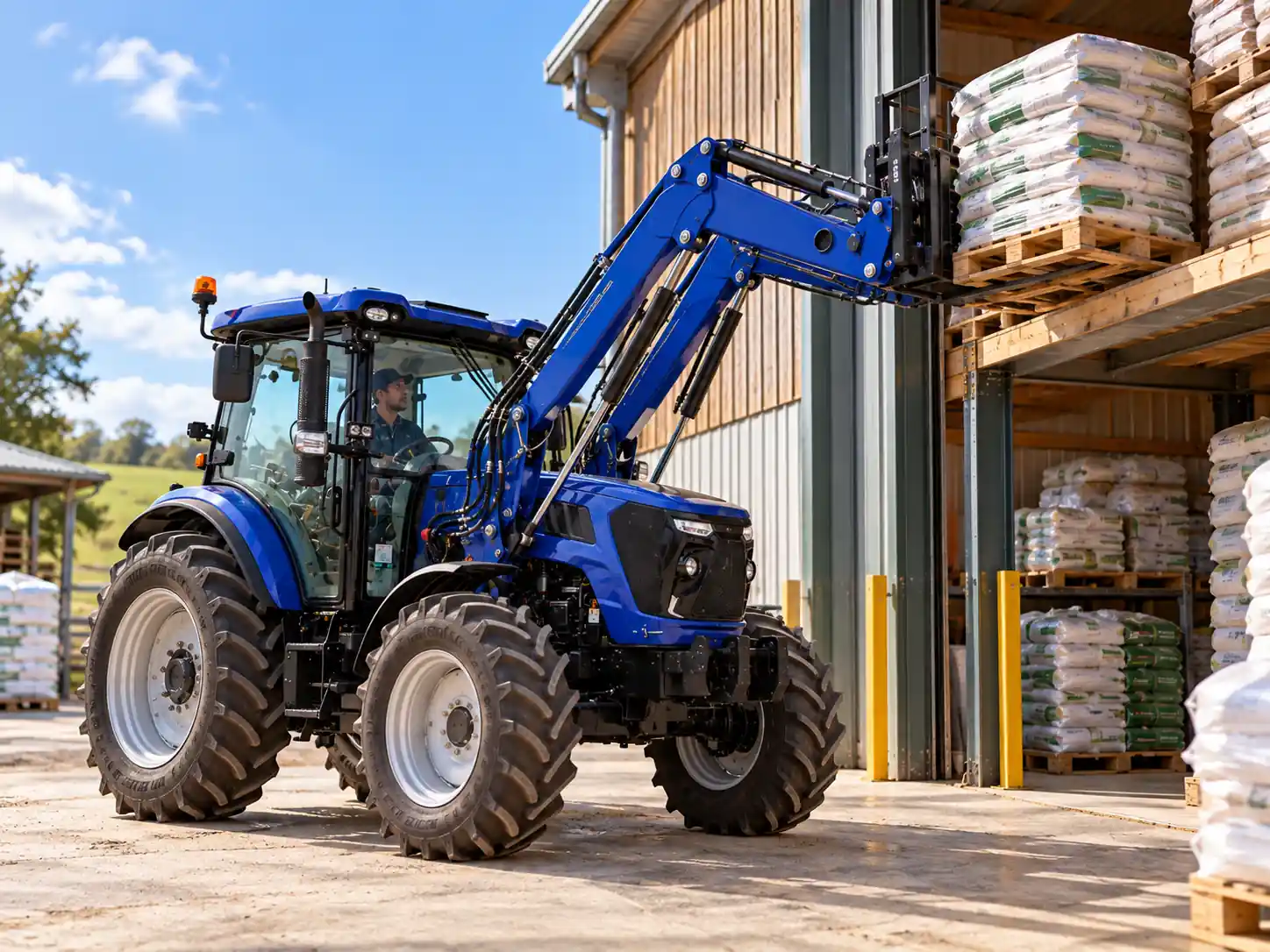
Figure 4. Bucket payload depends on material density and fill volume, not bucket size alone.
IV. The Hidden Cost of Getting the Capacity Wrong
Undersizing multiplies handling cycles
A loader that proves unsuitable at the required height may cause an operator to split loads, make additional journeys or call in a second machine. These costs recur long after the original price saving has been forgotten.
For an illustrative calculation, assume 35 handling cycles each working day, 40 extra seconds per cycle and 180 days of annual operation. The additional time is 35 × 40 × 180 ÷ 3,600 = 70 hours per year. At an assumed labour cost of €25 per hour, that is €1,750 in additional labour cost annually, before fuel, tyre wear, maintenance or lost availability. These are scenario inputs, not measured results from a particular farm or tractor.
Oversizing can be expensive too
Choosing a larger tractor “just in case” can increase capital outlay, storage needs, transport costs and access difficulties. A wider machine may not fit older gates or livestock-building passages. Engine horsepower alone cannot cure an inadequate load-centre rating; nor does a larger chassis remove the need for approved ballast and correct fork or bale attachments.
Compare the ready-to-work configuration cost: tractor, loader, mountings, hydraulics, bucket or forks, tyres, ballast, delivery requirements, and the information needed for the destination market. Then compare tonnes moved per hour or pallets handled per shift, not only the maximum kilograms printed in the brochure. The right purchase balances safe task capability, daily throughput and total cost of ownership.
V. A Technical Procurement Checklist for European Buyers
Put the real application in the quotation request
A useful RFQ should let two suppliers answer the same engineering question. Ask them to identify the model, the test reference points and the permitted configuration, then document any limitations instead of relying on verbal assurances.
Information to give the supplier | Confirmation to obtain before ordering |
Maximum payload and dimensions | Verified capacity at the real load centre |
Fork, bale grab or bucket | Attachment mass, rating and connection compatibility |
Placement or dump height | Capacity and reach at the actual working position |
Daily cycle count and surface | Hydraulic response, tyre choice and use limitations |
Gate, barn and aisle dimensions | Overall machine and loader clearances |
Transport and road use | Market-specific operating and road-use requirements |
Destination country | Applicable documentation for the supplied configuration |
Rear implements and hitch requirements | PTO, linkage and ballast arrangement compatibility |
Request evidence for safety and documentation
European requirements cannot be reduced to the phrase “CE certified”. The agricultural tractor and the fitted loader may fall under different regulatory and technical requirements, and the supplied configuration must be checked for the destination country. EN 12525 addresses agricultural front-loader safety; the European Commission’s 2024 implementing decision restricted the presumption of conformity for certain EN 12525:2000+A2:2010 requirements concerning falling objects and residual-risk information. CEMA issued technical guidance in July 2026 while revisions remained under discussion.
The practical purchasing step is to ask for the correct configuration-specific technical files, operator instructions, safety limitations and available conformity documentation. Do not assume that rollover protection alone resolves falling-load hazards. For the United Kingdom, consider applicable UK machinery and lifting-equipment rules separately from EU requirements; competent examination or other duties depend on the workplace and equipment use.
Agree on an acceptance test and a documentation trail
Before shipment, record the intended loader, attachment and ballast in the quotation. Request photographs or an inspection record of those actual components and serialised models where available. Any practical load demonstration should be performed only under the manufacturer’s approved conditions by trained personnel; a single lift cannot substitute for rated capacity data or a risk assessment.
If a supplier cannot state which load-centre measurement its claim uses, treat the offer as incomplete rather than assuming the most favourable interpretation. An extra round of technical questions is cheaper than discovering an incompatibility after importation.
VI. Matching OXPLO Tractors to the Actual Loader Task
OXPLO OXT504: compact access before unnecessary bulk
The OXPLO OXT504 50 HP tractor is listed with 4WD, an 8F + 8R gearbox, Category I rear linkage and an approximately 1,560 mm overall width. For a farm with narrow barn approaches, mixed grassland work and occasional light material handling, this compact footprint is a meaningful reason to evaluate the model. It is not proof that any particular fork or bale load is approved.
When discussing a 50 HP tractor with front loader, ask OXPLO to check the exact loader mounting, hydraulic connections, attachment, tyres and ballast for the required lifting task. A buyer with a narrow gate and occasional low-level loads may value the OXT504’s compact dimensions more than an increase in horsepower. Heavy high stacking can change that decision completely.
OXPLO OXT604: a larger utility platform for recurring mixed work
The OXPLO OXT604 60 HP tractor moves to a larger listed chassis with a 2,010 mm wheelbase, 12F + 12R transmission and Category II rear linkage. That makes it worth assessing when the farm needs more implement flexibility and frequent transitions between field, transport and yard tasks. The additional reverse ratios are particularly relevant to repeated forward-and-reverse manoeuvres.
An OXPLO OXT604 quotation should still distinguish engine output from loader performance. Ask for the matching loader’s capacity at the planned load centre and height, together with tyre loading, counterweight and attachment restrictions. A larger tractor platform alone is not a substitute for those figures.
OXPLO OXT704: more engine reserve, not a blanket lift guarantee
The OXPLO OXT704 70 HP tractor is listed as 4WD with a 12F + 12R gearbox and Category II linkage. Its higher engine output may be useful where loader work is only one part of a demanding annual programme involving mowing, towing and cultivation. OXPLO states that a compatible front-loader configuration can be discussed, with loader capacity and counterweight requirements confirmed before an order is placed.
Do not assume the OXPLO OXT704 can lift a specified mass merely because it has 70 HP. Its suitability depends on the chosen loader, attachment, approved capacities, terrain and operating practices. This is exactly why a model recommendation should follow the work specification rather than precede it.
What a buyer should ask OXPLO to prepare
OXPLO’s tractor configuration enquiry page invites customers to describe farm type, application, destination and attachments. For front-loader procurement, strengthen that enquiry with maximum payload, load-centre dimensions, target working height, loader cycles, access width and the intended fork, bale grab or bucket.
OXPLO can then discuss the tractor platform and available matching equipment, and identify which specifications or documents still require supplier confirmation. Ask OXPLO to include loader model, mounting parts, hydraulic requirements, approved ballast, destination-country documentation and delivery scope in the final quotation. This creates a clear basis for comparing a compact OXPLO machine with a larger utility model rather than buying on nominal HP alone.
For broader platform comparisons, consult the OXPLO tractor range. The existing front-loader tractor selection guide covers general tractor-loader compatibility; this article concentrates on proving lift capacity in the buyer’s specific working condition.
VII. Frequently Asked Questions
Is tractor loader lift capacity the same as the safe working load?
No. A lift-capacity figure describes performance under a defined set of conditions. The permitted payload in service also depends on the loader and attachment ratings, load centre, working height, tractor stability, axle and tyre limits, ballast and manufacturer instructions. A fixed percentage of the advertising figure is not a substitute for those checks.
Can a 50 HP tractor with front loader safely lift 1,000 kg?
Horsepower does not determine the answer. A buyer evaluating an OXPLO OXT504, or any other 50 HP tractor, needs the exact loader’s approved performance at the real load centre and height, plus confirmation of the full tractor and attachment configuration. OXPLO should not promise a particular payload without that evidence.
Why is front loader lifting capacity different at full height?
Loader-arm angles, cylinder geometry and leverage change through the lifting arc. Maximum height and maximum payload are not interchangeable. Request the manufacturer’s rating or curve for the intended lift position, and check useful clearance and reach for the actual pallet or bucket.
Does rear ballast increase the loader’s rated lifting capacity?
Approved ballast can improve tractor weight distribution and stability, but it does not automatically increase the loader frame, hydraulic or fork rating. OXPLO buyers should confirm the specified ballast arrangement along with front-axle and tyre loading for the actual configuration.
Should a mixed farm choose a tractor loader or a dedicated forklift?
Choose according to the primary job. A correctly matched tractor-loader combination offers useful versatility when loading is intermittent and the tractor has field duties. A forklift or telehandler can be preferable for repetitive, dense pallet handling or demanding high placement. Compare safe operating capability, site access, cycle time and whole-life cost—not just initial purchase price.
What should European dealers send with an OXPLO quotation request?
Send maximum payload and dimensions, load centre, placement height, daily handling cycles, attachment type, site conditions, narrowest entrance, other farm implements and destination country. Ask OXPLO for a configuration-specific quotation and available technical and market documents rather than a generic “tractor with loader” price.
VIII. Conclusion: Buy the Capacity You Can Use, Not the Biggest Number
A front-loader specification is useful only when its test point, lift height and attachment assumptions match the task. The real decision combines load centre, approved capacity, tractor stability, front-axle and tyre limits, protective measures and expected handling throughput. The wrong machine may cost money through repeated trips; the oversized one may cost money through poor access and unnecessary capital expenditure.
For European farm buyers comparing 50–70 HP platforms, OXPLO offers a practical starting range, but the final selection must be based on the actual loader package and its confirmed operating limits. Share your heaviest material, target height, working surface, access dimensions and destination market with OXPLO before choosing the tractor. Explore the OXPLO website or contact OXPLO for a configuration review to turn those requirements into a specific, checkable quotation.