

A tractor can start reliably, run a mower and deliver the expected horsepower yet still be unsuitable for the road-registration route promised to a European buyer. For dealers importing from outside the EU, that distinction often matters more than a small difference in purchase price.
Consider a French machinery dealer ordering several 50 HP tractors for vineyards and mixed farms. The machines arrive, but the registration file refers to a configuration that does not clearly match the fitted tyres and operator station. The tractors may work perfectly in the field; the dealer still faces a delivery dispute, occupied stock space and delayed cash collection.
That is the real purpose of a tractor COC Europe check: establish whether the specific tractor as built is covered by the required approval and supported by the correct evidence before money and transport commitments become difficult to reverse. This guide is for European importers, dealers and purchasing managers who must turn a supplier quotation into a defensible delivery decision.
I. Why EU Tractor Registration Is a Procurement Problem, Not Just Paperwork
Two different tests: field suitability and lawful road use
A tractor selected for vineyard work needs the right working width, manoeuvrability, PTO speed, hitch compatibility and traction. A tractor that must travel between dispersed plots over public roads raises additional questions: vehicle category, relevant type approval, lighting, brakes, mass limits, identification, national registration and insurance.
The fact that a customer principally uses the machine on private land does not resolve the second test. In France, for example, agricultural tractors are subject to registration requirements; the official process asks for a manufacturer’s certificate of conformity or an accepted alternative within the applicable registration route. The destination country and intended use must therefore be recorded before the model is chosen.
Where the hidden cost enters the dealer’s P&L
When paperwork is discovered to be inadequate after customs clearance, a dealer may face storage charges, financing costs, new technical reviews and an uncomfortable conversation with an end customer who planned work around a delivery date. Some omissions are administrative and can be corrected. A vehicle whose physical configuration falls outside the relevant approval presents a much harder problem: adding a document does not itself change the underlying vehicle.
For a new supplier or a first shipment into a new market, the buyer should treat registration eligibility as a purchase-release condition, rather than assuming the after-sales team can solve it later.
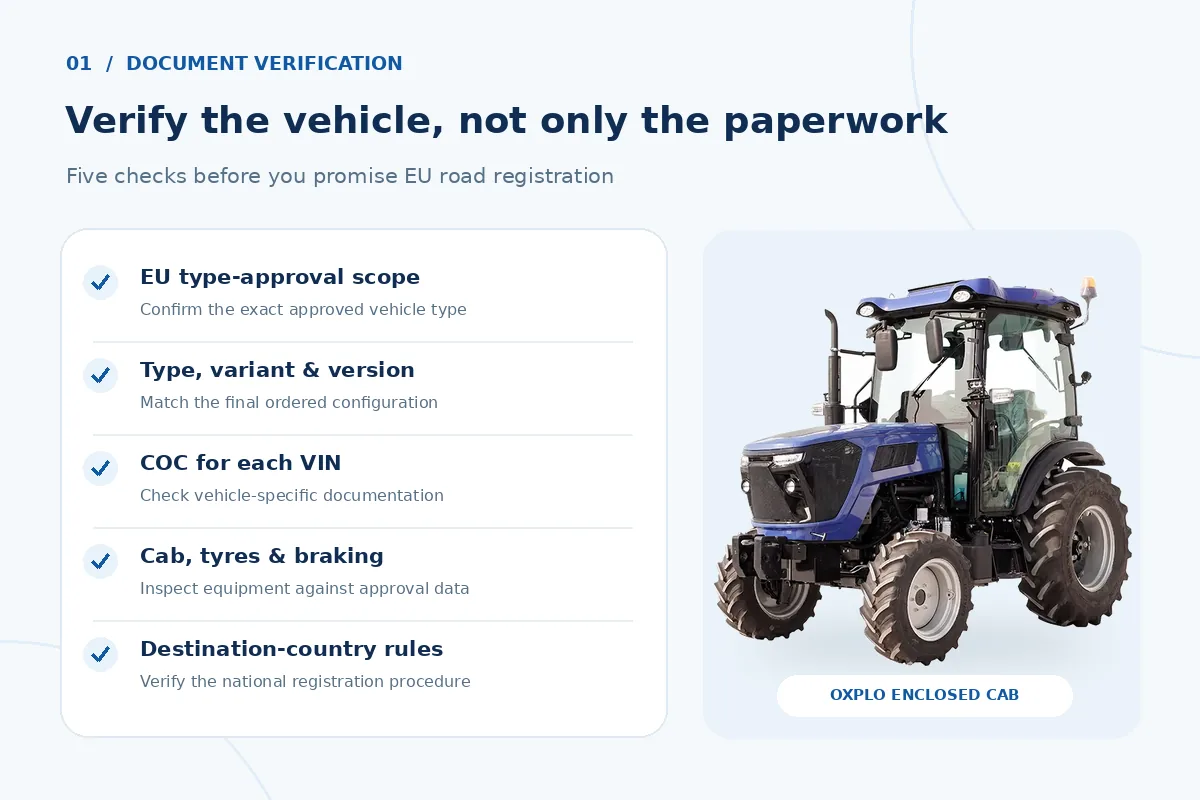
Figure 1. Tractor field performance and road-registration suitability are different checks.
II. Tractor COC Europe: What the Documents Actually Establish
CE, Stage V, whole-vehicle approval and COC are not interchangeable
Under Regulation (EU) No 167/2013, EU type approval covers applicable agricultural and forestry vehicle categories, including wheeled tractors in category T. EU whole-vehicle type approval concerns an approved vehicle type; a certificate of conformity (COC) is issued by the approval-holder manufacturer for an individual vehicle produced in conformity with that approved type. Article 33 sets out the manufacturer’s COC obligations for vehicles covered by that approval route.
An engine emissions statement, including information about an applicable EU Stage V configuration, does not certify the complete tractor for road registration. Nor does a general CE-related document replace an EU whole-vehicle approval. Buyers should ask the supplier precisely which requirement each document addresses.
Document / evidence | What the buyer can establish | What it does not establish by itself |
CE-related or product documents | Compliance with the particular rules addressed by those documents | EU whole-vehicle approval or national registration |
Engine emissions information | The applicable engine / emissions configuration | Approval of the complete tractor |
EU whole-vehicle type approval | An identified type, variant and version has an approval | That each delivered VIN matches the approved version |
Vehicle-specific COC | Manufacturer declaration for the individual vehicle under the relevant approval | Completion of every national registration step |
Invoice, packing list and customs records | Commercial identity and import transaction | Technical eligibility for public-road use |
Type, variant, version and VIN: the four identifiers buyers must connect
A catalogue name such as “50 HP 4WD tractor with cab” is a sales description, not a sufficient approval identifier. The EU COC format distinguishes vehicle type, variant, version and the vehicle identification number (VIN). Commission Implementing Regulation (EU) 2015/504 includes COC templates for complete, completed and incomplete vehicles. That distinction matters if a tractor is altered or completed in several production stages.
For an unbuilt order, request an appropriately redacted example from the approved configuration and a written commitment describing the final documentation. After manufacture, reconcile each VIN with the completed vehicle, manufacturer’s plate and actual certificate. A sample certificate is never a substitute for the document applicable to the machine delivered.
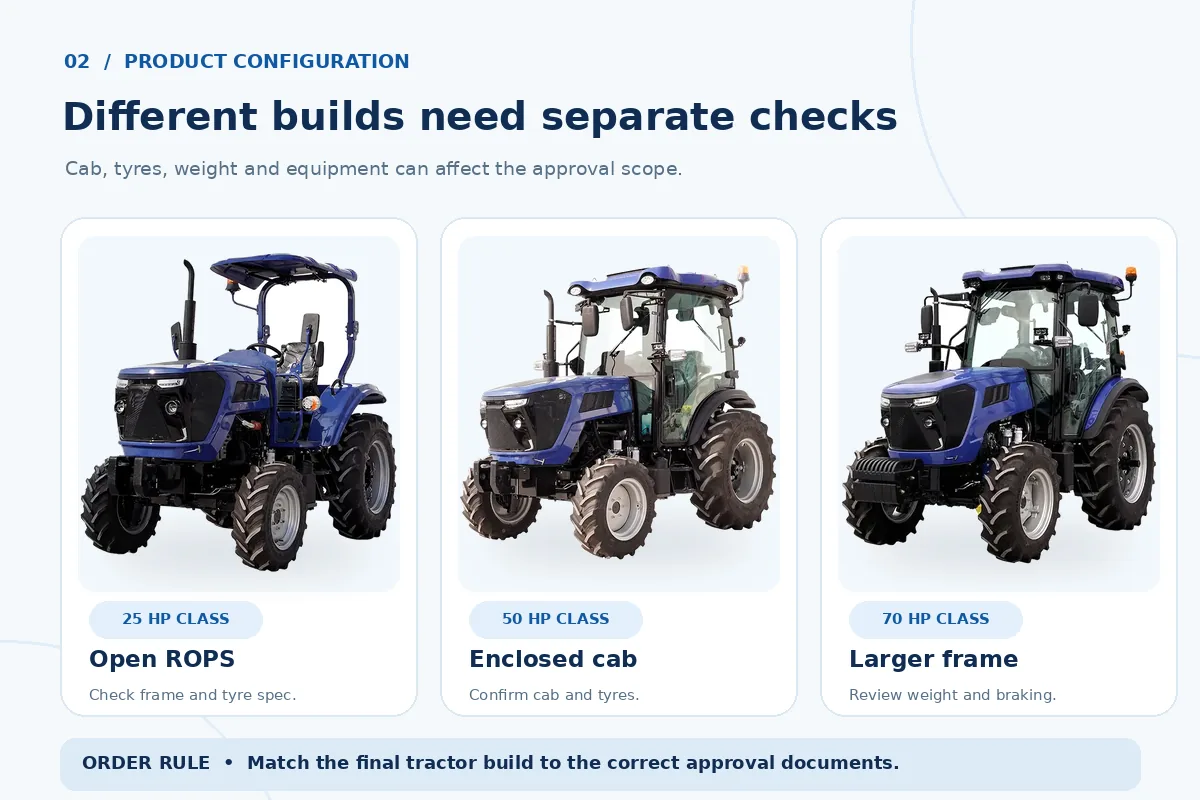
Figure 2. Buyers should verify COC, type approval scope, VIN matching and registration documents.
III. Three Configuration Changes That Can Undermine a Registration Plan
Tyres and operator station: the easy-to-miss differences
European buyers may specify different tyre sizes for orchard access, stability, ground pressure or local preferences. They may also switch from a ROPS station to a cab. Such decisions can change dimensions, masses or other characteristics relevant to the approval file. The sales team should not assume every option under one commercial model name belongs to the same approved type, variant or version.
Practical control: freeze the required tyres, operator station, maximum design speed, braking and lighting specification in the order attachment, then compare that attachment against the actual approval scope. If the buyer requests a change after that review, reopen the approval check before authorising production.
Road lighting, brakes and drawbar equipment cannot be “fixed later” by assumption
A dealer may plan to add lights, alter a towing coupling or change related equipment after arrival. But whether an alteration is acceptable depends on the applicable approval and local procedure. It is unsafe to assume that a workshop modification automatically cures a gap between the approved version and the delivered tractor.
If the end customer will tow agricultural trailers, discuss the towing system, permissible masses, relevant braking arrangements and the rules governing the complete combination. A tractor that can physically pull a trailer is not thereby cleared for every trailer operation on public roads.
Loader options change the engineering review, too
A front loader may make a tractor attractive for feed handling and mixed-farm operations, but it also affects front-axle loading, counterweight selection, hydraulic requirements, visibility and overall working dimensions. These are engineering checks in their own right. Where road use is intended, any effect on the vehicle’s approved configuration must be considered as a separate compliance question.
The right trade-off is not “buy the model with the most options.” It is “choose the least complicated configuration that delivers the buyer’s actual workload without creating an avoidable approval or servicing problem.”
IV. France and Italy: Why One EU Framework Still Requires Local Planning
France: confirm the registration evidence before quoting delivery
France’s official agricultural-vehicle registration guidance describes the documentation needed for new tractors, including the appropriate registration application and a manufacturer’s conformity certificate or accepted equivalent. It also references an individual approval report where a vehicle has not been homologated, depending on the case. That route must be assessed with the competent authority; it is not a guarantee that any imported tractor can be registered after arrival.
For a French dealer, a useful pre-order question is not simply “Will you provide a COC?” but “Does this particular approved vehicle configuration support the route my registration professional expects to use?” Have that professional examine the evidence while the order is still adjustable.
Italy and other markets: distinguish harmonised technical approval from administration
EU whole-vehicle approval is designed to support recognition across Member States, but it does not eliminate national registration procedures, documentation, insurance or use requirements. An earlier successful registration elsewhere is useful background, not a legal conclusion about a new VIN, changed configuration or different national process.
Italian importers should verify the current requirements with their registration specialist and the competent local authority before advertising a vehicle as ready for road registration. The same practical rule applies to Germany, Poland and other destination markets. Where the approval route remains unclear, hold the road-ready promise rather than relying on a future workaround.
V. What Missing Tractor Road Use Paperwork Does to Landed Cost
A transparent delay-cost example
Suppose a dealer imports four tractors, each with an assumed purchase value of €14,000. A document mismatch keeps them in stock for 30 additional days. For illustration only, assume €8 per tractor per day in storage and a 9% annual cost of working capital. These are calculation inputs, not European market benchmarks.
Cost component | Illustrative calculation | Estimated amount |
Extra storage | 4 tractors × 30 days × €8 | €960 |
Working-capital carrying cost | €56,000 × 9% × 30 / 365 | €414 |
Subtotal before rework or customer claims | €960 + €414 | €1,374 |
The subtotal excludes technical advice, reinspection, additional transport, customer delay claims and the extreme scenario of inventory that cannot be registered through the planned route. Not every late certificate creates those costs; the point is that the supplier quotation alone is not a complete commercial comparison.
A useful internal metric is registration-adjusted landed cost = base landed cost + verified compliance expenditure + expected delay cost + expected remedial cost. For uncertain outcomes, use documented scenarios and probability assumptions rather than inventing a universal percentage penalty. A slightly higher ex-factory quote can be economical when it comes with a demonstrably lower delivery risk.
Why sample orders should test the entire handover process
A trial shipment is most useful when it validates more than engine starting and field performance. Test document completeness, VIN-to-COC matching, the local registration process, implement fit, parts identification and service-response workflow. Do not treat successful registration of one 50 HP configuration as proof that every 25–70 HP model or cab/tyre combination has the same status.
VI. A Dealer-Ready Approval Gate Before the Purchase Order
Build a single, version-controlled approval file
Instead of forwarding certificates in separate emails, maintain one approval record per ordered configuration. Minimum fields should include destination country; intended public-road use; supplier and approval holder; commercial model; vehicle category; type/variant/version; approval number and relevant extensions; tyres; operator station; maximum design speed; braking and lighting equipment; attachment configuration; VIN when assigned; and planned COC handover.
Keep the approved specification alongside the signed quotation. When the buyer changes a tyre, cab or loader package, version the configuration sheet and ask whether the approval evidence still covers it. This reduces the chance that sales, production and shipping departments refer to different versions of the order.
Use three clear release decisions
- GREEN — progress:the approval route, exact configuration and document responsibility are supported by evidence, subject to completion of normal production and registration steps.
- AMBER — investigate:a document has been promised, but approval scope, final configuration or destination-country acceptance remains unresolved. Do not promise registration yet.
- RED — stop the road-registered commitment:the relevant approval cannot be established, delivered specifications conflict with the evidence, or the planned registration route has not been confirmed.
Do not release shipment on a product photo alone
Before dispatch, match the VIN list and nameplates against the vehicle documents and check tyres, operator station, lighting, brakes and agreed equipment against the signed specification. Define whether final COCs will accompany the vehicles and when the buyer receives copies. The supply contract should allocate responsibility if an agreed certificate is missing or the shipped build departs from the contractually approved configuration.
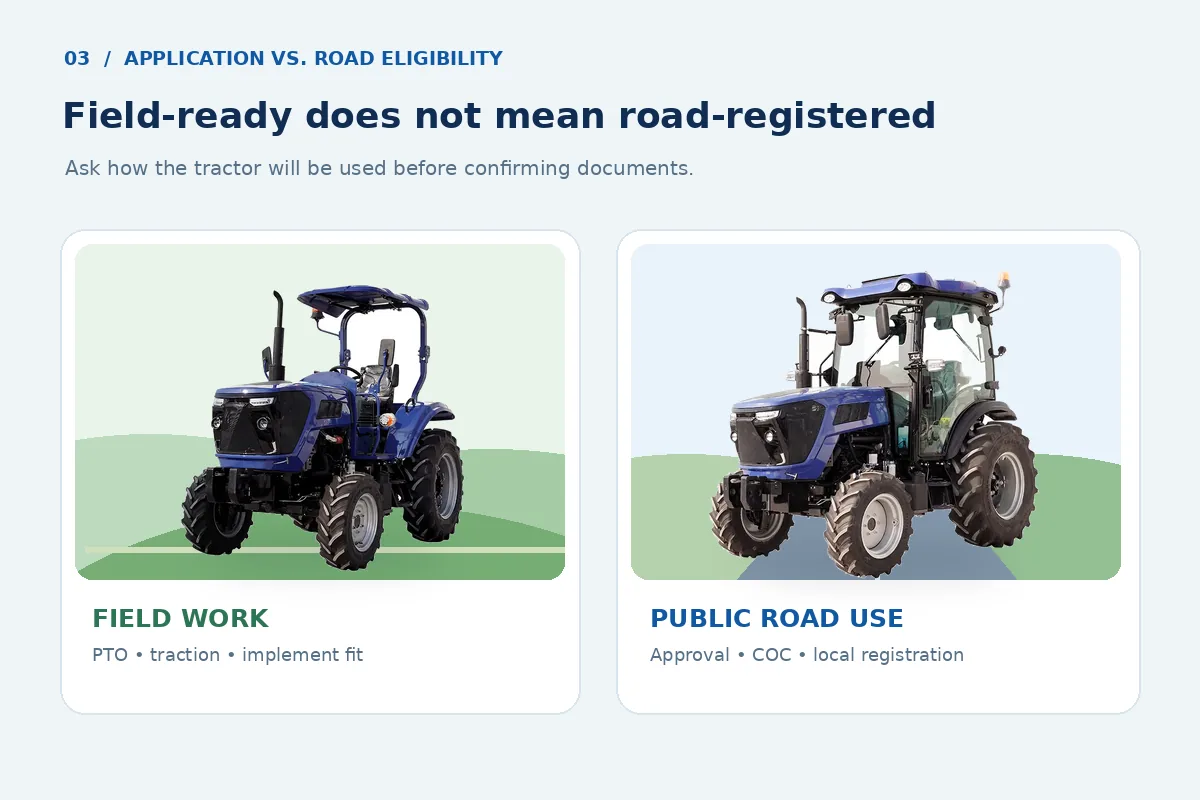
Figure 3. A pre-shipment VIN and COC check helps prevent delivery delays.
VII. Applying the Approval Checklist to OXPLO 25–70 HP Tractors
Select the working platform first, then verify the paperwork
For buyers comparing OXPLO’s tractor range, the first question is whether the farm requires a compact Category I machine or a larger Category II utility platform. This is a more useful starting point than selecting on horsepower alone. Any EU road-registration requirement must then be assessed for the particular vehicle and build; published product specifications are not evidence that every OXPLO version has EU whole-vehicle approval.
The OXPLO OXT504 50 HP tractor is published as a 4WD, 8F + 8R, Category I machine with a listed 1,560 mm width and 540/720 rpm PTO. That combination can be relevant to a vineyard or mixed farm that needs more power while retaining compact access. But a buyer should measure gate width, row spacing, headlands and implement dimensions; 1,560 mm on a product page is not a promise of fit for every vineyard.
The OXPLO OXT604 60 HP tractor moves to a larger platform with a 12F + 12R transmission, Category II linkage and 2,010 mm listed wheelbase. For recurring loader work and heavier rear implements, those platform differences may matter more than the additional 10 HP. The OXPLO OXT704 70 HP tractor keeps the larger Category II approach while offering more rated engine output for demanding mixed-farm schedules.
OXPLO model / class | Published work-platform distinction | Key dealer check |
OXT254 / OXT304 — 25–30 HP | Compact 4WD, Category I; orchards, vineyards and light work | Actual access width, intended implements, approval by exact version |
OXT404 / OXT504 — 40–50 HP | Compact Category I, more PTO and mixed-farm capacity | Cab/ROPS, tyre choice, output versus implement demand |
OXT604 / OXT704 — 60–70 HP | Larger Category II platform and 12F + 12R gearbox | Axle loads, loader/ballast package, towing and road equipment |
The trade-off is clear: a compact OXPLO tractor may preserve access for vineyards, while a larger OXPLO machine can improve compatibility with Category II implements and heavier recurring workloads. Neither advantage is sufficient if the chosen option is not supported by the required certification and documentation for its market.
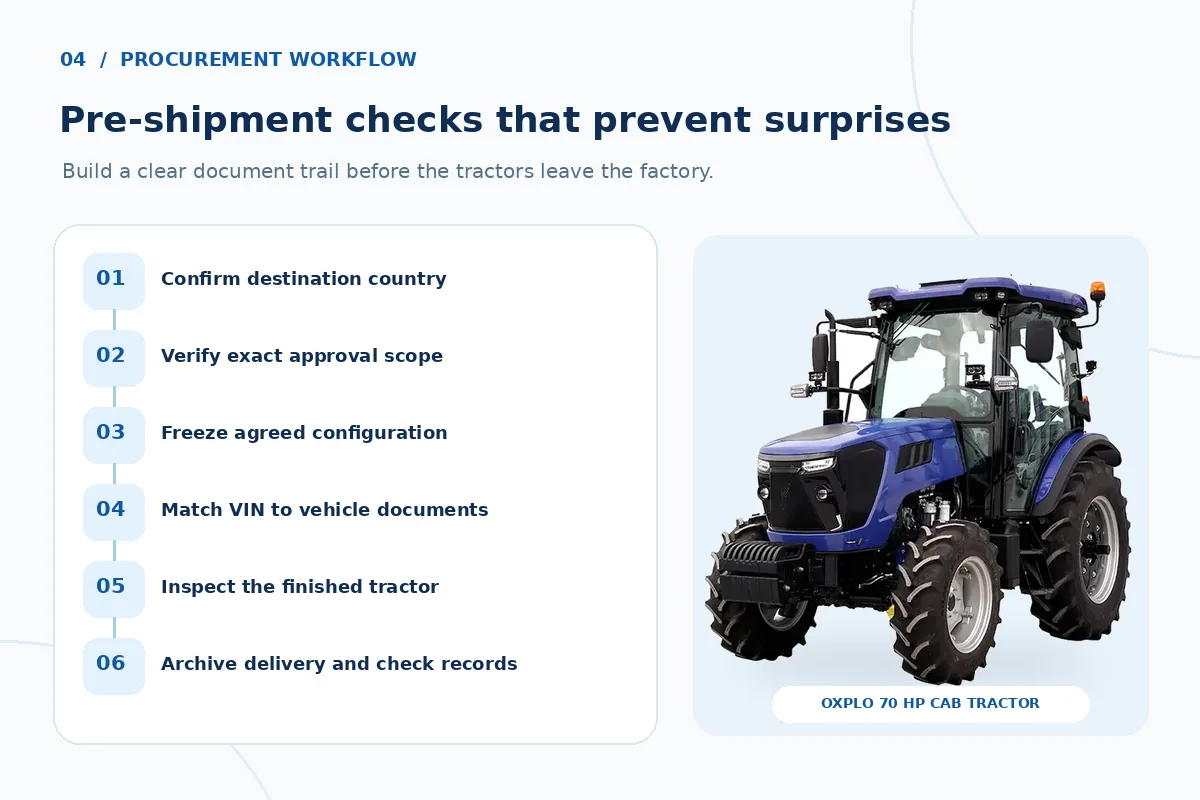
Figure 4. OXPLO 25–70 HP tractor platforms for different European farm applications.
What OXPLO can help buyers confirm—and what must remain conditional
Through its tractor configuration guidance and parts and technical support resources, OXPLO provides a route to discuss application needs, PTO and linkage compatibility, tyre and loader options, pre-shipment checks and follow-on service requirements. For example, a dealer buying an OXT504 for orchard spraying should confirm sprayer PTO input, operating width and trailer use alongside the operator-station and tyre specification.
However, a general CE-related statement or engine emissions configuration is not proof that every OXPLO tractor has EU whole-vehicle type approval or can be supplied with a valid EU tractor COC certificate. Buyers should ask OXPLO to state in writing which model, engine, version and destination-market documentation it can actually support. Where that evidence is unavailable, the offer should not be described as EU road-registration ready.
VIII. Frequently Asked Questions
Does every imported tractor need the same tractor COC certificate?
No. The correct route depends on vehicle category, approval basis and the relevant national rules. For a vehicle covered by the EU whole-vehicle type-approval route, the individual COC is a central document. Alternative national or individual routes may exist in specific cases, but the dealer should verify them with the destination authority before purchasing.
Does EU Stage V mean the tractor can be registered for road use?
No. Engine emissions compliance and whole-vehicle approval address different requirements. An OXPLO buyer should verify the exact engine configuration and separately request evidence relevant to the complete tractor and its intended road-registration procedure.
Can one OXPLO model’s approval cover every cab, tyre and loader choice?
Not automatically. The relevant approval may distinguish types, variants and versions. OXPLO buyers should obtain a configuration-specific response rather than inferring coverage from a commercial model family or an earlier registration of a different machine.
What EU tractor registration documents should a dealer request before a trial order?
Ask for the applicable approval number and scope, a redacted representative COC where appropriate, a documented list of deliverable certificates, the agreed configuration, and the process for VIN-specific COC handover after production. Also agree on who checks national registration requirements and what happens if the contractually promised evidence cannot be delivered.
What should a French or Italian dealer include in an OXPLO enquiry?
Send the country of first registration, intended public-road use, preferred model and quantity, required tyres and operator station, farm operations, PTO and linkage needs, loader or trailer requirements, and the documentary proof the registration specialist expects. That gives OXPLO enough context to evaluate the commercial specification without making an unsupported conformity promise.
IX. Conclusion: Verify the Vehicle, Not Just the Certificate Title
A strong procurement decision separates three questions: Will the tractor perform the farm work? Is the precise delivered configuration supported by the relevant approval and evidence? Can the customer complete the intended national registration procedure? Skipping any one of these turns a low-cost order into an uncertain delivery.
For dealers considering OXPLO’s 25–70 HP tractors, the practical next step is to send the destination country, intended road use, preferred model, attachments and final configuration for review—then request written clarification of what supporting documents are available for that exact order. OXPLO’s product range offers meaningful choices between compact Category I and larger Category II machines; registration eligibility must still be checked individually, not assumed from the brand or catalogue.
The safest purchasing sequence is straightforward: define use → verify market requirements → select and freeze configuration → check approval scope → specify contractual documents → inspect by VIN → complete local registration. That is how a dealer protects both the end customer’s working schedule and the margin on the transaction.
Regulatory References and Editorial Notes
Regulation (EU) No 167/2013, especially Article 33 on certificates of conformity: official EUR-Lex text.
Commission Implementing Regulation (EU) 2015/504, Annex III (COC templates): official EUR-Lex text.
France Service Public, “Immatriculation des tracteurs et des véhicules agricoles” (verified 6 March 2026): official registration guidance.
Important: This article is a buyer’s technical and document-review guide, not a certification or legal opinion. Product specifications cited reflect published OXPLO pages and must be reconfirmed on the final quotation. No statement here represents all OXPLO models as EU whole-vehicle type approved or guarantees road registration.