
A practical buyer’s guide to drawbar power, traction, implement geometry, field capacity and lifecycle cost.
A tractor can have enough advertised horsepower and still struggle to pull a disc harrow efficiently. The engine may run at an acceptable speed while the tyres spin, the discs lose consistent working depth, and the operator slows down to protect the machine. This is not necessarily a defective tractor or a defective harrow. It is often a mismatch between the two machines and the soil they are expected to work.
For a farm manager, machinery dealer or purchasing team, choosing a tractor for disc harrow work requires more than matching a horsepower figure to an implement brochure. The useful decision combines available drawbar power, loaded tractor weight, tyre traction, actual harrow width, soil resistance, working depth and the hours available before the next planting operation.
This guide works through those variables in the order they should be checked. It also shows when a narrower harrow can complete more hectares per day, why extra ballast is not a universal cure, and what evidence a supplier should provide before a tractor-and-harrow package is purchased.
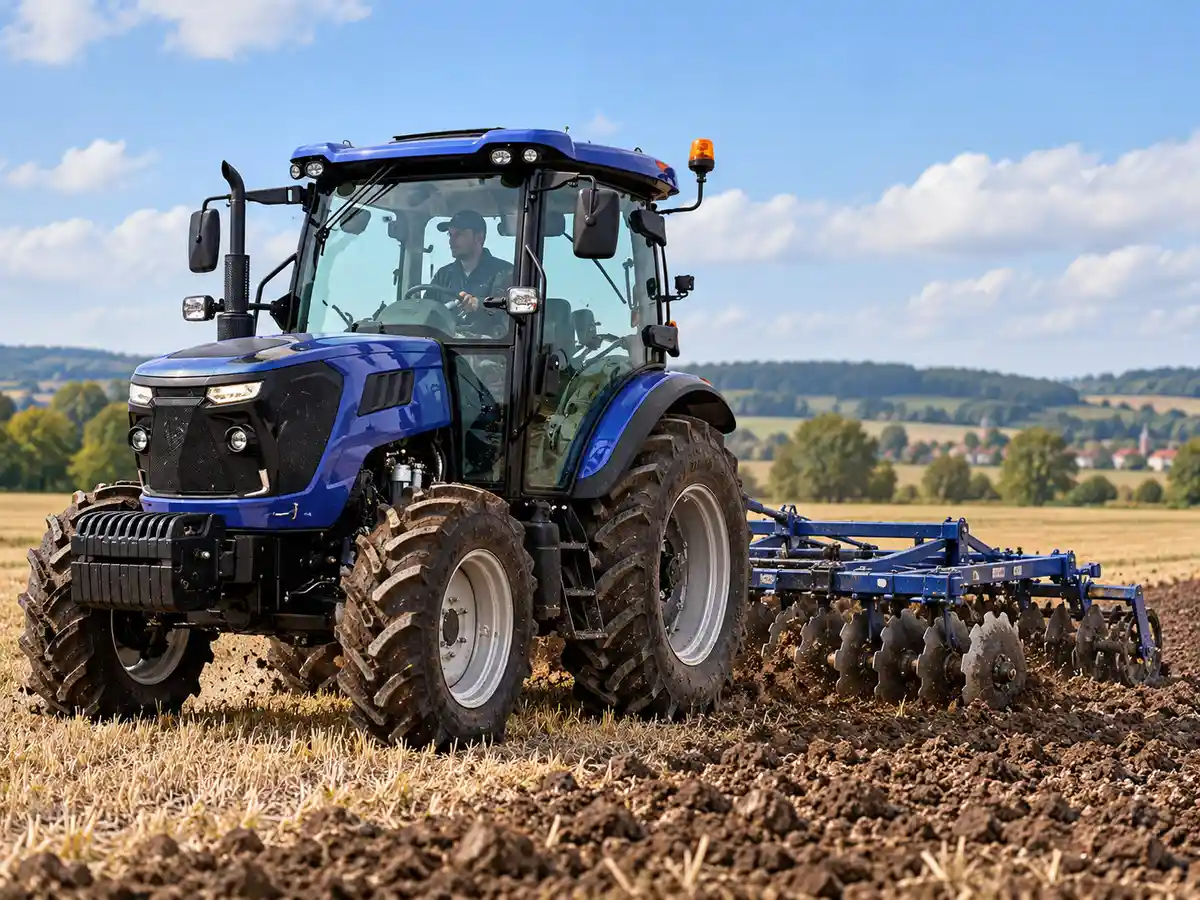
Figure 1. A blue 4WD tractor pulling a disc harrow through cultivated farmland (illustrative scene).
I. The Real Problem: Power on Paper Is Not Field Productivity
Where a technically “compatible” pair can still fail
Imagine a 50 HP tractor offered with a nominally compatible mounted disc harrow. On dry, previously cultivated loam, the tractor holds its target speed. A week later, the same combination works a damp, heavier field after harvest. Draft resistance rises, wheel slip becomes visible, and the operator shortens the working depth to keep moving. The implement is still attached correctly, but the agronomic result is no longer the one specified.
The hidden cost is cumulative: slower hectares per hour, uneven residue mixing, more wheel revolutions for the same distance, faster tyre wear, repeated passes and the possibility of missing a narrow weather window. A tillage tractor should therefore be judged on completed field work at an acceptable quality standard, not maximum implement width alone.
Start with the field and the job, not the engine badge
Different European operations face different constraints. A mixed farm may share one tractor among light tillage, mowing, trailer work and yard handling. A contractor may face variable soil across customers and require predictable daily output. A small farm with narrow gateways may value manoeuvrability more than a few additional horsepower. The right answer changes with the duty cycle.
Before requesting quotes, define the intended soil finish, target depth, residue condition, soil moisture range, slope, field shape and annual hectares. These factors determine the working load. They also prevent a supplier from substituting a generic “HP per metre” claim for an actual implement-matching assessment.
II. Tractor HP for Harrow: What the Engine Rating Leaves Out
Engine HP, PTO HP and drawbar power are different numbers
Most passive disc harrows are pulled through the tractor hitch or drawbar. Their discs rotate because they contact the ground; they do not normally require a powered PTO shaft. Engine rating is useful for screening, but drawbar power is the relevant output for overcoming draft at a chosen speed. Transmission losses, rolling resistance and tyre slip mean that rated engine power is not available in full at the drawbar.
Power measure | What it describes | Decision use |
Engine HP | Rated engine output at specified conditions | Initial tractor class and operating reserve |
PTO HP | Power available at the PTO shaft | Important for powered tillers and mowers, not the primary check for a passive disc harrow |
Drawbar power | Useful pulling power at the hitch/drawbar | Directly relevant to passive-harrow draft and travel speed |
A simple drawbar-power calculation
For an initial engineering check, the mechanical relationship is:
Drawbar power (kW) = Draft force (kN) × Ground speed (km/h) ÷ 3.6
Suppose a specific disc harrow generates 6 kN of draft in a representative field, and the planned ground speed is 5.5 km/h. Required drawbar power is approximately 9.2 kW (6 × 5.5 ÷ 3.6). That is power measured at the point of pulling, not a recommendation to buy a tractor with a 9.2 kW engine. The tractor must supply that pull after drivetrain and traction losses, while retaining enough reserve for harder patches and safe handling.
The 6 kN figure is an illustrative input, not a published draft specification for all disc harrows of a given width. Real draft must come from implement-manufacturer data, suitable engineering estimates or field measurement.
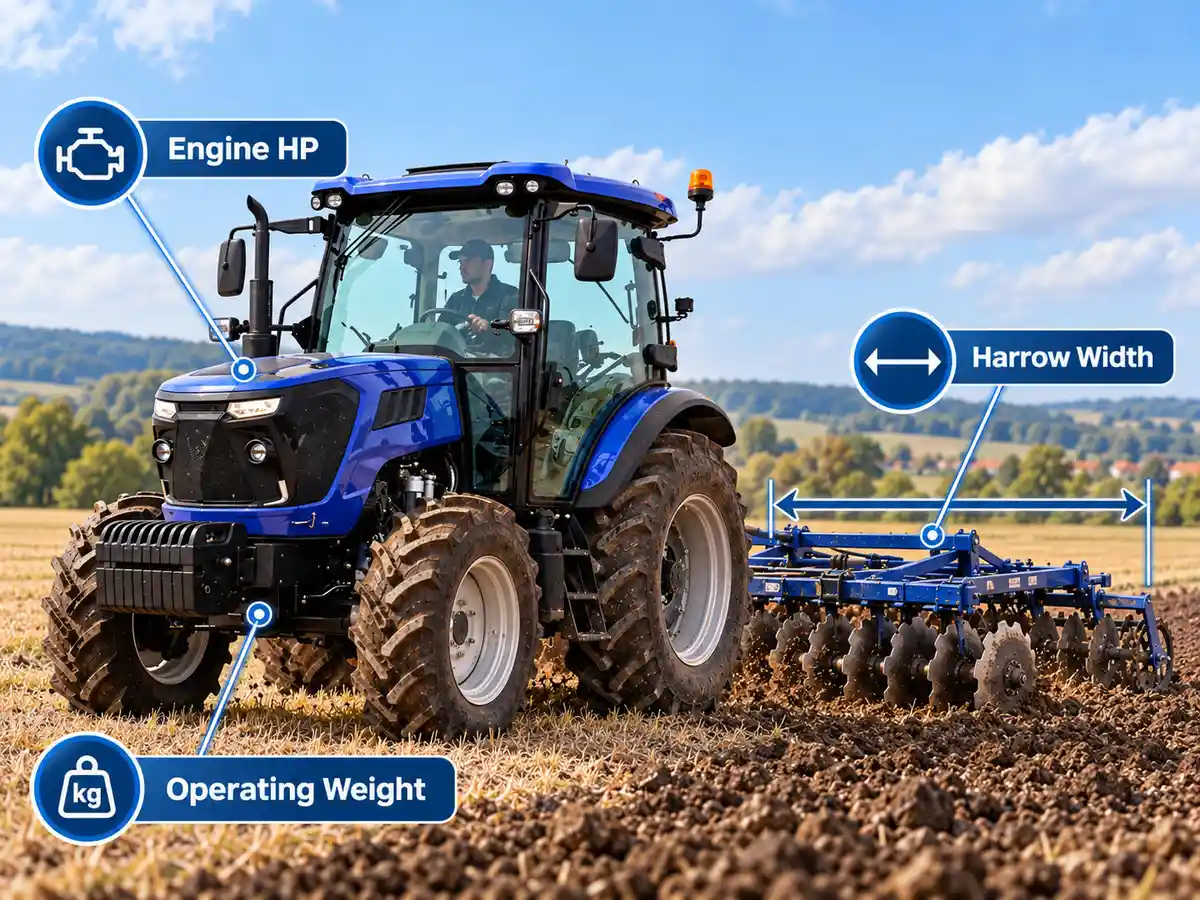
Figure 2. Engine output, tractor operating weight and harrow width need to be considered together.
Why draft changes even when the width does not
Draft is affected by the full implement-soil interaction: disc diameter and shape, spacing, disc-gang angle, implement mass, working depth, residue load, soil strength, moisture and slope. A light tandem disc working shallow stubble is not interchangeable with a heavy offset disc that cuts aggressively into firm ground. Two 1.8 m implements can require substantially different pulling effort.
Do not apply a universal tractor HP for harrow rule without identifying the harrow type. Some manufacturers specify minimum tractor power under defined soil and depth conditions. Those assumptions are part of the specification, not small print to ignore.
When the PTO question matters
If the proposed implement is a powered harrow, rotary tiller or another PTO-driven machine rather than a passive disc harrow, the selection logic changes. PTO rating, operating rpm and driveline protection become primary requirements, alongside total mass and stability. Mixing these two machinery categories produces misleading comparisons.
III. Operating Weight, Tyres and 4WD: Making Power Usable
Ballast improves traction only when correctly distributed
A machine cannot transmit unlimited pulling force through its tyres. When soil-to-tyre adhesion is inadequate, a higher throttle setting may produce more wheel slip rather than more forward motion. Correct ballast and axle-load distribution can increase usable traction, but additional mass also raises rolling resistance and can increase compaction. The aim is suitable working weight, not the heaviest possible tractor.
A mounted harrow places load behind the tractor, so static weight alone is not enough. Hitch geometry, lift position and implement centre of gravity influence front-axle loading and steering control. The farmer must verify hitch lift capacity at the stated reference point, permitted axle loads, front ballast and transport requirements. A tractor being able to lift a harrow is not proof that it is safe to carry it on public roads.
Why a 4WD farm tractor often makes sense
A 4WD farm tractor typically offers more opportunities to convert engine power into drawbar pull on loose, variable ground than an otherwise comparable two-wheel-drive machine. It can also improve mobility when headlands are soft. It does not remove the need to select tyres, pressures and implement depth correctly; a badly matched 4WD tractor can still spin excessively or compact wet soil.
Tyre-slip targets depend on drive layout, tyre construction and surface. Values around 8–12% are often used as a diagnostic starting point for mechanical-front-wheel-drive field work, rather than as a universal pass/fail requirement. Operators should follow machine and tyre-maker guidance and assess measured slip alongside soil disturbance and fuel use.
A sensible order for solving poor pulling performance
- Check whether soil conditions are suitable for tillage; avoid continuing simply because the calendar is tight.
- Return the harrow to the specified working depth and disc angle; do not use excessive penetration to compensate for poor field finish.
- Confirm tyre condition, inflation pressure under actual axle load and approved 4WD settings.
- Inspect front/rear ballast distribution and hitch geometry against manufacturer limits.
- If the combination still cannot hold the required speed and finish, reduce implement load or select a more suitable tractor platform.
This sequence is generally safer and cheaper than immediately purchasing weights or fitting a wider engine-power class to a poorly specified harrow.
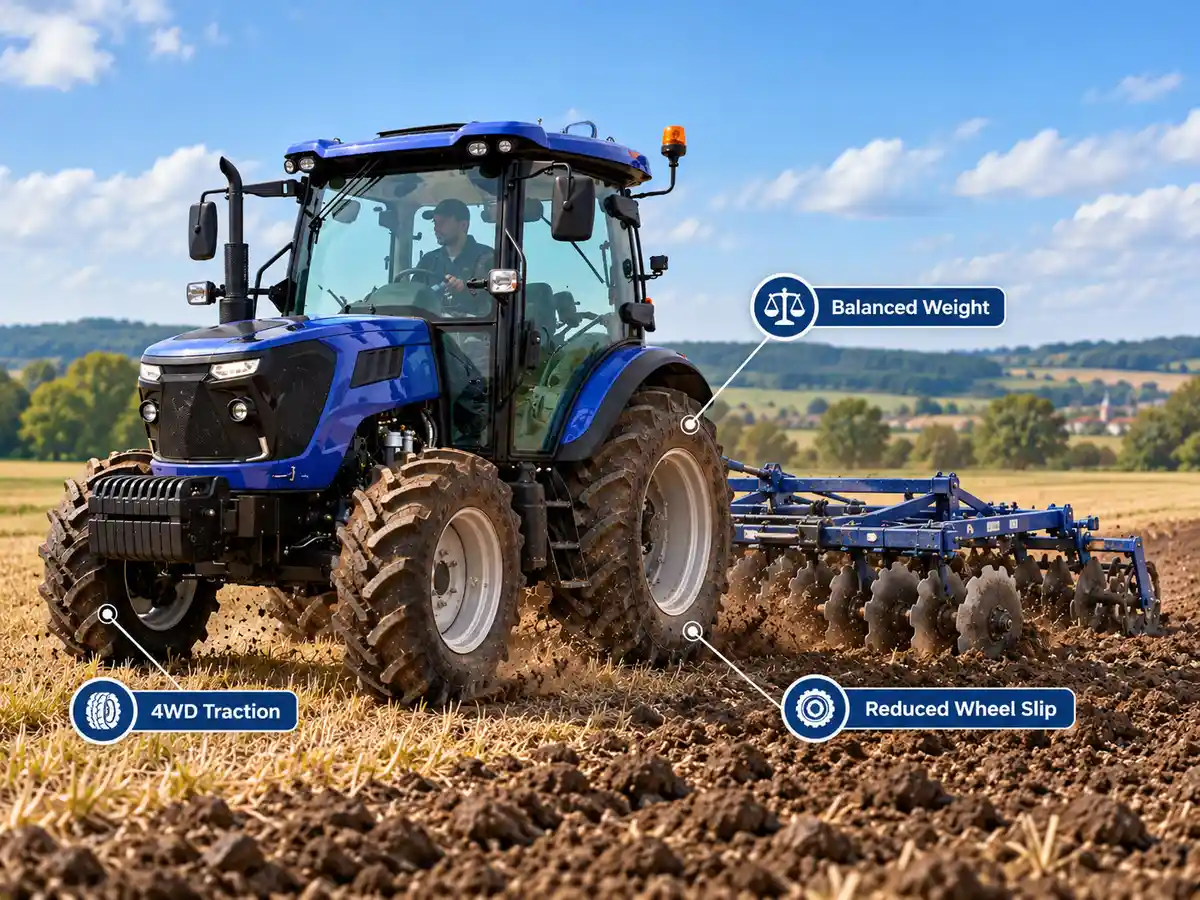
Figure 3. Tyre grip, weight distribution and 4WD determine how much engine power reaches the ground.
IV. Harrow Width: When a Narrower Implement Covers More Land
Use effective field capacity, not catalogue width
Theoretical coverage improves with width. Actual hectares completed per hour also depend on travel speed and field efficiency: losses from turns, overlap, adjustments and interruptions. A wide disc harrow that forces a tractor to crawl may lose to a narrower implement that works smoothly.
Effective field capacity (ha/h) = Working width (m) × Speed (km/h) × Field efficiency ÷ 10
For a comparable cultivation finish, compare two hypothetical choices. The figures below are an illustrative scenario, not OXPLO field-test results or a promised productivity improvement.
Metric | Setup A: Wider harrow | Setup B: Matched harrow |
Working width | 2.2 m | 1.8 m |
Sustainable ground speed | 3.5 km/h | 5.5 km/h |
Field efficiency | 65% | 75% |
Effective field capacity | 0.50 ha/h | 0.74 ha/h |
Time to cover 30 ha | About 60 h | About 40 h |
Setup B covers roughly 48% more land per operating hour in this constructed example despite having the narrower harrow. It saves approximately 19.5 hours on the 30 ha task. The conclusion is not that 1.8 m is always the correct width; it is that width must be evaluated together with sustainable speed and real field efficiency.
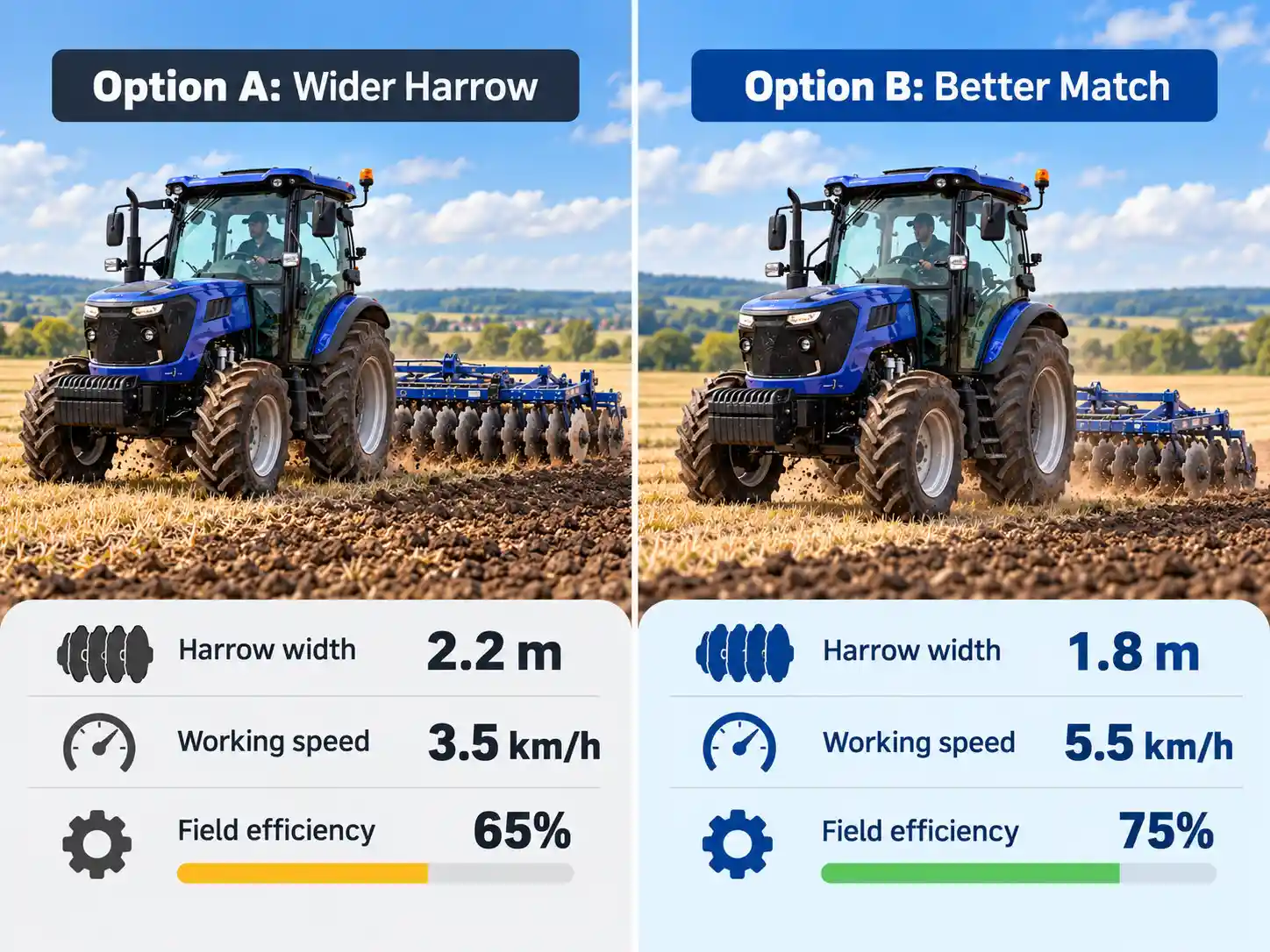
Figure 4. Illustrative comparison: a narrower harrow may cover more hectares when speed and field efficiency improve.
How to shortlist the width of a disc harrow tractor package
Start with the implement maker’s draft or tractor-power range for the exact disc-harrow design. Then check whether the planned working depth can be maintained at the target speed under representative soil conditions. If a supplier offers only a rough HP-to-width chart, use it for early screening, not as a guarantee of compatibility.
In particular, avoid assuming that a 2 m heavy-duty offset disc requires the same tractor as a 2 m light mounted tandem disc. Confirm disc type, total implement mass, hitch category, gang angle and soil workload before treating the widths as equivalent.
V. The Buying Mistakes That Increase Lifetime Cost
Mistake 1: Buying the widest implement that the tractor can move
The machine may move the harrow around a yard but fail to maintain ground speed and cultivation depth in a field. This usually leads to more passes or a compromised seedbed. Ask for achievable depth and speed under stated ground conditions, not just whether the implement can be pulled.
Mistake 2: Confusing hitch category with lifting capability
Category I and Category II describe linkage geometry, not a universal lifting-performance guarantee. A mounted disc harrow must be checked against hitch category, actual lifting capacity, implement weight, rear overhang, front-axle load and available turning clearance. Trailed units require their own drawbar, hydraulic and braking checks.
Mistake 3: Solving wet soil with more tractor weight
Excessive ballast may improve traction in suitable conditions, but on saturated soil it can worsen rutting and compaction. If a field is outside the appropriate tillage window, postponing work or adjusting the operation may be better than forcing the pass through.
Mistake 4: Comparing prices instead of completed hectares
A procurement team should compare the cost of meeting the same agronomic specification. A useful model is: annual ownership cost + fuel + labour + maintenance + wear parts + downtime, less residual value, divided by the hectares of satisfactory work delivered over the machine’s useful life.
Return to the scenario above. If 19.5 avoided operating hours have a defensible fully burdened value of €40 per hour, the illustrative saving is about €780 on that 30 ha job. It is an arithmetic scenario, not evidence that a particular tractor model achieves this saving. Actual TCO should use farm-specific times, fuel consumption, purchase and servicing data, and comparable work quality.
VI. A Repeatable Field-Test and Procurement Workflow
Step 1: Define a measurable job specification
Record soil type and condition, crop residue, required finish, working depth, field slope, planned hectares, timing and the other tasks the same tractor must perform. A European mixed-farm buyer should also list lane, gateway and shed clearances, because the most productive machine is useless if it cannot reach the work area.
Step 2: Obtain complete harrow information
Request the implement’s exact model, effective working width, disc size and count, machine mass, hitch category or drawbar configuration, draft/power recommendations, hydraulic needs and safety/transport requirements. When draft figures are estimated rather than measured, label that uncertainty in the comparison.
Step 3: Validate the tractor working system
Compare rated engine output, available ground-speed ratios, driven-axle arrangement, approved tyres and ballast, wheelbase, working mass, hitch lift limits and axle loads. For passive disc work, drawbar capability and traction matter more than an unrelated PTO specification.
Step 4: Conduct a representative trial
When a practical field trial can be arranged, test the intended depth and a realistic travel speed on representative ground. Record time, worked area, fuel used, observed or measured slip, engine load, soil finish and the number of headland turns. Repeat where conditions differ materially. A trial that meets speed but fails the agronomic finish is not a successful match.
Step 5: Compare cost per acceptable hectare
Estimate annual operating hours and the timing risk of delays. Include financing and transport, service intervals, local parts availability and any necessary changes to existing implements. The preferred setup is the one that reliably meets field-quality and timing requirements at an acceptable whole-life cost.
Step 6: Require an application-specific written quotation
Ask the supplier to state the actual tractor variant, tyre specification, hitch type, available ballast, relevant market documents, agreed attachments and the exact implement model being assessed. A “50 HP tractor with 2 m harrow” line on a quotation is not enough technical information to confirm fit.
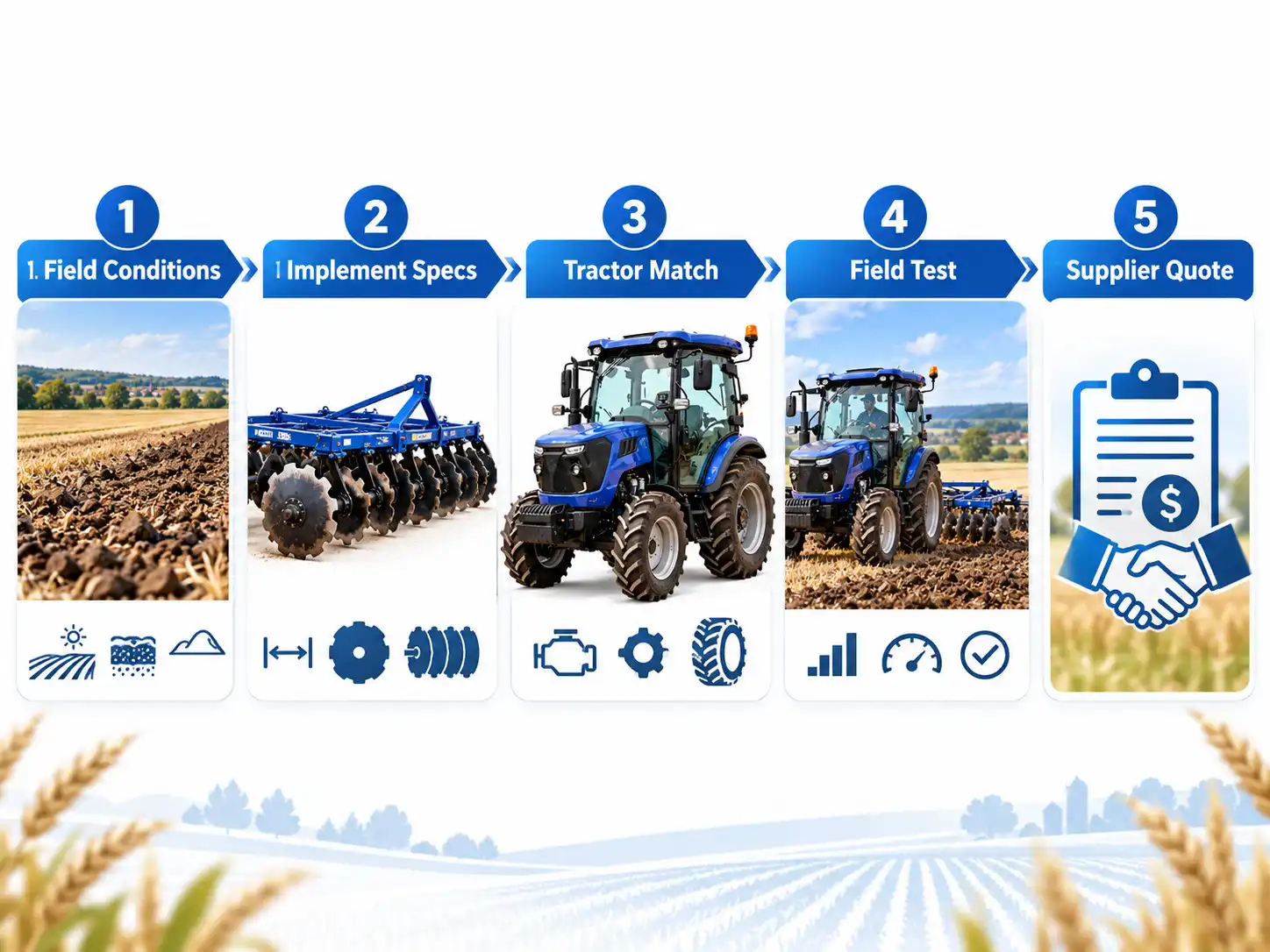
Figure 5. A five-stage decision path: field conditions, implement specifications, tractor matching, trial and quotation.
VII. Where OXPLO Tractors Fit into the Selection Process
Compare platforms, not just OXPLO model numbers
After the cultivation requirement is defined, the next question is which tractor platform can support it without wasting capacity. The OXPLO tractor range includes 25–70 HP four-wheel-drive models. For a prospective disc harrow tractor buyer, the important division within that range is the transition from the compact Category I group to the larger Category II utility group.
The published OXPLO OXT404 and OXPLO OXT504 have Category I rear linkage and 8F+8R transmissions. The OXPLO OXT604 and OXPLO OXT704 move to Category II linkage and 12F+12R transmissions. The change affects implement geometry, tractor mass and available working ratios, not only rated horsepower.
Model | Published output | Linkage / drive | Selection discussion |
OXPLO OXT404 | 40 HP | Category I / 4WD | Compact, light-tillage duties with compatible Category I implements |
OXPLO OXT504 | 50 HP | Category I / 4WD | More power on the compact chassis; implement mass and grip remain limiting factors |
OXPLO OXT604 | 60 HP | Category II / 4WD | Larger utility platform for appropriately matched, more demanding implements |
OXPLO OXT704 | 70 HP | Category II / 4WD | More power reserve on the Category II platform and more varied seasonal work |
OXPLO lists approximately 2,200 kg total weight for the OXT504 and approximately 2,500 kg for the OXT604 and OXT704 in current product information. These are published machine weights, not evidence of equal field traction across different tyres, ballast states or soils. OXPLO customers should request a confirmed specification for the intended order and avoid interpreting this table as a guaranteed disc-harrow width chart.
Use attachment type to narrow down the tractor
The OXPLO parts and attachments page displays light-duty, medium-duty and heavier disc-harrow variants, including mounted and trailed styles. These options cannot be grouped into a single HP-per-metre rule. When requesting a package, the buyer should send OXPLO the exact harrow model or a specification sheet, including weight, working width, depth and coupling type.
A small plot needing shallow residue incorporation may favour a correctly matched light harrow and an OXPLO compact tractor. A farm planning regular work with heavier Category II implements may have good reason to review the OXPLO OXT604 specifications or OXPLO OXT704 70 HP tractor. OXPLO should confirm the configuration against the actual implement; neither case authorises a blanket suitability claim for every harrow sold under that label.
A better OXPLO purchase enquiry
For a meaningful response from OXPLO, include: destination country; farm type; soil texture and slope; intended cultivated hectares per season; disc-harrow make/model and weight; desired depth and travel speed; current attachments; and constraints such as narrow gates or transport roads. The OXPLO tractor customisation guide helps structure the discussion, while the OXPLO tractor-efficiency article explains why usable traction and field productivity belong in the same decision.
European customers should separately confirm the supplied engine-emissions configuration, applicable machine and road-use requirements, operator-protection and safety equipment, and destination-country conformity documents. A listing or certificate shown for one configuration should not be treated as proof of conformity for every model and destination.
If the business uses tractors for several jobs, the OXPLO horsepower selection guide can help establish whether buying a larger multi-purpose platform makes sense before finalising the tillage pairing. OXPLO can then quote the specified tractor and relevant attachments instead of relying on a generic horsepower label.
VIII. Frequently Asked Questions
What size tractor do I need for a disc harrow?
There is no safe universal answer based on working width alone. Check the specific disc design, weight, intended depth, soil and recommended power/draft. For small farms, compact tractors may operate suitably light implements; heavier discs can exceed their practical draft or hitch limits even at similar widths.
Can a 50 HP tractor pull a 2-metre disc harrow?
Possibly, if it is a suitably light disc at a workable depth and speed in the intended soil. It is not a universal rating. A 2 m heavy-duty offset disc may impose a substantially greater load. Match the exact implement maker’s specification to the tractor’s traction and hitch limits.
Is 4WD necessary for disc harrowing?
Not for every light operation, but a 4WD farm tractor may provide more dependable traction where draft is high or soil conditions vary. Good tyres, inflation and ballast, plus sensible timing, remain essential.
Does a disc harrow require a PTO?
A conventional passive disc harrow generally does not. It is pulled through the soil. A PTO-driven powered harrow is a different equipment category and requires separate PTO-power and driveline checks.
Is a heavier tractor always better for tillage?
No. Sufficient correctly distributed weight helps transmit pull, but excess weight increases the risk of compaction and some operating costs. Verify axle loads, field conditions and wheel-slip behaviour rather than buying weight for its own sake.
How should I ask OXPLO for a matched tractor-and-harrow recommendation?
Send OXPLO the disc-harrow specification, soil conditions, working depth, annual area, destination country and other tractor duties. Then use the OXPLO contact page to request a written configuration with verified hitch, tyre, ballast and documentation details.
IX. Conclusion: Select a Tractor and Harrow as One Working System
A successful tractor for disc harrow decision balances three linked constraints: enough usable drawbar power, sufficient but not excessive working weight, and a harrow width that allows a stable ground speed at the required depth. The preferred combination is not the one with the largest numbers on paper. It is the one that finishes acceptable work within the available window at a defensible cost per hectare.
The OXPLO website provides a starting point for exploring farm tractors, while the OXPLO tractor models and OXPLO attachment support pages help buyers compare platforms and implement types. Share the real field conditions and harrow details with OXPLO before confirming a purchase. A properly specified quote today is considerably cheaper than discovering a traction or linkage mismatch during the next planting season.