
A tractor can have enough horsepower for farm work and still be the wrong choice for a front loader. It may fit an open field but not an older livestock building. It may lift a demonstration load yet lack a verified rating at the pallet’s actual load centre. Or it may arrive with a rear hitch that does not match the farm’s existing equipment.
For European livestock farms, agricultural contractors and machinery dealers, the extra 10 HP is not the central decision. The important question is whether the job requires a different tractor platform—and whether the complete tractor, loader and implement package will work safely and economically on that site.
This practical OXT504 vs OXT604 guide explains the critical checks, the trade-offs behind the specifications, and the evidence to request before ordering.
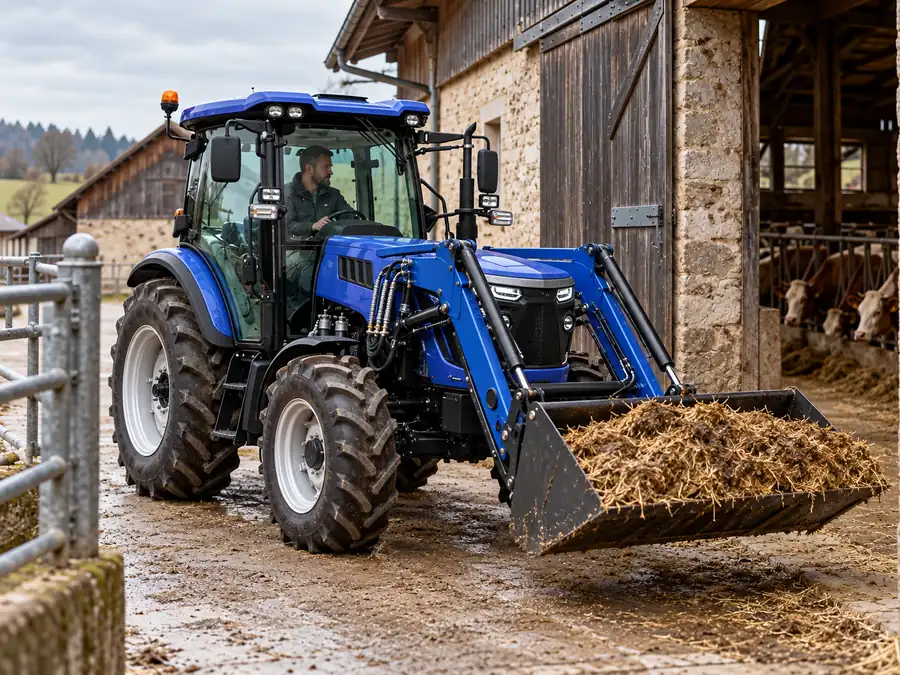
Figure 1. Illustrative livestock-yard loading scene. Loader design and lifting capacity must be verified for the ordered tractor.
I. The Purchasing Problem: Why More Horsepower Can Solve the Wrong Problem
Three costly mismatches on European farms
A narrow farmyard. A livestock business uses its tractor to bring feed from a shed to a barn. A larger machine looks attractive until the driver finds that the doorway and turning area are too tight with the loader fitted. The farm now needs a second handling step—or a different machine.
A misleading lift figure. A contractor wants to place fertiliser pallets onto a raised platform. The quotation quotes a high loader lift capacity but does not specify the measurement point, load centre, attachment or working height. The quoted figure cannot establish whether the intended pallet job is approved.
An implement that no longer fits. An established farm upgrades to a larger tractor but discovers that its mower, spreader or cultivator requires a different hitch arrangement. Equipment replacement and workshop time erode the perceived value of the upgrade.
These are not unusual technical curiosities. They are procurement failures caused by comparing tractor specifications without mapping the complete work process.
Start with a job specification, not a preferred model
Before choosing a 50 HP vs 60 HP tractor for loader work, record the heaviest normal payload, attachment type, required lifting height, daily cycle frequency, narrowest access point, operating surface and existing rear implements. Use actual weights and dimensions where possible. A statement such as “mostly feed and some bales” is not precise enough to assess an approved loader package.
Treat conditions such as doorway clearance, required loader rating and destination-market documentation as pass/fail requirements. Gear ratios, comfort features and purchase price matter only after those requirements have been met.
II. Chassis Size: Access, Weight Distribution and Loader Stability
The 200 mm width question
A tractor’s catalogue width affects a farm only when compared with the actual route it must travel. Older cattle sheds, horse properties, stone gateways and compact loading yards can make this the decisive factor.
Suppose an existing doorway is 1,800 mm wide. A tractor listed at 1,560 mm leaves a nominal 240 mm of total side clearance; one listed at 1,760 mm leaves only 40 mm. The second figure means just 20 mm per side if perfectly centred—before allowing for tyre settings, loader components, attachments, mirrors, uneven approaches or safe operating clearance. A nominally narrower machine is not automatically approved to pass; the complete configured width and safe route still need checking.
Measure doorway width and height, the approach angle, room to turn, the clearance between posts and the projection of the intended loader attachment. A site sketch and photographs will often answer more than an extra paragraph in a brochure.
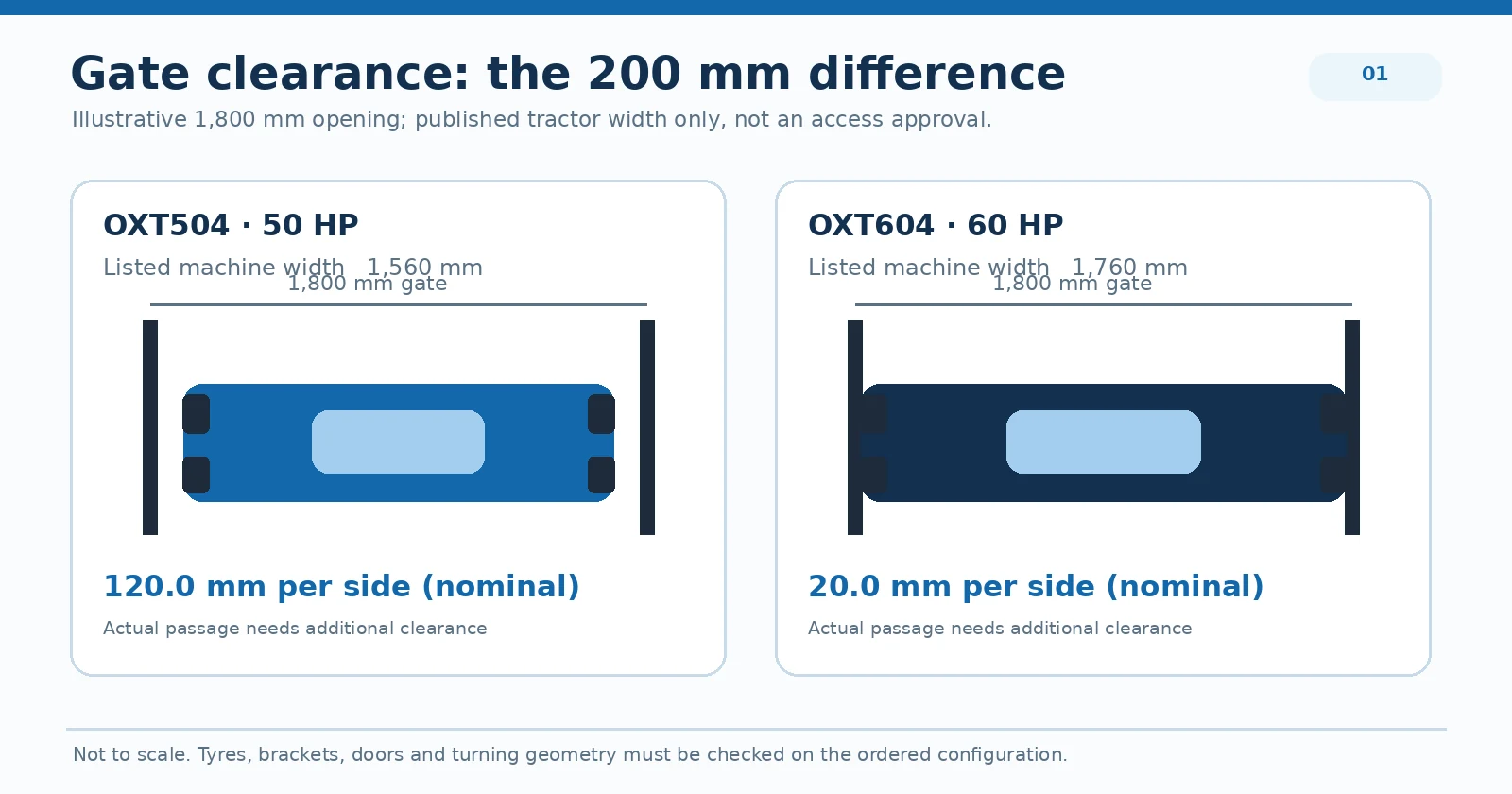
Figure 2. Published tractor widths compared with a hypothetical 1,800 mm farm entrance.
Why a longer wheelbase is not a lift-capacity certificate
During loader work, front-mounted mass changes axle loading and shifts the combined centre of gravity. Wheelbase, tyre specification, total machine mass, rear counterweight and load position all influence how the machine behaves. A heavier or longer-wheelbase tractor may provide advantages in certain configurations, but neither characteristic proves an approved lift rating.
For a simple static illustration, load moment = load force × horizontal distance. Moving a 400 kg pallet’s centre of mass another 0.5 m forward adds approximately 1.96 kN·m of gravitational moment about the same reference point. That is a mechanics illustration, not a calculated safe payload. Loader-cylinder geometry, structural limits, attachment mass, axle ratings and stability must be assessed using the manufacturer-approved combination.
A pallet-fork rating at a point forward of the loader pivot cannot be substituted with a pivot-pin rating. Likewise, maximum lift height says little about how much can be carried at that height. Buyers looking for the underlying measurement differences can consult this guide to loader lift capacity and load centres.
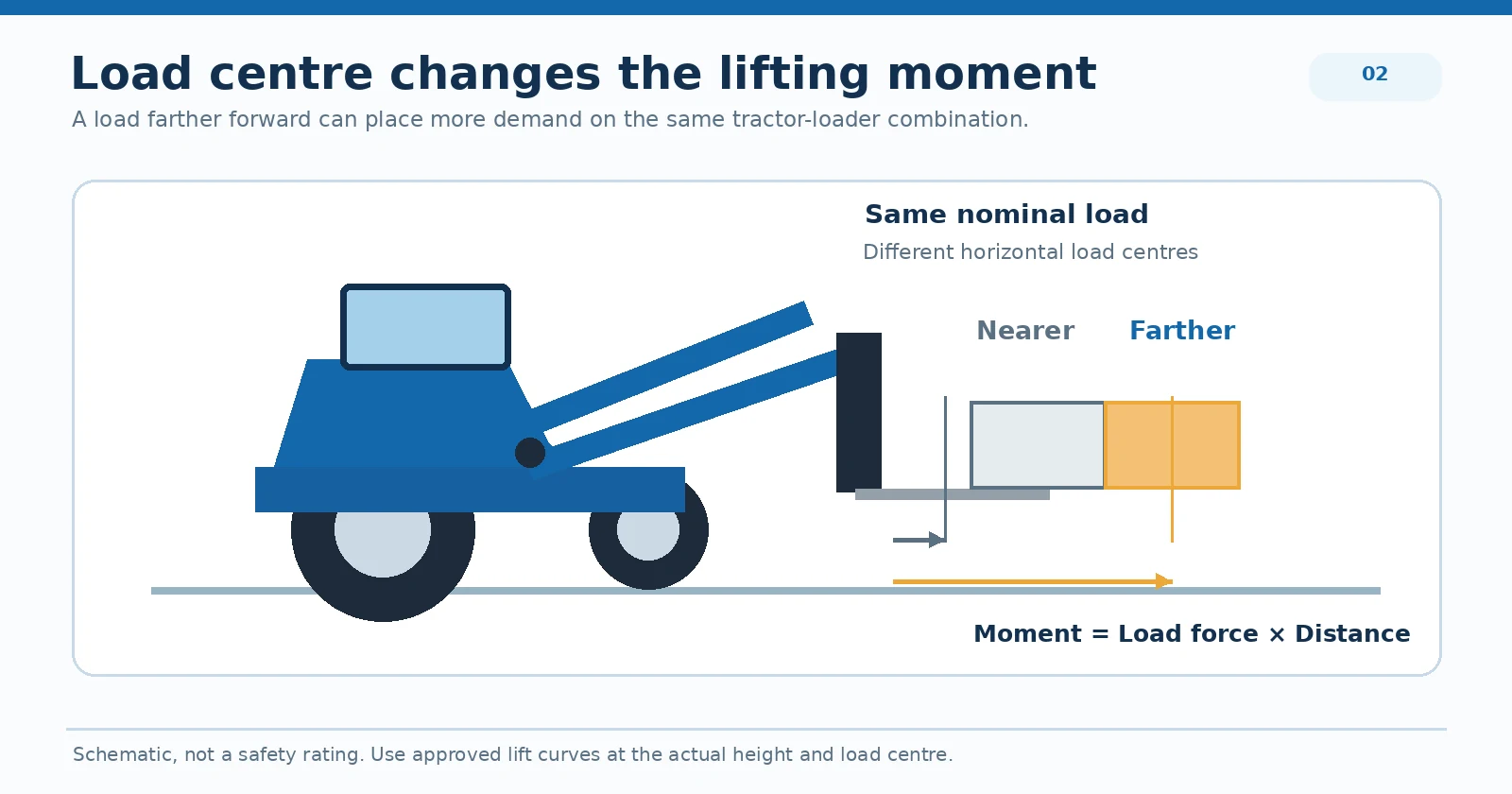
Figure 3. Why the load centre changes the moment acting on a loader.
Ballast and terrain are part of the specification
An arbitrary heavy implement on the rear linkage is not an engineered ballast plan. Ask for the approved counterweight configuration, front and rear axle limits, tyre load ratings and inflation guidance. For wet yards, rutted tracks or cross-slopes, check how the route affects traction and stability. Four-wheel drive helps traction; it does not raise the loader’s structural rating or remove the risks of travelling with elevated loads.
III. Gearbox and Hydraulic System: What Controls Real Loader Productivity?
A repeated loader cycle exposes the transmission
A typical feed-loading cycle consists of approach, bucket filling, reversing, turning, travel to the unloading point, discharge and return. The operator may repeat the sequence dozens of times. Low-speed control, ease of reversing and predictable hydraulics affect the cycle more directly than headline horsepower.
An 8F+8R transmission provides eight forward and eight reverse ratios; a 12F+12R transmission provides twelve of each. The additional choices may help match travel speed to the work, but the ratio count does not reveal whether the tractor has a mechanical, synchronised or power shuttle. Nor does it prove faster forward–reverse changes or lower clutch wear. Those details need the exact supplied gearbox specification and an operating demonstration.
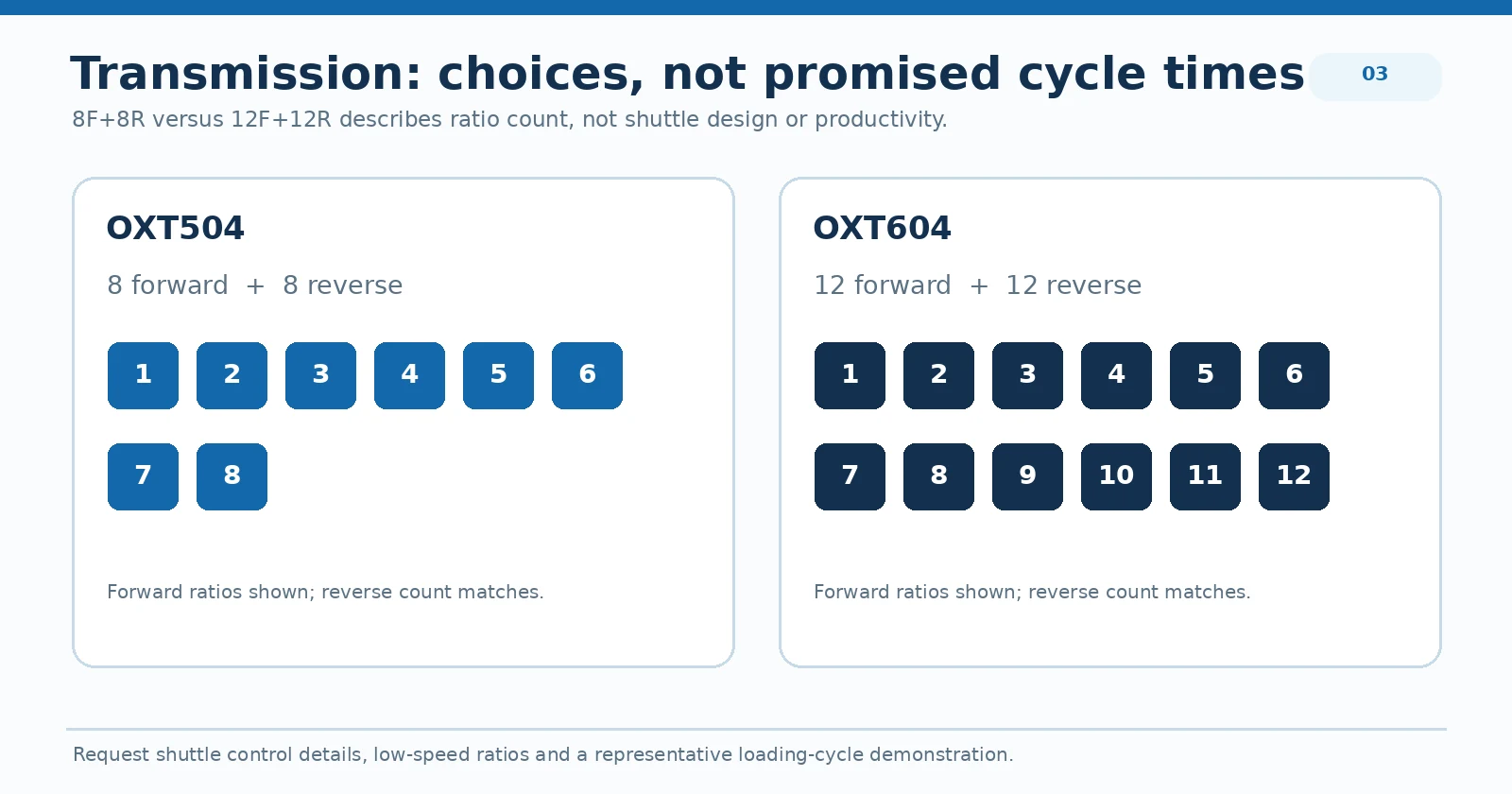
Figure 4. Gear count comparison: more ratios do not establish a faster loader cycle.
Pressure creates force; flow influences speed
Hydraulic pressure contributes to cylinder force; hydraulic flow contributes to cylinder movement speed. A 60 HP engine rating alone does not tell the buyer the loader’s oil flow, cylinder speed or rated capacity. The approved loader model, hydraulic pressure and flow requirements, auxiliary valves, hydraulic connections and temperature limits need to be matched to the tractor.
A bale grab may need an additional hydraulic function, while a basic bucket may not. An attachment that bolts onto a quick-coupler is still unsuitable if the circuit, attachment rating or locking arrangement is wrong. The broader tractor-with-front-loader buyer’s guide explains those general checks; the selection here turns on how they affect two specific tractor platforms.
Use a controlled comparison test
If a dealer can arrange a representative demonstration, use comparable loads and conditions. Record cycle time, gear changes, visibility, manoeuvring room, hydraulic response and operator effort. Do not test beyond the manufacturer’s approved operating limits.
Test item | What the buyer should record |
Low-speed approach | Can the operator engage material smoothly without repeated correction? |
Direction changes | How are forward and reverse selected, and how much operator effort is required? |
Loading and dumping | Is the hydraulic movement appropriate at normal working engine speed? |
Turning and access | Does the complete machine clear the work route and unloading position? |
Repeatability | Are cycle times consistent across several controlled operations? |
A bigger tractor that takes longer to turn or cannot enter the intended yard may deliver lower overall throughput, even when it has greater engine output.
IV. Implement Fit: The Upgrade Cost Missing From Many Quotations
Category I and Category II are different working ecosystems
Rear three-point linkage compatibility matters to farms that use one tractor for loading in the morning and mowing, cultivating or spreading later in the week. Category I and Category II linkages use different interface dimensions. An approved adapter may solve some connection differences, but it cannot automatically solve unsuitable implement weight, PTO power demand, operating geometry or structural limits.
Before changing tractors, inventory the implements that must remain in service. For each, record hitch category, attachment mass, PTO input speed, power demand and any auxiliary hydraulic requirements. Check drawbar and trailer braking requirements separately where relevant.
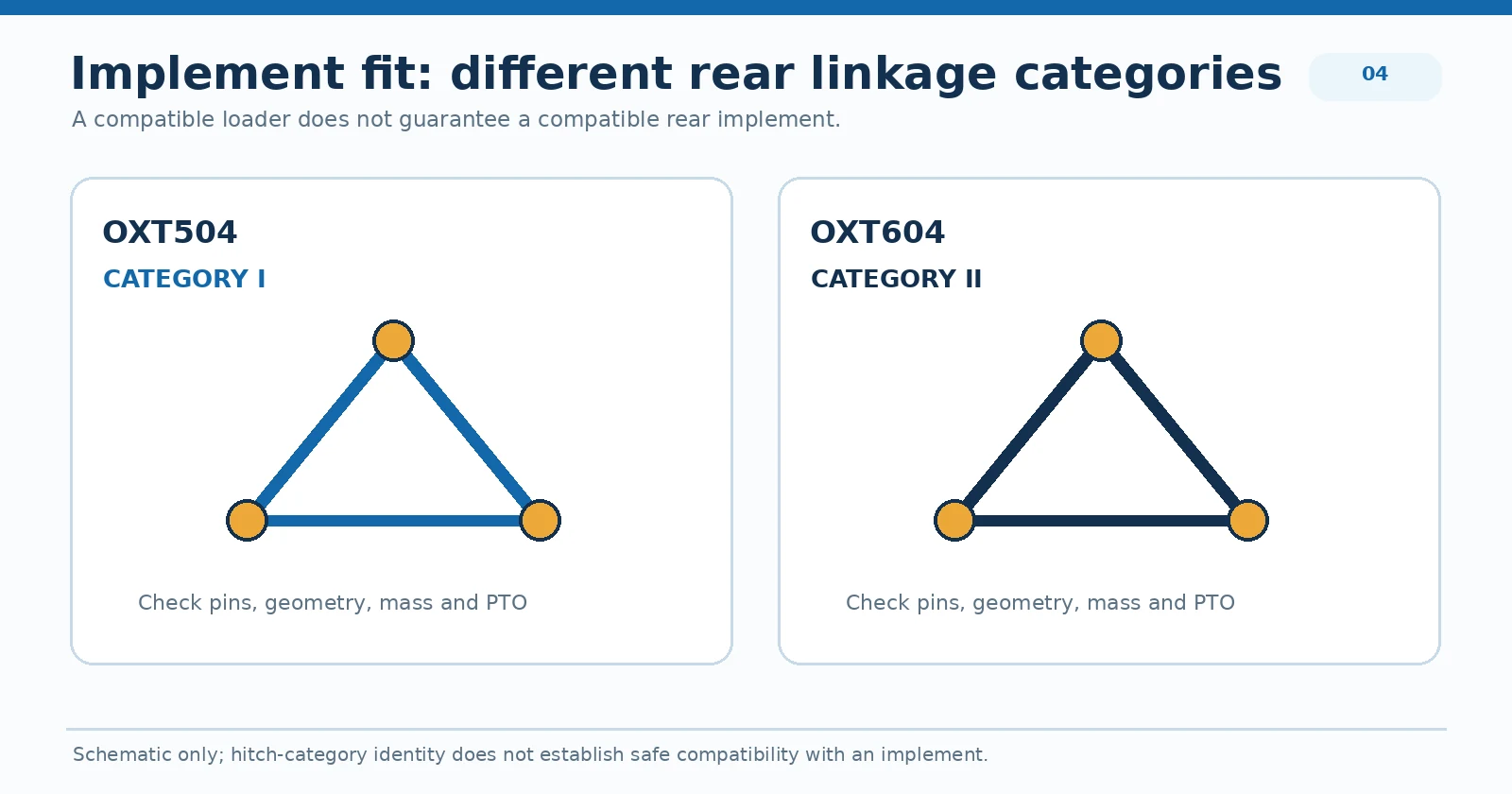
Figure 5. Rear-linkage categories must be checked alongside implement requirements.
A PTO speed mismatch cannot be ignored
A 540 rpm implement should be matched to a verified 540 rpm PTO arrangement. A 720 or 760 rpm setting should not be treated as a substitute. The six-spline shaft description does not by itself establish compatibility with every implement, and engine horsepower is not the same as verified PTO horsepower.
The total cost of a platform change can include approved adapters, revised driveline components, replacement implements, extra freight, commissioning time and production delays. That is why a quotation for the bare tractor is not a reliable total-cost comparison.
V. Convert the Technical Differences Into a Business Decision
Assess the cost of actual loader cycles
For repetitive work, hourly material throughput = approved average payload per completed cycle × completed cycles per hour. A large bucket does not necessarily raise throughput: heavy material may force the operator to underfill it, or the machine may need longer cycles and wider turning space.
Consider an illustrative, not model-specific, trial: one approved configuration saves 20 seconds per cycle, the farm completes 45 cycles per working day, and the work occurs on 180 days per year. The annual time difference is 45 hours. At an assumed fully loaded labour cost of €28/hour, that represents €1,260 of labour-time value annually. Actual savings require measured data; the figure is not an OXT504/OXT604 performance claim.
Compare costs over the ownership period
Use a total-cost-of-ownership comparison that includes purchase and configuration price, loader and attachments, approved ballast, transport and commissioning, fuel, tyres, service, operator time, downtime, implement changes and expected residual value. Ask about consumables and spare-parts lead times rather than relying solely on the initial warranty headline.
For a dealer, include the cost of resolving a misfit after delivery: idle inventory, engineering exchanges, repeated customer visits and possible registration problems. A more expensive tractor may be justified for the right duty cycle; it is not justified by horsepower alone.
Treat market documentation as a go/no-go gate
For an EU-bound tractor, verify the exact engine and vehicle configuration against the requirements of the destination and intended use. EU agricultural-vehicle type approval under Regulation (EU) No 167/2013 is distinct from engine emissions conformity. A generic CE-related document should not be treated as proof that a particular tractor has the necessary EU vehicle approval or can be road registered. The UK requires a separate check.
The OXPLO guide to tractor COC and EU road-registration questions provides a fuller document-checking process. For the purchase comparison, the essential rule is simple: do not approve a road-registered delivery or promise it to a customer until the supplied version and applicable evidence have been confirmed.
VI. OXPLO OXT504 vs OXT604: Two Platforms, Not Just Two Power Ratings
At this point the operating requirements are clear enough to compare the actual machines. OXPLO publishes two distinct tractor platforms: the compact OXT504 50 HP 4WD tractor and the larger OXT604 60 HP 4WD utility tractor. Their published data make the structural differences more useful than a simple 50-versus-60 HP comparison. Review the official OXPLO OXT504 product specifications and OXPLO OXT604 product specifications alongside the comparison below.
Published OXT504 tractor specifications and OXT604 tractor specifications
Specification | OXPLO OXT504 | OXPLO OXT604 |
Rated engine power | 50 HP / 37 kW | 60 HP / 44.1 kW |
Drive | 4WD | 4WD |
Transmission | 8F+8R | 12F+12R |
Overall size (L × W × H) | 3,180 × 1,560 × 2,600 mm | 3,980 × 1,760 × 2,800 mm |
Wheelbase | 1,800 mm | 2,010 mm |
Listed total weight | 2,200 kg | 2,500 kg |
Front / rear tyres | 6.5-16 / 11.2-24 | 8.3-20 / 12.4-28 |
Rear three-point linkage | Category I | Category II |
Published PTO speeds | 540/720 rpm* | 540/760 rpm |
Source note: Figures are taken from the currently published OXPLO product pages. Tyres, dimensions, engine, operator station and attachments may vary by ordered configuration. OXPLO notes a conflict elsewhere on its website regarding OXT504 PTO speeds, so the exact shipped configuration must be confirmed in writing. Neither product page publishes a model-specific approved loader capacity, hydraulic-flow figure or loader lift chart sufficient to certify a particular payload.
When the OXPLO OXT504 makes more sense
The OXPLO OXT504 is the highest-powered model in OXPLO’s compact OXT chassis group. Its published 1,560 mm width, 1,800 mm wheelbase, 8F+8R gearbox and Category I linkage are the relevant purchasing features—not a claim that it lifts a particular mass.
For an older livestock holding, an equestrian centre or a mixed farm with narrow access and compatible Category I implements, the OXT504 can be the better first model to assess. It keeps a smaller footprint while offering 50 HP for appropriately matched field and PTO jobs. When loader use is intermittent or moderate, an oversized chassis may add cost and access constraints without solving a genuine bottleneck.
Do not choose the OXPLO OXT504 where the required loader combination cannot be approved for the maximum load and working height, or where larger rear implements require a different tractor platform. The compact access advantage does not override lifting or implement limits.
When the OXPLO OXT604 justifies the larger platform
The OXPLO OXT604 adds 10 HP, but the more meaningful changes are a 210 mm longer wheelbase, 200 mm greater listed width, 300 kg greater listed weight, a 12F+12R gearbox, larger tyres and Category II linkage. These are differences in the machine’s entire working system.
For a mixed farm or contractor with adequate yard space, appropriate Category II equipment and recurring transport, field and loader work, the OXT604 is a stronger utility-platform candidate. More ratios can offer finer speed choice, while its larger hitch category better fits an appropriately specified range of rear implements. It remains essential to verify the gearbox control arrangement and the actual loader hydraulics.
Do not upgrade to the OXPLO OXT604 solely to obtain a presumed higher loader lifting capacity. The larger chassis does not replace an approved lift chart, axle-load assessment or rear-ballast instructions. Also reject the configuration if the 1,760 mm listed width leaves inadequate clearance on the customer’s farm.
VII. Real European Use Cases: Which Trade-Off Solves the Customer’s Problem?
Practical model-selection matrix
Customer’s binding requirement | Initial OXPLO candidate | Condition before quotation |
Narrow farm buildings; existing Category I implements | OXT504 | Confirm complete configured dimensions and approved loader package |
Frequent mixed-farm work; Category II rear equipment | OXT604 | Confirm access, gearbox controls, loader and implement fit |
Dense pallets or heavy wrapped bales at height | Neither selected by HP alone | Obtain approved rating at real load centre and lift height; consider dedicated handler |
EU public-road registration required | Either only after document check | Confirm specific model/version approval and destination-country requirements |
Case A: Livestock farm with a narrow feeding route
The farm’s daily problems are doorway access, regular feed movement and continued use of a Category I mower. The OXPLO OXT504 may be a better starting point than the OXT604 because its compact width has direct operational value. The purchase should still be conditional on the approved bucket or fork package, actual dimensions and ballast. Customer benefit: less risk of buying a machine that cannot enter the building or forces replacement of existing compatible implements.
Case B: Mixed farm with loader, transport and field duties
This farm handles bulk material in the yard, tows appropriate trailers and operates a range of larger rear implements. With sufficient access, the OXPLO OXT604 offers a Category II utility platform and more gearbox ratio choices. Customer benefit: the prospect of one correctly specified machine covering a broader annual workload instead of buying extra horsepower with no plan for its use. The loader’s rated working envelope still has to be proven.
Case C: Dealer sourcing tractors for multiple EU customers
A dealer may be tempted to stock only the higher-powered OXPLO OXT604. That can be a costly shortcut when some customers operate compact yards and others need Category II rear equipment. A better qualification process separates narrow-access clients from high-utilisation mixed farms, then asks for exact attachment and country requirements. Customer benefit: fewer unsuitable deliveries, fewer disputes about implement fit and a clearer pre-shipment documentation checklist.
Case D: Repeated high-reach pallet or bale work
Neither the OXT504 nor OXT604 should be recommended just because its engine rating seems adequate. The decisive checks are attachment rating, load centre, working height, route condition and cycle frequency. Where the task exceeds the approved tractor-loader envelope, a purpose-built forklift or telescopic handler may be more appropriate. OXPLO’s agricultural material-handling solutions also distinguish field and yard tractor tasks from palletised warehouse handling.
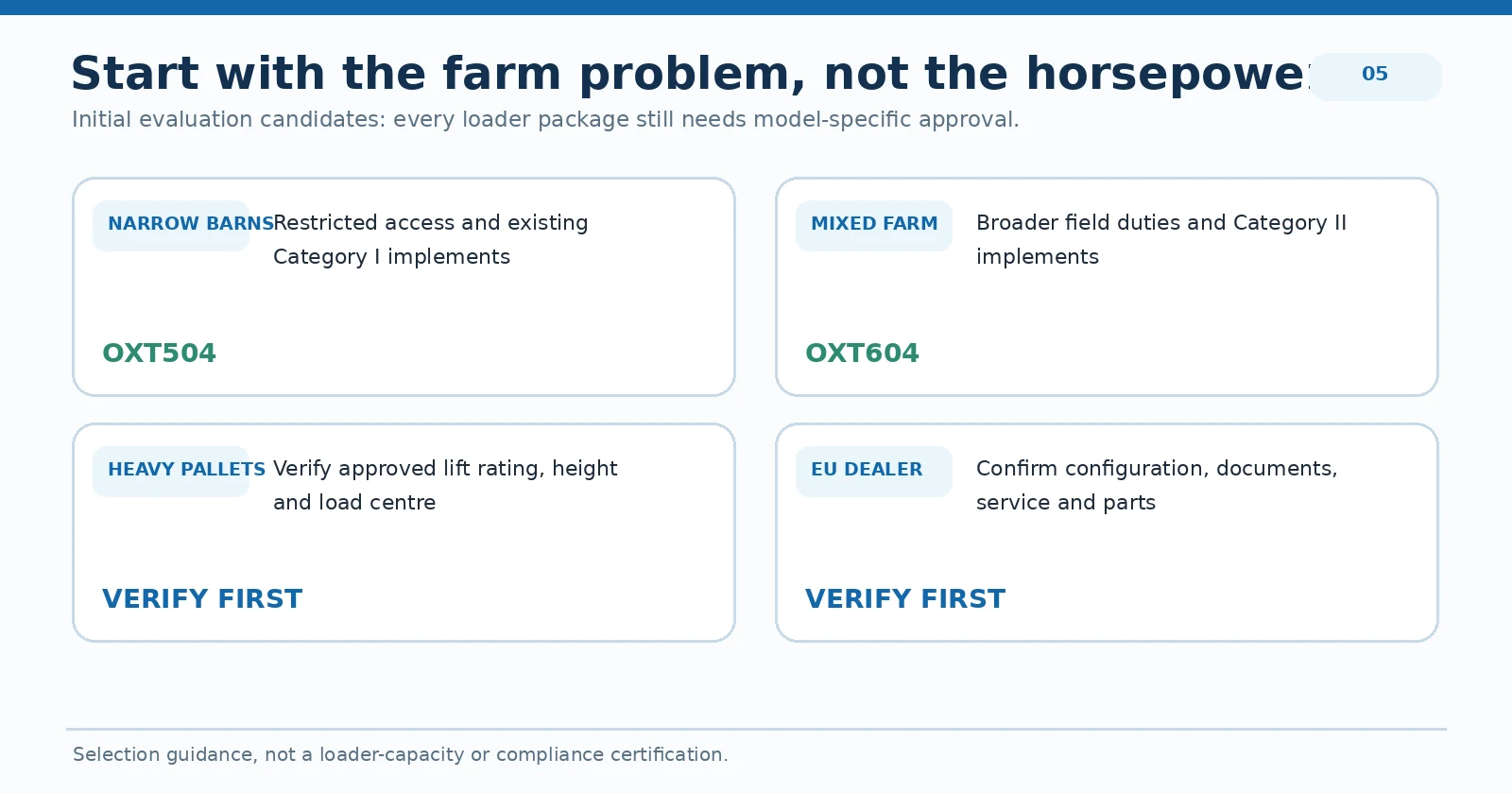
Figure 6. Candidate selection by European farm workload and constraints.
VIII. A Procurement-Ready OXPLO Configuration Workflow
Send the six facts that determine the choice
A useful OXPLO enquiry should include (1) destination country and intended road use, (2) farm type and operating terrain, (3) maximum payload with attachment and lift height, (4) narrowest passage and turning space, (5) existing hitch/PTO implement specifications, and (6) expected loader cycles and annual workload. Photographs, dimensions and implement nameplates reduce avoidable back-and-forth.

Figure 7. Information to send OXPLO for a configuration review.
Request a complete technical package
Rather than comparing bare-tractor prices, ask OXPLO to identify the exact tractor version; proposed loader and mounting system; approved rating at the relevant load centre and height; hydraulics and auxiliary circuits; tyres and ballast; compatible rear implements; and available destination-market documents. Define which statements are confirmed and which remain subject to technical verification.
OXPLO’s tractor configuration and attachment enquiry describes application matching, pre-shipment checks and parts-related support. Ask for those points to be written into the actual quotation and confirmed for the supplied version—not inferred from a generic website description.
Protect delivery and after-sales expectations
For an international order, confirm the delivery scope, technical drawings or final specification sheet, inspection evidence, parts ordering route and agreed warranty terms before shipment. The OXPLO attachments and technical-support page and OXPLO warranty policy provide starting points, but the signed quotation should set the applicable terms for the ordered machine. This helps prevent a minor specification discrepancy from becoming a post-delivery dispute.
IX. Frequently Asked Questions
Q1. Is the OXPLO OXT604 always better for loader work than the OXT504?
No. The OXPLO OXT604 has a larger Category II platform and more transmission ratios, but the OXT504 can be more practical where restricted access and Category I implement continuity matter. The approved loader capacity must be verified independently for both.
Q2. Does a 60 HP tractor lift more than a 50 HP tractor?
Not necessarily. Engine output does not establish loader lifting capacity. The loader model, hydraulic system, structure, attachment, load centre, lift height, ballast and axle/tyre limits govern the complete permitted operation.
Q3. Does the OXT604’s 12F+12R gearbox make loading faster?
Not by itself. It offers more ratio choices than the OXT504’s 8F+8R gearbox, but the direction-change mechanism, operator controls, turning area and hydraulic cycle time also affect output. Request the gearbox details and, where possible, a representative test.
Q4. Can an existing Category I mower work on the OXT604?
Compatibility must be checked for that specific mower. Linkage category, hitch geometry, weight, driveline and PTO speed all matter. Do not assume that a simple pin adapter makes a complete implement combination suitable.
Q5. What loader capacity does OXPLO publish for the OXT504 and OXT604?
The currently published tractor product data do not provide sufficient model-specific front-loader lift charts to establish a guaranteed payload. Ask OXPLO for the exact compatible loader and approved rating at your required lift height and load centre.
Q6. What should an EU machinery dealer verify before importing an OXPLO tractor?
Verify the exact engine and vehicle version, required destination-market approval and registration evidence, ordered tyres and operator station, loader and rear-implement fit, agreed shipment scope, warranty and service-parts process. Do not treat a generic CE-related claim as proof of EU vehicle type approval.
X. Conclusion: Choose the Platform That Fits the Whole Job
The OXT504 vs OXT604 decision is best understood as a platform choice, not simply a 50 HP vs 60 HP comparison.
The OXPLO OXT504 keeps a compact 1,560 mm listed width and Category I linkage while delivering 50 HP for appropriately matched farm work. It is worth considering when access limitations and existing compact implements are central to the job.
The OXPLO OXT604 moves into a larger Category II utility platform with 12F+12R transmission and a longer wheelbase. It deserves consideration when broader implement use and recurring mixed-farm work justify the additional size.
Neither choice is complete until the loader, hydraulics, attachment, ballast, access and destination-market documentation have been confirmed. A tractor that passes those checks is much less likely to create preventable equipment changes, delays or operating compromises.
Choosing between OXPLO OXT504 and OXT604? Send your farm type, maximum load, required lift height, building dimensions, existing implements and destination country to the OXPLO tractor sales and technical-enquiry team. Ask for a model-specific tractor-and-loader configuration review before placing the order.