
A practical technical buying guide for Turkish farm owners, agricultural equipment importers and machinery dealers.
A 60 or 70 HP tractor can look right on a quotation and still be wrong for the farm. The cooling pack may be difficult to clean during dusty summer work. The rear implement may demand a PTO speed the tractor does not offer. A loader may lift a test weight yet fail the required pallet job at full height. Each mismatch turns an apparently affordable purchase into lost operating time or additional equipment spending.
For buyers researching cab tractor Turkey, the correct sequence is to define the work, verify the tractor as a complete system, and only then compare horsepower and price. This guide focuses on the decisions that matter in Turkish grain fields, orchards and mixed livestock farms—and on the evidence a dealer should obtain before committing to an order.
I. The Real Buying Problem: Turkish Farms Do Not Share One Duty Cycle
One market, three different operating environments
In Central Anatolia, a grain farmer may spend long days on soil preparation, PTO-driven work and trailer transport over dry, dusty tracks. The challenge is sustained engine loading, air filtration and traction rather than air conditioning alone. Around the Aegean coast, an olive or fruit grower may need a cab tractor that clears branches, turns inside headlands and operates a mower without damaging trees. A mixed livestock farm near a regional town might use one tractor for feed handling in the morning, mowing later in the week and trailer work during harvest.
Konya is a useful example of why hot-weather testing cannot be dismissed. The Turkish State Meteorological Service reports historical extreme July temperatures above 40°C in Konya; this is an extreme observation, not the normal operating temperature or a tractor certification criterion. Buyers should define their own target summer ambient temperature and load test accordingly. See the official Konya climate record for context.
Write the work profile before the model shortlist
Record hectares, crops, soil condition, elevation, seasonal operating hours, the longest continuous work period and all existing implements. Then rank jobs by the cost of failure: a missed cultivation window may matter more than an occasional slow loader cycle. Separating daily work from seasonal peaks prevents both underspecifying a machine and paying for capacity that remains unused.
Farm profile | Main bottleneck | What the buyer must verify |
Central Anatolian grain farm | Dust, extended tillage, PTO duty | Cooling access, traction, implement power, PTO speed |
Aegean orchard | Height, row clearance, turns | Delivered cab height, width, mower position, turning space |
Livestock / mixed farm | Repeated loading and job changes | Loader chart, hydraulic performance, ballast, gearbox |
II. Cooling in Summer: Why Air Conditioning Is Not the Whole Answer
Three heat loads need to be considered together
A tractor cooling system for hot weather must manage engine heat, the heat produced by the hydraulic circuit and the additional demand associated with a cab air-conditioning system. A fitted A/C compressor says nothing by itself about engine cooling reserve. The condenser may also share the airflow path with the radiator, and dust accumulation can reduce heat rejection over a long shift.
Ask for the cooling-pack layout, the recommended service procedure, the air-filter access method, alarm/temperature monitoring provision and any manufacturer-supported continuous-load operating limits. A clean radiator during a short dealership demonstration cannot substitute for conditions in a dusty field. Do not assume that a larger engine automatically compensates for restricted airflow.

Figure 1. Hot-weather field work in Central Anatolia: check engine cooling, hydraulic-oil temperatures and cab ventilation under the intended load.
A field-oriented acceptance test
- Check coolant, intake and cooling-pack cleanliness against the manual; note baseline engine and hydraulic temperatures where instruments are available.
- Run the intended rotary tiller, mower or other implement at its specified PTO speed and realistic field load; capture ambient temperature and test duration.
- Operate the cab A/C concurrently, then examine low-speed turns and short idle periods rather than testing only in steady forward travel.
- Inspect for alarms, overheating trends, reduced hydraulic response and rapidly accumulating dust; apply manufacturer limits rather than a generic temperature threshold.
For long summer seasons, service access is itself an economic feature. If a dirty screen can be cleaned quickly and correctly, an operator is more likely to do it before the machine overheats. However, a supplier should confirm what cleaning method is permitted; high-pressure cleaning can damage radiator fins.
III. Tractor Hydraulics: Separate Pump Flow From Usable Implement Flow
Why horsepower cannot answer a hydraulic question
When comparing tractor hydraulic pump specs, request the actual pump flow (L/min), rated operating pressure (bar), useful flow at the rear remote or loader valve, relevant engine speed, valve/connector specification and continuous-use constraints. Pump total flow is not necessarily available to a hydraulic implement: steering, linkage and priority circuits may draw from the same or separate systems.
For a simple cylinder-motion illustration, an attachment requiring 3 L of oil would take 6 seconds at a hypothetical 30 L/min of uninterrupted available flow: 3 ÷ 30 × 60 = 6 seconds. Real cycle times differ due to load, valve losses, engine speed and simultaneous circuits. This is an engineering example, not a published specification or guaranteed cycle time for any tractor.
Pressure, flow and heat form a trade-off
Hydraulic power can be estimated as pressure (bar) × flow (L/min) ÷ 600. At a hypothetical 160 bar and 30 L/min the output is approximately 8 kW before losses. Increasing a pressure setting cannot fix insufficient pump flow and can violate component ratings. A high-flow attachment that runs continuously also demands attention to oil temperature and return-line back pressure.
The practical test is to send the implement nameplate and hydraulic diagram to the tractor supplier. Confirm whether it needs a double-acting remote, continuous supply, free return, power-beyond provision or specific couplers. Compatibility is not established merely because the hoses physically connect.
The cost of slow repeat cycles
Suppose a feed-handling task involves 40 cycles per day, and the actual verified hydraulic package reduces cycle duration by 10 seconds compared with another approved configuration. The theoretical gain is 400 seconds daily, or roughly 22 hours over 200 working days. That only becomes a financial benefit if the operator can use the recovered time; it is not a performance claim for an individual model.
IV. Loader Suitability: Measure Payload at the Actual Load Centre
A headline lift capacity is not a pallet-fork rating
A tractor with front loader must be assessed as a tractor–loader–attachment–ballast combination. Loader capacity at the pivot pin is not the same as the allowable payload on forks when a pallet sits 600 mm forward, and neither necessarily describes the full-height position. Front-axle loading, tyre ratings, rear ballast, level ground and turning stability may become the binding constraint before hydraulic lifting force.
Give the supplier the heaviest real feed or fertiliser pallet, the fork mass, load-centre distance, required lift and stack height, and the daily cycle frequency. Request a loader rating for that particular geometry. A tractor may be able to raise a load and still be unsafe or unsuitable for repeated travel with it. For more detailed measurement guidance, read the front-loader lift-capacity explanation.
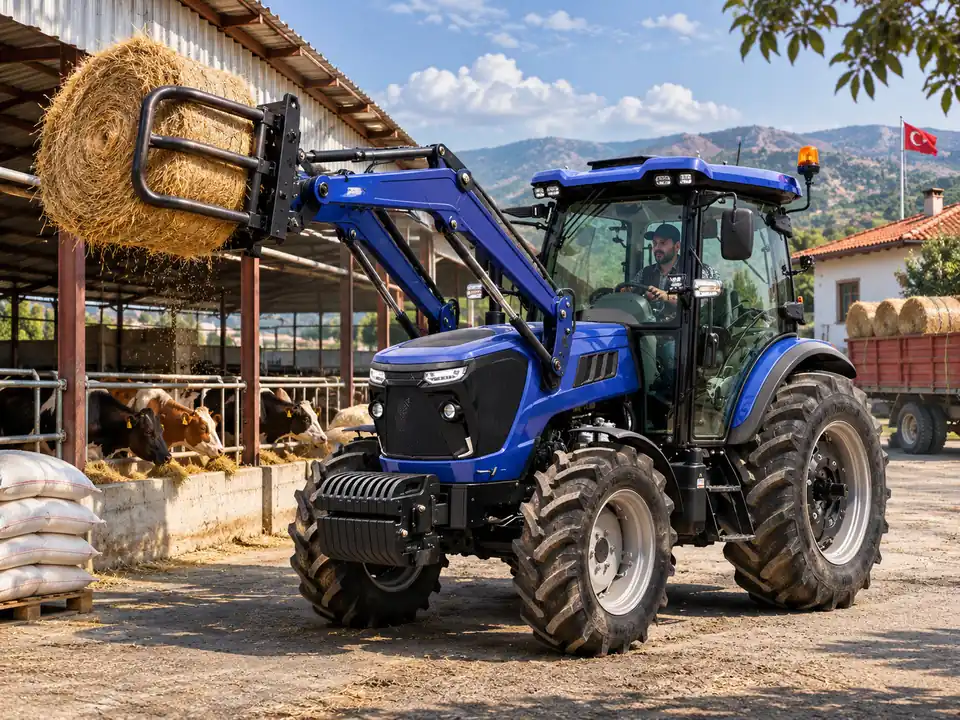
Figure 2. Front-loader bale handling on a mixed farm: verify attachment ratings, actual load centre, rear ballast and safe lifting height.
Cab height and sight lines can defeat the plan
Cab tractor loader suitability includes the ability to pass a feed-store door, reverse with a bale fork attached and see the load without an unsafe body position. Measure the complete delivered machine, not just the body dimensions in the brochure. Check the loader frame, mirror positions, roof height and the real turning envelope.
Where a farm must repeatedly stack large bales high above the ground, a dedicated handler may be more economical and safer than pushing a compact tractor-loader combination toward its limitations. The right decision is the complete work cycle, not the largest advertised lift number.
V. Existing Implements: The Most Easily Missed Import Cost
Make an implement register before asking for a quotation
Farm implement compatibility Turkey searches often reflect a buyer who already owns a plough, tiller, mower, spreader or trailer. That installed equipment has genuine economic value. Replacing several implements because the new tractor uses the wrong linkage category or PTO configuration can erase the apparent savings on the tractor purchase.
For each implement, record make and model, mass, centre of gravity, three-point-hitch category, PTO speed and shaft requirements, minimum available PTO power, hydraulic pressure/flow, implement width and any road-transport restrictions. Photographs of the nameplate, hitch and hydraulic connector often prevent errors that a general equipment description cannot.
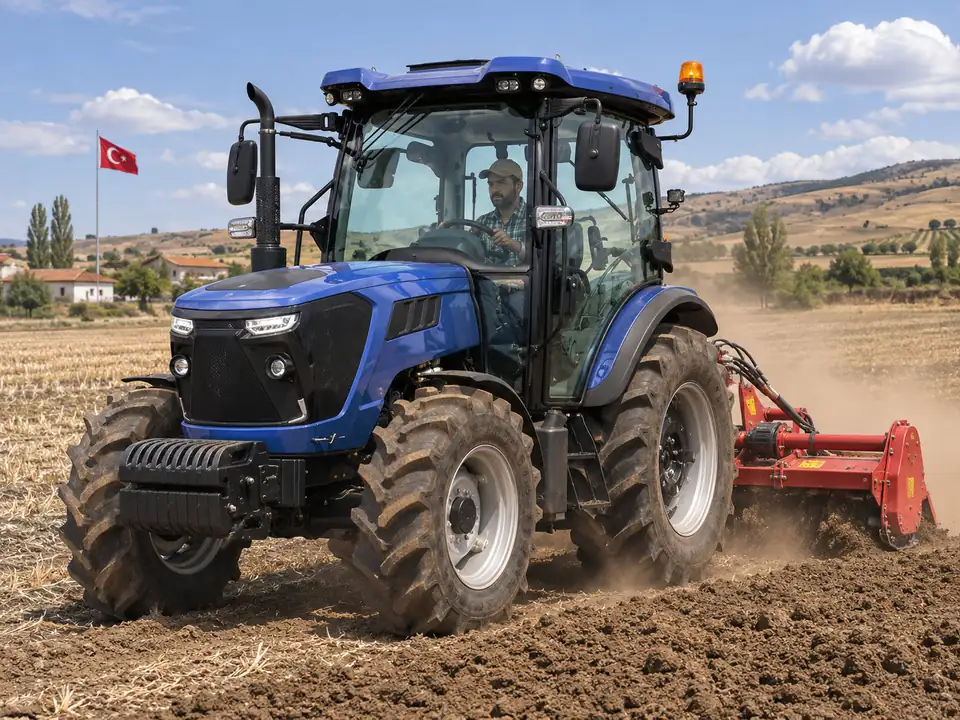
Figure 3. PTO-driven tillage: match implement power demand, PTO speed, hitch category and the tractor’s hydraulic connections before purchase.
PTO and hitch matching are separate tests
Category I and Category II three-point linkages are not automatically interchangeable. Bushings or adaptors can address some pin dimensions, but do not prove lift capability, safe geometry, implement weight or PTO shaft fit. Likewise, a 540 rpm implement should not be driven at 760 rpm unless its manufacturer permits that speed. Engine-rated HP is not equivalent to rated PTO output.
Implement | Question that prevents a wrong order | Likely consequence if missed |
Rotary tiller / mower | Correct PTO speed, PTO power, hitch, width? | Poor performance, driveline risk or new implement |
Plough / cultivator | Soil resistance, working depth, traction, category? | Wheel slip, low field output, excess fuel |
Hydraulic implement | Continuous flow, return pressure, couplers? | Slow operation, overheating or inability to run |
Agricultural trailer | Permitted loaded mass, brakes, hitch and road rules? | Unsafe operation or unusable transport package |
Orchard sprayer | PTO/hydraulic demand and appropriate cab protection? | Incompatibility and operator-exposure risk |
For pesticide spraying, a conventional enclosed cab with standard A/C is not automatically an appropriately filtered protective cab. Verify the required protective measures for the intended chemicals, equipment and local instructions.
VI. Three Turkish Farm Cases: Which Trade-off Should Win?
Case A: Grain production around Konya
The buyer wants a cab for long summer cultivation shifts, but also needs to pull the existing plough and run a powered tiller. The rational sequence is to calculate the implement load, verify PTO output and speed, test traction and wheel-slip risk, then verify cooling performance under the expected duty cycle. If the farm already uses Category II implements, selecting a compact Category I machine only because its HP looks sufficient can create an expensive compatibility problem.
Case B: An Aegean olive or fruit holding
Here the first constraint might be a low canopy or a narrow headland. A wider, taller utility tractor may provide more power but lose productive time because it cannot enter or turn safely. Measure minimum clear height and row spacing before paying extra for a cab. If spraying is planned, assess the correct operator protection separately. At some sites, a smaller non-cab configuration or specialised orchard machine is a more defensible choice than a tall general-purpose cab tractor.
Case C: A mixed livestock and arable farm
Daily fork work, feeding and farm transport demand repeated reversals and predictable handling; seasonal mowing and tillage require matching PTO and drawbar capability. This farm should compare loader work cycles, approved ballast and rear-implement compatibility alongside the gearbox. A 60–70 HP utility platform is a sensible shortlist only if the complete machine fits buildings and the loader package is certified for the intended tasks.
VII. Total Cost and the Purchase-Release Checklist
Compare costs per productive hour, not purchase price alone
For a B2B buyer, total ownership cost includes purchase and import, fuel, maintenance, repairs, operator time, unscheduled downtime, extra implement purchases and residual value. If a mismatched hydraulic attachment forces a new attachment purchase or an overheated tractor misses peak-season work, the initial price comparison was incomplete. Do not promise a fixed percentage saving: use the buyer’s own operating hours, verified cycle times and repair assumptions.
Illustration: if an unsuitable setup adds 20 minutes to a daily handling route for 180 days, the farm loses 60 hours per year. At an assumed fully loaded labour cost of €18/hour, this is €1,080 of potentially redeployable time before fuel or ownership costs. The example describes a calculation method, not measured OXPLO performance or a universal Turkish labour rate.
Send suppliers the following eight-point technical request
- Destination region, farm type, maximum summer ambient temperature and likely dust exposure.
- Annual running hours, longest continuous work shift and main high-load task.
- All existing implement models, hitch categories and PTO requirements.
- Required hydraulic flow, pressure, remotes and continuous return arrangements.
- Maximum loader payload, load centre, lifting height and daily cycles, if applicable.
- Minimum door width/height, row clearances, turning space and terrain/slopes.
- Exact cab and A/C specification, service parts, manual language, warranty terms and support responsibilities.
- Written confirmation of the Türkiye-specific import, conformity, approval and registration documents applicable to the final vehicle variant.
The final point is not administrative housekeeping. Turkey has a specific type-approval and testing framework for agricultural and forestry tractors. The Turkish Ministry of Agriculture and Forestry publishes relevant processes through TAMTEST tractor type-approval guidance. European CE-related documents, EU vehicle approvals and individual certificates of conformity cannot be casually treated as interchangeable or as automatic proof of Turkish registration eligibility.
VIII. Matching OXPLO Platforms to Turkish Farm Work
OXPLO OXT504: compact access and Category I implements
Once the job requirements have been defined, the OXPLO OXT504 50 HP 4WD tractor is a potential candidate for farms that value compact dimensions and compatible Category I implements. The published OXPLO configuration lists 50 HP, 4WD, 8F+8R transmission, Category I rear linkage, a 1,560 mm nominal width and a 1,800 mm wheelbase. It also lists 540/720 rpm PTO. That means its primary value is not “50 HP at any cost,” but 50 HP within a compact platform for appropriately matched work.
For an orchard or constrained mixed farm, OXPLO OXT504 may preserve access where a larger machine does not. Its listed overall height remains approximately 2,600 mm, so a buyer must still measure the complete cab-equipped delivery version and low branches or entrances. Category II implements are a reason to assess another platform, not to assume that more adapters will solve every problem.
OXPLO OXT604: the Category II step is more important than 10 extra HP
The OXPLO OXT604 60 HP utility tractor is a distinct work platform rather than a minor horsepower upgrade. OXPLO lists 4WD, a 12F+12R gearbox, Category II linkage, 2,010 mm wheelbase and 540/760 rpm PTO. For a Turkish mixed farm with larger compatible implements and frequent forward/reverse operation, those differences may be more meaningful than the power increase alone.
The OXPLO OXT604 is listed at 1,760 mm wide and 2,800 mm high. That makes it unsuitable for some low-roof sites even when the extra linkage capacity is useful. Before choosing the OXPLO OXT604 for loader work, obtain the specific hydraulic data and loader-load chart; neither follows automatically from the 60 HP figure.
OXPLO OXT704: more rated power on the larger utility platform
The OXPLO OXT704 70 HP 4WD tractor offers 70 HP, 12F+12R transmission, Category II linkage and a listed 540/760 rpm PTO. OXPLO positions this model for mixed farming, transport and heavier seasonal workloads. A buyer with a wider mower or greater field-work demand may shortlist it, subject to actual PTO output, traction, soil condition and implement manufacturer requirements.
The OXPLO OXT704 shares the listed 1,760 mm width and 2,800 mm height of the OXT604. Choosing it solely because the farm is large is therefore weak logic. It should earn the extra capacity through a documented work requirement, not a guess about hectares.
Published OXPLO item | OXT504 | OXT604 | OXT704 |
Rated power | 50 HP | 60 HP | 70 HP |
Drive / gearbox | 4WD / 8F+8R | 4WD / 12F+12R | 4WD / 12F+12R |
Rear hitch | Category I | Category II | Category II |
PTO speed | 540 / 720 rpm | 540 / 760 rpm | 540 / 760 rpm |
Listed overall width | 1,560 mm | 1,760 mm | 1,760 mm |
Listed overall height | 2,600 mm | 2,800 mm | 2,800 mm |
These are published model-level figures, not a quotation for an approved Turkish cab variant. OXPLO cab/A/C equipment, hydraulic pump and remote-flow values, loader lifting limits, tyre choices and Türkiye-specific documentation must be confirmed for the exact ordered build. The OXPLO tractor range provides the wider model overview.
What OXPLO can solve—and what requires final confirmation
OXPLO can help a Turkish agricultural buyer compare compact Category I and larger Category II platforms, discuss matching implements, and specify available tyre, operator-station and attachment options. The OXPLO tractor configuration page outlines application-led model selection, quotation, parts and support enquiries, and order-specific documentation review. OXPLO should provide the exact list of included equipment and any optional items in writing rather than allowing “cab tractor” to remain an undefined sales label.
For loader-plus-fork applications, compare the full attachment package using the 50–70 HP loader and bale-fork guide. For distributors considering their first order, the dealer trial-order checklist offers a useful framework for sample units, spare-parts planning and documentation checks. OXPLO has a published product and parts-support structure, but actual spare-part lead times, warranty terms and market documentation remain purchase-order questions—not unconditional promises.
IX. Frequently Asked Questions
Q1. What is a sensible cab tractor horsepower range for Turkish mixed farms?
A1. For some mixed farms, 50–70 HP is a useful shortlist, but it is not a universal requirement. The decision depends on the heaviest implement, PTO power, linkage category, traction, operating hours and site access. OXPLO OXT504, OXT604 and OXT704 illustrate different platforms, not a guaranteed answer for every farm.
Q2. Does a tractor with air conditioning automatically suit hot summers?
A2. No. Cab cooling, engine cooling, hydraulic-oil temperature and dust-management capacity are related but separate questions. Request the actual cab specification and the manufacturer’s acceptable work and service conditions, then test the intended load.
Q3. Which tractor hydraulic pump specs are essential for a loader?
A3. Ask for pump flow, usable loader-valve flow at the relevant rpm, operating pressure, valve/coupler details and any temperature or continuous-duty limits. Also request the complete approved loader and attachment capacity data; hydraulic flow alone does not establish safe lifting capability.
Q4. Can an OXPLO 60 HP tractor operate my existing 1,000 rpm implement?
A4. Do not assume so. The OXPLO OXT604 published PTO speeds are 540/760 rpm. Obtain the implement manual and confirm the required PTO speed and input power before choosing a tractor. A 1,000 rpm requirement cannot be ignored.
Q5. Is an OXPLO CoC enough to register a tractor in Türkiye?
A5. Not automatically. The exact model, engine, operator-station version and destination-specific approval route must be checked with the importing party and relevant Turkish authorities. Documentation applicable to a different market or tractor version does not prove registration eligibility in Türkiye.
Q6. What should a Turkish dealer send OXPLO before asking for a price?
A6. Send the target customer segment, expected yearly hours, detailed implement list, required cab and A/C equipment, hydraulic/loader tasks, preferred tyre specifications, first-order quantity, required spare parts and import-registration documentation needs. Then ask OXPLO for a configuration-specific written quotation and delivery scope.
X. Conclusion: Buy the Working Configuration, Not Just the Cab and HP
A cab tractor is only productive when its cooling arrangement, hydraulic delivery, loader geometry, PTO, hitch and physical dimensions work together. In Turkey, the wrong specification can become visible during the hottest field shift, the first loader operation or the day the existing implement refuses to connect. Those costs are easier to prevent before the order than to repair after delivery.
The correct buying sequence is straightforward: describe the farm’s actual work, identify the limiting implement, verify heat and hydraulic duty, measure access, confirm the loader and hitch package, and secure the precise market documents. Only then should the purchaser compare price and horsepower.
OXPLO offers a compact 50 HP Category I option and larger 60–70 HP Category II 4WD platforms for comparison. To discuss an OXPLO cab-tractor configuration for Türkiye, send your working conditions and implement list through the OXPLO website or tractor customisation enquiry. Ask for confirmed options, hydraulic and loader documents, and the compliance evidence relevant to the exact unit before placing the order.
Editorial technical note: Calculations and farm scenarios above are illustrative, not tested machine performance. Product specifications were checked against OXPLO’s live product pages; any final order must follow its signed specification. Climate context: Turkish State Meteorological Service (Konya). Regulatory process: Türkiye TAMTEST.