
A forklift that handles a two-tonne pallet comfortably inside a warehouse can become the slowest machine on site when it crosses a wet loading apron or a rutted gravel yard. The issue may have little to do with engine power. Poor traction, restricted clearance, a longer load centre or an unsuitable route can turn a routine transfer into a source of delays and operational risk.
For European distributors, agricultural suppliers, manufacturers and building-material yards, choosing a forklift for outdoor use is therefore a workflow decision, not simply a choice between battery and diesel power. One machine may be expected to unload trucks, enter a storage building, stack goods and travel across an exposed yard. Each stage places different demands on the tyres, chassis, mast and power system.
This OXPLO guide explains where electric, conventional diesel and rough terrain forklifts fit, when a site modification is the smarter investment, and which measurements an importer or fleet manager should obtain before requesting a quotation.

Figure 1. Indoor warehouse and outdoor yard operations require different route and surface checks.
Application illustrations are not specifications for individual OXPLO forklift models.
I. Find the Bottleneck Before Choosing a Forklift
A short outdoor route can cause the biggest delay
Imagine a materials distributor whose forklift moves pallets from high-bay storage to delivery trucks. Most of the route is level concrete. The final 25 metres cross broken paving and a gravel turning area. Operators reduce speed, avoid potholes and sometimes stop work after heavy rain. Buying a higher-capacity forklift would not necessarily solve any of those problems.
The first question is: which part of the complete loaded route prevents consistent, safe handling? The answer may be the surface, a tight doorway, a steep ramp, an incompatible mast or a charging arrangement that does not fit the shift schedule.
A simple time study can make the commercial impact visible. Suppose 24 daily pallet cycles each take an additional 90 seconds because of an awkward transition from warehouse floor to yard. That amounts to 36 minutes a day, or 144 hours over 240 working days. This is an illustrative scenario, not a measured forklift performance claim. It shows why cycle time should be assessed before equipment is replaced.
Document the task in operational terms
Record the heaviest pallet including packaging; the longest or most offset load; maximum lift height; narrowest doorway; available turning area; daily travel distance; shift pattern; and the condition of each outdoor surface in both dry and wet weather.
For an OXPLO equipment enquiry, photographs of the actual loaded route can be more useful than a description such as “outside use”. Concrete, compacted gravel and loose soil present very different constraints, even when all are called outdoor yards.
Consider fixing the yard rather than upsizing the machine
If a warehouse forklift performs well for 95% of the route and fails only at one badly drained unloading point, repairing the surface or providing a stable loading apron may be cheaper and operationally simpler than adopting a wider specialist forklift. OXPLO’s Building Materials and Outdoor Yards Solutions describes the distinct tasks involved in outdoor pallet handling and yard transport.
II. Electric, Diesel and Rough Terrain: Match the Machine to the Surface
Electric forklifts: warehouse-first, with qualified outdoor use
A battery-electric counterbalance forklift is a logical candidate when most work occurs indoors and external travel is confined to maintained concrete or asphalt. Electric forklifts have no tailpipe emissions during use and avoid engine oil, fuel-filter and exhaust-system maintenance. That matters where a machine works near staff, production lines or enclosed storage areas.
However, “electric” does not mean waterproof, and a pneumatic-tyre electric forklift is not automatically off-road equipment. Verify the exact model’s approved rain exposure, traction, brakes, ground clearance and electrical protection. Wet ramps, puddles, deep gravel and uneven agricultural ground may be unsuitable regardless of battery type.
For warehouse-dominant facilities, review the OXPLO Warehousing and Logistics Solutions alongside model-specific access dimensions and load charts.
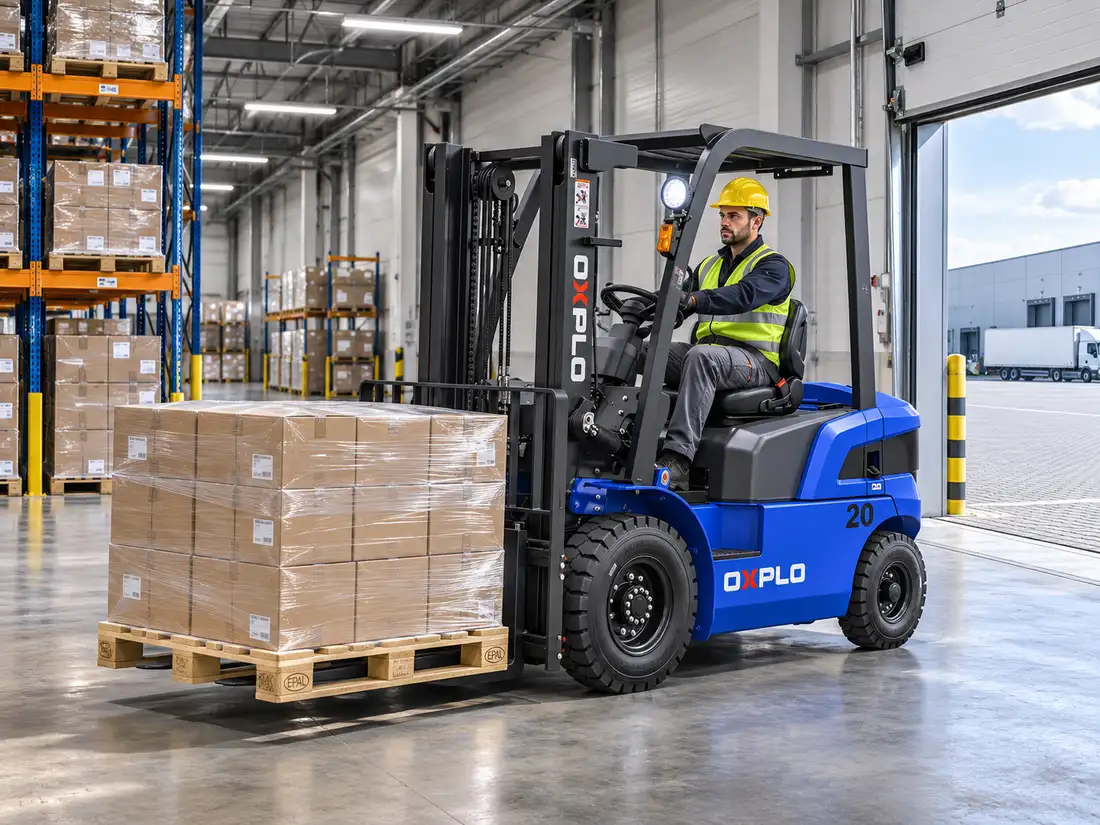
Figure 2. Warehouse pallet handling near a paved external loading area.
Diesel forklifts: refuelling flexibility for maintained yards
A conventional diesel forklift can suit frequent outdoor unloading and long or irregular shifts, particularly where charging infrastructure is not readily available. Pneumatic tyres can improve cushioning on suitable industrial surfaces, and refuelling can be integrated into established yard operations.
Nevertheless, a diesel engine does not turn a standard industrial counterbalance truck into a rough terrain forklift. Limited underbody clearance, uneven bearing surfaces or poor traction can still prevent safe operation. Indoor diesel use also raises exhaust-exposure and ventilation concerns; a warehouse door left open is not a substitute for an appropriate workplace assessment.
Rough terrain forklifts: greater clearance, but not unlimited access
Dedicated rough terrain forklifts are intended for particular outdoor conditions such as firm compacted gravel, reasonably supported agricultural yards and some uneven construction-material storage areas. Larger tyres, increased clearance and different chassis proportions may improve mobility compared with an industrial warehouse truck.
The compromise is often a wider machine, more turning space and potentially greater acquisition and maintenance expenditure. Moreover, a rough terrain designation does not permit operation on deep mud, weak subsoil, severe side slopes or unstable loading areas. A site assessment and the manufacturer’s permitted operating limits remain essential.
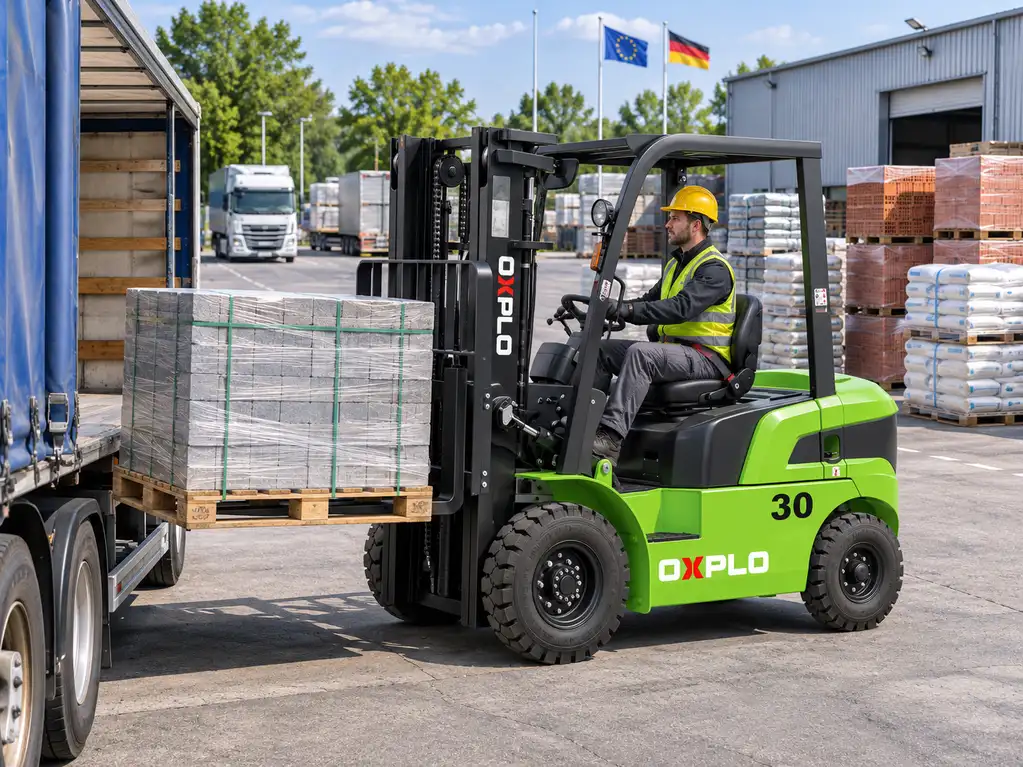
Figure 3. Firm gravel handling versus maintained surfaces: ground clearance and available width both matter.
Quick selection by working condition
Actual operating route | First option to evaluate | Critical check |
Warehouse plus maintained paved loading apron | Electric counterbalance forklift | Weather approval, charging and aisle width |
Level industrial yard with lengthy outdoor shifts | Electric or conventional diesel forklift | Energy infrastructure and duty cycle |
Firm, compacted gravel or moderately uneven outdoor route | Approved rough terrain forklift | Ground support, clearance and gate width |
Narrow indoor aisles plus difficult external terrain | Route improvement or separate machines | Combined workflow and handling transfers |
Deep mud, unstable soil or severe slopes | Stabilise site or redesign handling method | Stability and surface-bearing capacity |
III. Powertrain Choice Is a Shift-Planning Decision
Electric: size the charger and duty cycle together
A battery capacity figure is not a shift-duration guarantee. Actual consumption changes with travel distance, pallet mass, lift frequency, gradients, temperature and operator habits. An electric forklift that completes a short indoor transfer repeatedly may consume energy differently when it travels longer distances outdoors.
For an OXPLO electric forklift quotation, provide daily working hours, number of shifts, average loads, available charging breaks, grid supply and the expected proportion of outdoor travel. The battery, charger and operating schedule should be assessed as one system. Charging areas must also suit the equipment and applicable electrical and safety instructions.
Diesel: account for servicing and workplace restrictions
Diesel can provide convenient refuelling for remote or busy yards, but its total cost includes more than fuel. Engine maintenance, filters, cooling-system checks, tyres, hydraulic inspections and downtime remain material. Any indoor activity must also be evaluated for exposure to engine emissions.
An OXPLO comparison should use the same load, route and working hours for each candidate. Otherwise, a cheap machine can appear economical only because it is being assessed against an easier duty cycle.
Measure total cost, not just purchase price
Compare total cost of ownership = purchase price + energy or fuel + maintenance + infrastructure + downtime – expected residual value. Include charging equipment or engine servicing, plus tyres, mast maintenance and training. Record interruptions as well: a low-energy electric forklift offers little benefit if outdoor work stops after rain, while a wider rough terrain truck may create extra transfers if it cannot enter the warehouse.
IV. Lifting Capacity, Load Centre and Access Must Work Together
Rated capacity is conditional, not universal
A nominal 3.5-tonne rating does not mean every 3,500 kg load can be lifted to every height with every attachment. Rated capacity is established under defined conditions, particularly a specified load centre. A long timber pack can create a greater forward overturning moment than a compact pallet of the same mass.
For example, a 2,000 kg load whose centre of gravity lies 500 mm from the fork face creates a simplified moment of 1,000 kg·m. If the same weight has a 750 mm load centre, the nominal moment rises to 1,500 kg·m. This illustrates the effect of load geometry; it is not a method for calculating permissible forklift capacity. Use the capacity plate and load chart for the exact mast, lift height, fork length and attachments.
High stacking and attachments change available capacity
Residual lifting capacity may decrease as lift height or load-centre distance increases. Side shifters, fork positioners and other attachments can also alter the load moment. Ask for the actual capacity chart at the intended stacking height, not only the advertised base rating.
A European pallet operation may additionally involve narrow warehouse aisles, high vehicle beds, covered loading bays and different packaging types. Record mast-lowered height, door height, right-angle stacking space and turning requirements before model selection. OXPLO’s Manufacturing and Workshops Solutions illustrates why load dimensions and internal logistics routes should be assessed together.
Ground clearance solves one problem but can create another
Greater clearance may reduce underbody contact on irregular ground, but it does not establish traction, stability or ground-bearing capability. Larger tyres and a wider chassis also do not fit every loading gate. Compare actual dimensions and approved operating conditions rather than assuming a higher-clearance forklift is always the more versatile choice.
V. What the Right Choice Looks Like in Three European B2B Workflows
Warehouse distributor: prevent indoor compromises
Situation: A distribution centre receives palletised goods indoors, stacks them in restricted aisles and occasionally unloads trucks outside on a paved apron. The biggest risks are insufficient turning clearance, poor shift planning and unverified wet-weather operation.
Decision: Evaluate an electric counterbalance forklift first, provided the entire external route is suitable and the equipment is approved for the conditions. Check mast configuration, load chart, turning area, tyre specification and charging intervals. An OXPLO electric model may eliminate the need for routine indoor diesel operation; it does not eliminate the need to assess surface conditions.
Building-material yard: solve the gravel-route problem
Situation: A supplier of bagged aggregates and timber uses a firm gravel yard that becomes uneven after frequent truck movements. Most pallet movements are outside, but some goods are stored under cover. Long loads and narrow truck-loading zones complicate the job.
Decision: Compare an approved rough terrain forklift with the cost of stabilising the critical loading route. If terrain remains suitable but irregular, a specialist outdoor machine may reduce route restrictions. If the problematic section is short, paving and drainage could allow a narrower conventional forklift to continue working. Check the load centre of timber packs, actual gate widths and surface support under a fully loaded machine.
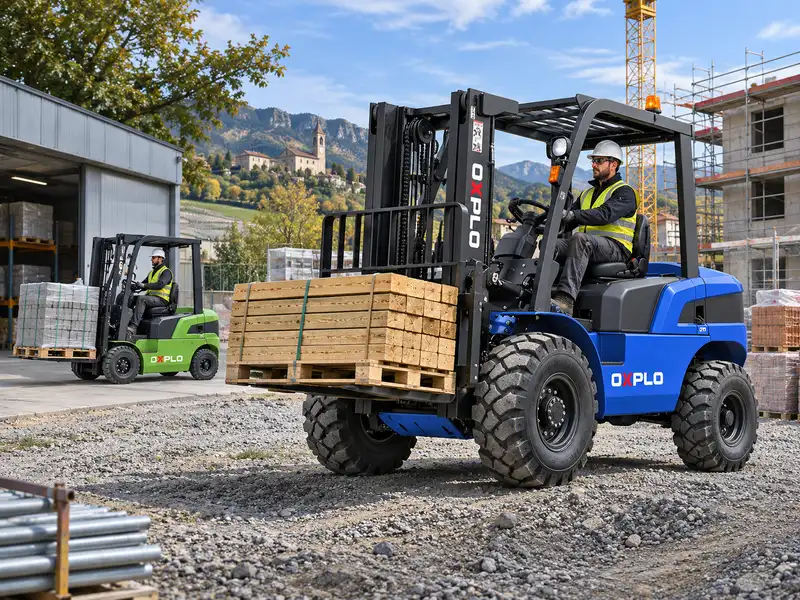
Figure 4. Palletised building materials in an outdoor loading yard.
Agricultural supply depot: avoid buying around the wrong season
Situation: An agricultural merchant stores seeds, feed and packaged fertiliser in a building but receives deliveries across a yard that changes after rainfall. Occasional winter handling does not justify the same machine specification as intensive daily off-road work.
Decision: Assess seasonal yard conditions and how often a forklift must cross the difficult section. An electric OXPLO machine could remain appropriate on a maintained paved route; a rough terrain model may be relevant for frequent handling over firm, uneven outdoor surfaces. If neither route is consistently safe, improve the yard or separate inside and outside tasks. For broader agricultural site operations, read the OXPLO Farm Material Handling Equipment Comparison.
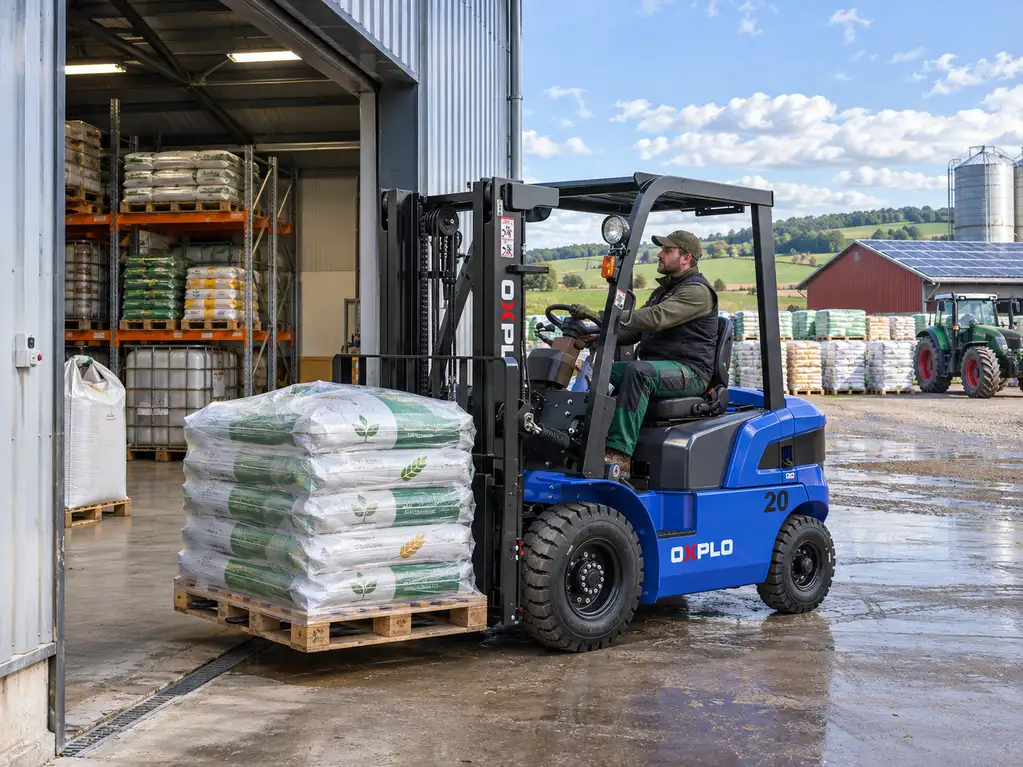
Figure 5. Pallet transfers between agricultural storage and an external receiving area.
VI. OXPLO Forklift Models: Match Published Features to the Customer’s Problem
OXPLO offers electric, conventional diesel and rough terrain forklift configurations, allowing buyers to compare equipment around the work being done. Published specifications help establish a shortlist, but final capacity, mast, tyres, engine, attachments and European-market availability must be confirmed for the exact order.
CPD25: electric pallet handling where space matters
The OXPLO CPD25 Electric Forklift has a published 2,500 kg rated capacity at a 500 mm load centre. Its overall width is 1,164 mm and minimum outer turning radius is 2,240 mm. The listed lithium battery is 76.8 V / 280 Ah, and minimum clearance at the mast is 115 mm.
Problem it can address: Regular pallet movement in warehouses, workshops and suitable paved loading areas where compact dimensions, no tailpipe emissions and charging access are relevant. Boundary to confirm: The CPD25 is not a dedicated off-road machine. Weather exposure, traction, required lifting height and realistic run time depend on the approved configuration and duty cycle.
OX35L: industrial diesel handling on maintained surfaces
The OXPLO OX35L Diesel Forklift lists a 3,500 kg rated capacity at a 500 mm load centre, 1,210 mm width, 135 mm minimum ground clearance and pneumatic tyres. Its published two-stage mast lifting height is 4 m.
Problem it can address: Repeated pallet unloading and material movement across appropriately maintained industrial yards where a diesel refuelling routine is practical. Boundary to confirm: It remains a conventional industrial forklift, not a substitute for a rough terrain machine on soft or deeply rutted ground. Diesel-engine specifications and destination-market documentation also require verification.
OX35F: outdoor mobility with a wider chassis
The OXPLO OX35F Rough Terrain Forklift is listed as a 3,500 kg class machine with 225 mm minimum ground clearance, 1,985 mm overall width and 20.5-16 tyres. Published two-stage and three-stage mast choices are described on the product page, but residual capacity at a chosen height must be confirmed using the supplied configuration’s load chart.
Problem it can address: Pallet movement across suitable, supported gravel or uneven outdoor areas where the clearance of a standard industrial forklift may be insufficient. Boundary to confirm: The OX35F is 775 mm wider than the published OX35L configuration. That difference can determine whether it fits a yard gate or covered storage passage. Its listed engine refers to a Chinese National II emissions designation, which is not evidence of EU emissions approval; request the exact EU-destination engine configuration and supporting documents before procurement.
Side-by-side OXPLO specification check
Published item | OXPLO CPD25 | OXPLO OX35L | OXPLO OX35F |
Type | Electric counterbalance | Diesel industrial | Diesel rough terrain |
Nominal lifting capacity | 2,500 kg | 3,500 kg | 3,500 kg class |
Load centre | 500 mm | 500 mm | Confirm for order |
Overall width | 1,164 mm | 1,210 mm | 1,985 mm |
Minimum clearance | 115 mm at mast | 135 mm | 225 mm |
Primary evaluation | Indoor and paved routes | Maintained outdoor yard | Firm uneven outdoor route |
The figures are taken from the listed OXPLO model pages. Ground-clearance reference points and configurations may differ, so the numbers are screening inputs rather than a complete cross-model performance test. Explore the OXPLO Forklift Range to compare other capacities before selecting a machine.
VII. A European Buyer’s Checklist: Compliance, Service and Configuration
Confirm the exact machine to be placed on the market
European buyers need more than a web listing. For machinery placed on the EU market before 20 January 2027, Machinery Directive 2006/42/EC remains the applicable machinery framework; Machinery Regulation (EU) 2023/1230 generally applies from 20 January 2027. Depending on the engine and machine, Regulation (EU) 2016/1628 on non-road mobile machinery emissions may also apply. Confirm the specific requirements with the importer or qualified compliance specialist rather than relying on generic “CE” wording.
The OXPLO OX35F public engine description makes this verification especially important. A Chinese emissions classification cannot be treated as proof of approval for EU import or placing on the market. Request the engine type-approval evidence, applicable declaration(s), manuals in the required language and identification documents for the actual final machine.
Use a pre-order evidence checklist
Ask the supplier for: (1) the precise model and serial/configuration details; (2) rated and residual capacity charts; (3) mast, tyre and attachment specification; (4) battery and charger details or engine/emissions information; (5) applicable conformity evidence and manuals; (6) inspection and pre-shipment records; (7) spare-parts and technical-support arrangements; and (8) written warranty and delivery terms.
For dealers, these checks reduce uncertainty when a customer later requests replacement parts, a different mast or evidence of compliance. OXPLO’s Parts and Support Information provides a starting point for discussing technical support and compatible equipment.
Send a useful purchasing brief to OXPLO
A productive enquiry contains the destination country, maximum load and dimensions, required lift height, photographs of travel surfaces, door and gate widths, number of daily shifts, charging conditions and planned attachments. This allows OXPLO to advise on an appropriate configuration without assuming that a forklift is suitable merely because its nominal rating matches the weight of the goods.
For a specification-led quotation, contact the OXPLO team through the OXPLO Enquiry Page. Request confirmation of all options and EU-destination documentation before purchase commitment.
Frequently Asked Questions
Can an electric forklift work outside in the rain?
Some electric forklifts can operate outdoors under specified manufacturer-approved conditions. Check electrical enclosure protection, tyre traction, braking, gradients and permitted weather exposure. Do not assume that a lithium battery makes the whole forklift waterproof. An OXPLO electric configuration should be assessed against the actual yard and charging arrangements.
Is a diesel forklift always better than an electric forklift outdoors?
No. Diesel can be practical for extended shifts and sites without adequate charging, while electric forklifts can be suitable for maintained paved yards and indoor-outdoor workflows. Ground condition, workplace emissions, energy infrastructure and total cost must be evaluated together.
Can a standard diesel forklift handle a gravel yard?
It may be suitable on sufficiently firm, level and maintained gravel if its manufacturer permits the conditions. Loose aggregate, deep ruts or insufficient ground-bearing capacity can make a conventional industrial forklift unsuitable. Pneumatic tyres alone do not prove rough terrain capability.
How is a rough terrain forklift different from an outdoor-capable warehouse forklift?
A warehouse forklift may be approved for suitable outdoor paved travel. A dedicated rough terrain forklift uses a configuration intended for more demanding ground, often with larger tyres and increased clearance. Neither type can be operated without regard to load stability, surface strength or manufacturer limits.
What is the practical difference between OXPLO OX35L and OX35F?
Both are published as 3.5-tonne class machines, but the OX35L is 1,210 mm wide with 135 mm ground clearance, while the OX35F is 1,985 mm wide with 225 mm clearance. The OX35F may be more relevant for suitable uneven outdoor routes; the OX35L may fit more restricted industrial access points. Confirm residual capacity, engine configuration and market documentation for either model.
What should a European dealer request before ordering?
Request the exact configuration, capacity chart, engine or battery specification, relevant conformity and emissions documents, operating instructions, pre-shipment inspection evidence, spare-parts arrangements and warranty terms. OXPLO can then evaluate the application against the available machine options rather than providing a quotation based on lifting capacity alone.
Conclusion
The right forklift for outdoor use is the one that completes the full handling route safely and efficiently, not simply the machine with the largest engine or highest advertised capacity. Electric forklifts can be effective for warehouse work and suitable paved external areas; conventional diesel forklifts may fit maintained yards with demanding shift schedules; rough terrain forklifts may be necessary where firm but irregular outdoor ground exceeds the capability of ordinary industrial equipment.
The most valuable selection work happens before a quotation: inspect the worst section of the route, measure available access, calculate actual load and load-centre requirements, and identify charging or refuelling constraints. For some operations, improved drainage and a stable loading apron will solve more problems than a larger forklift.
OXPLO’s CPD25, OX35L and OX35F illustrate three different equipment approaches. Each has a defined operating context and limitations that should be checked against the buyer’s worksite and, for European orders, the documentation applicable to the actual machine supplied. Share your load specifications, site photographs, shift pattern and destination country with OXPLO to develop a configuration-based recommendation rather than relying on nominal tonnage alone.