
A rural maintenance contractor may dig a drainage trench in the morning, move gravel after lunch and repair a farm entrance the next day. A skid steer is attractive for compact loading and attachment work; a backhoe loader brings a front bucket and a rear digging arm together. The wrong purchase can leave a business paying for unused functions—or repeatedly hiring a second machine to finish short jobs.
The backhoe loader vs skid steer choice is therefore less about which machine advertises more features and more about which one removes the recurring bottleneck in your work. This guide is written for European rural contractors, farm owners, estate-maintenance teams and machinery dealers who need to evaluate real applications, technical limits and ownership costs before requesting a quotation.

Figure 1. Rural entrance repair: a compact backhoe loader supports aggregate handling after drainage maintenance.
I. Start With the Job Mix, Not the Machine Catalogue
Why fragmented rural work becomes expensive
A small drainage repair may require locating underground services, excavating the failed section, moving spoil, placing bedding material, backfilling and restoring the surface. Neither a front bucket nor a rear excavator completes the entire job alone. What matters is how efficiently the equipment moves through these stages, including transport, repositioning and waiting time.
A backhoe loader is most interesting when one operator completes digging and loading sequentially across several short jobs. A skid steer may be a better investment when loading, sweeping, grading or operating approved attachments accounts for most of the working week, with excavation hired when necessary.
One operator or two simultaneous workstreams?
One backhoe loader cannot excavate with its rear arm and independently load with the front bucket at the same moment. On a site with two operators—one excavating while the other continuously removes material—a separate excavator and skid steer may complete work sooner. A single owner-operator has a different economic calculation: two specialised machines may spend much of the day idle.
Before comparing brands or prices, list your five most frequent jobs. Record the hours spent on excavation, loading, attachment work, travelling and waiting. Annual utilisation is a more useful starting point than a machine described as “multi-purpose”.
II. Backhoe Loader vs Skid Steer: What Changes on Site?
Excavation: dedicated rear geometry versus an added tool
A backhoe loader is arranged for below-ground excavation with a rear boom, dipper and bucket. It can support short drainage trenches, culvert repairs and localised service excavations when its depth, reach and setup are suitable. A skid steer is primarily a compact loader and tool carrier. Some skid steers can use trenchers or backhoe attachments, but mounting, hydraulic compatibility, operating stability and geometry determine what those attachments can actually achieve.
A trencher that makes a narrow, relatively uniform cut is not necessarily appropriate for a wider irregular drainage pit. Conversely, a compact backhoe loader may be inefficient for kilometres of continuous trenching. Where deep excavation dominates, compare a dedicated excavator as a third option rather than forcing the decision between just two machines.
Loading: bucket volume is not a rated payload
Skid steers can excel in tight loading cycles and short material transfers. A backhoe loader can shift soil, aggregate and spoil while also supporting excavation. Yet bucket volume, loader lift limits and usable dumping geometry are separate specifications. A 0.6 m³ bucket filled with material at an assumed density of 1,800 kg/m³ contains approximately 1,080 kg of material—before bucket weight and without establishing that the machine may lift it. Always request the manufacturer’s approved capacity information for the exact configuration.
Constrained access, surface damage and ground condition
A skid steer’s differential steering gives it a tight turning envelope but can scuff paving or damage weak surfaces. A wheeled backhoe loader usually needs additional space for rear excavation, boom movement and any required stabilisation. Four-wheel drive may improve traction but does not prove that a machine can operate safely on saturated soil, slopes or near unsupported trench edges. A compact track loader is another option for certain soft-ground loading jobs, but tracks do not remove the need for a ground-bearing and stability assessment.

Figure 2. Backhoe loader and skid steer at a rural worksite: different strengths for mixed excavation and loading.
Decision factor | Backhoe loader | Skid steer |
Short trench + spoil loading | Strong candidate for sequential mixed tasks | May need a suitable digging attachment or second machine |
Repeated loading in a confined yard | Depends on clearance and duty cycle | Often a strong fit |
Frequent specialised tool changes | Check approved front/rear interfaces | Often offers broad attachment choice |
Two crews digging and loading simultaneously | Cannot operate both functions independently at once | Can load while a separate excavator digs |
Soft ground or finished surfaces | Check tyres, support and bearing capacity | Wheel-skid turning can mark surfaces; assess track alternatives |
Continuous deep excavation | May be less productive than a dedicated excavator | Usually not the primary choice |
III. Four Real Jobs That Reveal the Better Choice
1. Repairing a failed farm entrance
A rutted gravel entrance may need damaged layers removed, unsuitable soil excavated, a drainage defect corrected and aggregate brought in before compaction. A backhoe loader can handle much of the excavation and loose-material movement on one carrier. A skid steer is appealing when the job is largely surface grading and short-cycle loading. Neither machine replaces appropriate drainage design or compaction equipment.
Buying lesson: If the same crew repeatedly excavates short sections and then backfills them, count the transport and standby cost of a separate excavator. If excavation is unusual, avoid buying a permanent rear digging system merely for occasional repairs.
2. Cleaning ditches across dispersed properties
An estate contractor may visit several rural properties in one week, cleaning short drainage sections and moving the excavated soil. If work is modest and sequential, a compact backhoe loader can reduce repeated equipment collection and delivery. However, narrow ditches alongside walls, buried pipes and weak edges can require specialised digging geometry and safe excavation controls. The useful comparison is not maximum digging depth alone, but the full excavation envelope.
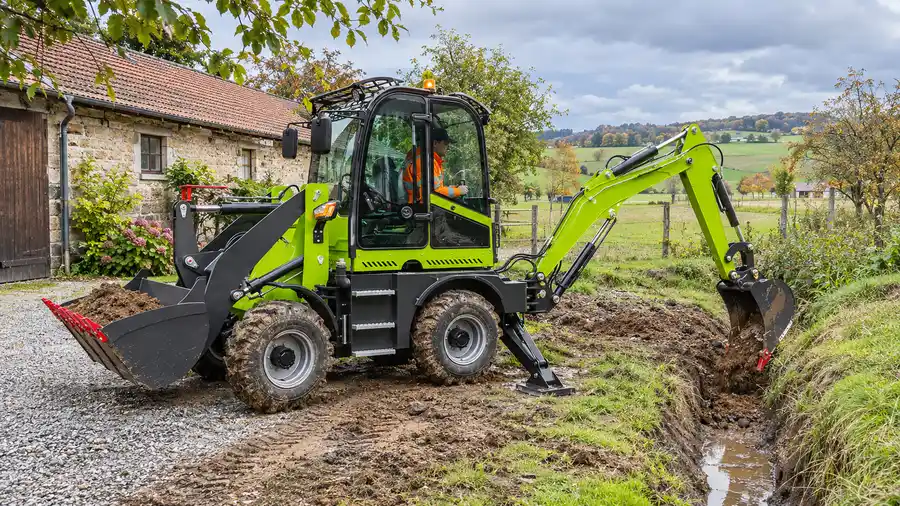
Figure 3. Drainage maintenance: the rear digging arm provides excavation capability for short rural trenches.
For a task-oriented checklist, see the OXPLO guide to farm drainage and yard repairs.
3. Landscaping around occupied buildings
Where crews repeatedly move topsoil, mulch, gravel and landscape materials through tight entrances, skid-steer manoeuvrability may outweigh a backhoe’s additional digging ability. The decision changes if drainage channels, service trenches and excavations are regular services rather than exceptions. Check pedestrian segregation, visibility, surface protection and safe attachment use before considering speed alone.
4. Small rural building and utility work
A project may involve shallow excavation, foundation preparation, aggregate delivery and site clean-up. A backhoe loader can connect several stages, provided its loading and digging limits suit the plan. A separate excavator and loader can be more productive when two crews need to work concurrently. For a wider comparison, OXPLO also examines whether one compact backhoe loader can replace a loader and mini excavator on small jobs.
IV. Six Checks That Prevent a Costly Equipment Mismatch
Measure the entire working envelope
Ask for the overall machine width with the intended attachment installed, transport height, turning clearance, rear-boom sweep and support footprint. A machine that passes through a gate may still be unable to turn or excavate safely inside. Request a site drawing or send dimensioned photographs to the supplier.

Figure 4. Restricted access: check the front bucket width as well as the overall machine width.
Compare excavation depth at the required reach
Maximum digging depth and maximum radius are not necessarily achieved at the same boom position. State typical trench depth, width, horizontal offset, soil type and how close the machine must work to structures. A digging-range diagram is more useful than a single headline depth.
Confirm hydraulic and attachment compatibility
For augers, breakers and other powered tools, check approved pressure, flow, couplers, return circuit, mounting geometry and any cooling limits. A physically compatible quick hitch does not establish hydraulic or structural compatibility. Obtain written confirmation for the exact carrier and tool combination.
Check safe loading against real material density
A larger front bucket may fill quickly with wet gravel or dense aggregate, but permissible load depends on lift geometry, bucket weight and rated capacity—not volume alone. Check dumping height and forward reach against the receiving vehicle as well.

Figure 5. Aggregate handling: confirm permissible payload and dumping clearance before loading a truck.
Test travel routes and ground support
Map gravel lanes, turning points, weak fill, buried services and the distance between tasks. Consider rutting, tyre damage, site-to-site transport and whether the machine may legally use public roads in the destination country. Operating weight alone does not establish trailer suitability or road approval.
Demand a service plan, not only a warranty sentence
Ask for service intervals, parts identification, hydraulic wear items, operator instructions and the actual process for troubleshooting. When one combined machine breaks down, both loading and excavation capability may be unavailable. Downtime risk belongs in the purchase calculation.
V. When Does One Multifunctional Machine Cost Less?
Compare the cost per completed project
The relevant calculation is annualised ownership + running costs + transport + additional hire + downtime. Fuel use is only one component. A skid steer can be economical when it is heavily used for loading and a mini excavator is hired only rarely. A backhoe loader can become attractive when hiring and transporting a second machine are recurring expenses.
Consider an illustrative scenario, not a market price: a contractor completes 18 small mixed excavation-and-loading projects annually. If the extra excavator mobilisation costs an assumed €90 per project, separate mobilisation totals €1,620 per year. A backhoe loader might avoid some of that amount, but the buyer must compare it with any difference in depreciation, servicing, attachments, work speed and financing. The €1,620 is not an equipment saving until those other factors have been evaluated.
Use a simple annual job mix
Prepare a workload estimate for the next 12 months: loading hours, excavation hours, tool-intensive work, inter-site travel and exceptional specialist jobs. Also note whether the same operator performs each task. A machine used 600 hours mainly for loading is a different purchase from one used 300 hours loading and 250 hours digging, even if both buyers describe their work as “rural maintenance”.
OXPLO’s backhoe loader supplier quotation guide explains why job details, attachments, delivery basis and documentation should be defined before comparing prices.
VI. Where the OXPLO OX15-20 Fits—and Where It Does Not
What the verified specifications tell a buyer
The OXPLO OX15-20 wheeled backhoe loader combines a front loader and rear excavator on a wheeled, articulated-steering platform. OXPLO presents it for farms, rural properties, yards and light construction applications. These are its published figures—not independently measured productivity guarantees.
OXPLO OX15-20 published data | Value | Buyer’s interpretation |
Rated engine power | 42 kW | Not a substitute for digging force or lift charts |
Operating weight | 3,400 kg | Check transport, support and ground bearing |
Overall width / loader bucket width | 1,680 / 1,800 mm | The bucket may prevent access through a narrow gate |
Maximum digging depth / radius | 2,350 / 3,500 mm | Request working-range geometry at the required depth |
Rear bucket width / capacity | 420 mm / 0.12 m³ | Compare with trench width and expected digging cycle |
Front bucket capacity | 0.6 m³ | Volume is not an approved safe payload |
Maximum dumping height | 3,200 mm | Check vehicle height and dumping reach |
Drive / steering | 4WD / articulated hydraulic | Evaluate manoeuvring and site conditions |
The OXPLO value proposition: reduce equipment changes on mixed-duty jobs
For a single-operator contractor repairing drainage, loading spoil and preparing a farm entrance, the OXPLO OX15-20 is a practical model to assess because the two essential earthmoving functions are available on one carrier. That may reduce reliance on separate short-term equipment hire. OXPLO should be evaluated against the entire sequence of work, not against the strongest specialist machine in only one task.
Its published 1,680 mm overall width may help with initial access screening, but the 1,800 mm front bucket is wider. This is an important buying detail for rural gateways: ask OXPLO for the full transport envelope and verify the installed attachments before relying on the chassis width. The 2,350 mm maximum digging depth likewise requires a working-range review rather than a blanket claim that every trench below that depth is suitable.
Additional tools can extend utilisation—but only after approval
The OXPLO parts and attachments support page lists backhoe-loader tools such as quick couplers, buckets, an auger and a hydraulic breaker. That catalogue indicates possible application directions, not automatic OX15-20 compatibility. Ask OXPLO to confirm the exact mounting interface, auxiliary hydraulics, approved load and final availability for any proposed tool.
Cases in which another machine is the better recommendation
OXPLO buyers should consider a skid steer for repeated confined loading and frequent approved attachment changes; a dedicated excavator for continuous or demanding digging; or a wheel loader for sustained bulk loading. Pallet lifting is a separate rated-capacity question and may require an appropriate forklift. The OXPLO construction material-handling comparison discusses when equipment combinations are more suitable than one multipurpose carrier.
VII. European Procurement: The Checks Dealers Cannot Skip
Verify conformity for the actual machine, engine and destination
EU buyers should request applicable machinery documentation, instructions and supporting conformity evidence for the specific configuration offered. The EU Machinery Directive 2006/42/EC currently applies to relevant machinery placed on the market; the newer Machinery Regulation (EU) 2023/1230 generally applies from 20 January 2027. Diesel non-road machinery is also subject to applicable engine-emissions requirements under Regulation (EU) 2016/1628. Review European Commission machinery guidance and non-road mobile machinery emissions guidance for the framework.
A model name, engine power figure or generic “CE available” statement does not verify an OXPLO OX15-20 configuration for a European order. Ask OXPLO for the actual engine approval information, applicable declaration, manuals, labels and destination-language documentation before confirming a purchase. Public-road approval and registration are separate questions where road travel is planned.
Check ownership risk before comparing quotations
For European dealers, technical suitability is only the first step. Confirm parts identification by serial number, wear-parts availability, warranty exclusions, service response process, operator documentation and the cost boundary of the quoted Incoterm. OXPLO’s support and service information is a useful starting point, but exact commitments should appear in the order documents.
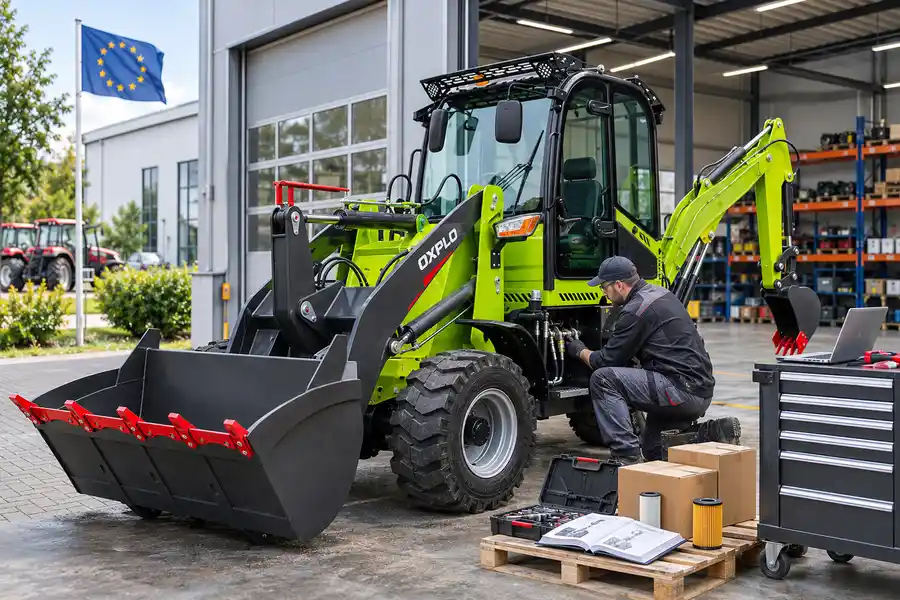
Figure 6. Maintenance planning: verify spare parts, service instructions and repair arrangements before purchase.
Send a job-based enquiry instead of “Please send the best price”
A useful OXPLO enquiry includes the destination country, typical and maximum trench depth, soil condition, required bucket width, material type, loading height, narrowest access point, annual work hours, requested attachments and quantity. This gives OXPLO enough context to assess fit, confirm technical limits and quote a defined configuration rather than an incomplete baseline machine.
Frequently Asked Questions
Is a backhoe loader more versatile than a skid steer?
It can be more versatile for sequential digging plus loading because both functions are integrated. A skid steer may be more versatile for compact loading and a range of compatible specialised tools. Choose by the frequency and sequence of real jobs, not the number of advertised functions.
Can a skid steer dig a drainage trench?
Some skid steers can operate a compatible trencher or backhoe attachment. However, trench width, excavation geometry, soil resistance and hydraulic compatibility may limit results. A dedicated backhoe or mini excavator may be preferable for irregular or deeper excavations.
Will the OXPLO OX15-20 fit through a 1.7-metre farm gate?
Do not assume it will. Although OXPLO publishes an overall machine width of 1,680 mm, the listed front bucket is 1,800 mm wide. Verify the complete installed transport configuration, safe clearances and any alternative approved bucket arrangement with OXPLO before purchase.
Does 4WD make a compact backhoe loader safe on muddy ground?
No. Four-wheel drive can assist traction, but bearing capacity, rutting, side slope, excavation-edge support and the approved machine setup determine whether the operation is safe. Wet ground requires a site-specific assessment.
What should a European dealer request before ordering an OXPLO backhoe loader?
Request the exact configuration and machine identification, working-range and rated-capacity information, attachment compatibility confirmation, engine-emissions evidence, applicable machinery documentation, manuals, parts process, warranty terms and delivery basis. OXPLO should confirm which documents and options apply to the specific destination market.
Conclusion: Buy the Machine That Removes Your Biggest Bottleneck
The backhoe loader vs skid steer decision is best made by mapping work, not counting functions. A skid steer can be an excellent compact loader and attachment carrier. A backhoe loader is worth considering when short excavations, spoil movement and backfilling repeatedly occur on the same jobs, especially when one operator would otherwise coordinate multiple machines.
For this mixed-duty profile, the OXPLO OX15-20 provides a relevant starting point. Its combined loader and backhoe functions, published dimensions and digging envelope should be checked against site access, safe capacities, ground conditions and the exact EU-market configuration. The strongest OXPLO recommendation is one that clearly explains both the work the machine can do and the work it should not be asked to do.
Explore the OXPLO wheeled backhoe loader range or contact OXPLO with your typical excavation depth, materials, site dimensions, operating hours and destination country to request a project-based configuration review.
SEO publishing details (not part of article body)
Focus keyphrase: backhoe loader vs skid steer
Keyphrase synonyms: skid steer vs backhoe; compact backhoe loader; light construction equipment; loader excavator
SEO title (57 characters): Backhoe Loader vs Skid Steer: Best Choice for Rural Work?
Meta description (117 characters): Backhoe loader vs skid steer for rural jobs: compare digging, loading, access, ownership costs and the OXPLO OX15-20.
Suggested slug: backhoe-loader-vs-skid-steer
Image note: Figures 1–6 are AI-generated illustrative scenes based on the supplied OXPLO product references. They do not document actual customer projects, European service facilities, or certified machine configurations. Verify visual details against the product photographs before publication.