
A 15-acre property can be easy to maintain with the right tractor—and surprisingly expensive to operate with the wrong one. The common mistake is to buy by acreage or engine horsepower, then discover that the rotary tiller overloads the PTO, the loaded trailer needs a different braking arrangement, or the tractor cannot clear the orchard canopy.
Fifteen acres is about 6.07 hectares. That number alone cannot tell a European farm owner, equipment dealer or procurement manager which tractor to buy. The useful questions are whether the complete machine can perform the required tasks, meet the site’s physical constraints and arrive with the correct equipment and documentation.
This tractor for 15 acres guide turns those questions into a practical selection process. It covers power and implement matching, trailer transport, orchard access, operating cost and a procurement checklist that can be sent to a supplier before quotation.
I. Start with the Farm Work, Not the Acreage
Divide the property into jobs that actually need machinery
A nominal 15-acre farm may include cultivated beds, permanent grass, orchard rows, a livestock paddock, service roads and buildings. Only part of that area may need rotary cultivation. Conversely, a property with a small cultivated area may still need frequent towing and loading.
Write down the area and seasonal frequency of each task. For example, a hypothetical 6.07-hectare property might contain 2.5 hectares for cultivation, 1.5 hectares of orchard, 1.2 hectares of grass and 0.87 hectares of yards and tracks. This is an illustration, not a typical European farm ratio.
Find the limiting task before choosing horsepower
One job often rules out an otherwise attractive model. Heavy soil can demand more PTO power than grass mowing. A steep gravel track can make braking and traction more important than towing speed. A low orchard canopy may exclude every standard-height tractor in a particular model range.
The decision sequence should be access and safety → implement compatibility → productive capacity → total delivered cost. More engine power cannot repair a clearance, hitch or legal-compliance mismatch.
II. Choose Tractor Horsepower for Small Acreage by Workload
Separate engine HP from power delivered to the implement
A tractor advertised as 30HP does not necessarily deliver 30HP at the PTO. Transmission losses mean actual PTO power is lower than engine-rated power, and the difference depends on the specific machine and operating point. For rotavators, mowers and other PTO-driven attachments, ask for the rated PTO power of the exact configuration, not just an engine-power brochure.
A second limit is the three-point linkage. Even if a tractor has the engine power to turn a heavy implement, it may not have the approved hitch geometry, lift capacity, tyre loading or stability to carry it. Hydraulic flow, rear-axle limits and suitable ballast must be assessed separately.
Use horsepower bands as shortlisting tools, not promises
A light-duty owner using small compatible implements only occasionally might begin by comparing 25–30HP machines. Frequent mowing, moderate rotary cultivation and varied field work may justify comparing 40HP. A 50HP option deserves attention when verified PTO demand or working hours increase—but only if the linkage, tyres, implement size and access remain compatible.
These are screening ranges, not a universal horsepower chart. A tractor for 15 acres is best specified against the farm’s actual work. A 25HP tractor with a correctly matched rotavator may complete the required work more economically than a larger tractor carrying an oversized attachment. Equally, a smaller machine forced to run overloaded for long days can lose the apparent saving in downtime and working time.
Set a measurable target for the busiest week
Estimate how many hectares must be worked between weather windows, not merely how many tractor hours occur in a year. If soil preparation needs to be completed in two workable days, the achievable field capacity matters. If it can be spread over two weeks, paying extra for a wider machine may have little commercial return.
III. Match a Rotavator Without Overloading the PTO
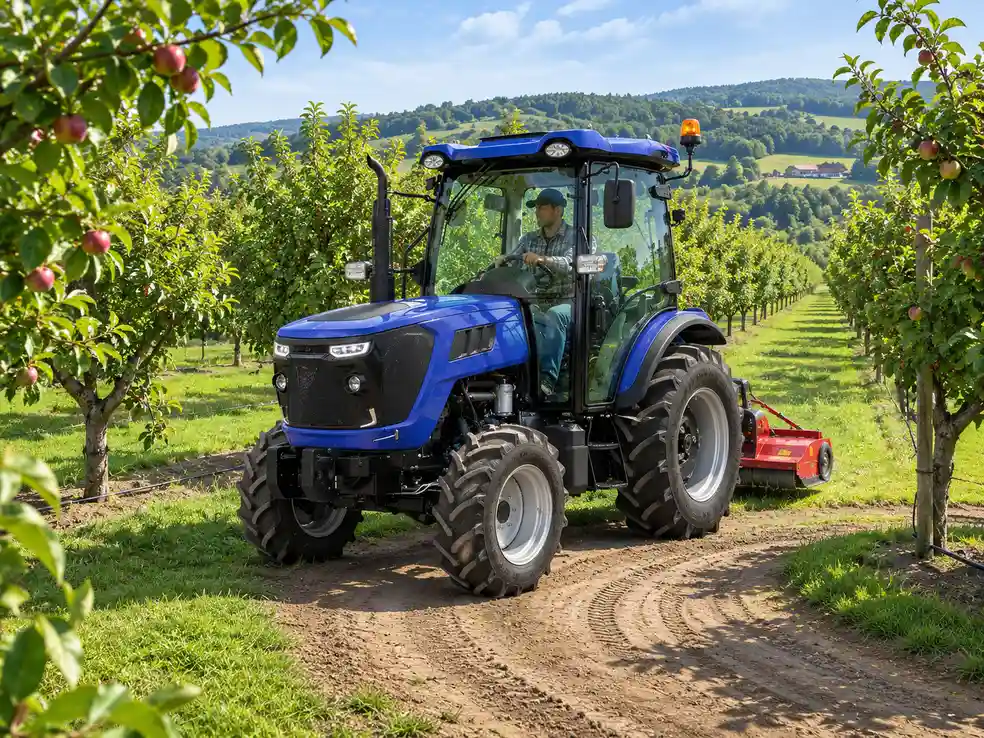
Figure 1. Rotavator work on a mixed farm. Check implement width, PTO output and soil conditions. Illustrative scene.
Check the five interfaces between tractor and rotavator
The correct tractor for rotavator and trailer work needs more than a horsepower match. Before accepting a tiller package, verify the attachment manufacturer’s permitted tractor-power range, required PTO speed, PTO shaft/spline and guarding, three-point hitch category and actual implement mass. Confirm PTO shaft length and telescopic travel at the full raised and lowered positions.
Most farm buyers are familiar with 540 rpm PTO implements, but the attachment data plate determines the required speed. A tractor with multiple PTO speed settings is useful only if the intended attachment is approved for the selected setting. Do not assume that different tractor models use identical PTO combinations.
Calculate usable field capacity, not catalogue coverage
A practical estimate is effective field capacity (ha/h) = tiller working width (m) × ground speed (km/h) × field efficiency ÷ 10.
Assume 2.5 hectares require one pass with a 1.5 m rotavator at 3.0 km/h and an illustrative 70% field efficiency. Capacity = 1.5 × 3.0 × 0.70 ÷ 10 = 0.315 ha/h; estimated field time is about 7.9 hours. An otherwise compatible 1.8 m rotavator at the same ground speed and efficiency would take about 6.6 hours, saving roughly 1.3 hours for that pass.
The improvement is conditional. If soil resistance forces the wider tool to run at 2.3 km/h, effective capacity drops to about 0.290 ha/h—worse than the narrower tool at 3.0 km/h. Field efficiency is a planning assumption; headland turning, overlapping passes, soil moisture and stone interruptions can change the outcome.
Do not use engine speed as the first cure for hard soil
When a rotavator struggles, first check working depth, forward gear, soil moisture and the attachment’s rated power range. Selecting a slower travel gear while maintaining the specified PTO operating speed can be more appropriate than indiscriminately reducing engine rpm. Unapproved deep cultivation may require a different soil preparation sequence rather than a more aggressive tiller setting.
Ask whether the implement includes suitable overload protection, such as a manufacturer-specified slip clutch. Repeated PTO shock loads can make a cheap mismatched attachment expensive over its service life.
IV. Trailer Selection: Gross Load, Brakes and Farm Tracks
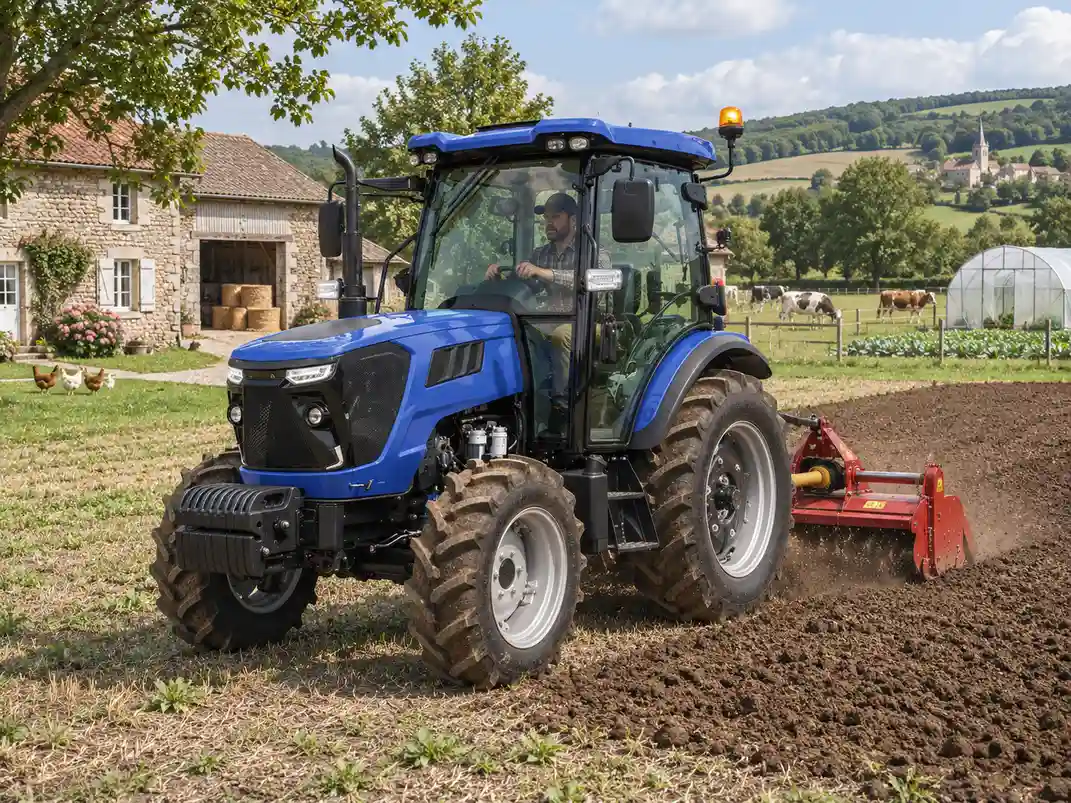
Figure 2. Farm trailer transport. Confirm gross mass, hitch and braking requirements before loading. Illustrative scene.
Calculate what the tractor must control
A trailer advertised with a 1,300 kg payload does not weigh 1,300 kg when loaded. If its empty mass is 500 kg, the gross trailer mass becomes 1,800 kg. This combined mass—not the payload alone—must be considered alongside the approved tractor towing rating, drawbar vertical load, hitch type, brakes and intended route.
A useful illustration: on an 8% gradient, the grade force acting on an 1,800 kg trailer is approximately 1,800 × 9.81 × 0.08 = 1.41 kN, before rolling resistance or other losses. This is not an allowable towing-capacity calculation; it shows why an apparently easy yard load becomes a different problem on a slope.
Four-wheel drive does not replace trailer brakes
Four-wheel drive can improve traction when travelling on mud, gravel or damp grass. It does not guarantee that the tractor-and-trailer combination can stop safely. Check the braking arrangement and applicable legal limits, especially when moving between fields on public roads. Use the designated drawbar connection and never improvise a high tow point.
A farm that frequently moves produce or feed should request the tractor’s documented rated towing and hitch limits. Do not infer towing capability from engine HP or from a promotional photograph of a loaded trailer.
Test the complete combination at its worst routine turn
The trailer may clear a gateway when pulled straight but cut a tighter inside path on a turn. Check tongue articulation, tyre clearance, turning space, reversing sightlines and low-speed braking under representative, controlled conditions. Record track slopes and the condition of the route in the purchase brief.
V. Orchard Clearance: Width, Height and Turning Space
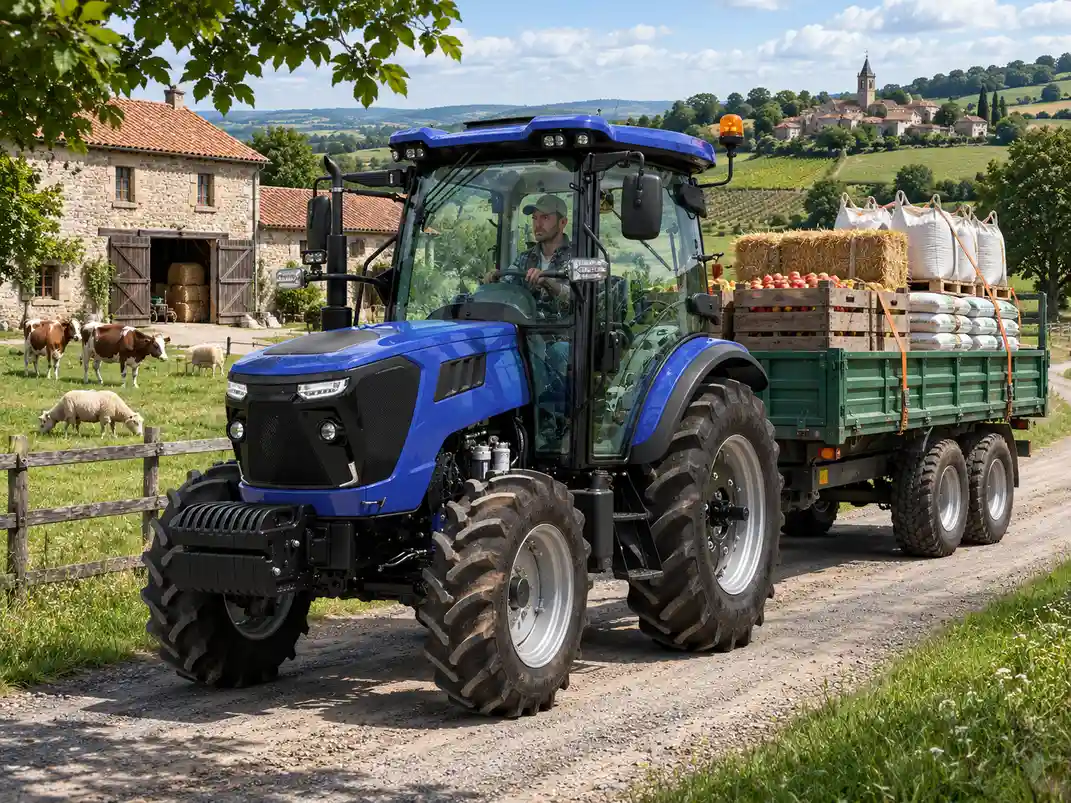
Figure 3. Orchard manoeuvring. Measure clear row width, branch height and headland turning space. Illustrative scene.
Measure the usable corridor at operating height
Orchard row spacing is not the same as free tractor width. Branches, trunks, irrigation fittings and ruts reduce the space available to the machine. Measure the narrowest usable corridor where the tractor and its widest attachment must actually pass. Include tyres, mirrors, exhaust, guards and any projecting components in the final envelope.
For example, a 2,150 mm clear corridor and a 1,560 mm-wide tractor leave 590 mm total horizontal clearance, or 295 mm per side only when perfectly centred. That is a planning calculation, not an established safety clearance. Root mounds, side slopes and attachment overhang can use up the margin.
Check canopy height before discussing power
If the lowest unavoidable overhead clearance is 2,450 mm, a configuration listed at 2,600 mm overall height simply does not fit. Buying the same-height tractor with 25HP instead of 50HP does not change this geometry. The solution is a machine whose approved operating configuration fits, or a different safe access plan—not operating with roll-over protection improperly removed or disabled.
This is an important orchard tractor clearance test: a compact label does not make a tractor low-profile. On slopes, reduced track width or altered protective arrangements can create further stability risks.
Draw the turning envelope of the tractor and attachment
At each headland, measure the usable depth between trees, fencing, ditches and walls. A mounted rotavator swings beyond the tractor’s rear axle; a trailer follows its own cut-in path. Wheelbase alone cannot establish the required turning radius. Where the orchard is the limiting site, arrange a dimensioned turning check or a slow on-site demonstration.
For more site-specific guidance, the related article Tractor for Olive Groves in Italy: Width, Mowers and Daily Tasks explains how orchard constraints can outweigh headline horsepower.
VI. Three 15-Acre Farm Scenarios—and the Trade-Offs
Scenario A: Mostly rotavator work, light seasonal towing
Hypothetical brief: 2.5 hectares of cultivation, level access, occasional light transport and a tight budget. The buyer should first obtain the tiller manufacturer’s required PTO power, working width and weight. If a 25–30HP tractor meets the real attachment requirements at an acceptable speed, a 40–50HP upgrade may have little payback. The purchase objective is reliable completion of the seasonal workload, not maximum power.
Scenario B: Orchard maintenance with low branches
Hypothetical brief: 2.2 m usable corridor, 2.45 m minimum overhead clearance and mowing between rows. A tractor measuring 1.56 m wide may pass the horizontal test but fails the height test if its listed configuration is 2.60 m tall. The buying decision should stop here until a properly approved lower-profile alternative or changed access plan is established.
Scenario C: Cultivation plus frequent loaded trailer trips
Hypothetical brief: a mixed farm with seasonal tillage, repeated produce haulage and a sloping access track. A 40–50HP shortlist may be reasonable, but the final decision depends on verified tiller PTO power, approved hitch/towing ratings, trailer brakes and safe turning. If no shortlisted tractor supports the loaded trailer lawfully and safely, the correct answer may be a different transport solution.
Convert productivity improvements into total cost of ownership
A wider tiller might save 1.3 hours on one 2.5-hectare pass. At three passes a year, that is 3.9 hours annually. At an illustrative labour-and-operating-time value of €35/h, the gross time value is about €137 per year. If achieving it requires an additional €1,500 purchase cost, the simple payback from those savings alone exceeds ten years—before fuel, repairs and financing are considered.
For a tractor for 15 acres, this calculation is intentionally conservative. A short weather window, contract-labour saving or major growth in cultivated acreage could change the outcome. For a purchasing manager, total cost of ownership (TCO) should include delivered price, compatible attachments, fuel, wear parts, downtime, service access, finance and eventual resale value.
VII. Matching OXPLO Tractors to the Verified Requirements
Compare the OXPLO compact models after the site passes the access test
The best OXPLO tractor for 15 acres is chosen after the functional limits are known. The OXPLO tractor catalogue provides four compact-platform candidates for many small-farm comparisons: the OXPLO OXT254 (25HP), OXPLO OXT304 (30HP), OXPLO OXT404 (40HP) and OXPLO OXT504 (50HP). All four published product specifications list 4WD, Category I linkage, 1,560 mm overall width and 2,600 mm overall height in the displayed configurations.
That shared published width is a useful OXPLO purchasing distinction: a customer can compare increased rated engine output within the same nominal compact-series width. It does not make the models automatically suitable for narrow orchards, nor does higher power increase the Category I linkage’s allowable implement loads.
OXPLO model | Where to start the evaluation | Critical confirmation |
Light mowing, routine property work and compatible smaller tillers | Rated PTO output; implement manufacturer power range | |
More frequent cultivation and mixed daily work | Category I implement weight; approved towing/braking | |
Higher engine-power need with the same listed compact width | Exact PTO setting and implemented driveline compatibility |
One OXPLO specification difference that buyers should not overlook
The OXPLO OXT254, OXT304 and OXT404 product pages currently list 540/1000 rpm PTO. The OXPLO OXT504 product page lists 540/720 rpm PTO. Another OXPLO configuration page contains differences in some transmission descriptions. Treat the individual quotation and confirmed specification sheet as controlling; do not order a 1,000 rpm implement on the assumption that every compact OXPLO model offers that setting.
For a buyer with an existing tractor implement fleet, matching the PTO and hitch can preserve investment in usable equipment. For a dealer buying multiple OXPLO machines, a version-specific specification schedule reduces disputes about which gears, PTO speeds, tyres and protective equipment were supplied.
Build a complete OXPLO package, not a tractor-only quotation
The OXPLO attachments and support page lists rotary tillers, trailers and other attachments. OXPLO can use the buyer’s implement dimensions, PTO requirements, hydraulic needs and intended work to check compatibility before the order. This is more useful than selecting accessories from photographs, because apparently similar attachments can impose very different loads.
On the OXPLO tractor configuration page, European buyers can submit their farm type, destination country and operating requirements. OXPLO describes model-specific documentation assistance, attachment matching, dealer quotations, pre-shipment inspection photos or videos and shipping coordination. Confirm the services and documents actually included in the commercial offer.
European purchasing: confirm the exact version and its documents
For EU markets, agricultural-vehicle type approval is governed by Regulation (EU) No 167/2013 and relevant implementing and delegated rules. A Certificate of Conformity relates to a vehicle matching an approved type. Do not assume that CoC support for selected OXPLO versions extends to every model or configuration. Ask OXPLO for the documents applicable to the specific unit, engine, tyres and intended destination.
Confirm applicable emissions requirements, operator protection, lighting, braking, road registration arrangements and trailer use. UK and EU requirements should not be treated as automatically identical. For more context, see OXPLO’s tractor CoC and EU road-registration guide.
A six-item quotation request that prevents expensive rework
- Farm location and destination country; total acres plus actual areas for tillage, grass and orchard.
- Rotavator make/model, work width, minimum/maximum allowed PTO horsepower, 540/1000-rpm requirements and hitch category.
- Trailer tare mass, maximum gross mass, hitch/brake specifications, gradients and any public-road use.
- Minimum orchard corridor, canopy clearance, gateway width, headland depth and site photographs.
- Expected annual hours and equipment already owned; any proposed future attachments.
- Written confirmation of OXPLO model/version, PTO and transmission, attachment match, approved limits, destination documentation, landed costs and spare-parts plan.
This is where OXPLO can help reduce procurement uncertainty: the outcome should be a documented and compatible OXPLO tractor-and-implement package—not a generic horsepower recommendation.
VIII. Frequently Asked Questions
Q1. How Much Horsepower Does a Tractor for 15 Acres Need?
A 25–40HP class is a useful initial comparison for many light and moderate workloads, but it is not a rule. Verify the most demanding PTO implement, the hours available to complete field work, gradients, trailer requirements and access. OXPLO offers 25HP, 30HP, 40HP and 50HP compact-platform options that can be evaluated against those inputs.
Q2. Will a 25HP tractor pull a rotavator?
Only if the specific rotavator’s allowed PTO power, working depth, weight and interface requirements fit the exact tractor. Check rated PTO power, not engine HP alone. Soil conditions and working speed can change the practical result.
Q3. Is a 4WD compact tractor always safe for trailer towing?
No. 4WD can help traction, but safe towing depends on approved gross trailer mass, drawbar load, hitch height, axle and tyre limits, brake system, slope and road-use rules. Obtain the tractor and trailer documentation before loading.
Q4. Can the OXPLO compact range enter a low orchard?
Not automatically. The published OXPLO compact-series configurations are approximately 1,560 mm wide and 2,600 mm high. A site with 2,450 mm overhead clearance fails the height test regardless of HP. Measure the complete machine and attachment before ordering.
Q5. What should a European dealer ask OXPLO to send with the quotation?
Request the precise version-specific specification, eligible approval/CoC information, engine and road-use details, attachment fitment, spare-parts terms, warranty scope, shipping basis, delivery estimate and pre-shipment inspection arrangement. The OXPLO support team can discuss parts and technical requirements.
IX. Conclusion: Buy for the Work, Not the Acreage
The most effective tractor for 15 acres is the machine that completes the farm’s recurring jobs within its real physical and technical limits. Start with the rotavator’s rated PTO demand, the trailer’s loaded and braked configuration, and the orchard’s narrowest width, lowest canopy and headland clearance. Then compare the total lifetime cost—not just the engine-power figure.
OXPLO offers several compact 4WD tractor options and compatible-attachment support, but the right OXPLO recommendation depends on the individual site and final model configuration. For a practical review, send your measurements, rotavator details, trailer specifications and destination country through the OXPLO contact page. A configuration-specific quotation is the right next step after these checks—not before them.