
A forklift can have enough rated capacity to lift a pallet and still be the wrong machine for the yard. Consider a Croatian building-material distributor moving heavy pallets from a concrete warehouse to a truck-loading area across compacted gravel. In dry weather, the route looks manageable. After rainfall, the same forklift encounters wheel slip, ruts and longer manoeuvring times. The nominal lifting capacity has not changed, but the loading schedule has.
For buyers evaluating an outdoor forklift Croatia operation, this is the central issue: equipment selection must account for the complete handling cycle, not just the number printed on the capacity plate. Ground condition, tyre construction, load centre, available space, operator visibility and EU-market documentation can each determine whether the forklift is fit for purpose.
This guide shows procurement managers, yard supervisors and machinery dealers how to specify a forklift for outdoor yards in Croatia and the wider Balkans. It also explains when improving a surface may be a better investment than purchasing a larger machine.
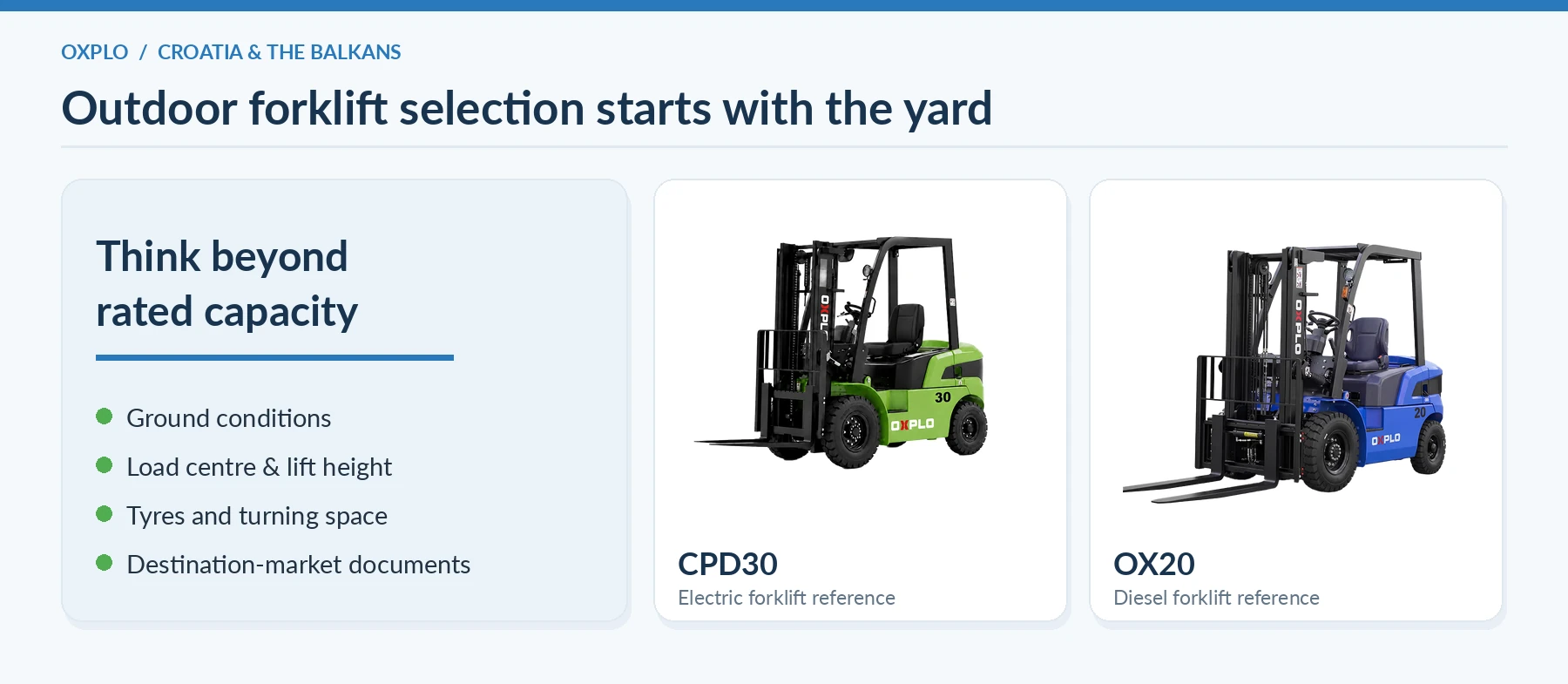
Figure 1. Original OXPLO product references supplied for this article: CPD30 electric forklift (green) and OX20 diesel forklift (blue). These are not photographs of OX30, OX35L or OX35F.
I. Start With the Worksite Problem, Not the Forklift Catalogue
Why a forklift that works indoors may fail to meet outdoor targets
A typical yard combines concrete warehouse floors, asphalt loading aprons and unpaved storage lanes. Moving between them changes tyre grip, vibration, stopping behaviour and the time required for each cycle. A machine that performs predictably indoors can become a bottleneck outdoors even when the pallet is below its nominal load rating.
The hidden costs usually appear as slower truck turnaround, puncture repairs, repeated load repositioning, extra operating hours and interrupted dispatches. They should not be confused with a measured loss of rated lifting capacity: the issue is the suitability of the entire operating system.
For an outdoor yard forklift Croatia buyer, the first useful question is not “Which forklift is strongest?” It is “Where, during a normal shift, does the operator need to slow down, stop or take a different route?”
Three customer environments, three different constraints
Customer | Recurring difficulty | Specification priority |
Building-material distributor | Heavy pallet loads across a mixed concrete/gravel route | Verified capacity, tyre grip and turning space |
Timber and panel yard | Long packs with forward-shifted centres of gravity | Residual-capacity chart, fork support and visibility |
Agricultural supply warehouse | Compacted soil, seasonal moisture and remote service access | Ground clearance, suitable tyres and maintainability |
These are illustrative operating scenarios, not claims about specific customer installations. Their purpose is to show why a single “outdoor forklift” specification cannot serve every yard equally well.
II. Survey the Route Before Choosing Tyres or Ground Clearance
Document the worst 20 metres of the route
Walk the forklift’s full path, from unloading to storage to dispatch. Photograph the roughest section after rain if possible. Record surface type, potholes, ruts, standing water, longitudinal gradients, cross-slopes, gate widths, turning areas and travel distance. Note where a loaded machine must stop, reverse or approach a truck.
Compacted gravel with a stable sub-base can sometimes support an appropriately specified industrial forklift. Loose gravel or waterlogged fill is different: tyres can displace stones, sink into soft areas or lose traction when braking. Adding a deeper tread does not turn weak ground into a safe working surface.
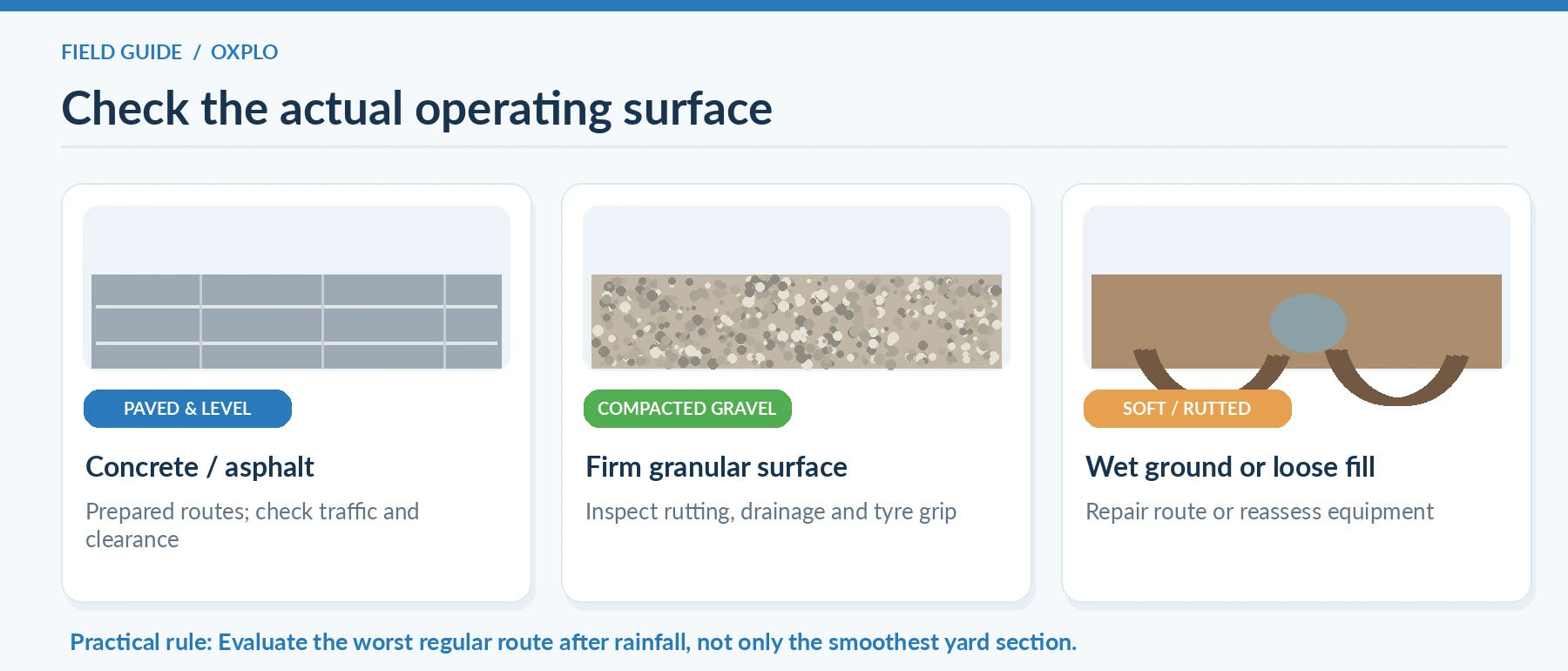
Figure 2. Route-condition assessment: prepared paving, compacted gravel, and soft or rutted sections require different handling decisions.
If only one short loading lane causes the problem, compare the cost of drainage, grading or surface reinforcement against the cost of a different forklift. Repairing a route may improve every machine using it; purchasing a taller forklift addresses only part of the problem.
Ground clearance and chassis width are a trade-off
More clearance can help a chassis pass over irregular ground, but it does not guarantee that the forks, mast or underbody will clear every obstacle. Wheelbase, approach geometry and tyre deflection also matter. Meanwhile, some rough-terrain designs are substantially wider than industrial models.
Measure the tightest entry and the real turning space around stacked products and delivery vehicles. A forklift that crosses ruts successfully but cannot turn within the loading lane will still create delays. A rough surface forklift Balkans assessment therefore needs a dimensioned site sketch, not only a ground-clearance number.
Do not mistake gradeability for an approved loaded slope
A brochure’s gradeability figure is not a blanket safe-operating limit for a loaded truck. Surface grip, load position, operating direction and side slope change stability. Use the model-specific operating instructions and a competent site risk assessment; redesign unsuitable routes rather than assuming additional power or tread will make them safe.
III. Calculate the Load Envelope, Not Just the Heaviest Pallet
Load centre can invalidate an attractive 3-ton quotation
Nominal capacity is stated at a specified load centre and configuration. When the centre of gravity moves forward, the load moment increases even if pallet weight stays the same.
Screening relationship: Load moment = Load weight × Load-centre distance.
Suppose a construction-material pallet weighs 2,600 kg and its centre of gravity sits 600 mm forward of the fork face. Its simplified moment is 2,600 × 600 = 1,560,000 kg·mm. For a rough comparison at a 500 mm reference centre, that moment corresponds to 1,560,000 ÷ 500 = 3,120 kg. This does not establish a safe forklift rating: the manufacturer’s approved load chart, mast, lifting height, tyre configuration and attachment arrangement must decide whether the lift is permitted.
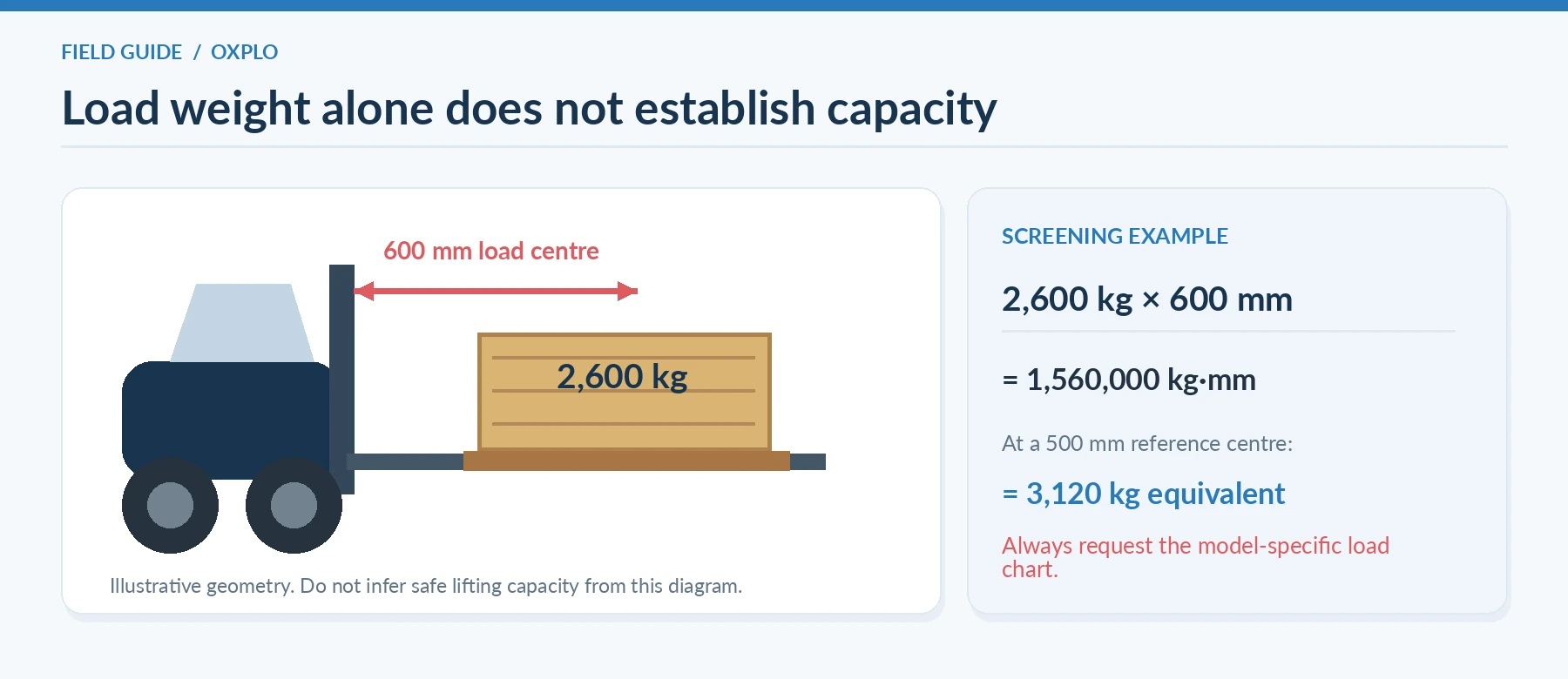
Figure 3. Illustrative load-moment screening only. Use the manufacturer’s configuration-specific load chart to determine permissible capacity.
The calculation is still useful because it identifies a common error. A buyer may assume that a 3,000 kg forklift handles every 2,600 kg pallet, while the pallet geometry makes that assumption unreliable.
Fork length, lifting height and attachments change the answer
A timber pack, long panel bundle or deep pallet may demand longer forks, a side shifter or specialised clamps. Attachments add weight and can shift the effective load centre. Rated capacity may also decrease at greater lifting heights. Ask for a residual-capacity chart covering the actual mast and attachments rather than combining unrelated headline specifications from a brochure.
A complete load brief should state maximum gross weight, pallet length and depth, expected load-centre distance, maximum lift height, fork-entry dimensions, attachment requirements and the position of any irregular load. If that information is missing, comparing quotations by capacity alone is premature.
IV. Forklift Tyre Selection for Gravel, Asphalt and Wet Yards
Match tyre construction to the operating surface
Tyres affect more than puncture risk. They influence shock transmission, vibration, traction, rolling resistance and the operator’s ability to maintain a consistent handling cycle.
Tyre choice | Potential fit | Important trade-off |
Air-filled pneumatic | Firm outdoor surfaces and some uneven routes | Pressure maintenance and puncture exposure |
Solid pneumatic-style | Debris-prone yards where punctures are frequent | Typically firmer ride; check traction and application |
Cushion | Smooth, predictable warehouse or paved work | Poor default for heavily uneven gravel or soft ground |
A deep-tread tyre is not a substitute for adequate soil bearing capacity. Tyre width and inflation also interact with axle loading; avoid making ground-pressure claims without the actual machine and tyre data. Any tyre substitution should be approved for the exact forklift because it may alter stability and ratings.
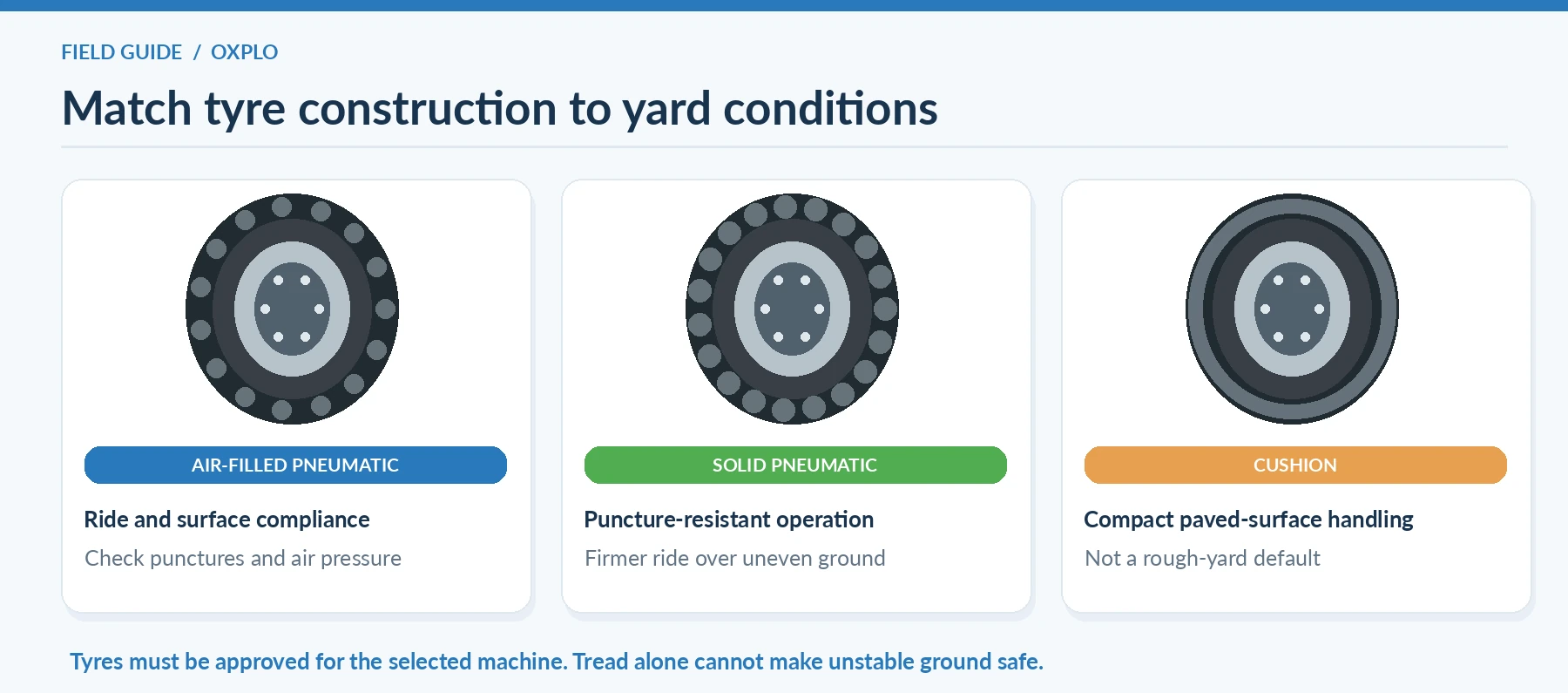
Figure 4. Forklift tyre comparison; the complete tyre and truck configuration must be approved for the actual site.
Use a simple surface decision test
For pallet handling on gravel, distinguish three conditions. Stable, compacted gravel: assess an approved pneumatic-equipped industrial configuration. Irregular but reasonably firm terrain: consider a purpose-built rough-terrain chassis and appropriate tyres. Deep mud, severe ruts or loose fill: improve the ground or evaluate a different handling method before running loaded trials.
For wet coastal yards, include drainage and corrosion exposure in the operating plan. For agricultural yards, inspect the surface after seasonal rain rather than relying only on dry-season photographs. For yards containing metal scrap or sharp debris, add a tyre-damage history to the comparison.
The tyre quote should answer operational questions
Ask the supplier to identify the exact tyre size and construction, approved load rating, recommended inflation pressure if pneumatic, replacement availability and suitability for the intended surface. An “off-road tyre” description without these details is not a sufficiently precise specification.
V. Compare Solutions Through Real Customer Decisions
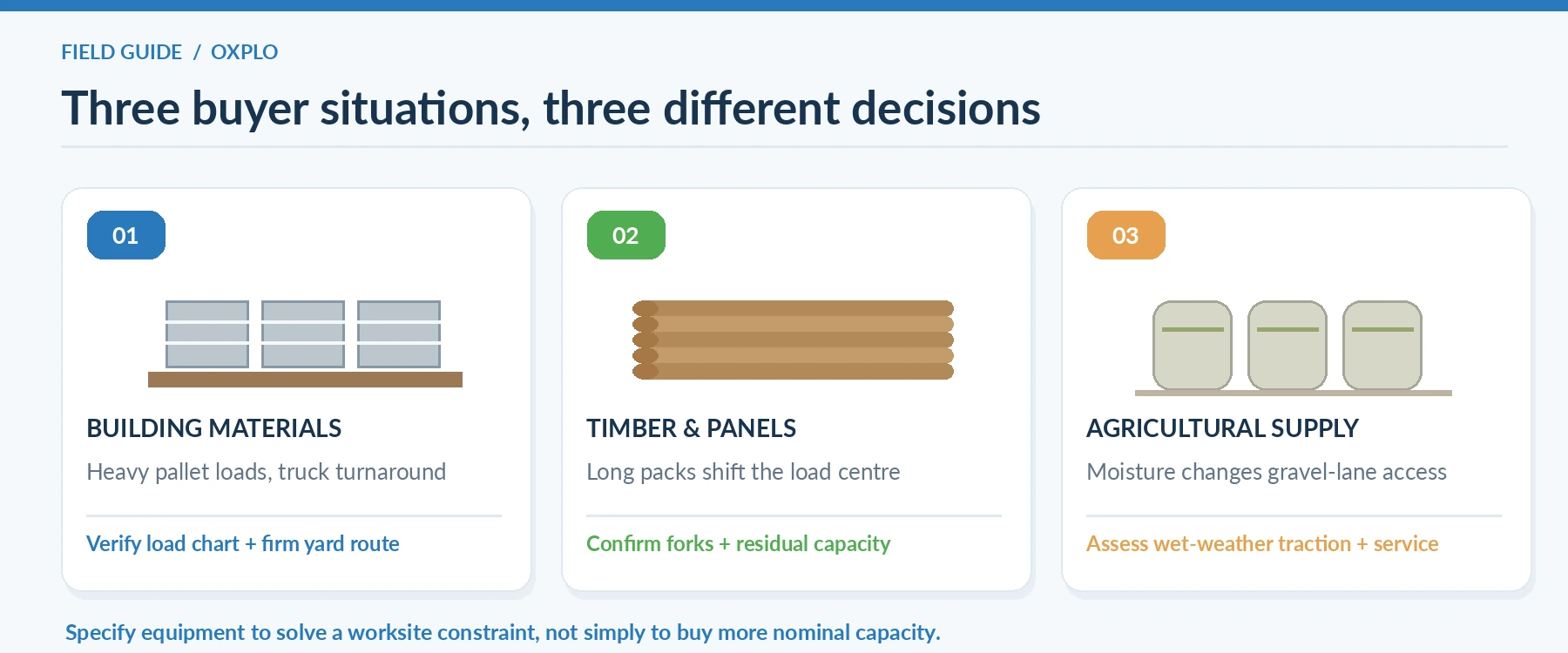
Figure 5. Typical outdoor forklift purchasing priorities differ among building-material, timber, and agricultural businesses.
Scenario A: Mixed-surface building-material dispatch
A distributor stores blocks and bagged materials on concrete but loads trucks along a compacted gravel lane. Pallets are heavy, and the gateway is relatively narrow. An industrial forklift may be the better value if its tyres, approved operating conditions and rated load chart suit the route. Upgrading to a wider rough-terrain machine can create a new access problem without eliminating the underlying drainage issue.
Decision: Verify load centre and gate dimensions first. Trial the existing route only under approved, controlled conditions. If one lane deteriorates after rain, price surface rehabilitation as a competing solution.
Scenario B: Timber yard with unusually long packs
The daily challenge is not only weight. Long timber packs move the centre of gravity forward and can restrict the operator’s view. Even a forklift with a nominally adequate rating may need derating with long forks or attachments. Poor gravel adds vibration and complicates turning.
Decision: Obtain a capacity chart for the complete attachment package, verify supported load geometry, plan traffic separation and compare tyres against debris exposure. An increase in nominal tonnage is not sufficient evidence of suitability.
Scenario C: Seasonal agricultural warehouse
An agricultural supplies business moves palletised feed and packaged goods between covered storage and an outdoor yard. Soil and gravel lanes become less reliable in wet periods, while access to service technicians can be limited.
Decision: Prioritise approved terrain mobility, clearance, practical daily inspection and parts availability. Where heavy loads must cross unstable ground regularly, evaluate both route improvement and a genuinely suitable outdoor machine. See OXPLO’s Agricultural Handling application overview for related site workflows once the basic handling requirements are established.
VI. Quantify the Operating Cost Without Inventing Savings
Translate slow cycles into yearly capacity
Suppose a yard handles 60 pallets each day and poor route conditions add 30 seconds to every handling cycle. The additional time is 60 × 30 seconds = 30 minutes per day. Over 220 working days, that is 110 hours of extra operating time. These figures are an illustrative calculation, not a promised performance improvement from a forklift upgrade.
To test the business case, record baseline cycle times under representative dry and wet conditions. Compare the same load, operator training level and route after an approved improvement. Distinguish reduced operating time from payroll savings: time released may increase throughput or reduce overtime rather than eliminate a position.
Build a total cost of ownership (TCO) comparison
Annual TCO = Depreciation + Financing + Fuel/Energy + Planned Maintenance + Tyres + Unplanned Repairs + Downtime + Other Operating Costs.
Add one-time site work, attachments, training, delivery and required compliance documentation when comparing proposals. A lower purchase price can lose its advantage if spare parts are slow to arrive or tyres are unsuitable. Conversely, a more expensive rough-terrain machine may be unjustified if the route can be made suitable for a conventional forklift at lower total cost.
A useful buying metric is the cost per safely completed handling cycle over the planned ownership period, with assumptions documented rather than guessed.
VII. What Croatian and Balkan Buyers Must Confirm Before Importing
EU machinery rules and engine emissions are separate checks
Croatia is in the EU. For machinery placed on the EU market before 20 January 2027, the machinery conformity framework continues under Directive 2006/42/EC; Regulation (EU) 2023/1230 becomes generally applicable from that date. The applicable rules at the time of placing on the market must be assessed. For diesel non-road machinery, relevant engine-emissions requirements under Regulation (EU) 2016/1628 must also be checked separately.
Ask for the exact configuration’s EU Declaration of Conformity and CE-related evidence, appropriate manuals and labels, and applicable engine emissions/type-approval information. Croatia’s national machinery requirements also call for operating instructions and relevant warnings in Croatian. Do not accept a certificate for a different engine or a generic product-family brochure as proof that the offered unit complies.
Croatia and Slovenia are EU members; Serbia, Bosnia and Herzegovina, Montenegro and other neighbouring markets have their own destination requirements. A single package should not be assumed compliant across the whole Balkans.
Treat service and documentation as part of the product
Before paying a deposit, confirm spare-parts identification, planned maintenance intervals, warranty exclusions, technical assistance, delivery terms and the person responsible for local conformity obligations. OXPLO’s support information describes the importance of exact model details and serial numbers when requesting assistance, while its warranty policy provides a basis for checking commercial terms.
Ask for answers in writing. A machine that looks suitable in a video but arrives without the necessary documentation or maintainable parts supply cannot deliver predictable value.
VIII. How OXPLO Configurations Fit Different Outdoor Yards
Compare industrial and rough-terrain geometry honestly
OXPLO offers both conventional diesel forklifts and rough-terrain configurations within its forklift range. The important OXPLO advantage for a buyer is the ability to compare different machine types against an application brief rather than automatically specifying the largest chassis. A machinery dealer can use the same decision framework when discussing end-customer needs.
Published specification | OXPLO OX30 | OXPLO OX35L | OXPLO OX35F |
Nominal rated load | 3,000 kg | 3,500 kg | 3,500 kg |
Listed minimum clearance | 135 mm | 135 mm | 225 mm |
Listed overall width | 1,210 mm | 1,210 mm | 1,985 mm |
Configuration emphasis | Industrial diesel | Higher-capacity industrial diesel | Rough-terrain diesel |
The published OX35F is 90 mm higher in minimum ground clearance and 775 mm wider than the OX35L. These figures do not prove how either machine will perform at a particular customer site, but they reveal a meaningful design trade-off: clearance versus access space.
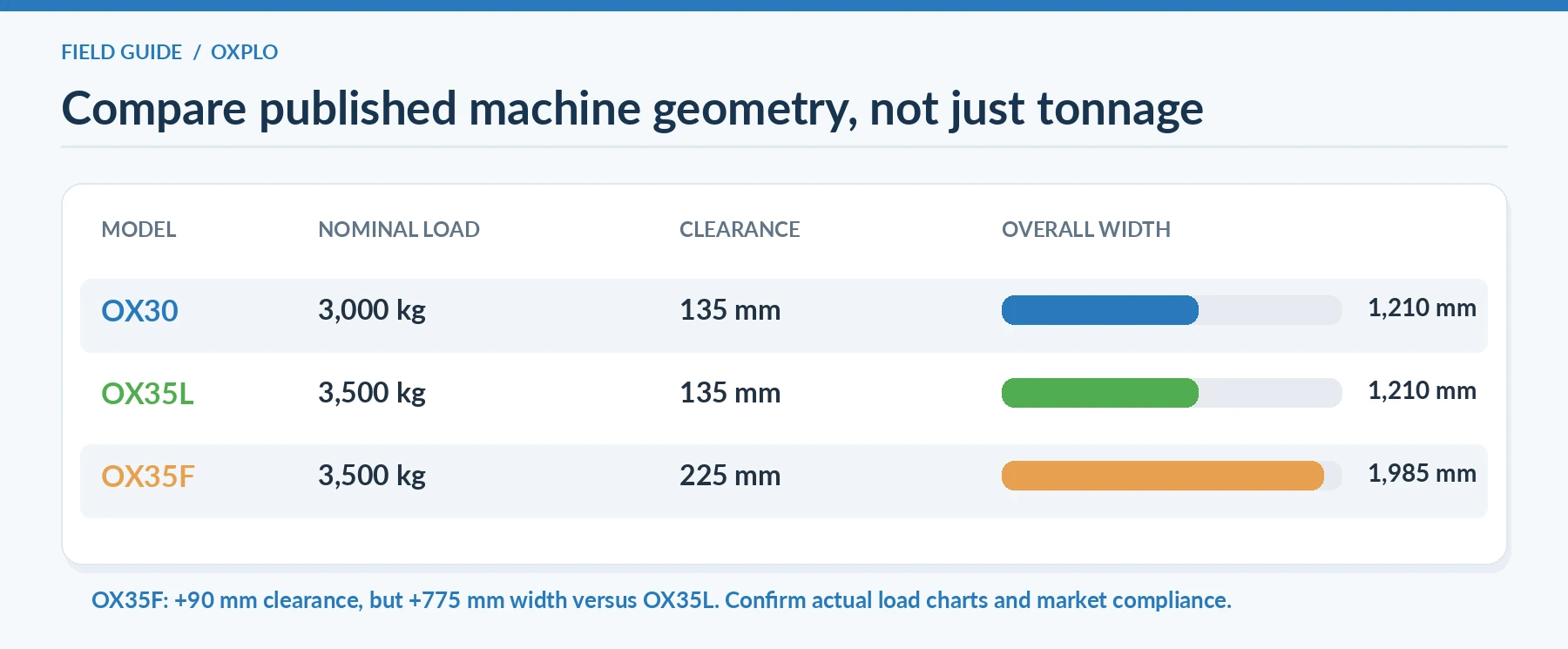
Figure 6. Published OXPLO dimensional comparison. Figures are for initial screening, not a substitute for load charts or market compliance confirmation.
OXPLO OX30: prepared industrial yards and measured loads
The OXPLO OX30 Diesel Forklift is listed with a 3,000 kg nominal rating at a 500 mm load centre, pneumatic tyres, 135 mm minimum clearance and 1,210 mm overall width. This makes it a starting point for buyers handling compatible loads on concrete, asphalt or other appropriately prepared routes. OXPLO should not present the OX30 as a substitute for a purpose-built rough-terrain machine on deeply rutted or unstable ground.
For a Croatian construction-material depot with restricted access, the OXPLO OX30’s published width may deserve attention before considering a larger chassis. Final suitability still depends on the capacity chart, the actual load and the approved surface conditions.
OXPLO OX35L: heavier pallets without the same chassis-width increase
The OXPLO OX35L Diesel Forklift is listed at 3,500 kg at a 500 mm load centre, with 135 mm clearance and 1,210 mm overall width. Where heavier pallets are handled on prepared routes, OXPLO OX35L is worth evaluating against OX30. Its additional nominal capacity does not eliminate load-centre derating or make it an off-road forklift.
For both OXPLO industrial models, request confirmation of the precise mast, tyres and documentation intended for the destination country rather than assuming the website’s reference specification is the final sales configuration.
OXPLO OX35F: more clearance, with meaningful conditions
The OXPLO OX35F Off-Road Forklift is presented for construction yards, timber sites, farms and open storage areas. OXPLO publishes a 3,500 kg nominal capacity, 225 mm minimum clearance, 20.5-16 tyres, 1,985 mm width and a 4,830 kg machine weight. Those attributes make OX35F worth considering when an industrial forklift for open yards cannot handle the required surface where a low-clearance industrial design may be unsuitable.
There are two important boundaries. First, the public OXPLO OX35F specification does not publish a usable load-centre figure or a complete residual-capacity chart; both must be supplied for the specific mast and load. Second, the standard engine listed publicly is a Yunnei YN25, 37 kW, National II configuration. That listing is not evidence of EU Stage V eligibility. OXPLO indicates that any European-market Stage V configuration and CE documentation depend on model and engine availability; buyers must obtain written confirmation before ordering for Croatia or Slovenia.
OXPLO’s Building Materials & Outdoor Yards solution provides additional context on pallet handling, truck loading and outdoor storage workflows. Use it alongside product specifications, not as a replacement for machine-specific verification.
What to send OXPLO for a useful technical quotation
The fastest way to avoid a misleading quotation is to send OXPLO a compact technical brief: destination country and delivery point; pallet weight and dimensions; true load centre; lift height; expected forks or attachments; site photos after rain; narrowest access width; daily cycles; route distance; and any required Croatian-language or EU compliance documents.
OXPLO can then discuss whether the proposed work fits a verified industrial configuration, an eligible OXPLO rough-terrain configuration or requires a change to the yard itself. Buyers can request the exact technical and commercial details through the OXPLO contact page.
IX. Frequently Asked Questions
Can a normal diesel forklift work on compacted gravel in Croatia?
Sometimes. A suitably configured and manufacturer-approved industrial forklift may operate on firm, stable gravel. Loose stones, deep ruts, wet fill and gradients require a more demanding assessment. The machine’s rating and tyres alone are not proof of site suitability.
Is 3.5 tonnes always better than 3 tonnes for outdoor pallets?
No. The correct rating depends on weight, load centre, lift height, attachments and the approved load chart. Extra nominal capacity does not repair an unsafe route or guarantee better tyre traction.
Are solid pneumatic tyres better than air-filled tyres?
They can help where punctures are frequent, but they tend to deliver a firmer ride. Air-filled tyres can offer useful shock absorption on some uneven surfaces. Choose based on debris, ground, operating distance and the approved equipment specification.
Does OXPLO OX35F automatically comply with EU Stage V?
No. The public standard OXPLO OX35F listing identifies a National II engine. Any proposed EU-market engine, Stage V eligibility and conformity documents must be confirmed for the actual unit before it is imported or placed on the market.
What information should a Croatian buyer request before a deposit?
Ask for the exact machine and engine model, load chart, mast/tyre configuration, EU conformity evidence where applicable, engine-emissions documents, Croatian instructions, warranty terms, spare-parts plan, delivery responsibilities and a written specification matching the quotation.
X. Conclusion: Buy the Forklift That Completes the Job
The right outdoor forklift Croatia solution begins with the route and the load. Measure gravel condition, access widths and gradients; verify the load centre and lifting height; compare approved tyre and chassis choices; and price the complete handling process rather than the machine alone.
For a prepared yard, an industrial diesel forklift may be sufficient. For firm but more uneven outdoor routes, a correctly specified rough-terrain machine may justify its larger dimensions. Severely unstable ground may call for site remediation before any forklift purchase.
OXPLO provides buyers and distributors with industrial and rough-terrain models to assess against these conditions. Its OX30, OX35L and OX35F represent different design choices, not interchangeable solutions. To request an appropriate OXPLO recommendation, send the load details, site photographs and destination-market documentation requirements through OXPLO or the technical enquiry page. The most effective quotation is the one that explains why the proposed configuration fits the job—and where its limits are.