
I. A Lower Tractor Quote Is Not Always a Lower Cost
A familiar B2B purchasing pattern starts with a simple request: “Please quote a 50 HP 4WD tractor.” Three suppliers answer with three prices, and the buyer naturally places them in a spreadsheet from lowest to highest.
The problem is that the three numbers may not describe the same machine. One tractor quotation may include a cabin, loader preparation, the required tyre package and a defined shipping basis. Another may cover only the base tractor. A third may list the same horsepower but leave PTO, hydraulic outlets, braking equipment or destination-market documents open for later confirmation.
This is where a cheap tractor quote can become expensive. The hidden cost appears after the buyer has already mentally selected the lowest number: extra options are added, an attachment must be changed, transport assumptions are revised, or the existing mower cannot connect to the supplied tractor.
Procurement rule Do not compare two tractor quotations until they have been converted to the same technical scope and the same delivery basis. Same horsepower does not mean same tractor. |
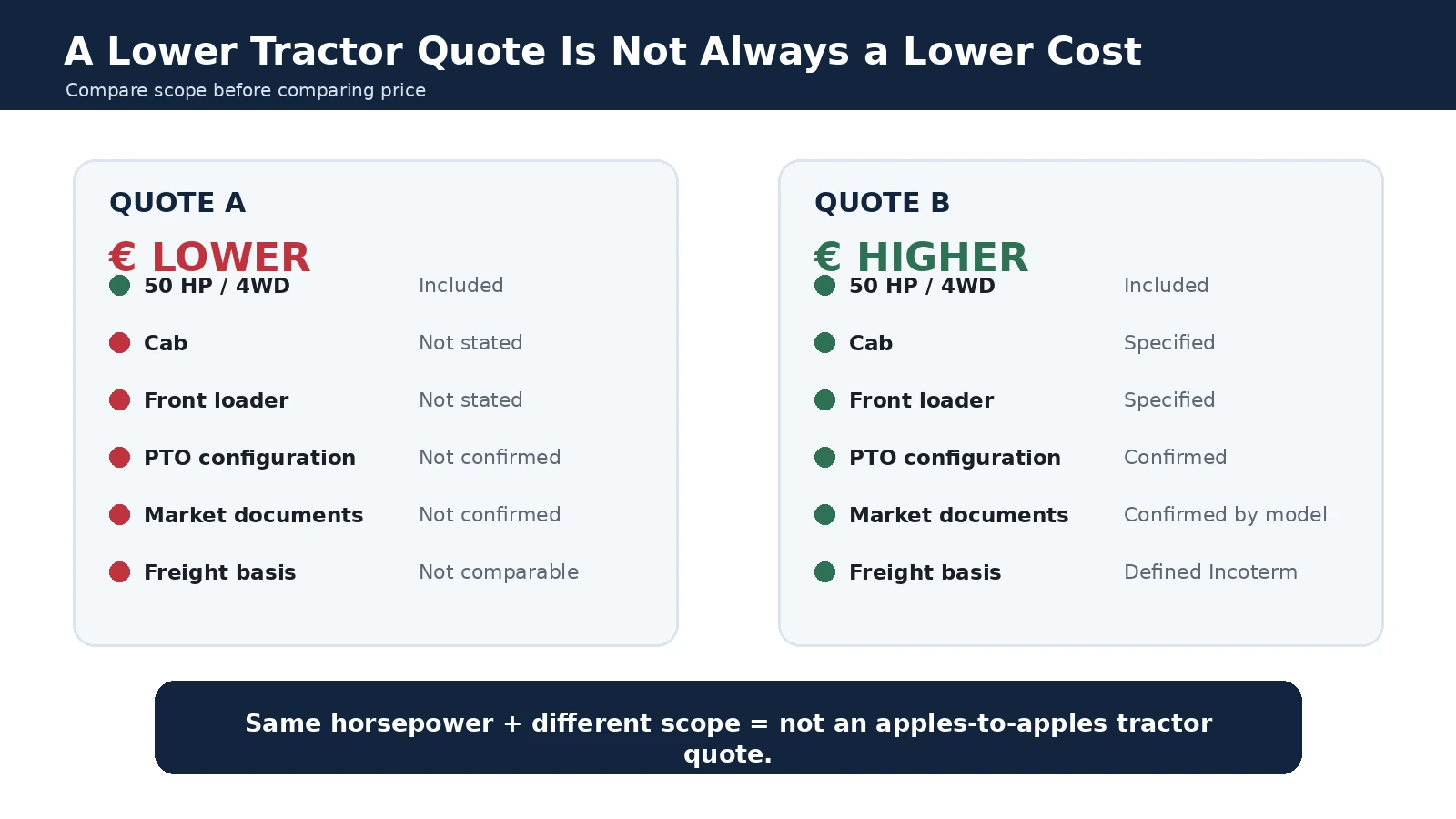
Figure 1. Why headline price alone can create a false comparison between tractor quotations.
II. Why Tractor Quotation Is Hard: A Tractor Is a Working System
A tractor is not a standalone product in the way a generator or pump is often purchased. Its productivity depends on the system around it. The tractor must pull, lift, drive or carry an implement while operating on real soil, real slopes and real access routes. That is why horsepower is useful for screening, but weak as a final purchasing specification.
The correct sequence is job -> implement -> interface -> tractor platform
A more reliable selection process begins with the tractor application. Define the jobs first: mowing, rotary tilling, ploughing, trailer transport, loader work, spraying support, bale handling, orchard maintenance or mixed seasonal work. Then identify the implement that creates the highest demand.
The limiting implement may be the heaviest attachment, the implement with the highest PTO demand, the one requiring Category II geometry, or the attachment that needs hydraulic flow or remote valves the smaller tractor cannot provide. Once that bottleneck is known, the buyer can choose the tractor platform around it.
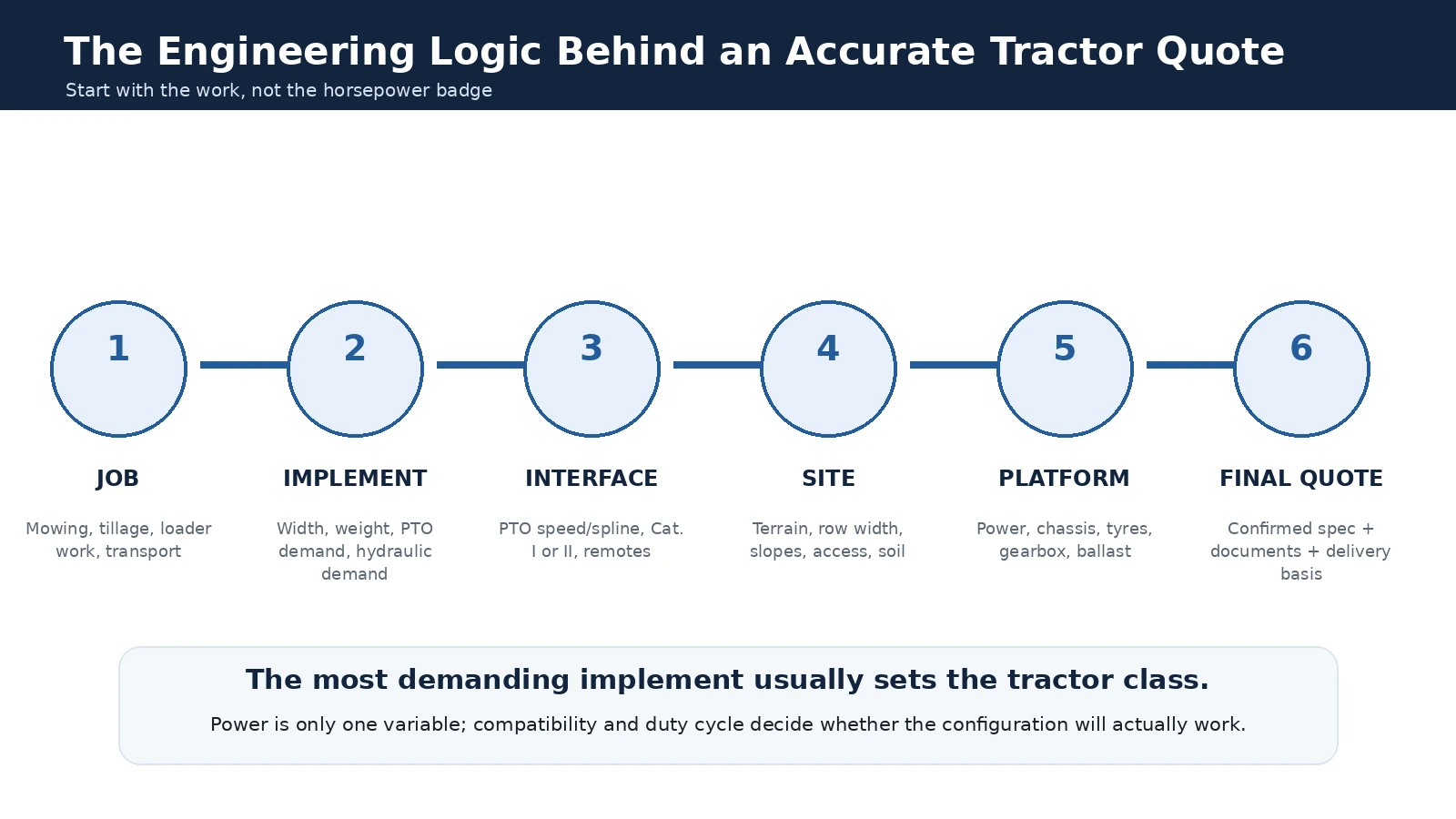
Figure 2. A configuration-based workflow produces a more reliable tractor quote than selecting horsepower first.
Horsepower can solve one bottleneck while creating another
More engine power is not automatically better. A larger tractor may bring a longer wheelbase, greater machine mass, larger tyres and a different 3-point linkage category. Those changes can improve traction and implement capacity, but they can also reduce access through narrow gates, orchard rows, older livestock buildings or compact yards.
That trade-off matters in Europe, where one farm may combine narrow access, road transport between parcels, old implements and seasonal work on wet ground. The correct question is not “How many HP can I buy?” It is “Which platform completes my recurring work without creating a new access, compatibility or ownership-cost problem?”
III. European Buyers Need More Than a Generic “CE: Yes or No” Answer
European tractor procurement adds another layer: the exact market configuration matters. The destination country can affect documentation, engine and emissions configuration, road-use equipment, lighting, braking, mirrors, operator protection and registration or entry-into-service requirements.
Start with the destination market before locking the configuration
For agricultural and forestry vehicles, Regulation (EU) No 167/2013 provides the core EU approval and market-surveillance framework. Engine emissions requirements are also linked through EU legislation. In practice, that means a professional buyer should not reduce the compliance discussion to one generic sticker or one broad certificate question.
For the current legal framework, review Regulation (EU) No 167/2013 on agricultural and forestry vehicles and confirm the exact obligations that apply to the model, configuration and intended use in the destination country.
Ask for model-specific documentation, not a marketing checkbox
A better buyer question is: “What approval, conformity, emissions and technical documents are available for this exact tractor model and supplied configuration in my destination market?” That forces the tractor supplier to tie documents to the actual machine being quoted.
The same discipline applies to road use. If the tractor will travel between fields on public roads, the quotation discussion should identify the intended use and confirm the relevant braking, lighting, mirrors, tyres, speed and registration-related equipment rather than assuming a farm-only configuration will be sufficient.
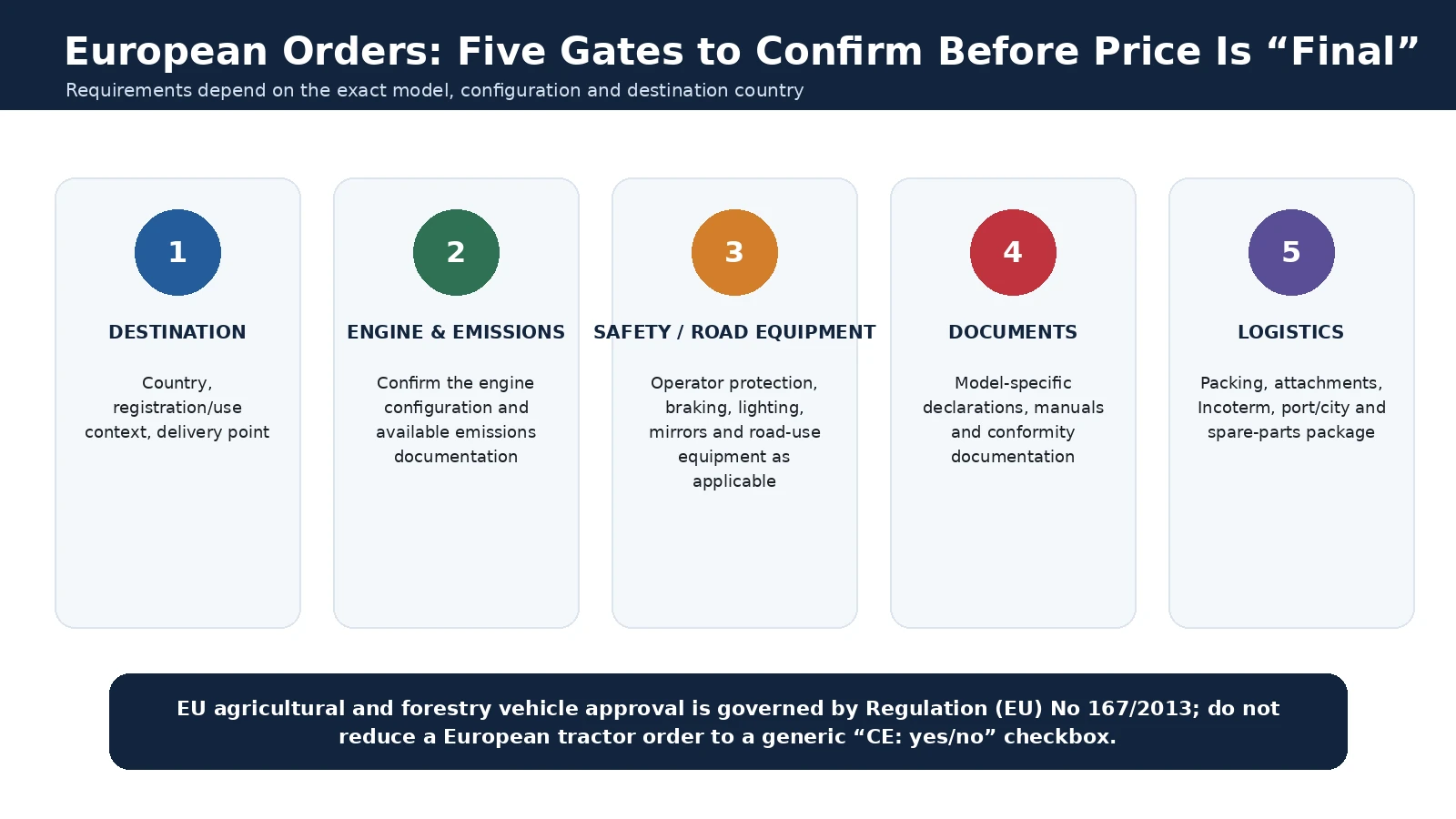
Figure 3. Five confirmation gates that should be closed before a European tractor quotation is treated as final.
IV. The Information That Actually Changes a Tractor Quote
Instead of sending a long random list of specifications, organize the inquiry into four information blocks. Each block answers a different engineering or commercial question. This makes it easier for the supplier to identify what is known, what still needs confirmation and what can materially change the price.
1. Work profile: what must the tractor do?
Describe the primary and secondary tractor application. A useful work profile includes the farm type, the jobs completed most often, the peak seasonal job and the approximate annual operating hours. Farm area is helpful, but workload is more important than acreage alone.
For example, a 30-hectare livestock property using a front loader every day can place a very different demand on a tractor than a 30-hectare estate using a mower for several weeks each season. The same acreage does not produce the same farm tractor specifications.
Send information such as:
- Main applications: mowing, tillage, transport, loader work, spraying support, bale handling or other tasks.
- Farm type: vineyard, orchard, livestock, mixed farm, estate, contractor or municipal/land-management work.
- Approximate annual working hours and the season in which workload peaks.
- Whether the tractor will spend long periods on PTO work, loader work or road transport.
2. Implement interface: what must physically connect and operate?
If the buyer already owns implements, these should drive the tractor quotation. Send the implement model, working width, weight and a photo of the nameplate and connection points whenever possible. The supplier should then verify the interface rather than guessing from the word “mower” or “tiller.”
The key technical checks are PTO speed and spline, 3-point linkage category, implement weight, required lift capacity, hydraulic connections, hydraulic flow or pressure where relevant, and the manufacturer’s recommended tractor power.
This is one of the highest-value steps in the whole inquiry. A tractor can have enough engine power and still be the wrong machine if the implement geometry, PTO or hydraulics do not match.
3. Site conditions: where must the tractor fit and maintain traction?
Terrain and access influence tyres, ballast, 4WD requirements, dimensions and machine weight. Tell the supplier whether the land is flat or hilly, whether spring conditions become muddy, whether access roads are narrow, and whether the tractor must work between orchard or vineyard rows.
For narrow-row work, provide actual dimensions. “Compact tractor” is subjective; “row spacing is 2.2 m and the preferred tractor width is below 1.6 m” is engineering information. The same principle applies to old barns, gateways and low-clearance buildings.
4. Commercial scope: what exactly should the quotation include?
The final information block defines the commercial boundary of the tractor quote: quantity, buyer type, required attachments, cab or open station, loader requirement, tyre preference, spare-parts package, delivery city or port and Incoterm. Dealers and importers should also state their expected model mix and whether they need a first stocking package for parts and attachments.
A useful landed-cost structure is: Base tractor + required configuration + attachments + market-specific equipment + documentation + spare parts + packing + freight + local import/registration costs. Not every cost must be quoted by the tractor supplier, but each cost should have an owner so nothing disappears between quotations.
V. Four Common Quote Mistakes and Their Hidden Costs
Mistake 1: choosing horsepower before checking the implement fleet
The wrong sequence is horsepower -> tractor -> implement. The better sequence is job -> implement -> interface -> tractor. If the farm already owns Category II implements, choosing a compact Category I tractor because its horsepower looks sufficient can create an expensive compatibility problem later.
Mistake 2: assuming “farm use” is an application
“Farm use” is too broad to engineer a machine. A flail mower, rotary tiller, trailer and loader place different demands on power, gearing, hydraulics, traction and ballast. A serious tractor quotation needs the actual duty cycle, not the industry label.
Mistake 3: treating options as accessories instead of system components
A front loader is a good example. It changes more than the purchase price. Loader work can affect hydraulic requirements, front-axle loading, counterweight, tyre choice, stability and the value of a transmission with more forward/reverse ratios. It should be specified with the tractor, not added casually after the base machine is selected.
Mistake 4: comparing EXW, FOB and delivered prices as if they are equal
An apparently lower quotation may simply stop earlier in the logistics chain. The comparison sheet should record the Incoterm, loading point, packing scope, attachments included, spare-parts package and delivery location. Otherwise the buyer is comparing different cost boundaries.
VI. A Systematic Workflow for an Accurate Tractor Quotation
A disciplined inquiry does not need to be slow. In fact, the right structure usually reduces back-and-forth because the supplier can identify the technical decision points early.
- Define the three or four jobs the tractor must perform most often.
- Identify the limiting implement: highest weight, PTO demand, hydraulic demand or linkage requirement.
- Record interface data: PTO speed/spline, 3-point category, hydraulic connections and implement dimensions.
- Measure access constraints: gates, row width, building entrances and turning space.
- Describe terrain, soil, slopes and seasonal surface conditions.
- State destination country, road-use expectations and required documentation.
- Define commercial scope: cab/ROPS, loader, tyres, ballast, attachments, quantity, spare parts and delivery basis.
- Ask the supplier to issue a confirmed specification sheet together with the final tractor quote.
The document that should govern the order Website specifications are useful for screening. The final purchase decision should be tied to a confirmed specification sheet that states the exact supplied engine, transmission, PTO, linkage, tyres, hydraulics, options, documentation and delivery scope. |
VII. How OXPLO’s 25-70 HP Range Fits the Decision
Once the work profile and interface requirements are clear, the OXPLO range can be used as a platform-selection map rather than a simple horsepower menu. OXPLO currently presents six tractor power steps from 25 HP to 70 HP for vineyards, orchards, mixed farms, livestock operations, grassland, transport and general agricultural work.
Buyers can review the full OXPLO 25-70 HP tractor range and the OXPLO tractor configuration and attachment page after the limiting application has been identified.
The important jump is not only horsepower – it is platform class
The clearest example is the move from the OXPLO OXT504 to the OXPLO OXT604. The current OXT504 product page lists 50 HP, 4WD, an 8F + 8R transmission, Category I linkage, a 1,560 mm overall width, a 1,800 mm wheelbase and a listed weight of 2,200 kg. That makes the OXPLO OXT504 relevant when the buyer needs more output but still values compact access and existing Category I implements.
The OXPLO OXT604 is not simply the same tractor with another 10 HP. Its current product page lists 60 HP, 4WD, a 12F + 12R transmission, Category II linkage, a 1,760 mm width, a 2,010 mm wheelbase and a listed weight of 2,500 kg. OXPLO therefore positions the OXT604 as the entry point to a larger utility platform for heavier implements, broader implement compatibility and higher recurring workloads.
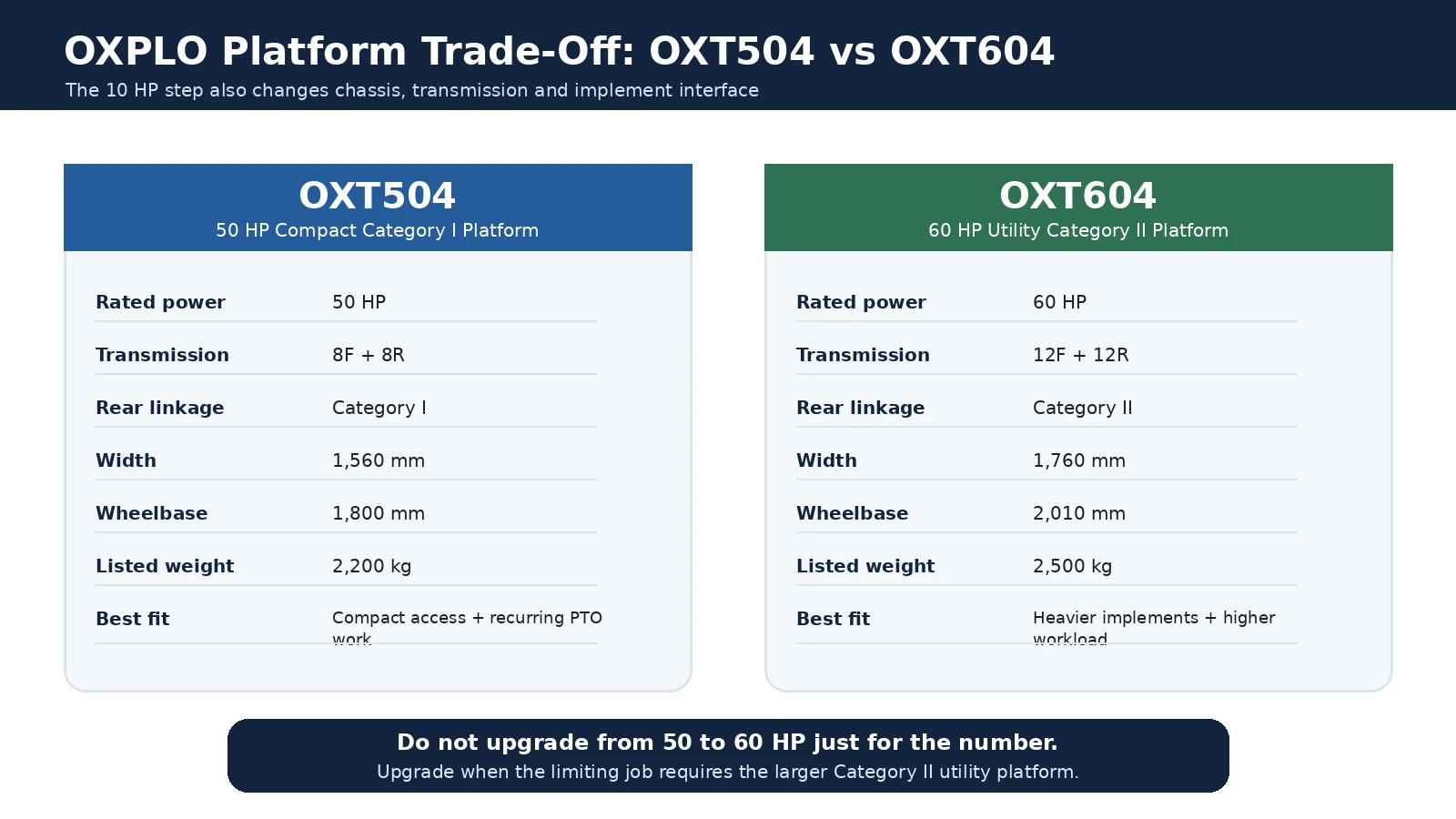
Figure 4. OXPLO OXT504 versus OXPLO OXT604: a platform decision, not merely a 10 HP decision.
Model details: OXPLO OXT504 50 HP tractor | OXPLO OXT604 60 HP tractor
What this means for a European buyer
If a customer works through narrow gates, uses Category I implements and needs frequent PTO work, the OXPLO OXT504 can be a more coherent starting point than moving automatically to a larger tractor. If the same customer begins using heavier Category II implements, performs loader work more frequently or needs a more substantial utility chassis, the OXPLO OXT604 may solve the real bottleneck more effectively.
The same logic extends across the OXPLO line. OXPLO OXT254 and OXT304 address lower-power compact work; OXPLO OXT404 and OXT504 increase working reserve while remaining within the published Category I compact family; OXPLO OXT604 and OXT704 move to the larger Category II utility platform. The correct OXPLO model should therefore follow the implement and operating envelope, not replace that analysis.
VIII. How OXPLO Can Turn an Inquiry into a Configuration-Based Tractor Quote
OXPLO’s strongest role in this process is not simply sending a price list. The practical value is in converting the buyer’s work profile into a configuration that can be priced and checked before production or shipment.
Application review before model selection
An OXPLO inquiry can start with the destination country, farm type, main tractor application, implements, annual workload and access constraints. This gives OXPLO enough context to narrow the model class before discussing optional equipment.
PTO, linkage, hydraulics and attachment compatibility
OXPLO’s tractor configuration page highlights PTO and linkage confirmation, hydraulic and tyre configuration, attachment compatibility and a broad attachment range. For the buyer, the important point is that the OXPLO tractor quote should state the exact interface being supplied, rather than leaving compatibility implicit.
European order documentation and market configuration
For European orders, OXPLO can confirm available model-specific documents and market configuration before the order is finalized. Buyers should still define the destination and intended use clearly, because the relevant engine, operator-protection, braking, lighting and document package depends on the exact supplied configuration.
Pre-shipment inspection and support
OXPLO states that photos or videos of the tractor, attachments and packing can be provided before shipment. That final inspection step is useful because it closes the loop between quotation, confirmed specification and the actual machine being prepared for dispatch.
See the OXPLO support, parts and attachment resources for compatibility, documentation, spare-parts and support information.
IX. Copy-and-Send Tractor Quote Brief
The following brief can be sent to OXPLO or used as a checklist with any tractor supplier. It is intentionally short enough for WhatsApp or email, but detailed enough to start a serious tractor quotation.
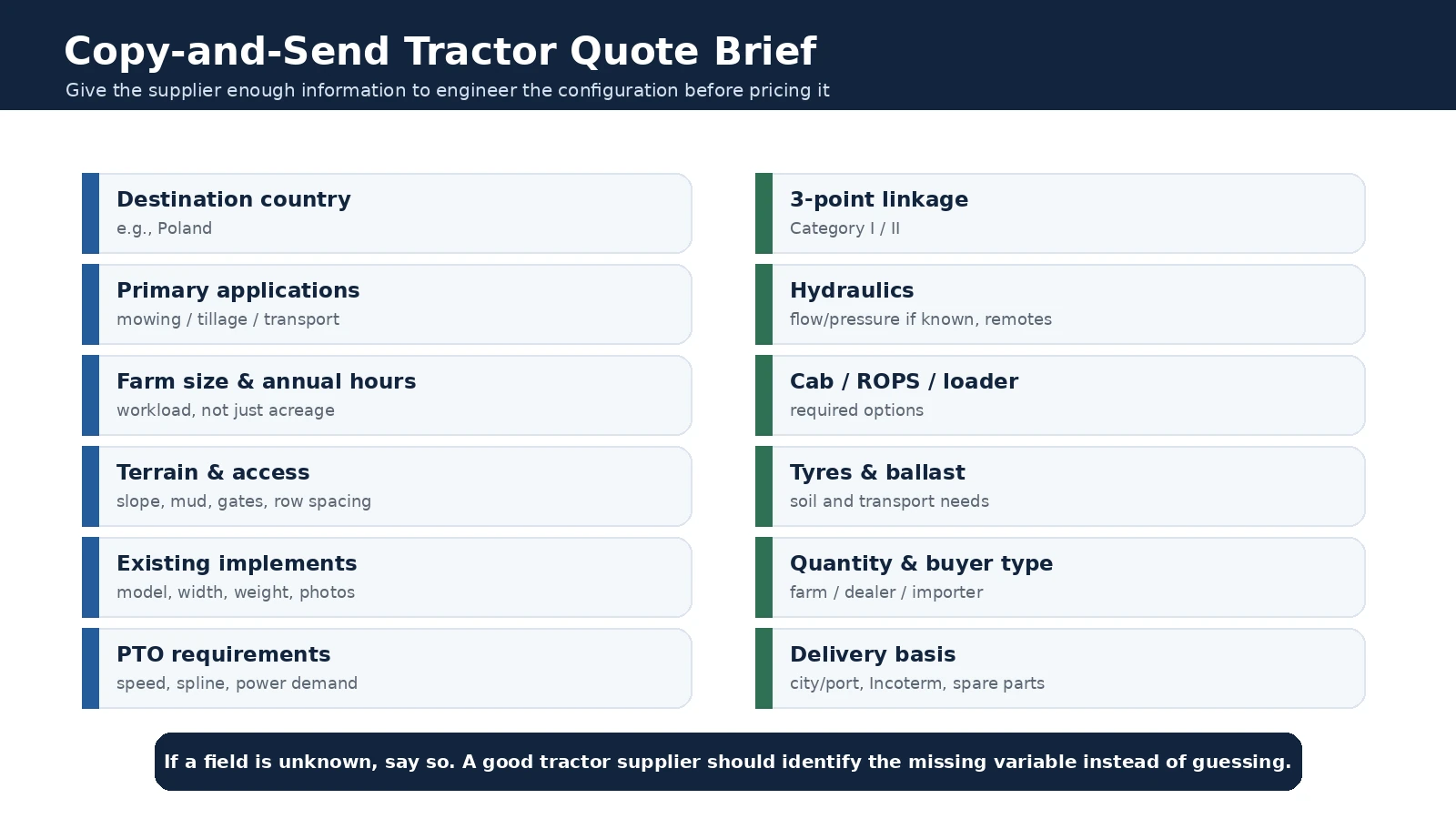
Figure 5. The core information a buyer should provide before requesting an accurate tractor quote.
Subject: Tractor Quote Request – [Country] – [Main Application]
Hello,
We are looking for a tractor for the following work: • Destination country: [ ] • Buyer type: Farm / Dealer / Importer / Contractor • Main applications: [ ] • Farm size / annual working hours: [ ] • Terrain and access: [flat/hilly, mud, gate width, row spacing] • Existing implements: [model, width, weight, photos] • PTO requirement: [ ] • 3-point linkage: [Cat. I / Cat. II / unknown] • Hydraulic requirement: [ ] • Cab / ROPS / front loader: [ ] • Tyres / ballast preference: [ ] • Quantity: [ ] • Delivery city or port / preferred Incoterm: [ ] • Required documents or road-use requirements: [ ]
Please recommend the suitable model and provide a configuration-based tractor quote with the confirmed specification sheet, included options, attachment compatibility, available documentation and delivery basis. |
X. FAQ
What is the minimum information needed for a tractor quote?
At minimum, provide the destination country, main tractor application, approximate power range if known, existing implements, terrain/access conditions, major options such as cab or loader, quantity and delivery location. If you know PTO, linkage and hydraulic requirements, include them. OXPLO can use those details to narrow the model and identify what still needs confirmation.
Do I need to know the exact horsepower before contacting OXPLO?
No. A buyer can start with the work profile. OXPLO can compare the application, implement interface and access constraints against its 25-70 HP range. Horsepower should be the result of the sizing process, not the only input.
Can OXPLO check my existing mower, tiller or other implement?
Yes, compatibility can be reviewed when the implement data is available. Send the implement model, nameplate photo, working width, weight, PTO requirement, linkage category and hydraulic requirements. OXPLO can then check the relevant tractor interface before the quotation is finalized.
Why is the OXPLO OXT604 not simply a more powerful OXT504?
Because the platform changes. The current OXPLO OXT504 page lists a compact Category I platform with 8F + 8R transmission, while the OXPLO OXT604 moves to a larger Category II platform with 12F + 12R transmission, a longer wheelbase, greater listed weight and larger overall dimensions.
What should European buyers ask OXPLO about documentation?
Ask what engine/emissions, approval, conformity, operator-protection and technical documents are available for the exact OXPLO model and configuration in the destination country. If public-road use is expected, state that before the order is confirmed so the relevant equipment and document requirements can be reviewed.
Should I compare tractor quotations by EXW machine price?
Only if every supplier is quoting the same configuration and the same cost boundary. For a meaningful comparison, normalize the tractor, options, attachments, spare parts, documents, packing and Incoterm. A lower EXW price can become a higher landed cost if the scope is incomplete.
Can dealers and importers use the same quote process?
Yes, but they should add expected model mix, annual volume, attachment mix, spare-parts requirements, destination market and dealer service needs. OXPLO can then discuss the quotation as a stocking and support package rather than a single-machine purchase.
Where can I review OXPLO tractor models before sending the inquiry?
Use the OXPLO tractor range and tractor configuration pages to screen the 25-70 HP classes. Treat website data as a starting point; the final OXPLO tractor quotation should carry a confirmed specification sheet for the exact order.
XI. Conclusion: Better Information Produces a Better Tractor Quote
The most useful tractor quote is not the fastest number a supplier can send. It is the first quotation that accurately describes the machine the buyer actually needs.
Start with the work. Identify the limiting implement. Confirm PTO, linkage, hydraulics and access. Define the European market requirements and the commercial scope. Then compare prices on the same configuration and the same delivery basis.
For OXPLO buyers, this approach also makes the 25-70 HP range easier to understand. The OXPLO OXT504 and OXT604 example shows why a model change can represent a chassis and implement-interface change, not simply another horsepower number. That is the level at which a professional tractor purchasing decision should be made.
If you are preparing a purchase, send OXPLO your destination country, main tractor application, implement details, working conditions and delivery requirement. Visit OXPLO or review the tractor configuration page to begin with a configuration-based recommendation rather than a horsepower-only price request.
Technical reference note: OXPLO model specifications and support statements were checked against current OXPLO pages in September 2026. EU approval references use EUR-Lex. Final supplied specifications and market requirements should always be confirmed for the actual order.