
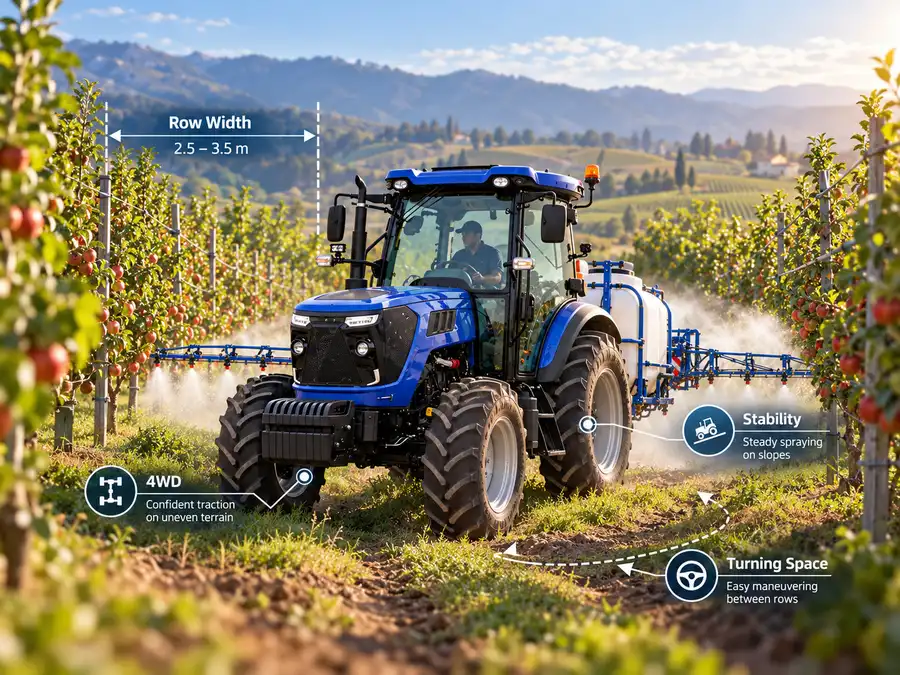
A practical engineering decision framework for selecting an agricultural sprayer tractor without overspending, overloading the chassis or compromising spray quality.
A spraying tractor should be specified as part of a complete application system—not purchased on engine horsepower alone. PTO output, spray rate, tank load, road access, row clearance and the available weather window all affect whether a machine will work economically in the field.
For European mixed farms, orchards, vineyards and agricultural contractors, the costly mistake is often not buying too little or too much power. It is buying a tractor that looks suitable in a catalogue but cannot operate the existing sprayer at the required speed, load or field geometry. The following process helps buyers ask the right technical questions before requesting a quotation.
I. The Real Cost of a Poor Spraying Tractor Match
A narrow spraying window makes small mismatches expensive
Spraying is constrained by crop stage, product label, wind, rainfall risk, temperature and operator availability. A machine that must slow down because its fan loads the engine, a mounted sprayer that cannot be used at full capacity, or a tractor that cannot turn within the headland can each turn a planned one-day job into a longer operation. The cost is not just diesel: labour, crop protection timing, machine availability and the risk of needing another application are involved.
Consider a contractor with 100 hectares to cover before the forecast changes. A higher-specification tractor is not automatically the answer. The operator needs a predictable application rate, reliable PTO operation and a refill plan that keeps the sprayer working during suitable conditions. A larger engine that adds purchase cost without improving these constraints offers little value.
The four failure modes buyers should investigate
- PTO mismatch:the tractor cannot hold the sprayer manufacturer’s specified shaft speed and continuous input power at an appropriate ground speed.
- Load mismatch:a full mounted tank shifts too much weight onto the rear axle, unloads the front axle or exceeds approved lift, axle or tyre limits.
- Access mismatch:the tractor fits between rows on paper but cannot clear the canopy, sprayer guards, field gates or turning area.
- Process mismatch:the chosen capacity forces too many water trips, or the nozzle calibration is invalidated by changes in speed or pressure.
The selection sequence should be sprayer requirement → field limits → tractor configuration → productivity and ownership cost. Reversing this sequence encourages buyers to select a horsepower number before they know the job.
II. Match PTO Speed, Continuous Power and Sprayer Demand
Engine HP is not available PTO HP
An engine rated at 50 HP does not necessarily deliver 50 HP at the power take-off. Driveline losses, tractor auxiliaries and the engine operating point matter. The implement supplier’s demand should be compared with the tractor’s documented PTO power under the relevant operating conditions, not simply with the engine badge. This is particularly important for an air-blast orchard sprayer tractor, where a large fan may require substantially more power than the liquid pump alone.
A PTO sprayer tractor must also provide the correct shaft speed, spline arrangement, rotation and driveline geometry. Many agricultural sprayers are designed for 540 rpm PTO input; others differ. Running a 540 rpm-rated implement from a 1,000 rpm setting is not an acceptable substitute for proper power matching.
Three checks to make before comparing tractor quotations
- Power check:obtain the sprayer’s minimum and recommended PTO input power, including fan operation at its working setting—not only pump capacity.
- Speed check:verify the tractor can maintain the rated PTO rpm at an appropriate forward speed, using an available gear ratio and the correct PTO mode.
- Interface check:confirm shaft spline, driveline guards, three-point linkage category, hydraulic couplers, flow/pressure demand and electrical supply where applicable.
A seller may truthfully say that the machine has a “540 rpm PTO”, while leaving unanswered whether it can operate the exact sprayer continuously. Ask for a model-specific specification sheet and written implement compatibility review.
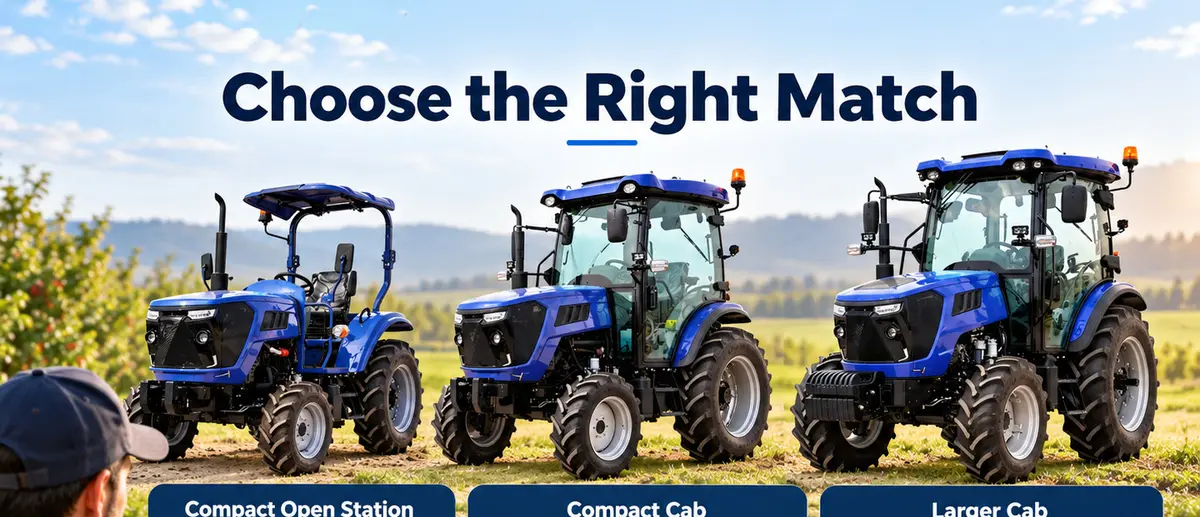
FIGURE 1 | PTO matching. PTO and sprayer connection are illustrative. Confirm the exact tractor PTO speed, shaft interface and continuous power against the implement manual.
A simple calibration example: ground speed changes the application rate
For a conventional boom sprayer, the relationship between total nozzle output, effective boom width and travel speed is:
SPRAY-RATE EQUATION Application rate (L/ha) = 600 × total nozzle flow (L/min) ÷ [travel speed (km/h) × effective width (m)]. |
Take a boom with 24 nozzles delivering 1.2 L/min each, an effective width of 12 m and an actual working speed of 6 km/h. Total nozzle flow is 28.8 L/min, giving 240 L/ha. If the operator increases speed to 8 km/h without changing nozzle output, the application falls to 180 L/ha—a 25% reduction. That may depart from the required product label, coverage target or validated operating procedure.
The pump must also supply any agitation and return flow. Therefore, 28.8 L/min of nozzle output should not be mistaken for the pump’s total required capacity. For air-assisted orchard equipment, fan airflow, canopy geometry and liquid distribution require separate assessment. Always calibrate the assembled sprayer under real operating conditions, initially using clean water.
The trade-off: more power versus better speed control
Additional engine power helps only when the current tractor is genuinely power-limited. If the limiting factor is a narrow set of workable gears, frequent gear changes or poor ground-speed consistency, a transmission with more suitable ratios can be as important as extra horsepower. Do not pay for 70 HP to solve a problem caused by incorrect nozzle selection or unsuitable travel speed.
III. Tank Size Is a Payload Decision, Not Just a Productivity Decision
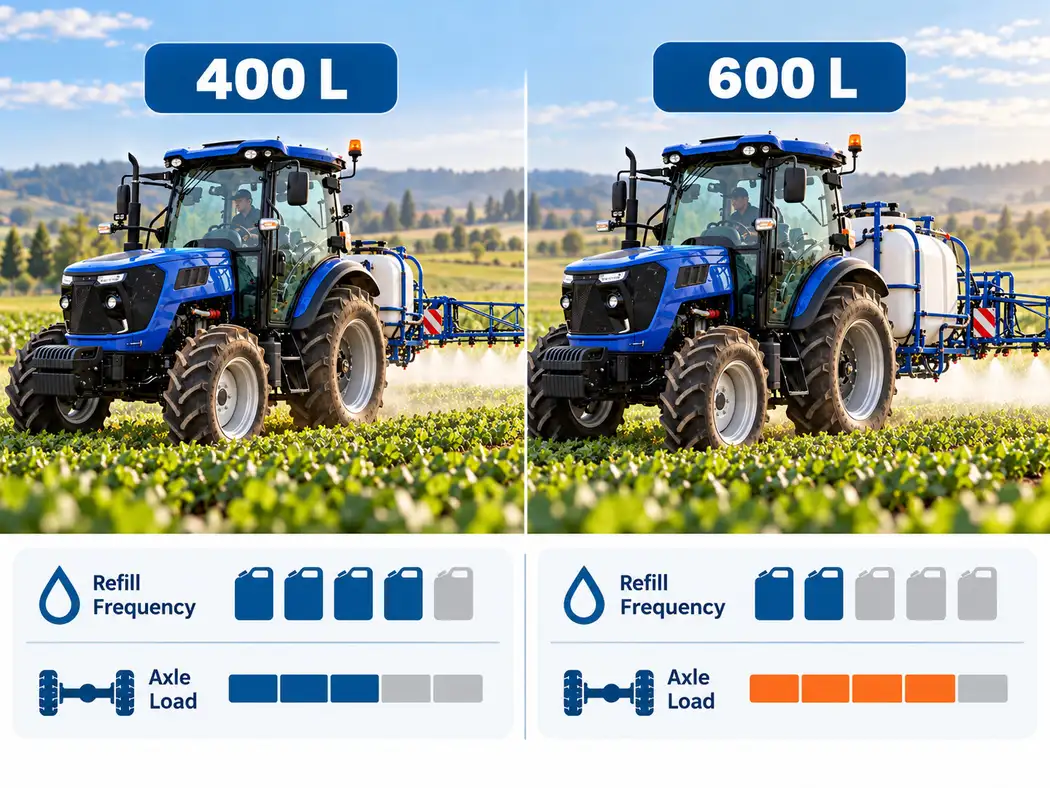
FIGURE 2 | Tank-size trade-off. Larger tanks may reduce refill time but increase liquid mass and axle loads. The graphic is conceptual; assess the actual implement and tractor together.
Calculate coverage before assuming a larger tank is better
Tank size influences how often the operator stops to refill, but it also changes axle load, soil impact and manoeuvrability. For a water-based spray mix, every extra 100 litres adds approximately 100 kg of liquid, before the mass of the tank, pump, frame, boom and plumbing.
Usable liquid volume | At 200 L/ha | Approx. liquid mass |
300 L | 1.5 ha | 300 kg |
400 L | 2.0 ha | 400 kg |
600 L | 3.0 ha | 600 kg |
800 L | 4.0 ha | 800 kg |
These figures assume that the listed volume is usable. They exclude unavoidable residual volume and the mass of the sprayer structure. Liquid density may differ from water depending on the formulation. A tank advertised as “600 L” is not itself evidence that a tractor can safely carry the complete 600 L system.
Why a rear-mounted sprayer can reduce front-axle loading
The location of the load matters as much as its mass. A full three-point-mounted sprayer can place its centre of gravity behind the tractor’s rear axle, effectively levering weight off the front axle. The result can be reduced steering authority at the same time that rear-axle and rear-tyre loads increase.
ILLUSTRATIVE STATIC LOAD CHECK If a fully loaded sprayer weighs 750 kg, its centre of gravity is 0.75 m behind the rear axle and tractor wheelbase is 1.80 m, a simplified static moment calculation indicates about 313 kg of front-axle unloading (750 × 0.75 ÷ 1.80). Actual axle reactions require verified tractor dimensions, original axle weights and implement geometry; dynamic cornering and fluid movement add further complexity. |
This is why a nominal rear-lift rating is insufficient to approve a sprayer combination. A procurement check should cover three-point geometry, maximum permissible axle loads, tyre ratings, minimum front load, approved ballast and operating limitations. Do not assume that adding ballast automatically makes an overloaded axle compliant.
Mounted versus trailed: choose the constraint you can manage
A mounted sprayer is compact and often easier to reverse in small fields, but it concentrates load on the tractor and may require careful front ballast. A trailed sprayer places much of the liquid on its own axle, but introduces drawbar forces, braking requirements, additional tyre tracks and a larger turning envelope. On a tight vineyard headland, a trailed unit may have enough tank capacity yet be operationally unsuitable.
The correct decision is therefore not “600 L beats 400 L”. It is “Which capacity completes the field with fewer avoidable stops while staying inside the complete combination’s approved limits?”
IV. Terrain, Row Width and Canopy Clearance Define the Working Envelope
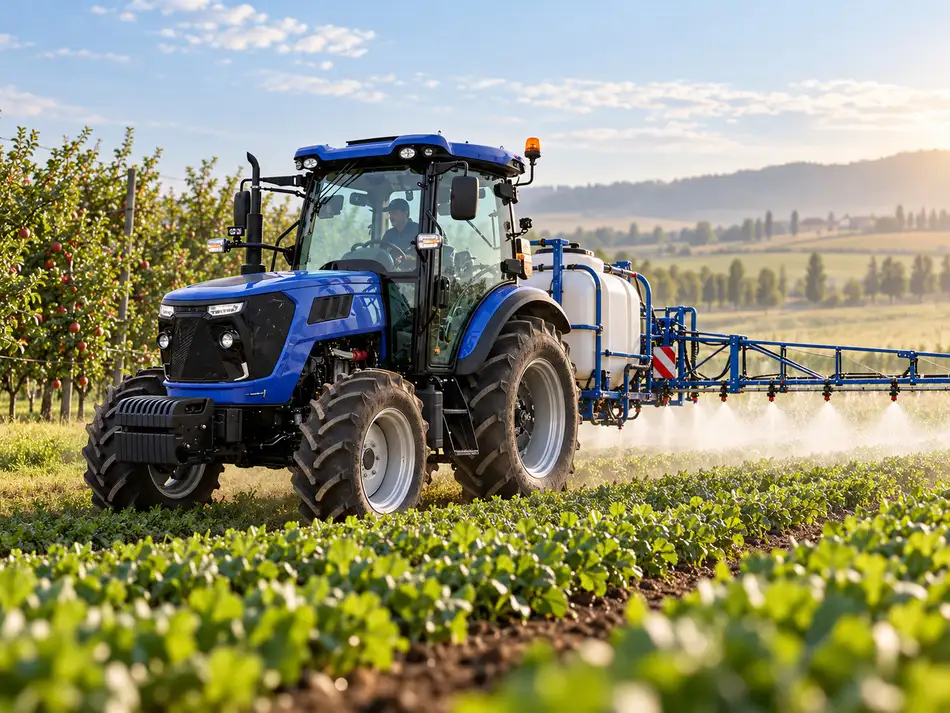
FIGURE 3 | Orchard access. Orchard row clearance and manoeuvring must be measured on site. Illustrated spacing and terrain are not universal operating limits.
4WD improves traction; it does not create a universal safe slope
Four-wheel drive can help a farm tractor move over soft soil, wet tracks and variable field surfaces. It does not cancel rollover risk or compensate for poor ballast, a high-mounted tank, unsuitable tyres or excessive turning speed. Terrain assessment should consider slope direction, ruts, drainage, tyre loading and the sprayer’s centre of gravity. A single “safe slope percentage” should not be invented for every tractor–sprayer combination.
Operators should follow the machine and implement manuals, use site-specific risk assessment and avoid working beyond stated limits. A wider stance, suitable tyres and a slower travel plan may be useful, but each change must remain consistent with the manufacturer’s approved configuration.
Use the narrowest obstruction, not just the row-centre distance
For an orchard sprayer tractor, determine the real clearance at the widest point of both tractor and sprayer, at the lowest branches and at the tightest turn. As a first screening calculation, a 1.56 m-wide machine centred in a 2.50 m row leaves only 0.47 m nominal clearance per side. In a 2.30 m row, that drops to 0.37 m per side before accounting for canopy growth, stakes, uneven wheel tracks or steering deviation.
Height may rule out a model even when width appears acceptable. For example, a hypothetical vineyard with only 2.40 m effective canopy clearance cannot safely accept a tractor specified at 2.60 m overall height on the basis of horsepower or width alone. In that case, a low-profile specialist tractor may be the correct answer.
Different crops impose different constraints
Operating environment | Likely limiting factor | What to measure before buying |
Field crops | Boom stability, working speed, time to refill | Effective boom width, target L/ha, turning time, refill distance |
Wider-row orchard | Fan load and canopy penetration | Fan PTO demand, tractor height, branch clearance, headlands |
Vineyard | Width and low canopy access | Actual clear row width, trellis posts, lowest canopy height |
Hilly or wet ground | Traction and combination stability | Slope direction, ruts, axle/tyre loads, ballast plan |
For boom sprayers, consistent boom height and nozzle spacing influence spray distribution. For air-blast units, airflow, nozzle layout and canopy targeting matter more than a generic “high-pressure” claim. Higher pressure may change droplet size and drift behaviour, not just improve coverage. Technical advice must distinguish these systems instead of treating all spraying as the same task.
V. Quantify Field Output and Cost per Treated Hectare
Separate theoretical field capacity from real working capacity
Theoretical field capacity is effective width (m) × ground speed (km/h) ÷ 10. A 10 m boom at 6 km/h has a theoretical rate of 6 ha/h. If turning, overlap and nonproductive field movements reduce field efficiency to an assumed 65%, the fieldwork rate becomes 3.9 ha/h, before water-refill stops are added. That assumption is illustrative, not a measured industry average.
To evaluate refill decisions, calculate time per hectare as fieldwork time plus refill time per hectare. This lets a purchaser test whether the larger tank actually produces enough benefit to justify its added load and capital cost.
Example: 400 L versus 600 L on a 100 ha job
Illustrative input / output | 400 L mounted tank | 600 L mounted tank |
Target spray rate | 200 L/ha | 200 L/ha |
Coverage per tank | 2.0 ha | 3.0 ha |
Field-only effective capacity | 3.90 ha/h | 3.90 ha/h |
Refill downtime per tank | 10 min | 10 min |
Combined capacity, approximately | 2.94 ha/h | 3.21 ha/h |
Time for 100 ha, approximately | 34.0 h | 31.2 h |
Under these assumptions, the 600 L system saves roughly 2.8 operating hours per 100 hectares, or about 9% more hectares per hour than the 400 L system. The simplified model distributes refill time across every full tank and ignores end-of-job residuals; real results vary with refill infrastructure and field layout. The extra 200 L also adds about 200 kg of liquid mass before any structural differences.
For a contractor repeating the same job many times each season, 2.8 hours may have commercial value. For a small holding with water beside every field, a lighter 400 L system may be the better purchase. The decision should include sprayer price, tractor suitability, annual treated area and any incremental maintenance or tyre costs.
Measure TCO against completed, compliant work
A useful cost model is: annual depreciation or finance + fuel + maintenance + labour + refill travel + avoidable downtime + other operating costs, divided by the hectares successfully treated during the same period. Do not count hectares that must be repeated because application rate, timing or coverage was unacceptable. Procurement teams should also model the opportunity cost of a tractor tied to spraying when it is needed for mowing, trailer work or livestock operations.
The preferred investment may be a versatile medium-power farm tractor used across the season, not a bigger machine bought only for spraying. Conversely, a dedicated specialist tractor can be justified where tight vineyard geometry prevents a general-purpose model from safely entering the rows.
VI. European Buyer Checks: Safety, Documentation and Acceptance Testing
Separate sprayer inspection rules from tractor market approval
Professional pesticide application equipment used within the EU is subject to inspection arrangements under the Sustainable Use Directive 2009/128/EC. Its Article 8 sets a general maximum inspection interval of three years after 2020, with specific provisions for new equipment and certain derogations; national procedures and current rules must be checked for the destination country. An inspection label for the sprayer is not a substitute for the tractor’s market documentation.
Agricultural and forestry vehicle approvals are governed separately by the EU tractor type-approval framework, Regulation 167/2013. For a Europe-bound purchase, confirm the exact machine variant and whether the supplier can supply the necessary engine-emissions, braking, lighting, protective-structure, road-use and registration documents for the intended market. A general marketing statement about “CE” should not be treated as proof of every applicable tractor approval.
Operator protection matters, especially with pesticides
An enclosed cab is not automatically a certified protection system for pesticide aerosols or vapours. Buyers should verify the relevant operator-protection category and filtration documents, including the applicable EN 15695 requirements referenced in EU technical documentation, where such protection is required. A cab’s appearance, air-conditioning or dust filter alone does not establish the intended level of chemical protection.
Application teams must also follow product-label conditions, operator training and PPE requirements, and drift-buffer or water-protection rules in force locally. Weather, nozzle choice, pressure and application speed are operating decisions; no tractor purchase removes those responsibilities.
Use a pre-delivery acceptance checklist, not just a sales specification
- Record the exact sprayer make/model, minimum PTO power, rated rpm, total filled mass, centre-of-gravity information and hydraulic/electrical requirements.
- Measure the narrowest row, lowest usable canopy height, steepest intended work area, gate openings and headland turning space.
- Request confirmed model-specific tractor dimensions, linkage category, PTO option, axle/tyre ratings, ballast instructions and documentation for the destination country.
- Before work, test with clean water: verify PTO rpm and ground speed, measure nozzle output, check pressure and agitation, inspect guards and evaluate turning with the approved load.
- Agree in writing what the supplier will provide after sale: operating documentation, consumables, parts identification, warranty process and technical support route.
PROCUREMENT RULE Ask the tractor supplier and sprayer supplier to sign off the same configuration sheet. If either party cannot confirm one of the critical limits, the combination is not yet ready for approval. |
VII. Which OXPLO Tractor Configuration Makes Sense for Spraying?
For buyers who have completed the checks above, OXPLO’s 25–70 HP tractor range offers six 4WD farm tractor options across compact Category I and larger Category II platforms. The purpose of an OXPLO recommendation is to narrow the alternatives against your actual sprayer, field access and annual farm workload—not to declare every model compatible with every sprayer.
OXPLO compact platforms: preserve access while choosing appropriate power
The OXPLO OXT254 and OXPLO OXT304 are 25 and 30 HP alternatives for lighter mixed-farm jobs where the implement’s verified power and weight demands fit a compact Category I tractor. An OXPLO compact model should never be presented as a guaranteed specialist vineyard tractor: the published width of this platform is 1,560 mm, and listed height is approximately 2,600 mm. Measure canopy and row clearance first.
Where the farm uses a more demanding compatible implement but must retain the 1,560 mm listed tractor width, the OXPLO OXT404, 40 HP and OXPLO OXT504, 50 HP merit a direct comparison. Both are presented with 4WD, an 8F + 8R transmission and Category I linkage. The OXPLO OXT404 page lists 540/1000 rpm PTO; the OXPLO OXT504 page describes 540/720 rpm, but PTO specification should be reconfirmed against the precise order sheet.
If a 40 HP farm tractor already sustains the required PTO output at the chosen spray speed, the OXPLO 50 HP upgrade may offer little spraying-only benefit. If power reserve is a real limitation and row access cannot become wider, the OXPLO OXT504 may be worth assessing—with PTO output and axle loading verified rather than assumed.
OXPLO 60–70 HP utility tractors: useful for broader annual workloads
The OXPLO OXT604 and OXPLO OXT704 move to Category II linkage, a 12F + 12R transmission, 1,760 mm listed width and a six-spline 540/760 rpm PTO. Their larger platform may make sense for agricultural contractors and mixed farms that also need compatible heavier implements, pasture work, transport and other regular duties.
However, choosing OXPLO 60 or 70 HP does not automatically improve spray coverage. A Category I sprayer may require a different approved mounting arrangement, and a 1,760 mm-wide tractor may be unsuitable for a narrow orchard. Specify the full operating package before comparing the OXPLO OXT604 and OXPLO OXT704 on purchase price.
OXPLO model group | Published specification | Spraying-related buying logic |
OXT254 / OXT304 | 25 / 30 HP; 4WD; Cat. I; width 1,560 mm | Review for light-duty sprayers only after power, clearance and weight checks. |
OXT404 | 40 HP; 4WD; 8F+8R; Cat. I; PTO 540/1000 rpm | Potential compact choice where verified PTO demand fits. |
OXT504 | 50 HP; 4WD; 8F+8R; Cat. I; width 1,560 mm | More engine output without increasing published compact-platform width. |
OXT604 / OXT704 | 60 / 70 HP; 4WD; 12F+12R; Cat. II; width 1,760 mm | Review for broader multi-implement workloads, not narrow access by default. |
All figures are based on published OXPLO product listings, and may vary by selected market configuration. Engine HP is not a certified PTO output figure; compatibility, cab filtration, emissions documents, lifting limits and road-use status require specific confirmation.
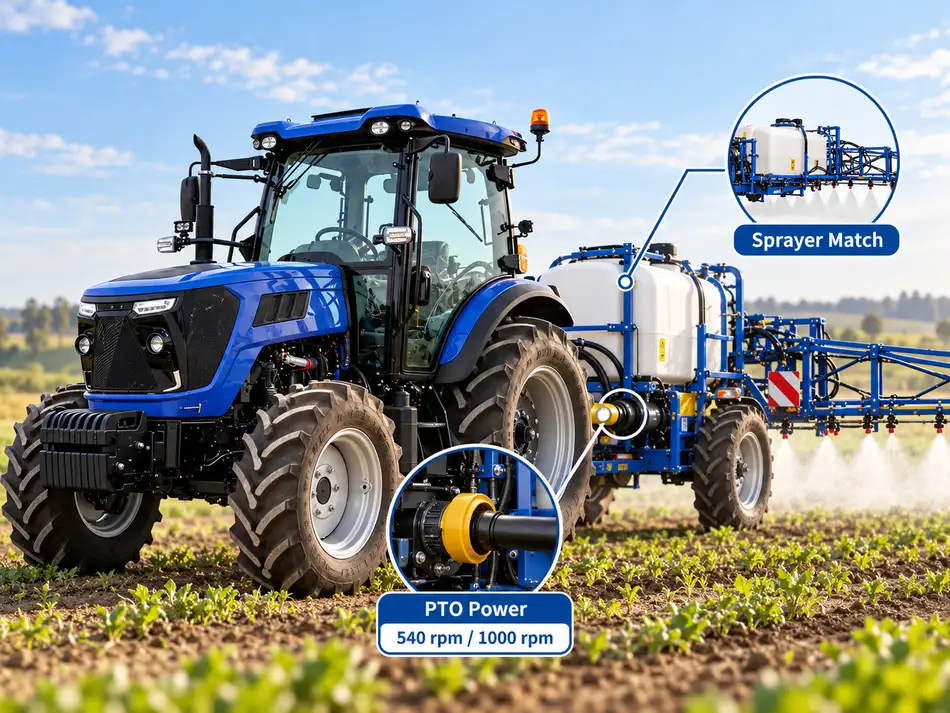
FIGURE 4 | OXPLO selection. Illustrative OXPLO tractor configurations: open-station, compact cab and larger cab. Select by verified PTO, dimensions, load and documentation—not appearance alone.
What an actionable OXPLO quotation request should contain
Instead of asking only for a “tractor for spraying price”, send OXPLO one concise specification pack: destination country; sprayer manufacturer/model; required PTO rpm and power; sprayer dry and filled weight; mounted or trailed connection; row width and canopy height; intended slopes; annual treated hectares; other implements; operator-protection and market-document requirements.
Use the OXPLO tractor configuration page to review the available platforms, then consult OXPLO attachments and technical support about compatible implements, documents and post-delivery requirements. This creates a useful starting point for a model-specific OXPLO recommendation rather than a headline HP quotation that needs to be revised later.
VIII. Frequently Asked Questions (FAQ)
What horsepower tractor do I need for a 400 L or 600 L sprayer?
There is no universal horsepower figure. The decision depends on whether the equipment is mounted or trailed, the fully loaded weight, the required PTO input, the tractor’s available PTO power, linkage limits and axle loads. Tank litres alone cannot certify compatibility.
Is 40 HP enough for a PTO sprayer tractor?
It may be adequate for some smaller boom or orchard systems, but only after checking the sprayer manufacturer’s continuous PTO power and rpm requirements. A fan-driven air-blast sprayer can impose a very different power demand from a basic hydraulic boom sprayer.
Can a regular farm tractor work in a vineyard?
Only if its width, height, turning envelope, tyre setup and approved load suit the actual vineyard. The smallest available HP is not necessarily the narrowest or lowest suitable machine. Measure working clearance rather than using row spacing alone.
Does 4WD make a full sprayer safe on slopes?
No. 4WD improves traction in appropriate conditions but does not remove rollover, front-axle unloading or dynamic load risks. Follow the vehicle and sprayer operating limits, confirm ballast and assess the site.
What should European buyers request before paying a deposit?
Ask for the exact configuration sheet, relevant destination-country tractor documents, sprayer compatibility review, confirmed PTO and axle specifications, warranty terms, operating manual and parts-support procedure. These details are more protective than an unqualified claim of “European compliance”.
IX. Conclusion: Choose the Spraying System Before Choosing the Tractor
The best tractor for spraying is not necessarily the most powerful farm tractor or the one carrying the largest tank. It is the tractor that can reliably drive the sprayer at the specified PTO conditions, carry or tow it within approved limits, pass through the real field geometry, and complete the planned hectares without avoidable refill and downtime costs.
For European buyers, the decision is also commercial: a combination that works safely in one field but cannot clear another row, meet documentation requirements or support other seasonal jobs may be a poor long-term investment. A structured checklist protects both spray quality and total cost of ownership.
For a configuration-matched quotation, send OXPLO your sprayer requirements and field dimensions. Browse the OXPLO tractor range.