
When buyers search for a tractor for mowing, the first question is usually, “How much horsepower do I need?” That is understandable, but it is rarely the best place to start. A mowing tractor is part of a working system. Grass density, moisture, mower type, cutting width, PTO demand, field geometry, slopes, soil condition and the number of hours available before the next weather change all influence whether a tractor is genuinely productive or merely capable of turning the mower.
This distinction matters in European grassland work. A livestock farm may have several separate paddocks rather than one regular field. An estate may need to pass through old gateways, work around trees and buildings, and avoid unnecessary turf damage. A contractor may need to finish multiple sites inside a short weather window. In each case, a tractor that is technically able to operate a mower can still be commercially wrong if it forces low travel speeds, excessive overlap, difficult turning or repeated delays.
The correct selection sequence is therefore not acreage → horsepower. It is grass condition → mower type → PTO and linkage requirements → terrain and access → required field capacity → tractor platform. This guide explains that sequence, the trade-offs behind it, and how European buyers can use it to compare a compact tractor for mowing with a larger utility tractor without paying for capacity they will not use—or discovering too late that the machine they bought has no working reserve.
Core buyer rule: Do not buy the smallest tractor that can spin the mower. Buy the smallest complete tractor–mower system that can finish your real work, at the required quality, inside the available working window. |
I. The Real Problem Is Not Horsepower — It Is Finishing the Work on Time
A mower creates a variable load, not a fixed load
Mowing is often described as a light tractor job because it does not always demand the drawbar pull of deep cultivation. That description is misleading. PTO load can change dramatically from one part of a field to another. Short, dry grass may be easy to cut; dense, wet or lodged material can slow the same tractor and mower combination within minutes. Taller growth increases the volume of material entering the cutter, while uneven ground can force the operator to reduce travel speed even when engine power is still available.
This is where many under-sized combinations fail. They do not stop working completely. Instead, the tractor loses PTO speed in heavy patches, the operator drops a gear, average field speed falls and the job takes several additional hours. The failure appears operational rather than mechanical, which makes it easy to underestimate during a short dealer demonstration or an online comparison.
The hidden cost is the lost mowing window
For grassland businesses, the expensive consequence of insufficient capacity is often a lost weather window. If a farm has twenty hectares to cut before rain arrives, the question is not whether the machine can eventually complete twenty hectares. The question is whether it can complete them before conditions deteriorate. A slower machine can push the remaining area into wetter conditions, which may further reduce traction and cutting speed. Where mowing is the first step in hay or forage production, the delay can also affect drying, raking and baling schedules.
That is why the useful metric for a tractor for grass cutting is not headline HP. It is sustainable field capacity under the grass and soil conditions the farm actually experiences. A buyer should size for a difficult but recurring day, not for the easiest field in the driest week of the year.
Oversizing has a cost as well
Buying a much larger tractor “to be safe” is not automatically better. More chassis mass can increase soil compaction and turf marking on soft ground. A longer wheelbase and wider turning envelope can be inefficient in small paddocks, orchards and estates. The buyer also ties more capital to a machine whose additional capacity may remain unused for most of the year. Good sizing is therefore a balance: enough reserve for dense grass and tight deadlines, without sacrificing access, manoeuvrability and ownership cost.
II. Build a Mowing Profile Before Comparing Tractor Models
Start with the vegetation, not the acreage
Two farms with the same acreage can need very different tractors. Regularly topped pasture is not the same load as neglected grassland containing tall weeds, coarse stems or volunteer scrub. Likewise, a finishing mower used on an estate lawn creates a different requirement from a rotary cutter working through rough pasture. Before comparing tractors, describe the material that the mower must process at its worst normal condition: average height, density, moisture and how frequently the area is cut.
Cutting frequency is especially important. Grass maintained every few weeks creates a more predictable load than land cut only once or twice per season. If mowing is delayed, the next pass may require more power and a lower ground speed. A farm that routinely operates close to the tractor’s limit has little tolerance for such variation.
Measure field geometry and access
European operations often add an access constraint. Older gateways, livestock buildings, orchard rows, hedges and short headlands can make a compact tractor more productive than a physically larger machine. Measure the narrowest gate, the available turning area, overhead restrictions and the space required to attach the mower. Do not compare tractor width only on an open field; compare the complete route the machine must travel from storage to work.
Field shape also matters. A wide mower gives excellent theoretical output in a large rectangular field. In small irregular paddocks, frequent turning, overlap and manoeuvring can reduce the advantage. A narrower tractor for pasture work may achieve a higher percentage of productive cutting time even if its nominal working width is smaller.
Define soil, slope and traction conditions
Wet grassland creates two separate problems: the mower may require more power while the tractor has less traction available to use that power. Four-wheel drive can help maintain movement on damp fields, access tracks and gentle slopes, but it does not remove the need to assess stability, tyre choice and safe operating practice. Buyers working on soft ground should also consider tyre footprint and total machine mass, because a heavier tractor may provide stability and traction yet create more compaction or rutting.
Convert acreage into a deadline
Instead of asking, “How many hectares do I have?”, ask, “How many hectares must I finish in one workable day?” A 30-hectare holding cut over several days is a different buying case from a 30-hectare grassland operation that needs the mowing stage completed in one day before a change in weather. This single question often explains why two buyers with similar land area legitimately choose different horsepower classes.
III. Choose the Mower First, Then Size the Tractor Around It
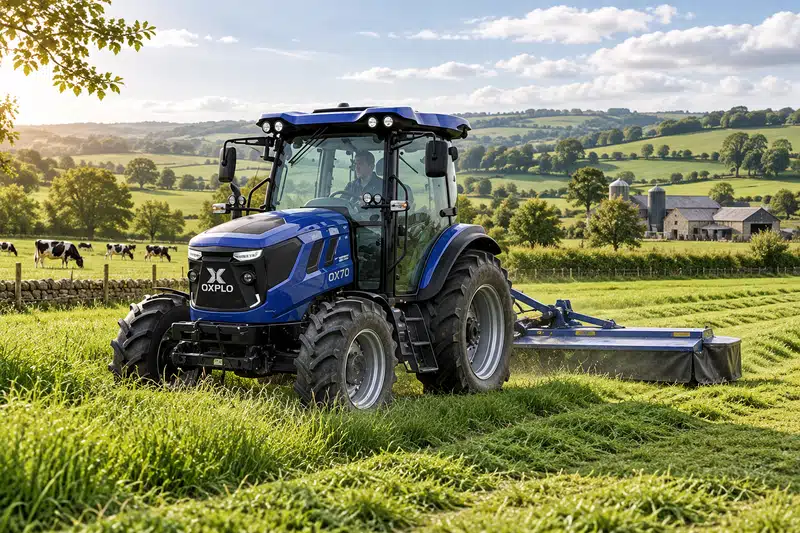
Figure 1. Match the mower to PTO speed, linkage category and tractor platform before purchasing.
Rotary mower: robust pasture maintenance
A rotary mower is a common choice for pasture topping, weeds and general rough grassland maintenance. Its appeal is simple construction and tolerance of less uniform vegetation. The tractor must still be matched to the mower manufacturer’s required PTO power, hitch category and implement weight. A wider rotary mower increases material throughput, so the power requirement can rise quickly when grass is dense.
Flail mower: good residue control, but do not assume a light load
A flail mower can be attractive for orchards, estates, verges and grassland where chopped residue and a controlled finish matter. The rotating rotor and large number of flails can create a significant continuous PTO load, particularly in tall or wet material. A compact tractor with loader or other attachments may have adequate engine horsepower but still be marginal at the PTO when the flail mower is working near its full width and depth.
Finishing mower: manoeuvrability may matter more than extra HP
For maintained lawns, parks and large estates, the objective is usually an even finish rather than aggressive vegetation reduction. In this case, the best farm mower tractor is often the one that can turn cleanly, protect the turf and maintain an appropriate ground speed. Adding unnecessary tractor size may increase turning damage and reduce access without improving the cut.
Disc mower: think beyond mowing to the full forage chain
A disc mower is more relevant when the grass is being harvested rather than simply controlled. Once the work continues to tedding, raking and baling, the limiting implement may no longer be the mower. The tractor should be sized against the heaviest or most power-demanding recurring implement in the whole forage system. This is a common reason why a livestock farm should not select its tractor from the mower alone.
The compatibility checks that must be completed before purchase
Before choosing the tractor, obtain the mower’s technical data and confirm four points: recommended PTO power, required PTO speed, three-point linkage category and implement mass. If the mower uses hydraulics for folding or positioning, confirm the hydraulic requirement as well. Engine horsepower cannot be substituted directly for PTO power, and a tractor with enough power is still the wrong tractor if the hitch geometry, shaft speed or lift capacity does not match.
System check: Mower working width should be selected together with PTO demand and required field speed. A wider mower only improves productivity when the tractor can keep the PTO loaded and maintain the planned travel speed in real grass conditions. |
IV. Six Technical Variables That Determine a Good Tractor for Mowing
1. PTO power and PTO speed
The mower receives usable mechanical power through the PTO, not directly from the engine rating printed on the bonnet. Always start from the mower manufacturer’s PTO requirement and then confirm that the tractor’s supplied configuration provides the required shaft speed. A mismatch here cannot be solved by simply buying more engine horsepower. It is also sensible to retain working reserve for denser material rather than selecting a combination that operates at its limit all day.
2. Working gears and speed control
Mowing quality depends on maintaining PTO speed while choosing a ground speed that suits the vegetation. If one gear is too fast and the next is unnecessarily slow, the operator loses either cut quality or productivity. A useful mowing tractor therefore needs a transmission with enough ratios in the real working-speed range—not just an impressive top road speed. More ratios become especially valuable when conditions change within the same field or when one tractor must also handle loader, transport and cultivation work.
3. Four-wheel drive, tyres and usable traction
4WD is valuable on damp grass, uneven field entrances and mixed surfaces because it helps convert available engine power into forward motion. Tyres determine how that traction is delivered. For soft grassland, a buyer should discuss tyre configuration rather than assuming the standard package is ideal. The correct solution depends on soil strength, slope, road travel and whether the machine must protect established turf.
4. Chassis mass, wheelbase and implement stability
A tractor that is too light can struggle for traction or feel unsettled with a relatively heavy rear mower. A tractor that is unnecessarily heavy can compact soft soils and become cumbersome in small fields. Wheelbase, total mass and rear implement weight therefore need to be considered together. This is one reason a move from a compact Category I tractor to a larger Category II utility platform should be treated as a change of working system, not simply a ten-horsepower upgrade.
5. Manoeuvrability and access
A compact tractor for mowing often wins on jobs with many headlands, trees, gateways or separate paddocks. Every unproductive turn reduces actual field efficiency. Buyers should measure tractor width and consider wheelbase, turning space and the mower’s overhang. In fragmented fields, saving thirty seconds on repeated turns can matter more over a full day than adding a small amount of theoretical cutting width.
6. Future implements and annual utilisation
Many European farms cannot justify a tractor that performs only one job. The machine may mow in spring, spread fertiliser, transport feed, move trailers and support property maintenance at other times of the year. A tractor should therefore be selected against the next two or three years of likely implement use. Buying exactly enough tractor for today’s mower can create an expensive replacement problem when the farm later adds a heavier implement, front loader or larger forage machine.
V. Calculate Real Field Capacity and Total Cost Before You Buy
Use effective field capacity, not theoretical working width
A simple planning formula is useful for comparing mowing systems: effective field capacity (ha/h) = working width (m) × travel speed (km/h) × field efficiency ÷ 10. Field efficiency accounts for turning, overlap, adjustments and other time when the mower is not covering new ground. The exact percentage varies by field layout and operating practice, but the formula forces the buyer to connect mower width with a realistic travel speed.
Consider a 1.8 m mower operating at 7 km/h with an assumed field efficiency of 75%. The estimated capacity is about 0.95 ha/h. Twenty hectares would therefore require roughly 21 hours of cutting time. A 2.4 m mower at the same speed and efficiency gives about 1.26 ha/h, reducing the estimate to about 15.9 hours. On paper, that is a saving of more than five hours per cut.
However, this comparison is valid only if the tractor can actually hold the larger mower at 7 km/h in the expected vegetation. If the wider mower forces the tractor down to 5 km/h in dense grass, the theoretical gain shrinks sharply. That is why mower width should never be purchased independently from tractor power reserve and transmission choice.
Calculate cost per hectare, not only litres per hour
Fuel consumption per hour can be misleading. A smaller tractor may burn less fuel each hour but require many more hours to finish the same area. A better comparison is cost per hectare, including fuel, labour, maintenance, mower wear parts, depreciation and the cost of downtime. The commercial objective is not the lowest hourly consumption; it is the lowest sustainable cost for completing the required work to the required standard.
The right reserve depends on the business risk
A property owner who can postpone mowing for two days may accept a tighter tractor–mower match. A livestock farm or contractor with narrow weather windows should usually value additional reserve more highly. There is no universal percentage of “extra horsepower” that is correct for every buyer. The reserve should be justified by vegetation variability, seasonal deadline, annual hours and the consequences of not finishing on time.
VI. Match the OXPLO Platform to the Customer’s Real Mowing Scenario
This is the point where a tractor brand should enter the discussion. After the mower, field conditions and productivity target are defined, the current OXPLO tractor range provides a useful 25–70 HP ladder for comparing compact Category I machines with larger Category II utility tractors. OXPLO’s own tractor application pages position the range for mowing, livestock and grassland, orchards, mixed farming and property maintenance. The important point is not to choose the highest OXPLO horsepower. It is to choose the platform that removes the buyer’s actual bottleneck.
Buyer profile | Typical constraint | OXPLO starting point | Why |
Estate, orchard or small paddock | Narrow access, many turns, light-to-medium recurring mowing | OXT304 / OXT404 | Compact 1,560 mm published width, 4WD and Category I implement interface support manoeuvrability and recurring PTO work. |
Livestock / grassland mixed farm | One tractor must mow, transport and handle several seasonal jobs | OXT404 / OXT504 | More engine reserve while retaining the compact OXT Category I platform; OXT504 is the highest-powered model in this compact chassis group. |
Larger grassland / contractor | Wider implements, higher annual workload, short weather windows | OXT604 / OXT704 | Larger utility platform, 12F+12R transmission and Category II linkage provide a different implement envelope and finer speed selection. |
Scenario A: estate, orchard or small paddock — compactness is a productivity feature
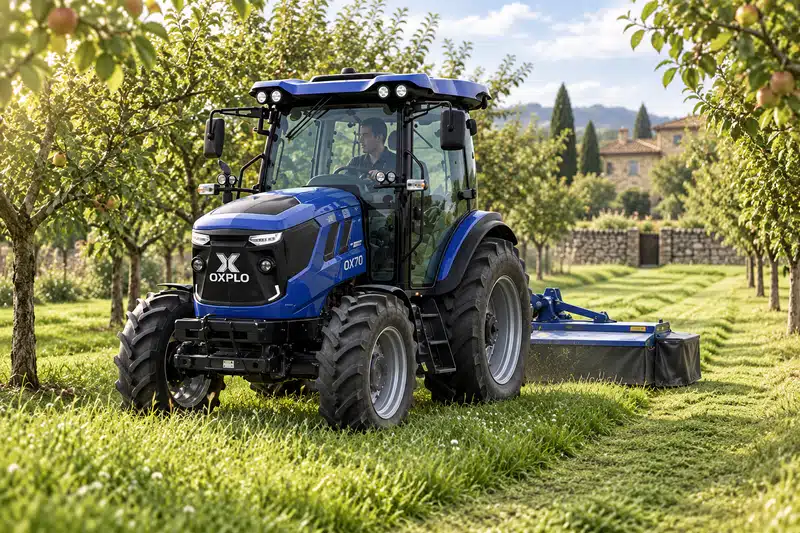
Figure 2. A compact OXPLO mowing setup suited to orchards, estates and smaller paddocks.
For an estate, orchard or small livestock property, the limiting factor is often access rather than maximum power. Frequent turns, narrow gates and short working runs reward a smaller footprint. The OXPLO OXT304 is published as a 30 HP 4WD tractor with an 8F + 8R transmission, Category I linkage and a 1,560 mm overall width. The OXPLO OXT404 keeps the same published width while increasing rated output to 40 HP and adding more reserve for recurring grassland work.
For buyers in this group, compare the OXPLO OXT304 and OXPLO OXT404 against the mower’s PTO requirement and the narrowest access point. The value of these OXPLO models is not that they are “small tractors”; it is that their compact platform can reduce non-cutting time where manoeuvrability dominates the job.
Scenario B: livestock and mixed grassland farm — reserve without unnecessary bulk
A livestock farm often needs more than a dedicated mowing tractor. Pasture maintenance may share the annual workload with feed transport, spreading, trailer work and other PTO-driven tasks. This is where the 40–50 HP OXPLO compact platform becomes relevant. The OXPLO OXT504 is particularly interesting because its published product information places 50 HP in the same 3,180 × 1,560 mm compact footprint used by the smaller OXT models, while retaining Category I linkage. In practical terms, the buyer can add engine reserve without automatically moving to OXPLO’s larger Category II chassis.
See the OXPLO OXT504 50 HP tractor. Its published page lists 4WD, an 8F + 8R transmission and a 540/720 rpm PTO combination; because market and model configurations can vary, the final supplied PTO and documentation should always be confirmed in the quotation. This type of verification is exactly what a serious European buyer should request before ordering any tractor for mowing.
Scenario C: larger grassland or contracting — move to a larger platform for a reason
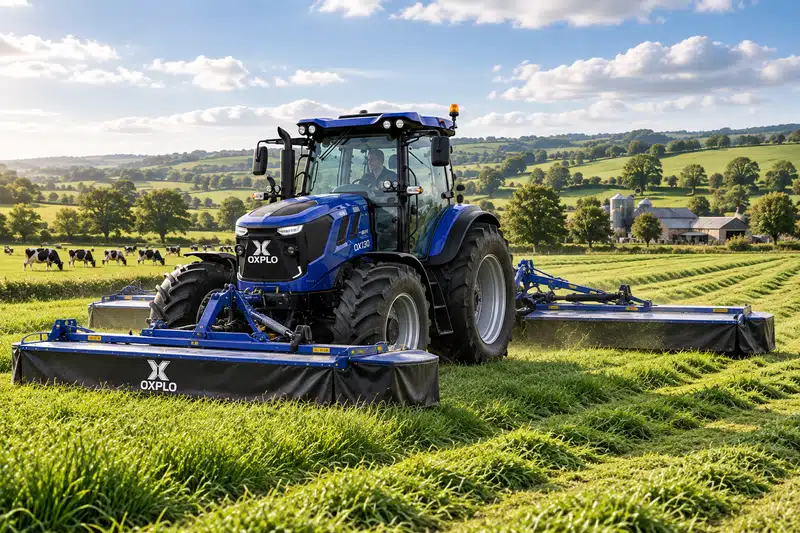
Figure 3. A larger OXPLO grassland setup for higher daily output on livestock farms and contracting work.
When the bottleneck is no longer access but implement size, annual workload and weather-window capacity, moving to the larger OXPLO utility platform can make sense. The OXPLO OXT604 is not merely an OXT504 with ten additional horsepower. Its published specification moves to a 2,010 mm wheelbase, 2,500 kg listed weight, 12F + 12R transmission and Category II linkage. That changes the implement envelope and gives the operator more working ratios for varying field conditions.
The OXPLO OXT704 continues that larger Category II platform at 70 HP. For a contractor or larger grassland operation, the decision between the OXT604 and OXT704 should be driven by the mower and the other recurring implements, not by a desire to buy the biggest number. If a 60 HP OXPLO tractor comfortably handles the complete implement set within the required deadline, the extra 10 HP may not create enough additional value. If the farm has denser forage, heavier seasonal work or less tolerance for delay, the OXT704 may provide a more useful reserve.
Compare the published specifications for the OXPLO OXT604 and OXPLO OXT704 as complete working platforms, then verify mower weight, linkage, PTO, tyres and destination-market requirements before final configuration.
OXPLO attachments and system matching
OXPLO also lists mowing and forage attachments within its tractor support range. That matters because the commercial question is not simply whether a tractor is available; it is whether the tractor, mower and other implements can be specified as one compatible package. Buyers can use the OXPLO support and tractor-configuration pages to discuss mower type, linkage, PTO, tyres and other attachments before a quotation is finalised.
Useful internal resources: OXPLO tractor range | OXPLO tractor configuration guide | OXPLO attachments and support.
VII. Conclusion: Buy a Mowing System, Not a Horsepower Number
The right tractor for mowing is not the tractor with the highest HP and it is not automatically the cheapest tractor that can rotate the mower. It is the machine that can maintain the required PTO load and field speed, fit the farm’s access constraints, protect the ground appropriately and finish the work inside the business’s actual weather window.
For European estates and small paddocks, a compact platform can create more useful work per day by reducing turning and access losses. For livestock and mixed farms, the 40–50 HP class can offer a better balance between mowing reserve and year-round versatility. For larger grassland and contracting work, the move to OXPLO’s 60–70 HP Category II utility platform should be justified by larger implements, higher recurring workload or a tighter completion deadline—not by horsepower alone.
OXPLO’s 25–70 HP tractor range gives buyers several points on that spectrum. The strongest way to use that range is to begin with the customer’s mower and working conditions, then let OXPLO confirm the appropriate tractor platform, attachment compatibility, tyres and destination-market configuration. That process is more valuable than simply asking OXPLO for the price of a 50 HP or 70 HP tractor.
Send this information when requesting an OXPLO recommendation
- Destination country and whether regular public-road travel is required.
- Total grassland area, typical field size and the number of separate paddocks or sites.
- Grass condition: maintained pasture, dense forage, weeds, wet grass or rough vegetation.
- Terrain: flat, rolling, sloping, soft ground or regularly wet areas.
- Mower type, working width, total weight, required PTO power, PTO speed and linkage category.
- Narrowest gateway, orchard row, barn access or other dimensional restriction.
- Target completion time for a normal mowing cycle and the expected annual tractor hours.
- Other implements planned for the next two to three years, including loader, spreader, tillage, trailer or forage equipment.
- Required operator-station, tyre, lighting, braking, emissions and conformity documentation for the destination market.
To review the full range, visit OXPLO or compare the current 25–70 HP OXPLO tractors. A useful enquiry does not say only, “I need a 50 HP tractor.” It explains the mower, the grass, the land, the deadline and the next jobs the tractor will have to perform.
VIII. Frequently Asked Questions
Q1. How much horsepower do I need for a mowing tractor?
There is no reliable horsepower answer without the mower specification. Start with the mower manufacturer’s required PTO power, then account for grass density, terrain, working speed and the number of hours available to finish the area. A 40 HP tractor can be entirely adequate for one mowing system and too small for another of similar width.
Q2. Is a compact tractor for mowing better for small European farms?
Often, but not always. A compact tractor can reduce turning time and improve access through smaller gateways, orchards and older farmyards. The trade-off is a smaller chassis and implement envelope. If the farm uses heavier mowers or other large Category II implements, a larger utility tractor may be the more stable and versatile choice.
Q3. Is 4WD necessary for a tractor for pasture mowing?
4WD is useful where the tractor works on damp grass, slopes, loose tracks or changing surfaces. It improves traction, but it does not make an unsafe slope safe and it does not compensate for unsuitable tyres or excessive implement weight. Assess the complete working condition rather than treating 4WD as a substitute for correct sizing.
Q4. Should I choose the OXPLO OXT504 or move to the OXT604?
Choose by platform requirement, not only by the 10 HP difference. The OXPLO OXT504 is the highest-powered model in the compact Category I OXT chassis group, which can suit buyers who need more PTO reserve while keeping compact dimensions. The OXPLO OXT604 moves to a larger chassis, 12F + 12R transmission and Category II linkage, making it more appropriate when the implement fleet or annual workload has outgrown the compact platform.
Q5. What should a European buyer confirm before ordering an OXPLO tractor?
Confirm the final tractor specification, PTO speed, hitch category, tyre configuration, mower compatibility and all documentation required for the destination country. Where public-road operation is planned, also confirm the required road-use equipment and documents. OXPLO’s product pages note that configuration and market documentation can vary, so the final quotation and specification sheet should be treated as the purchasing reference.
Q6. Can OXPLO supply mowing attachments as well as the tractor?
OXPLO lists mowing and forage equipment within its attachment and support range. Buyers should send the exact mowing task and tractor model so OXPLO can confirm compatibility instead of selecting an attachment only by appearance or nominal working width.
Product-note: OXPLO specifications referenced in this guide are based on the company’s published product pages at the time of preparation. Final engine, PTO, tyres, operator station, attachments and destination-market documentation should be confirmed in the quotation and specification sheet before ordering.