
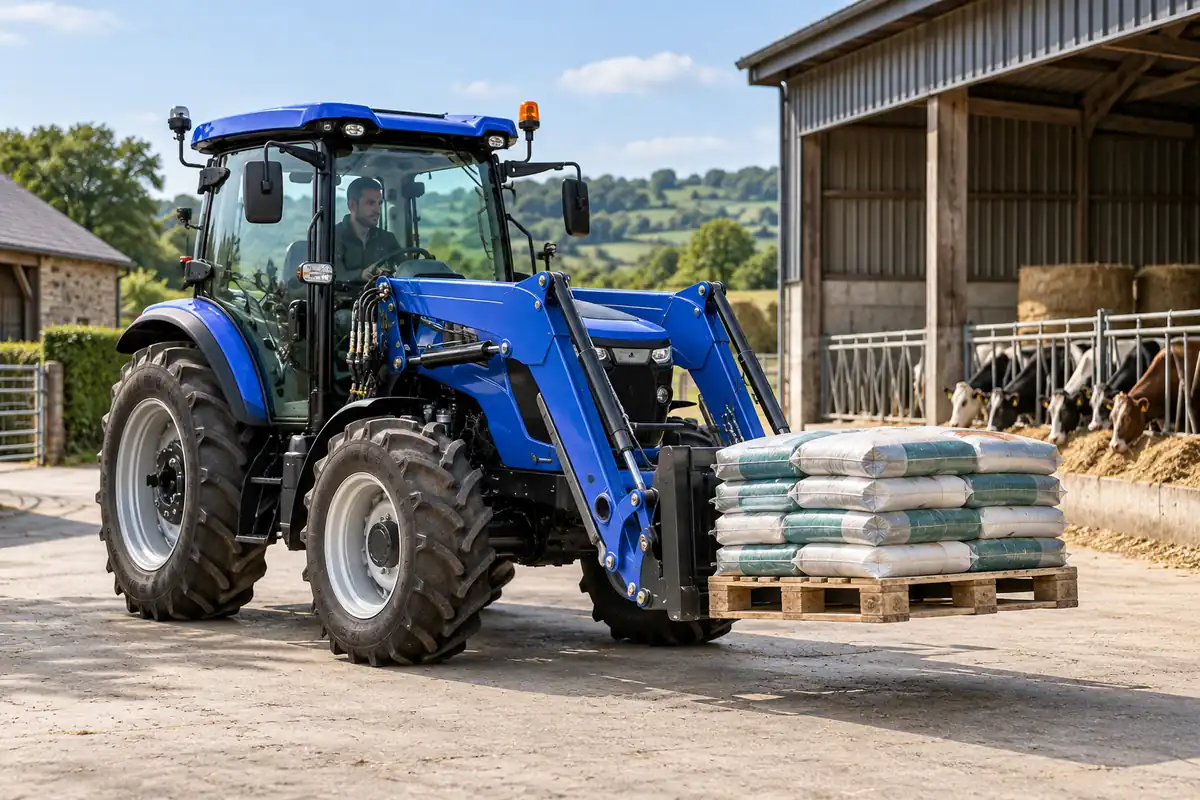
A practical engineering and procurement guide for European farms, dealers and equipment buyers
A tractor with front loader is easy to buy badly. The specification sheets look straightforward: horsepower, four-wheel drive, loader capacity and perhaps bucket size. Yet those numbers do not tell you whether the machine will move wet soil safely, carry round bales through an old livestock building, load a trailer efficiently, or survive several hundred forward-reverse cycles in a working day.
For European farms, the decision is often harder because the tractor must do more than one job. The same machine may handle feed in the morning, tow a trailer after lunch, run a mower later in the week and still pass through a narrow gate that predates modern agricultural equipment. A larger front loader tractor may offer a more substantial working platform, but it can also become too wide or cumbersome. A compact tractor with loader may fit the building perfectly yet spend its life operating too close to its practical loading limit.
That is why the correct question is not simply, “How many horsepower do I need?” A better question is: “Which tractor-loader system can repeatedly move my real loads, at my required height and cycle rate, on my actual ground conditions, without creating avoidable stability, productivity or total-cost problems?”
BUYER RULE Select the loading job first and the tractor second. Define the material, payload, load centre, lift height, daily duty cycle, surface conditions and access restrictions before comparing tractor models. |
I. Why European Farms Often Choose the Wrong Tractor With Front Loader
The most common sizing error starts with engine power. A buyer decides that 40 HP is small, 50 HP is safer and 70 HP must therefore be better for loader work. Horsepower matters, but front-loader performance is controlled by a system of interacting limits rather than one headline number.
A tractor loader has to satisfy several conditions at the same time:
- the loader must generate enough force to raise the load;
- the front axle, tyres and chassis must tolerate the resulting load transfer;
- the rear axle must retain enough load and traction;
- the hydraulic system must complete repeated lift, lower, crowd and dump movements at an acceptable speed;
- the tractor must remain stable while turning, braking and crossing uneven surfaces; and
- the complete tractor-loader-attachment package must still fit the farm’s buildings, gates and working areas.
The loader changes the tractor’s physics
A front loader places the payload in front of the tractor. That turns the machine into a lever. As the payload moves farther forward, the moment around the front axle increases. As the loader rises, the combined centre of gravity also moves upward. A tractor can therefore have enough hydraulic force to lift a load while still being a poor platform for transporting it repeatedly across a yard.
This distinction matters commercially. A machine that can lift a heavy load once for a demonstration may not be the machine you want performing 200 loading cycles per day for five years.
European access restrictions make the trade-off harder
Older livestock buildings, stone gateways, orchard rows and compact farmyards make overall dimensions a procurement variable, not a cosmetic detail. The narrowest gate, barn entrance, turning area and overhead clearance should be measured before the tractor is ordered. More importantly, compare those dimensions with the complete working envelope of the tractor, front loader and attachment—not only with the bare tractor.
This is where many buyers face a genuine engineering trade-off: the platform that offers more stability may reduce access, while the tractor that fits every doorway may provide less reserve for dense materials or high-frequency loader work.
II. Start With the Job, Not the Horsepower
Before you compare a tractor with front loader, build a simple duty profile. This takes less time than comparing dozens of brochures and usually eliminates several unsuitable models immediately.
1. Identify the material and its density
Bucket volume alone is not a payload specification. The same 0.40 m³ bucket can create very different loads depending on what is inside it. If the bulk density of a light material is about 0.7 t/m³, a full theoretical bucket contains roughly 280 kg. At 1.8 t/m³, the same volume represents roughly 720 kg before allowing for fill factor, moisture variation or material stuck to the bucket.
This is why a farm tractor loader that performs comfortably with feed may feel completely different when it is used for wet soil, gravel or dense fertiliser. Buyers should define the heaviest normal material, not the easiest material, when sizing the tractor-loader package.
2. Define the real load centre
Loader capacity is meaningless unless the measurement position is known. A pallet fork moves the load centre farther forward than many bucket applications. A wrapped bale may also place its centre of mass well in front of the loader pivot. The farther forward the load is carried, the greater the leverage on the tractor.
When requesting a quotation, ask where the stated lift capacity is measured: at the pivot pin, at the bucket edge, at a specified distance forward, or at a defined load centre. Also ask whether the figure applies at ground level or at full lift height.
3. Count cycles, not just tonnes
Occasional loader work and production loading are different equipment duties. A farm performing 20 to 30 loader cycles per day can accept a slower hydraulic response that would become frustrating at 200 to 400 cycles per day. High-frequency work magnifies every small delay in lifting, lowering, crowding, reversing and positioning.
For frequent material handling, productivity should be evaluated as useful payload per cycle multiplied by completed cycles per hour. That is a better operational metric than maximum lift capacity in isolation.
4. Define lift height and dump geometry
Moving feed into a low trough is not the same job as loading a high-sided trailer. Ask for the loader geometry that matters to your task: pivot-pin height, dump clearance, reach at height, dump angle and roll-back angle. A loader can technically reach a target height but still be inefficient if the bucket cannot clear the trailer side or dump cleanly at that position.
5. Map the working environment
Record surface type, slope, mud exposure, turning space, doorway dimensions and road-transport requirements. A tractor for material handling on level concrete may not require the same stability margin, tyre choice or traction package as a machine working on wet grass, compacted soil and uneven livestock yards.
European Buyer Profile | Typical Loader Work | Primary Selection Risk |
Dairy / livestock farm | Feed, silage, manure, bedding, round bales | High cycle count, wet yards, frequent reversing |
Mixed farm | Fertiliser, seed, pallets, soil, bales, trailer loading | One tractor must balance loader, PTO and transport work |
Orchard / vineyard | Bins, fertiliser, pruning waste, light materials | Access, row width and turning space can dominate sizing |
Estate / property operator | Timber, soil, gravel, maintenance materials | Wide attachment mix and irregular annual workload |
Agricultural contractor | Multiple materials across customer sites | Utilisation, downtime, attachment compatibility and transportability |
III. Five Engineering Variables That Actually Control Loader Performance
1. Front-axle load and leverage
A useful first-principles check is to think in moments rather than payload alone. Consider an illustrative tractor with a 2.0 m wheelbase carrying a 500 kg payload whose centre is 0.7 m ahead of the front axle. Ignoring the loader’s own weight and dynamic effects, the payload can add roughly 675 kg of static load to the front axle while removing about 175 kg from the rear axle.
The point is not the exact number—real machines require manufacturer ratings and proper load calculations. The point is that a 500 kg payload does not simply add 500 kg to the machine. Its position changes how the load is distributed. Bucket, loader frame and attachment weight further increase the demand on the front of the tractor.
ENGINEERING CHECK Before ordering, request the permitted front-axle loading, tyre load capacity, loader specification and recommended ballast for the exact configuration. Do not infer safe working load from engine horsepower. |
2. Rear ballast and axle balance
Rear ballast is part of the loader system, not an afterthought. Correct ballast can restore useful rear-axle load, improve traction and reduce the sensation of the tractor becoming nose-heavy during steering or braking. But excessive ballast also has costs: greater total mass, higher rolling resistance, more tyre loading and potentially more soil compaction.
The objective is therefore not “as much rear weight as possible.” The objective is a balanced tractor for the real attachment and payload. Ask the supplier to state the recommended counterweight method and operating assumptions for the final front loader configuration.
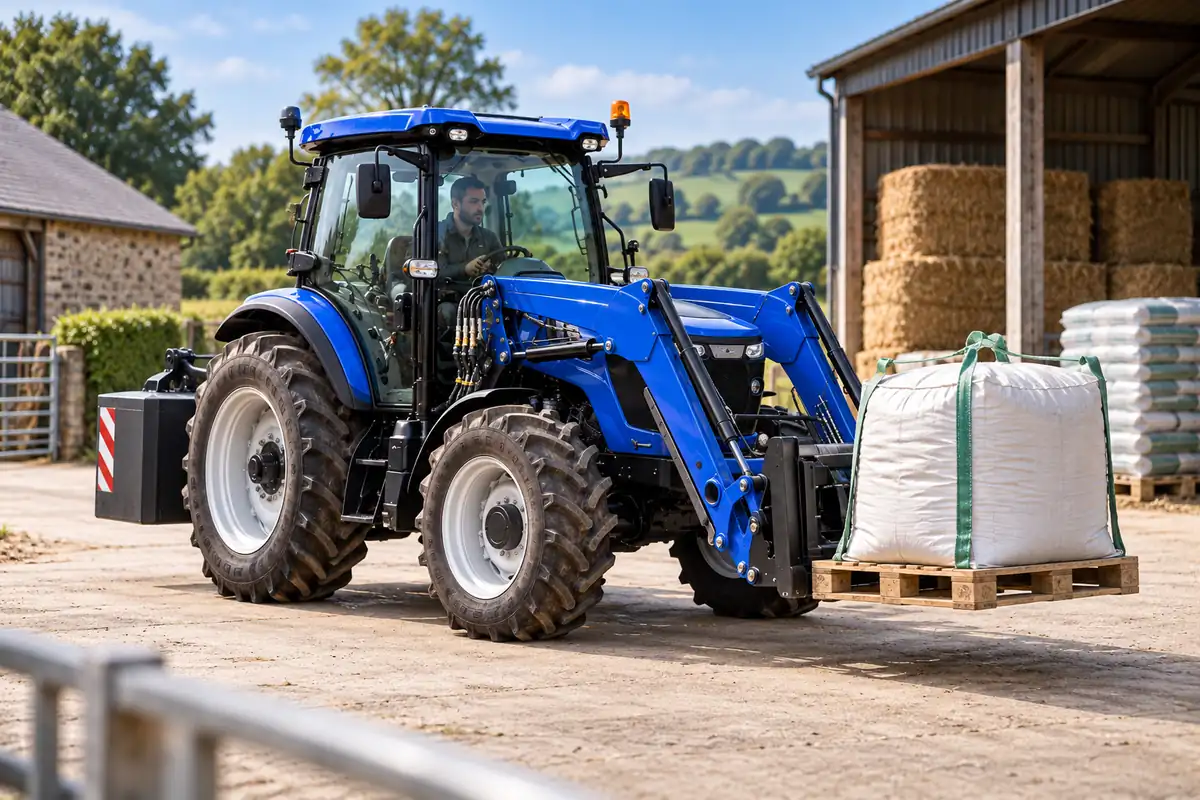
Figure 1. Rear ballast and a low transport position help balance the tractor-loader system during front loader work.
3. Hydraulic flow and cycle time
Hydraulic pressure mainly determines available force; hydraulic flow strongly influences movement speed. For frequent loader work, a modest difference in cycle time can create a large annual productivity difference. If one working cycle is only four seconds slower and the tractor performs 300 cycles per day, that is 20 minutes of additional cycle time before accounting for operator positioning or travel.
Do not compare pump-flow figures blindly. Steering priority, engine rpm, valve block design, line losses and simultaneous functions all affect real performance. The useful comparison is the time needed to complete your normal loading cycle at a realistic working engine speed.
4. Wheelbase, operating mass and tyre footprint
As the loader rises, the combined centre of gravity moves forward and upward. A longer wheelbase and heavier platform can provide more stability reserve, while appropriate tyres support traction and load carrying. The trade-off is that larger machines are usually less agile and may reduce access in confined farm buildings.
This is why selecting a front loader tractor is not a contest to maximise weight or wheelbase. It is an optimisation problem: enough platform for the duty, without creating unnecessary access, transport or soil-compaction penalties.
5. Transmission and reversing workload
A typical loader cycle is forward, collect, reverse, turn, forward, raise, dump and reverse again. When this sequence is repeated hundreds of times, the reversing process affects operator fatigue, clutch use and completed cycles per hour. Buyers should therefore ask how directional changes are actually performed, not simply count the total number of gears.
A gearbox with more ratios can improve speed matching for mixed farm work, but the number of ratios alone does not make a tractor ideal for loading. Evaluate the whole operating sequence.
IV. The European Trade-Off: Compact Access vs Loader Stability
For many European buyers, the hardest decision is not 50 HP versus 60 HP. It is access-first sizing versus loader-duty-first sizing.
When a compact tractor with loader makes more sense
A compact tractor with loader is often the rational choice when narrow entrances, low buildings, orchard rows or small yards are non-negotiable. It is also attractive when loader work is light to moderate and the tractor spends substantial time mowing, spreading, transporting or operating Category I implements.
The mistake is assuming “compact” automatically means “efficient.” If the machine must repeatedly handle dense materials, heavy pallets or large bales near its practical limit, the operator may compensate with smaller loads and more cycles. Access improves, but productivity can fall.
When a larger utility platform becomes more economical
As daily loader cycles rise, attachments become heavier and the farm expects the tractor to perform more demanding cultivation or transport work, a larger utility platform can become the more economical choice even if the purchase price is higher. More chassis mass, a longer wheelbase, larger tyres and a higher implement category can provide additional operating reserve.
This is why buyers should not view the step from a compact 50 HP tractor to a 60 HP utility tractor as merely buying another 10 HP. In many product ranges, including OXPLO, it is a change in the working platform itself.
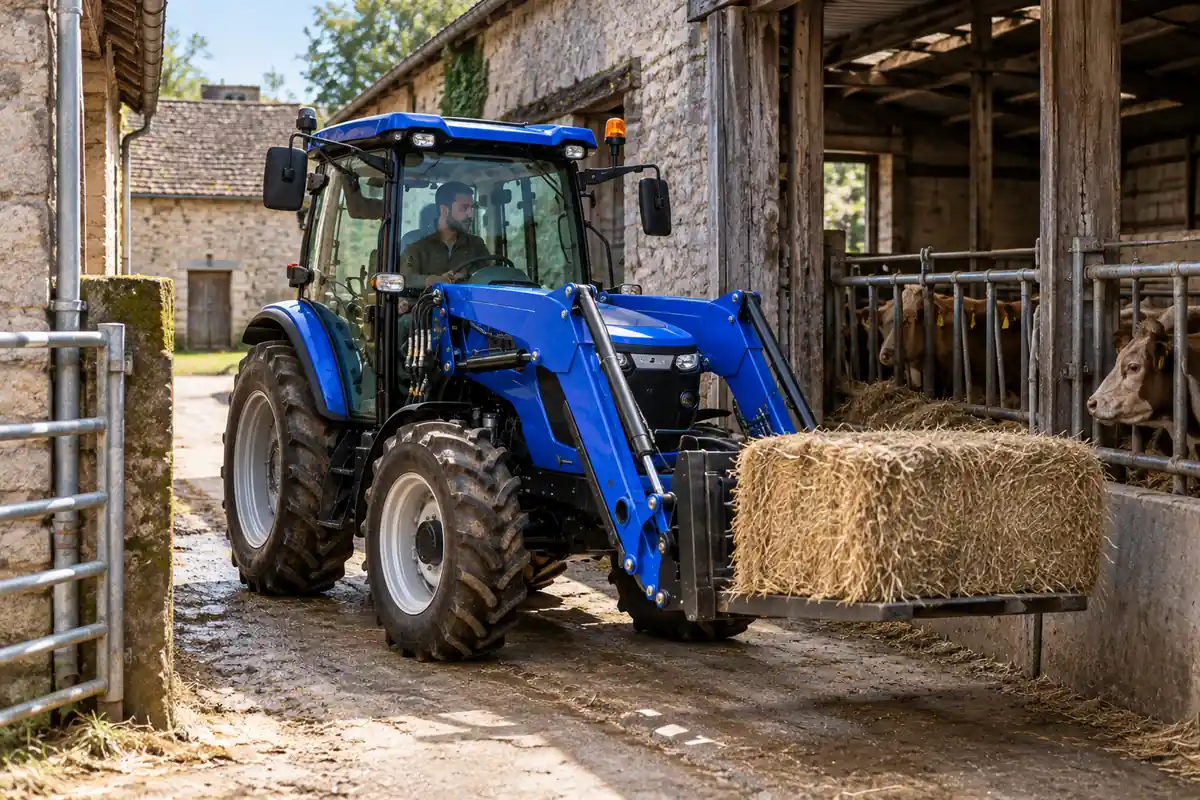
Figure 2. A compact tractor with loader can be the better choice when access is limited by older European farm buildings.
V. Seven Expensive Front Loader Buying Mistakes
Mistake 1: Selecting by horsepower alone
Engine output cannot substitute for front-axle capacity, loader geometry, hydraulic performance, ballast or stability. If loader work is the primary duty, chassis and hydraulic suitability deserve equal attention.
Mistake 2: Comparing maximum lift capacity without the measurement point
Two capacity numbers cannot be compared fairly if one is measured at the pivot and the other is measured farther forward, or if one applies near ground level and the other at full height.
Mistake 3: Forgetting attachment weight
Buckets, pallet forks, bale grabs and other tools consume part of the working load margin. The attachment is not a weightless interface.
Mistake 4: Assuming “it can lift it” means “it can carry it”
A raised static load is only the beginning. The tractor must turn, brake, cross ruts and travel on slopes. Dynamic operation requires more margin than a stationary lift demonstration.
Mistake 5: Buying the tractor first and solving the loader later
The safer sequence is material → payload → attachment → loader → tractor → ballast. Reversing that order can force compromises in hydraulics, geometry or stability.
Mistake 6: Checking bare-tractor dimensions instead of the working envelope
A machine that fits through the gate without a loader may not fit with the selected attachment positioned for travel. Measure the complete system.
Mistake 7: Treating European compliance as a one-word “CE” question
Destination-market suitability depends on the exact tractor, engine, operator-protection equipment, lighting, braking, road-use requirements and documentation package. Confirm the supplied configuration before shipment.
VI. Size for Productivity and Total Cost of Ownership, Not Purchase Price
A tractor for material handling should be evaluated by what it moves over time, not only by what it costs to buy. A useful simplified productivity model is:
PRODUCTIVITY LOGIC Useful material moved per hour = effective payload per cycle × completed cycles per hour. |
Effective payload is constrained by the lowest safe limit in the system: loader geometry, attachment weight, load centre, front-axle limit, tyre capacity, ballast, ground conditions and stability. Cycles per hour are influenced by hydraulic response, transmission operation, travel distance, visibility, turning room and operator workflow.
The hidden cost of undersizing
An undersized tractor may require more trips, smaller bucket fills and slower travel with the load. It can also spend a greater proportion of its working life near the upper end of its practical duty. The purchase price is lower, but labour hours and cycles per tonne can rise.
The hidden cost of oversizing
Oversizing also has a cost. A larger tractor can mean higher capital cost, more fuel, larger tyres, additional soil compaction and loss of access to buildings or rows. If the loader is used only occasionally, those costs may never be recovered through productivity.
A practical TCO checklist
- purchase price of tractor, loader and required attachments;
- fuel consumption under the actual duty cycle;
- tyres, pins, bushes, hydraulic hoses and wear components;
- service parts and planned maintenance;
- operator time per tonne or per loading task;
- downtime cost during peak seasons;
- residual value and equipment utilisation across non-loader jobs.
For a B2B buyer, the best front loader tractor is therefore rarely the machine with the highest single specification. It is the configuration that moves the required material at the lowest acceptable lifetime cost while remaining useful for the rest of the farm’s work.
VII. How OXPLO 50–70 HP Platforms Fit Different Loader Workloads
Only after the duty cycle is defined should a buyer compare specific machines. The current OXPLO tractor range spans 25–70 HP, with the 50–70 HP models being the most relevant starting point for regular material handling. OXPLO also offers front loaders, bale forks and other agricultural attachments, with compatibility checked against the selected tractor and application.
Explore the OXPLO tractor range: OXPLO 25–70 HP Tractors & Attachments
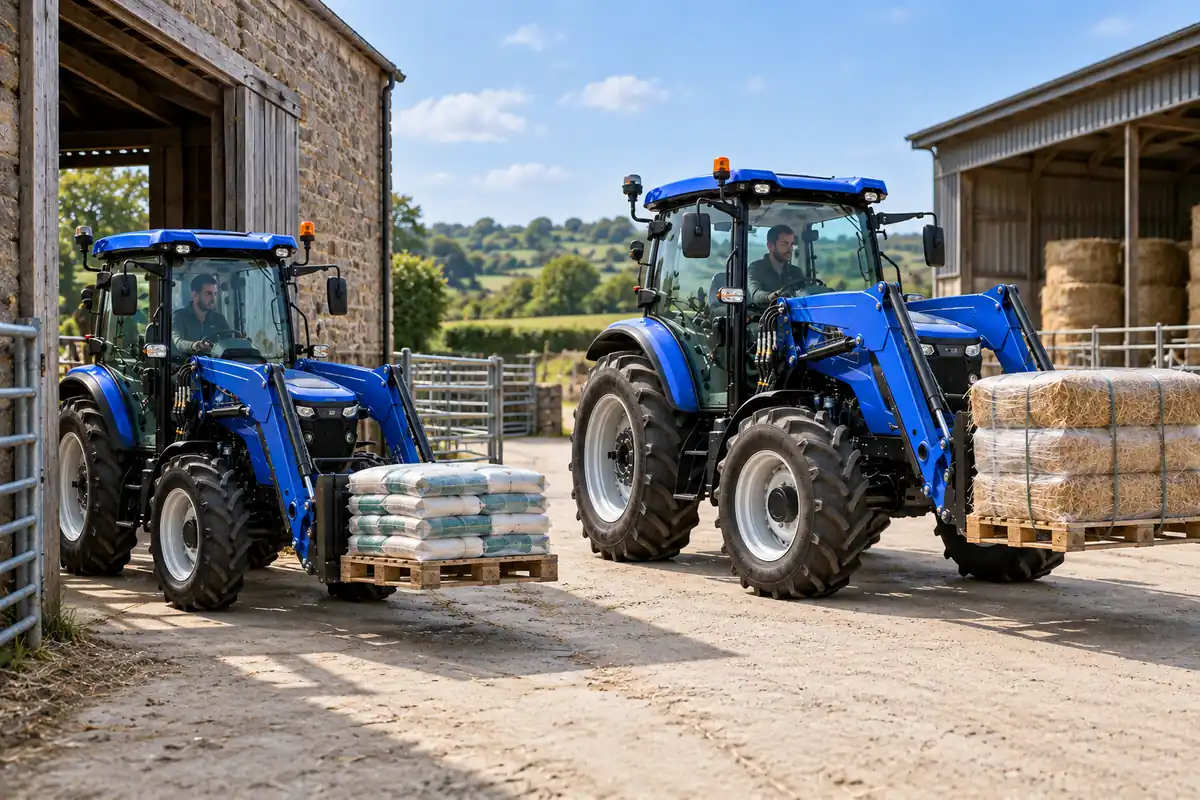
Figure 3. OXPLO compact vs utility tractor platforms: access-first sizing versus loader-duty sizing.
OXPLO OXT504: access-first 50 HP compact platform
The OXPLO OXT504 is currently listed at 50 HP with 4WD, an 8F + 8R gearbox, Category I rear linkage, a 1,800 mm wheelbase and a listed total weight of approximately 2,200 kg. Its listed width is 1,560 mm. That combination makes the OXT504 relevant to buyers who want more engine reserve while retaining the access advantages of OXPLO’s compact OXT chassis group.
For a European livestock farm, estate or mixed farm, the OXT504 can make sense when loader work is light to moderate, access remains a major constraint and the tractor must also handle mowing, grassland, PTO and transport tasks. The key boundary is duty severity: dense materials, heavier attachments or very high loader-cycle counts should trigger a comparison with the larger OXT604 rather than an automatic decision to stay compact.
Product link: OXPLO OXT504 50 HP 4WD Farm Tractor
OXPLO OXT604: the platform transition for regular loader work
The OXPLO OXT604 is the important transition model in this decision. It is listed at 60 HP with 4WD, a 12F + 12R transmission, Category II linkage, a 2,010 mm wheelbase and approximately 2,500 kg listed weight. It also uses a larger tyre package than the OXT504.
The commercial point is not that 60 HP is “better” than 50 HP. The point is that OXPLO moves the buyer into a larger utility platform. For farms that have outgrown the compact Category I range, the OXT604 provides a stronger starting point for recurring loader work, heavier implements and more demanding mixed-farm operation—provided the larger dimensions still fit the site.
For buyers deciding between OXT504 and OXT604, the practical question should be: “Is compact access still the dominant constraint, or has daily loader workload become the dominant constraint?”
Product link: OXPLO OXT604 60 HP 4WD Utility Tractor
OXPLO OXT704: workload reserve for broader mixed-farm duties
The OXPLO OXT704 is listed at 70 HP with 4WD, a 12F + 12R transmission, Category II linkage, a 2,010 mm wheelbase and approximately 2,500 kg listed weight. OXPLO positions it for heavier cultivation, transport and demanding farm work, and a compatible front-loader configuration can be discussed for feed, soil, fertiliser, pallets and other materials.
The OXT704 becomes more relevant when the tractor must support loader work as part of a wider, higher-demand job mix: heavier cultivation, transport, Category II implements and longer annual utilisation. Buyers should still avoid assuming that 70 HP automatically determines loader capacity. OXPLO specifies that loader capacity, hydraulic connections, attachment type and counterweight requirements must be confirmed as part of the final configuration.
Product link: OXPLO OXT704 70 HP 4WD Farm Tractor
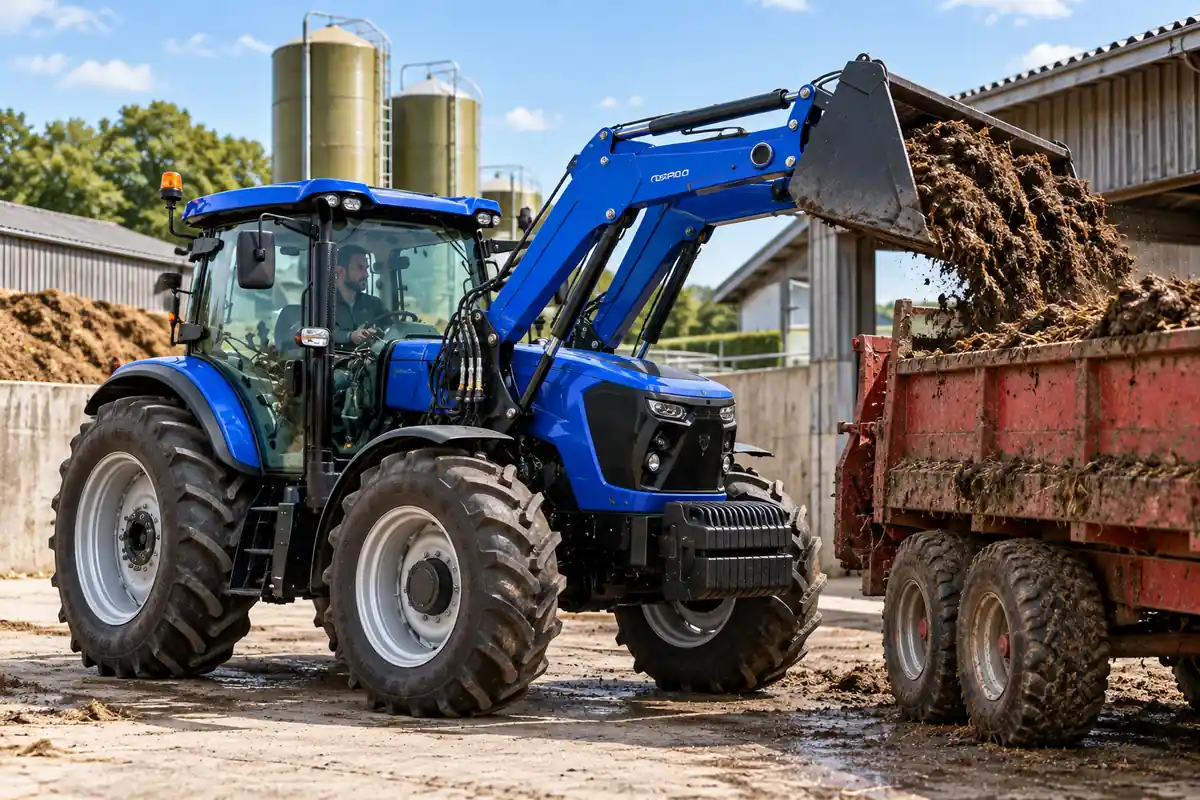
Figure 4. A larger utility platform can become more economical for repeated high-load front-loader work.
OXPLO Platform | Best Starting Point For | Main Buyer Question |
OXT504 – 50 HP, Cat. I | Access-sensitive farms; light-to-moderate loader duty; mixed PTO and transport work | Do I need compact access more than additional loader-duty reserve? |
OXT604 – 60 HP, Cat. II | Regular loader work; larger farms; heavier implements; higher recurring workload | Has material handling become important enough to justify the larger utility platform? |
OXT704 – 70 HP, Cat. II | Loader work combined with heavier cultivation, transport and demanding mixed-farm duties | Do I need more engine reserve across the whole farm workload, not only for the loader? |
What OXPLO can solve before the tractor is shipped
The value of application-based configuration is that several buying risks can be addressed before the machine leaves the factory. OXPLO asks buyers to provide the destination country, farm type, expected workload and required implements so the team can confirm the model, PTO and linkage compatibility, tyres, hydraulic requirements, attachment compatibility and available market documentation.
For European orders, this matters because documentation and market configuration depend on the selected model, engine, destination and intended use. OXPLO states that CE-related documents can be provided for eligible European configurations, while Stage V engine options depend on the applicable model and engine supplier. Buyers should confirm the exact declaration, manuals, labels, emissions information, lighting, braking and road-use requirements before production or shipment.
Support and European order information: OXPLO Tractor Attachments, Parts & Support
VIII. European Buyer Brief: What to Send Before Requesting a Tractor-Loader Quotation
A vague enquiry such as “Please quote a 60 HP tractor with front loader” forces the supplier to make assumptions. A good technical brief shortens the quotation process and makes competing offers easier to compare.
Information to Provide | Example |
Destination country | Poland |
Farm / business type | Dairy and mixed farm |
Main loader materials | Silage, manure, fertiliser, round bales |
Maximum normal payload | e.g. 650–750 kg bale or stated pallet load |
Required lift / dump height | e.g. trailer side height or target loading height |
Estimated loader cycles | e.g. 150–200 cycles/day during peak periods |
Narrowest access point | e.g. gate or barn opening dimensions |
Ground conditions | Concrete yard + wet grass / compacted soil |
Other tractor duties | Mowing, trailer transport, cultivation |
Existing implements | PTO speed, linkage category, weight and hydraulic requirements |
Annual working hours | Estimated tractor and loader hours |
Operator / road requirements | Cab, lighting, mirrors, braking, registration needs where applicable |
With this information, OXPLO can narrow the decision from “which horsepower?” to a practical configuration sequence:
OXPLO CONFIGURATION SEQUENCE Application → tractor platform → front loader → attachment → hydraulic interface → tyres → rear ballast → destination-market equipment and documentation. |
This is also the right point to request a confirmed specification sheet. If the quotation does not clearly state the tractor model, engine configuration, transmission, tyres, linkage, PTO, loader arrangement, attachments and required documentation, the offer is not ready for a meaningful technical comparison.
Start from OXPLO’s tractor application page: Configure an OXPLO Tractor for Your Farm
Conclusion: Choose a Loading System, Not Just a Tractor
The best tractor with front loader is not automatically the machine with the highest horsepower or the largest advertised lift figure. It is the machine whose chassis, loader geometry, hydraulics, tyres, ballast, transmission and dimensions fit the real loading job.
For European buyers, that means balancing two competing priorities. A compact platform can preserve access to older buildings, tight gates and confined yards. A larger utility platform can provide more reserve for frequent material handling, heavier attachments and broader farm duties. The correct choice depends on which constraint dominates your operation.
Within the current OXPLO range, the OXT504 provides a compact 50 HP starting point for access-sensitive mixed-farm work; the OXT604 represents the move to a larger 60 HP Category II utility platform for more demanding recurring work; and the OXT704 adds 70 HP engine reserve for broader heavy mixed-farm duties. The loader itself should then be confirmed around the attachment, payload, hydraulic connection and counterweight requirements—not assumed from horsepower alone.
If you are comparing an OXPLO front loader tractor for a European farm, send the OXPLO team your country, farm type, heaviest normal load, attachment requirements, daily loader duty, access dimensions and other tractor jobs. That information is far more useful than asking for “the best 60 HP tractor,” because it allows the machine to be configured around the work you actually need to complete.
Learn more: OXPLO Machinery – Tractors and Agricultural Equipment
FAQ: Tractor With Front Loader Selection
Q1. How much horsepower does a tractor with front loader need?
There is no universal horsepower number. Light loading in confined areas may suit a compact tractor, while high-cycle material handling usually requires more attention to operating mass, wheelbase, front-axle loading, hydraulics and ballast. Start with the payload and duty cycle, then choose horsepower.
Q2. Is a 50 HP front loader tractor enough for farm work?
A 50 HP tractor can be a good fit for light-to-moderate loader duties, particularly when compact access and multi-purpose farm work are important. The actual suitability still depends on loader geometry, attachment weight, material density, load centre, ballast and daily cycle count.
Q3. When should I move from the OXPLO OXT504 to the OXT604?
Consider the OXT604 when regular loader work, heavier implements, Category II compatibility, a longer wheelbase, larger tyres or a broader workload justify moving beyond OXPLO’s compact 50 HP platform. Confirm that the larger tractor still fits your access constraints.
Q4. Can the OXPLO OXT704 be supplied with a front loader?
OXPLO states that a compatible front-loader configuration can be discussed for the OXT704. Loader capacity, hydraulic connections, attachment type and counterweight requirements should be confirmed for the final specification.
Q5. Why is rear ballast important on a farm tractor loader?
A front-mounted load transfers weight toward the front axle and can reduce useful rear-axle loading. Correct ballast helps restore balance, traction and controllability. The required amount should be matched to the loader, attachment and payload rather than guessed.
Q6. What should a European buyer confirm about CE and Stage V?
Do not treat compliance as a generic yes/no question. Confirm the exact tractor and engine configuration, destination country, Declaration of Conformity or other applicable CE-related documents, manuals, labels, emissions documentation, lighting, braking and road-use requirements before shipment.
Q7. What information should I send OXPLO for an accurate loader tractor recommendation?
Send the destination country, farm type, material, maximum normal load, attachment type, required lift height, daily loader cycles, narrowest gate or building dimensions, ground conditions, existing implements and annual working hours. This allows OXPLO to recommend the tractor and attachment package around the actual application.
Related OXPLO Resources
- OXPLO Tractor Range & Application Selection
- OXPLO OXT504 50 HP Tractor
- OXPLO OXT604 60 HP Tractor
- OXPLO OXT704 70 HP Tractor
- OXPLO Attachments, Parts & Support
- OXPLO Product Range
Editorial note: Published specifications and available market configurations should be reconfirmed on the final OXPLO quotation and specification sheet before ordering.