
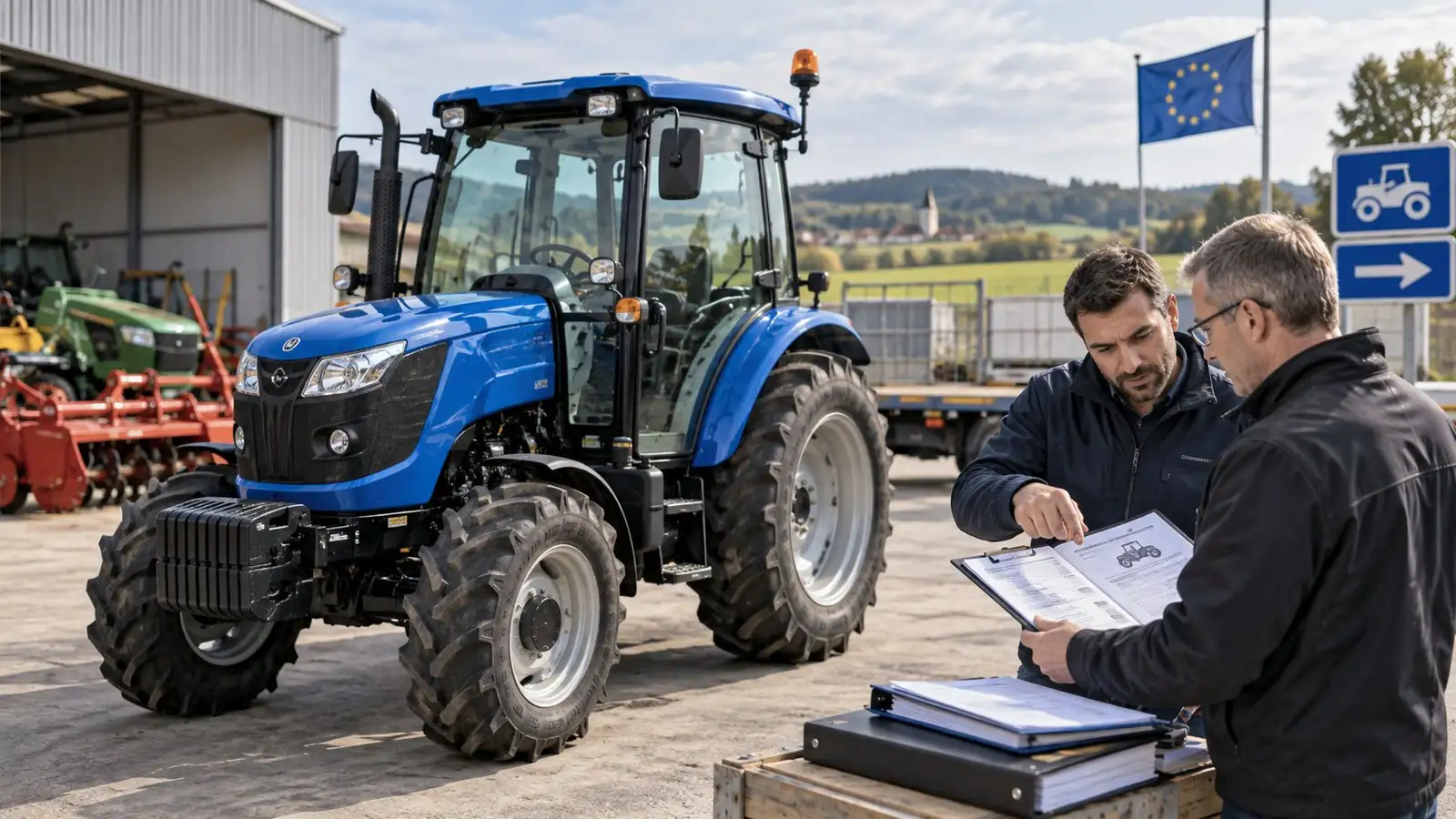
The most expensive compliance mistake is often not buying a tractor with no documents. It is buying a tractor that appears to have the right documents, only to discover that the approval, engine, tyres, cab, speed configuration or Certificate of Conformity does not match the vehicle that was actually produced and shipped.
For European importers, this is why EU tractor type approval should be treated as part of purchasing due diligence, not as paperwork to be checked after the machine reaches port. A 50 HP tractor can have the right power, PTO and hydraulic capacity for the farm and still become a commercial problem if the regulatory identity of the delivered vehicle cannot be traced cleanly through its approval documents.
This guide explains how to verify that chain before ordering, where importers commonly lose control of it, and how to turn compliance checks into a repeatable purchasing workflow. The focus is practical: what to ask, what to compare, when to stop an order, and how to prevent a late configuration change from becoming a registration problem.
Core rule: Do not buy the certificate. Verify the exact tractor behind the certificate. |
Key Takeaways · EU tractor type approval is tied to an approved vehicle type and configuration, not simply to a commercial model name. · A CE-related document for machinery, an attachment or another item is not a substitute for whole-vehicle approval evidence where vehicle type approval is required. · The Certificate of Conformity (CoC), Type-Variant-Version (TVV), approval number, VIN and statutory plate should form one traceable chain. · Stage V verification should cover the engine fitted to the ordered tractor and its approved installation, not merely a general engine brochure. · Changes to tyres, cab/ROPS, speed, braking, engine or other approval-relevant features should trigger a compliance re-check before production continues. · For OXPLO European orders, the destination country, application, selected model, engine and final configuration should be confirmed together with the available documentation before the order is locked. |
I. The Real Import Risk: A Tractor Can Look “EU Ready” and Still Be the Wrong Approved Configuration
Imagine a European distributor sourcing a 50 HP 4WD tractor for mixed farms. The sales file looks reassuring: Stage V is mentioned, road lights are fitted, the machine has a cab, and a folder contains several certificates. The tractor photographs also look correct.
The problem appears later. The approval document covers another variant. The engine family differs from the one shown in the paperwork. The tyre combination was changed after the initial document review. Or the CoC refers to a TVV that does not match the finished vehicle.
This is the difficult part of tractor approval Europe projects: certificates can be genuine and still be irrelevant to the tractor sitting in front of you.
The Hidden Cost Is Usually Timing
Compliance failure rarely creates only one extra fee. Once the machine has been produced and shipped, the importer may be exposed to storage, demurrage, additional transport, engineering review, replacement parts, retrofit work, retesting, registration delay and lost seasonal working time.
For an agricultural tractor Europe purchase, timing can be more expensive than the correction itself. A four-week delay outside the season may be inconvenient. A four-week delay during planting, mowing or harvest can affect the customer’s entire operating plan.
TCO logic: Compliance failure cost = storage + demurrage + transport + retrofit + engineering + retesting + registration delay + financing cost + lost working time. |
Why First-Time Importers Miss It
- The sales model name looks identical, so the buyer assumes every configuration is covered.
- The buyer asks only “Do you have CE?” instead of asking for the approval identity of the exact tractor.
- Stage V is treated as a whole-vehicle answer instead of one part of the vehicle compliance chain.
- Custom options are agreed commercially but are not re-checked against the approved configuration.
- Document review begins after the deposit, after production or even after shipment.
II. What EU Tractor Type Approval Actually Means for an Importer
Regulation (EU) No 167/2013 provides the core EU framework for the approval and market surveillance of agricultural and forestry vehicles, including T-category tractors. Supporting delegated and implementing regulations cover functional safety, braking, construction, administrative documentation and environmental performance.
For buyers, the legal architecture matters less than the purchasing implication: approval is built around a defined vehicle type and technical configuration. It is not a universal permission attached to a brand name or horsepower badge.
Start With the Vehicle Category
Before reviewing certificates, confirm what regulatory category the tractor belongs to. Conventional wheeled agricultural tractors generally fall within category T, which is further divided according to factors such as geometry, mass, ground clearance and maximum design speed. The a/b suffix is also linked to maximum design speed, with the 40 km/h threshold playing an important role in subcategory classification.
This is why a commercial description such as “orchard tractor,” “compact tractor” or “50 HP farm tractor” is not enough for homologation review. The importer should ask for the formal category used in the approval file.
CE Is Not the Same Question as Whole-Vehicle Type Approval
A common purchasing shortcut is to ask whether a tractor “has CE.” That question is too broad. CE-related documentation can be relevant to machinery, implements or other equipment, while complete agricultural and forestry vehicles are governed by the vehicle type-approval framework where applicable.
A more useful request is: “Please provide the EU whole-vehicle type-approval information and the CoC applicable to the exact type, variant and version quoted.” This immediately forces the discussion away from generic certificates and toward vehicle applicability.
III. Build an Approval Evidence Chain, Not a Certificate Folder
The safest way to review tractor documents is to treat them as an evidence chain. Every link should point to the same physical tractor.
Approval evidence chain: EU type-approval number → Type / Variant / Version → ordered configuration → VIN & statutory plate → final CoC → delivered tractor |
Why TVV Matters More Than the Sales Model Name
Implementing Regulation (EU) 2015/504 requires manufacturers to allocate alphanumeric Type-Variant-Version designations, and the TVV is intended to identify a unique combination of technical features. For procurement, that makes TVV one of the most useful bridges between the regulatory file and the commercial order.
One commercial tractor model can be offered with different engines, tyres, operator stations, maximum speeds, braking arrangements and other options. Sales may still call all of them the same model. The approval system may not.
The CoC Is the Individual-Vehicle Link
The Certificate of Conformity is the manufacturer’s statement that a produced vehicle conforms to the approved vehicle type. In practical terms, it connects an individual tractor to its regulatory identity through fields such as the type, variant, version, category, approval number and VIN.
The CoC should therefore never be treated as a decorative document added to the shipping file. It should be cross-checked against the tractor, the quotation and the approval records.
Evidence | What the Importer Should Match |
Commercial quotation | Exact model, engine, tyres, cab/ROPS, maximum speed, braking, PTO and key options |
EU type-approval information | Approval number, approved type and relevant scope |
TVV | The exact technical combination represented by the ordered tractor |
Certificate of Conformity | TVV, category, approval number and VIN |
Statutory plate | Vehicle category, approval information and VIN where required |
Chassis/VIN marking | Must match the CoC and vehicle identification |
Engine identification | Engine model/family and emissions information consistent with the approved installation |
Final production photos | Evidence that the manufactured tractor has the reviewed configuration |
IV. The Configuration Trap: Small Commercial Changes Can Create Large Compliance Questions
Customization is normal in tractor purchasing. The problem is not customization itself. The problem is allowing a commercial change to bypass the compliance review.
The “Same Tractor” Assumption
A buyer may ask for wider agricultural tyres after the original quotation. Another customer may request a cab instead of an open ROPS station. A dealer may want a higher road speed, a different light package or a different engine supplier. Mechanically, each change may appear straightforward. From a type-approval perspective, the correct question is whether the change remains inside the approved configuration.
The safe operating rule is simple: whenever an approval-relevant configuration changes after document review, reopen the compliance review. Do not assume that a commercially equivalent substitution is automatically an approval-equivalent substitution.
Specifications That Deserve a Re-Check
- Engine model or engine family
- Tyre and wheel combination
- Cab, ROPS or other protective structure
- Maximum design speed
- Braking system and trailer-brake interface
- Lighting and signalling equipment
- Permitted masses and axle loads
- Mechanical coupling / towing equipment
- Other changes that alter a characteristic listed in the approved vehicle specification
V. Stage V: Verify the Engine Fitted to the Tractor, Not Just the Words “Stage V”
EU Stage V emissions requirements are part of the environmental framework affecting agricultural and forestry vehicle engines. For buyers, the important point is traceability.
A supplier saying “Stage V engine available” is only the start of the discussion. The importer should identify the engine used in the quoted tractor, confirm the relevant engine family or approval information, and verify that the engine fitted during production is the one associated with the reviewed configuration.
A Better Stage V Verification Chain
- Confirm the engine manufacturer, model and family used for the quoted tractor.
- Review the available Stage V emissions documentation for that engine configuration.
- Confirm that the tractor approval documentation corresponds to the relevant propulsion installation.
- Before shipment, photograph the engine identification and compare it with the final order and document package.
This prevents a common mistake: treating an engine supplier’s general Stage V capability as proof that every tractor configuration in a supplier’s range is automatically ready for the same European order.
VI. Braking, Maximum Speed and Trailer Work: Where Farm Use Meets Road-Use Risk
European tractor buyers often focus on engine power and PTO requirements because those determine whether the tractor can perform field work. Importers should add another layer whenever the tractor will tow loaded trailers or travel regularly on public roads.
Delegated Regulation (EU) 2015/68 sets detailed braking requirements for agricultural and forestry vehicles. In practical purchasing terms, braking, design speed, towing equipment and permitted masses should be reviewed together rather than as isolated specifications.
Technical Capability Is Not the Same as Regulatory Suitability
A 50 HP tractor may physically pull a farm trailer. That does not by itself establish that the tractor-trailer combination is suitable for every intended public-road use. The buyer should review the approved maximum design speed, braking configuration, coupling arrangement, masses and local registration or use requirements in the destination market.
Importer question: Will this tractor spend most of its time in the field, or is loaded road transport a recurring part of the customer’s work? The answer changes which specifications deserve the most scrutiny. |
VII. Worked Example: A 50 HP Tractor for a European Mixed Farm
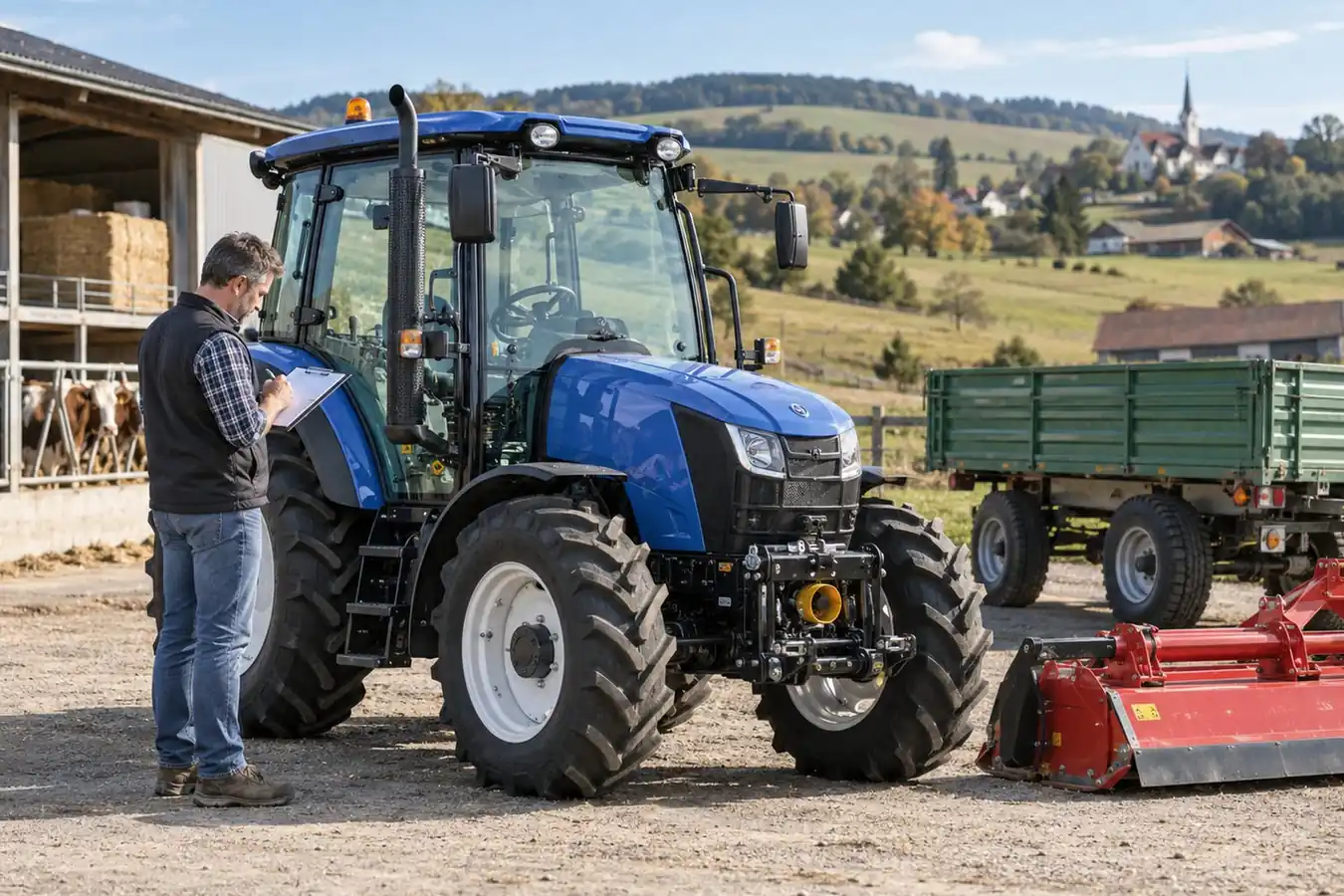
Figure 1. Start with the farm workload and implement set, then lock the configuration and verify the matching documents.
Consider a buyer looking for one tractor to cover grassland maintenance, rotary tilling, livestock-yard work and farm-trailer transport. The initial target is 50 HP, 4WD and an enclosed cab. This is a realistic use case for many mixed farms, but the correct purchasing process does not start and end with horsepower.
Step 1: Translate Work Into a Technical Configuration
- PTO-driven implements: confirm PTO speed, output requirement and spline compatibility.
- Tillage: check traction, tyre choice, ballast and implement weight.
- Livestock/material handling: check hydraulic requirements, loader compatibility and axle load implications.
- Trailer transport: check braking, coupling, permitted masses and expected road speed.
- Access constraints: confirm width, turning space and cab/ROPS requirements.
Step 2: Freeze the Exact Order Specification
Only after the work profile is clear should the buyer lock the engine, tyre package, operator station, speed configuration, braking equipment, PTO, linkage and major options. This is the point where the commercial specification and the compliance review need to become one document set.
Step 3: Verify Approval Applicability Before Production
Ask for the approval information applicable to that exact configuration, including the relevant TVV and the document path to the final CoC. If a later production change is proposed, reopen the review rather than accepting “same function” as sufficient evidence.
How This Relates to OXPLO OXT504
OXPLO lists the OXT504 50 HP 4WD Farm Tractor with 50 HP rated power, 4WD, an 8F + 8R gearbox, Category I linkage and a compact platform aimed at livestock, grassland, transport and recurring PTO work. Those published specifications are useful for initial selection, but the final European order should still confirm the destination-market engine, tyres, cab/ROPS, braking, road-use equipment and available documentation before production.
VIII. Supplier Red Flags: When to Slow the Order Down
Good compliance due diligence is partly about documents and partly about supplier behaviour. The following responses should trigger a deeper review.
Red Flag | Why It Matters |
“Yes, we have CE.” | No vehicle approval number, no TVV and no explanation of which document applies to the quoted tractor. |
“This certificate covers all our tractors.” | A broad claim with no model/configuration traceability. |
“The engine is Stage V, so the tractor is fine.” | Engine emissions compliance is being used as a substitute for whole-vehicle configuration verification. |
“We changed the tyres/cab, but it is the same tractor.” | No evidence that the revised production specification remains within the approved configuration. |
“We cannot show the VIN or plates before shipment.” | The buyer loses a practical opportunity to compare the physical tractor with the final documents. |
Documents for a different horsepower/model | A genuine document can still be inapplicable to the ordered vehicle. |
IX. A Three-Gate Workflow for Tractor Import Europe Projects
The easiest way to prevent document drift is to divide compliance review into three purchasing gates. Each gate answers a different question.
Gate 1 — Before Deposit: Is This the Right Regulatory Route and Base Configuration?
- Confirm destination country and intended use.
- Confirm the formal tractor category and expected maximum design speed.
- Request the EU tractor type approval information applicable to the quoted configuration where the EU approval route is used.
- Confirm TVV or equivalent configuration identification available for the order.
- Confirm engine and Stage V status for the selected market configuration.
- Identify any country-specific registration or administrative requirements with a local specialist before committing funds.
Gate 2 — Before Production Is Locked: Does Every Option Still Match?
- Freeze engine, tyres, cab/ROPS, braking, lighting, speed, PTO, linkage, hydraulics and towing equipment.
- Review any requested customization against the approved configuration.
- Confirm the document set expected with the finished tractor.
- Record the final agreed specification in the purchase order or technical annex.
Gate 3 — Before Shipment: Does the Physical Tractor Match the Paper Trail?
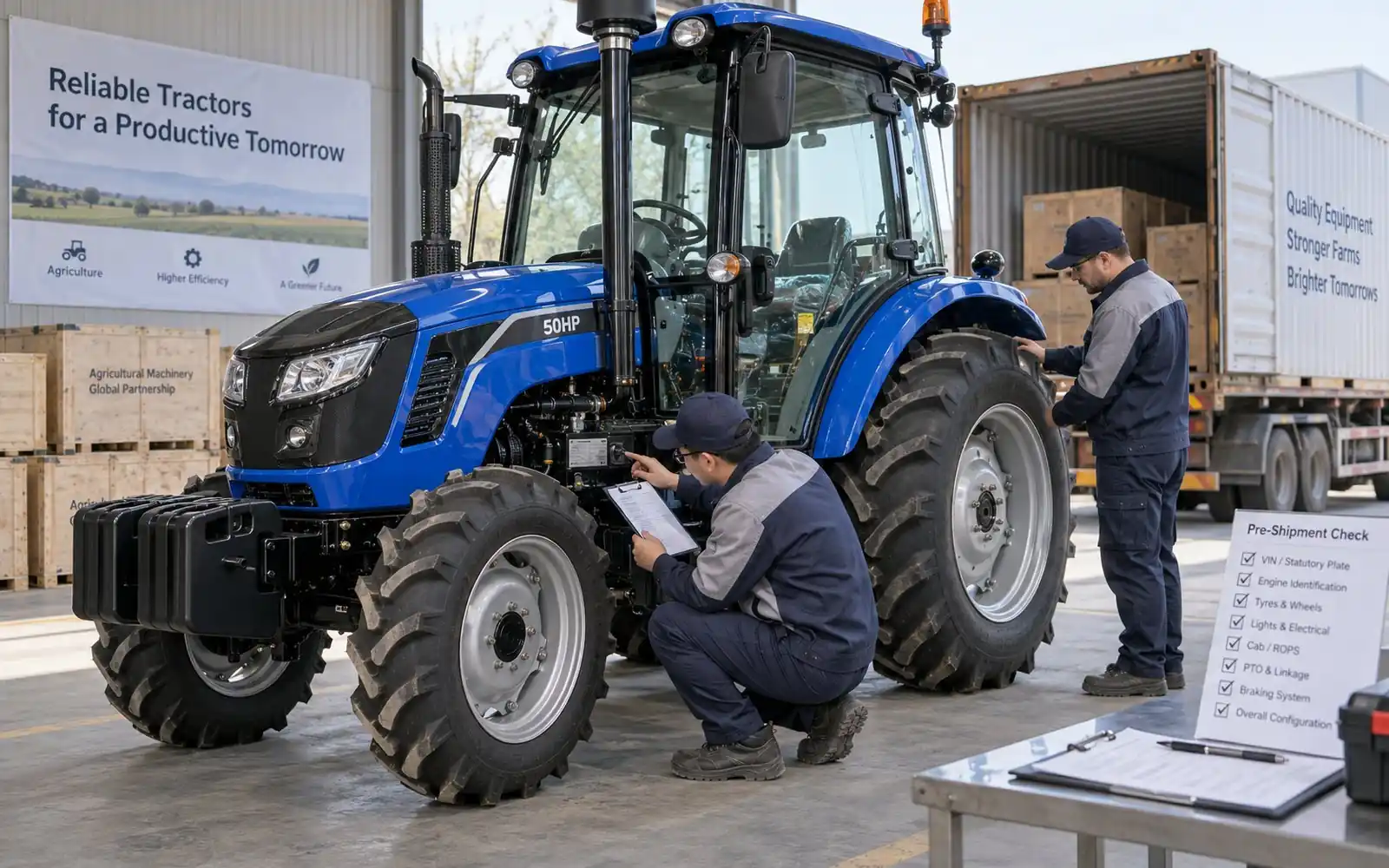
Figure 2. Pre-shipment inspection should compare the physical tractor with the final order and document package before loading.
- Obtain clear photographs of the tractor from multiple sides.
- Photograph the VIN/chassis identification and statutory plate.
- Photograph the engine identification plate or marking.
- Check tyres, operator station, lighting, PTO, coupling and other configuration-critical items.
- Compare the final CoC and approval information with the VIN and reviewed specification.
- Resolve discrepancies before the tractor is loaded, not after it reaches Europe.
The commercial advantage: This three-gate process moves compliance discovery earlier, when changes are still cheap and production can still be corrected without disrupting shipping or the customer’s season. |
X. How OXPLO Can Fit Into a More Controlled European Purchasing Process
For OXPLO European tractor enquiries, the useful starting point is not simply “Which horsepower do you want?” It is a short application brief: destination country, farm type, main implements, terrain, transport requirements, working hours and preferred configuration.
OXPLO currently presents a 25–70 HP tractor range for vineyards, orchards, mixed farms, soil preparation, mowing, transport and material handling. The range includes 25, 30, 40, 50, 60 and 70 HP classes, with different transmissions, linkage categories and application envelopes.
Why This Matters for Approval Review
Choosing an OXPLO tractor by workload first helps reduce unnecessary configuration changes later. For example, a compact 25–30 HP OXPLO tractor may suit orchard maintenance and light transport, while 40–50 HP OXPLO models move further into mixed-farm tillage, mowing and trailer work. OXPLO 60–70 HP models are positioned for heavier implements, larger fields and higher daily workloads.
The compliance lesson is that the final documentation should follow the final machine configuration. OXPLO’s support information explicitly notes that European-market configuration and documentation depend on the product model, engine, destination country and intended application, and that customers should confirm the exact documentation before ordering.
Before requesting a quotation, buyers can review the OXPLO tractor product range and then send the destination country, target horsepower, implements and road-use requirements. OXPLO can use that information to narrow the model and configuration before the documentation discussion is finalized.
OXPLO Pre-Order Information That Improves the Discussion
- Destination country and buyer type: importer, dealer, farm, rental company or fleet buyer.
- Main farm work: orchard, vineyard, tillage, mowing, livestock, transport or material handling.
- Existing implements: PTO speed/spline, linkage category, hydraulic requirements and implement weight.
- Road transport: expected trailer loads, journey frequency and target operating speed.
- Preferred operator station: cab or ROPS.
- Any required tyre, lighting, branding or other customization.
- Required documents and language before shipment.
For documentation, configuration and pre-shipment support, see the OXPLO Support page. For general tractor enquiries, buyers can start from oxplomachinery.com and provide the application brief before requesting a final quotation.
XI. The Importer’s Pre-Order Verification Checklist
Check | Verification | Status |
Destination & use | Country, public-road use, farm application, implements and trailer work are defined. | □ Confirmed |
Vehicle category | Formal tractor category/subcategory is identified. | □ Confirmed |
Approval identity | Applicable EU type-approval information is provided for the selected configuration where relevant. | □ Confirmed |
TVV | Type, Variant and Version are identified and consistent with the order. | □ Confirmed |
Engine / Stage V | Exact engine model/family and emissions documentation are confirmed. | □ Confirmed |
Configuration | Tyres, cab/ROPS, speed, braking, lighting, masses, PTO, linkage and coupling are frozen. | □ Confirmed |
CoC pathway | Supplier confirms the final CoC will correspond to the produced tractor. | □ Confirmed |
VIN / plates | VIN, statutory plate and engine identification will be photographed before shipment. | □ Confirmed |
Final cross-check | VIN, CoC, approval number, TVV and physical configuration are compared before loading. | □ Confirmed |
Local registration check | Importer verifies any destination-country administrative requirements with the competent/local registration channel. | □ Confirmed |
XII. Conclusion: Verify the Vehicle, Not Just the Certificate
EU tractor type approval should be treated as a configuration-control problem as much as a document problem. The safest import process connects the approval identity, TVV, engine, final specification, VIN, statutory plate and CoC to one physical tractor before the machine leaves the factory.
This approach changes the buyer’s question from “Does the supplier have a certificate?” to “Can the supplier show that these documents apply to this exact tractor, in this exact configuration, for this destination market?”
For OXPLO customers, the practical next step is to start with the work: farm type, implements, terrain, road transport and horsepower requirement. OXPLO can then help narrow the appropriate 25–70 HP tractor class, review configuration details and confirm the available documentation for the selected European-market order before production is finalized.
Planning a European tractor order? Send OXPLO your destination country, application and required attachments before requesting the final configuration.
FAQ: EU Tractor Type Approval for Importers
Is CE certification enough for a tractor imported into the EU?
Not necessarily. CE-related documentation and vehicle type approval answer different regulatory questions. For tractors subject to the EU vehicle type-approval framework, importers should verify the approval information and CoC applicable to the exact vehicle configuration rather than relying on a generic “CE” statement.
What is the most important document to check before shipment?
There is no single document that replaces the full cross-check. The final CoC is particularly important because it connects the produced vehicle to its approved type, but it should be checked together with the TVV, approval number, VIN, statutory plate and physical configuration.
Does a Stage V engine mean the complete tractor is approved for Europe?
No. Stage V addresses engine emissions requirements. The importer still needs to verify the vehicle-level approval and configuration applicable to the tractor.
Can I change tyres or cab after the type-approval documents are reviewed?
A change may or may not remain within the approved configuration. The safe process is to re-check approval applicability whenever an approval-relevant item is changed.
What should I ask OXPLO before ordering a tractor for Europe?
Provide the destination country, intended work, implements, desired horsepower, road-use needs and preferred configuration. Then ask OXPLO to confirm the exact engine, key specifications and available documentation for that model/configuration before production.
Which OXPLO tractor range is available for European farm applications?
OXPLO currently lists 25–70 HP tractor classes, covering compact orchard and vineyard work, mixed-farm applications, mowing, tillage, transport, livestock work and heavier utility tasks. Final market configuration should be confirmed for the destination country.
Regulatory & OXPLO References
- Regulation (EU) No 167/2013 — approval and market surveillance of agricultural and forestry vehicles
- Commission Implementing Regulation (EU) 2015/504 — administrative requirements, TVV, approval documentation and CoC
- Commission Delegated Regulation (EU) 2015/208 — vehicle functional safety requirements
- Commission Delegated Regulation (EU) 2015/68 — vehicle braking requirements
- Commission Delegated Regulation (EU) 2018/985 — environmental and propulsion-unit performance / Stage V framework
- OXPLO 25–70 HP Tractors for European Farms
- OXPLO Tractor Product Range
- OXPLO OXT504 50 HP Tractor
- OXPLO Support — European configuration, documents and Stage V guidance
Note: EU legislation is amended over time, and national registration procedures can add administrative requirements. Importers should use the current consolidated legal text and confirm destination-country registration requirements before placing an order.