
A practical buying and field-setup guide for European mixed farms, equipment dealers and agricultural contractors.
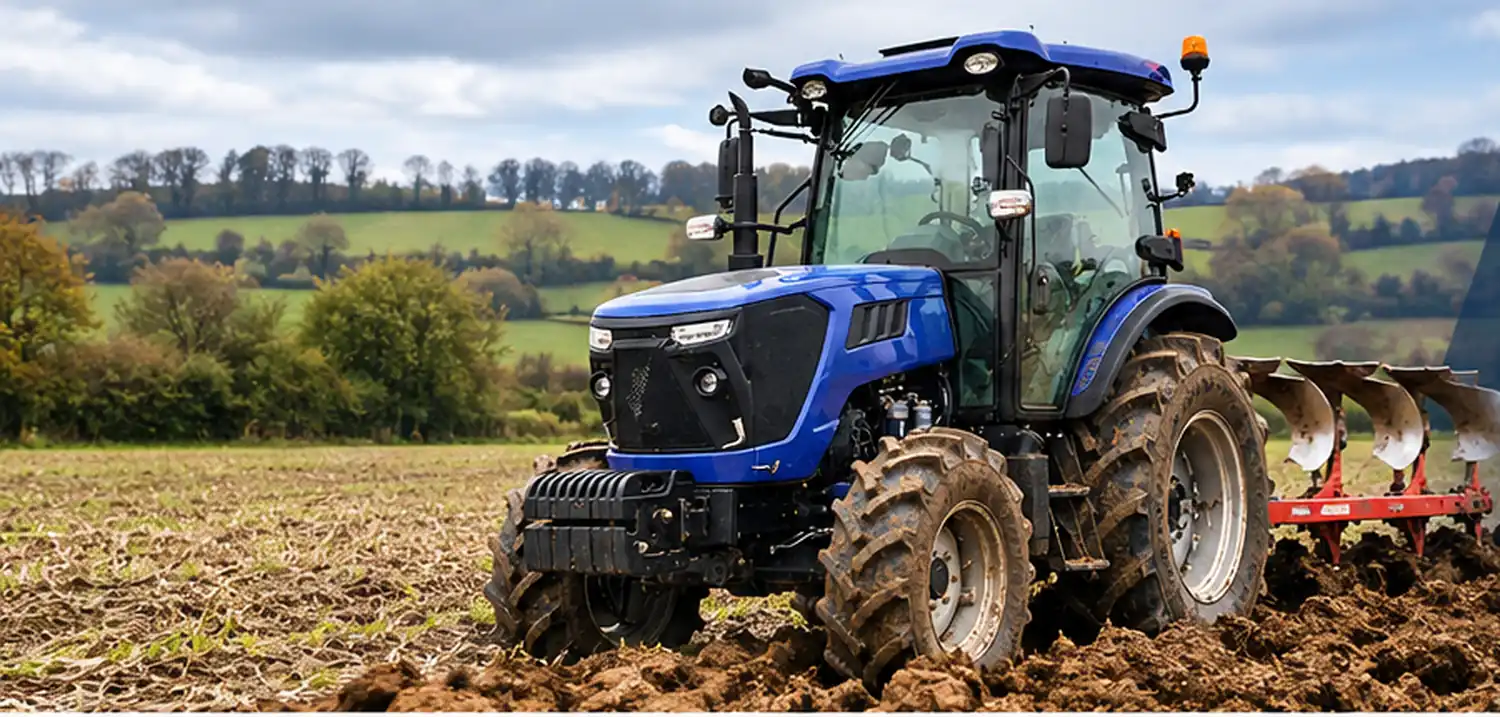
Figure 1. Field illustration of a compact 4WD tractor pulling a mouldboard plough in heavy clay. Machinery and performance are illustrative, not field-test results.
After autumn rain, a mixed farm still has fields to plough before drilling. The tractor has enough horsepower on paper, yet its tyres spin at working depth. Should the farmer add ballast, narrow the plough or buy a larger tractor?
First identify the limiting factor. In heavy clay, the constraint may be plastic soil, poor tyre contact, plough misalignment or excessive draft. A bigger engine cannot make unworkable soil safe to cultivate.
Selecting a tractor for heavy clay soil requires a sequence: assess soil readiness, diagnose poor performance, set tyres and ballast, match the implement, then choose the platform. This guide turns those steps into purchasing decisions for European buyers.
I. Why Heavy Clay Turns a Routine Job into a Costly Delay
The real problem is the working window—not just engine power
Heavy clay can move from hard and difficult to penetrate to sticky and vulnerable after rainfall. Autumn and spring working windows may be short. On European mixed farms, the same tractor may also be needed for pasture work, feed movement and transport. A ploughing delay therefore disrupts other jobs.
When a tractor slows or slips, farmers often focus on the visible symptom: lack of forward progress. The less visible losses are repeated passes, wheel rutting, smeared furrows, delayed sowing, additional fuel and time spent correcting the soil after it dries.
Distinguish four very different field conditions
Condition | Likely constraint | First decision |
Hard, dry clay | Penetration resistance; large clods | Reassess depth, timing and tool condition. |
Moist, friable clay | Potentially workable soil | Proceed only if test passes confirm structure and traction. |
Wet, plastic clay | Smearing, compaction and wheel slip | Postpone conventional ploughing; avoid traffic. |
Variable drainage across a field | Different conditions between zones | Inspect and manage zones separately. |
This distinction matters commercially: a dealer cannot honestly recommend a tractor model from soil texture alone. “Clay” describes particle composition; it does not establish the current soil strength, moisture state or drawbar requirement.
II. Soil Readiness: Decide Whether to Plough at All
Use a spade test at the intended cultivation depth
Before comparing engine power or agricultural tyres for heavy clay, examine at least a few representative locations, including lower-lying ground and areas with previous wheel tracks. Soil that looks dry at the surface may still be plastic at 15–25 cm.
- Expose the surface, middle of the intended working layer and the furrow-bottom depth with a spade.
- Squeeze a small sample and try rolling it into a thin thread; note whether it cracks or remains flexible and sticky.
- Break a clod by hand and inspect whether it fractures along natural pores or smears into smooth faces.
- Inspect existing wheel ruts, standing water and any dense layer beneath the planned depth.
- If the soil is plastic at working depth, stop the ploughing plan; do not assume that 4WD or extra ballast will prevent structural damage.
The UK Agriculture and Horticulture Development Board explains that soil above the lower plastic limit can be moulded without cracking and is vulnerable to compaction from cultivation. See the AHDB soil-moisture field guidance.
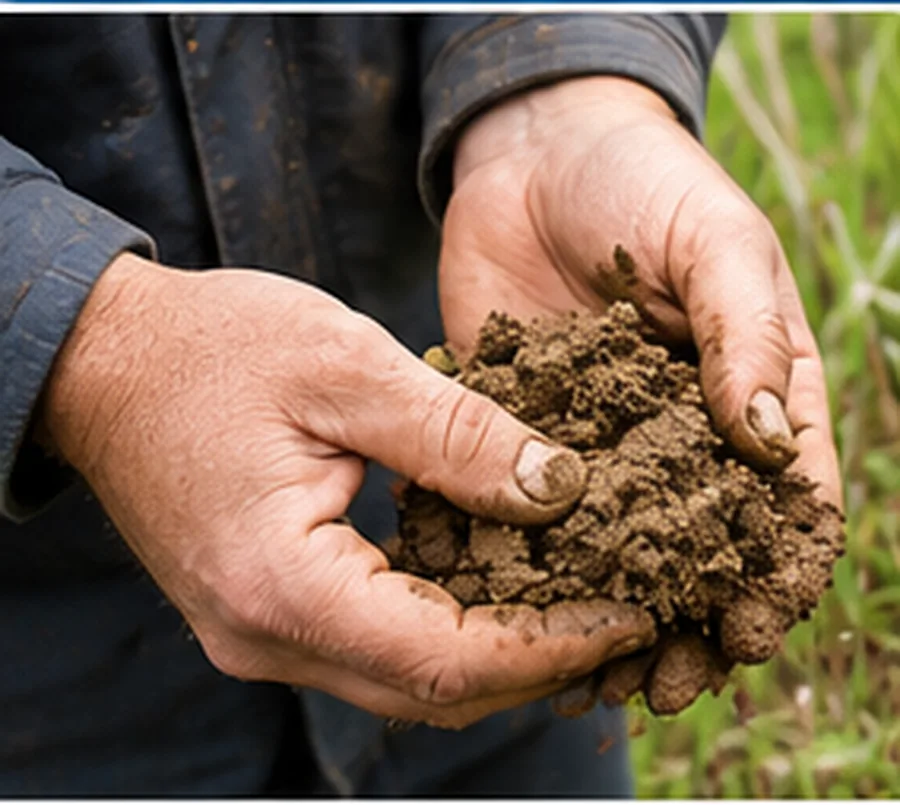
Figure 2. A hands-on soil structure check helps identify whether the cultivation layer is friable or still plastic.
Why ploughing in wet soil can cost more than waiting
Wet clay can smear at the furrow bottom, reducing air and water movement and restricting roots. Ireland’s Teagasc specifically warns that wet ploughing may create a compacted or smeared pan, including at typical plough depths. This is why a successful pass cannot be judged solely by whether the tractor moved forward. See Teagasc soil-structure guidance.
There is a genuine trade-off: waiting may tighten a sowing deadline, while entering too early risks a repair operation that consumes another workable day. Document both risks. In fields with uneven drainage, work the suitable sections first rather than forcing the entire area through one timetable.
III. Diagnose Tractor Traction in Clay Soil Before Spending Money
Read the machine’s symptoms correctly
A tractor for heavy clay soil should be evaluated under load, not just by the specification printed on its bonnet. Make a short, safe test pass only when the soil is workable and record engine response, GPS speed, visible slip and furrow quality.
Observed symptom | Most likely direction to investigate | Avoid this shortcut |
Engine revs fall; wheels hold grip | Excessive draft, unsuitable gear or insufficient power | Do not assume adding ballast fixes engine overload. |
Engine revs hold; driven wheels spin | Tyre grip, pressure, ballast, moisture or oversize plough | Do not buy more horsepower before testing traction. |
Plough pulls sideways; furrow uneven | First-furrow width, frame levelling and alignment | Do not compensate with permanent steering correction. |
Soil sticks; wheel ruts deepen | Moisture and soil trafficability | Do not continue simply because 4WD still moves. |
Measure slip—do not rely on how fast the wheels look
Wheel slip can be estimated from driven-wheel theoretical travel and actual travel over the same pass. For example, if a calibrated wheel-speed estimate is 5.0 km/h while independent GPS speed is 4.3 km/h, slip is approximately (5.0 − 4.3) / 5.0 = 14%. Calibration matters because tyre rolling circumference changes with loading and inflation.
As a broad diagnostic reference, Michelin discusses approximately 8–15% slip in agricultural traction and recommends investigation as slip rises above 15%. The ideal range is not universal; tyre construction, ground conditions and the operation change the result. Read Michelin’s tractor-traction guidance.
If the soil is plastic, a “better” slip figure is not permission to proceed. Soil readiness and mechanical traction are separate decisions.
IV. Tyres and Tractor Ballast for Tillage: Improve Grip Without Damaging Soil
Choose tyre capability before choosing tyre pressure
Agricultural lug tyres usually suit tillage better than turf tyres, but tread design alone is not enough. Compare casing type, permitted load, overall diameter, section width, self-cleaning behaviour and compatibility with the tractor’s 4WD driveline. On mechanical-front-wheel-drive tractors, changing tyre sizes must preserve the approved front-to-rear rolling relationship.
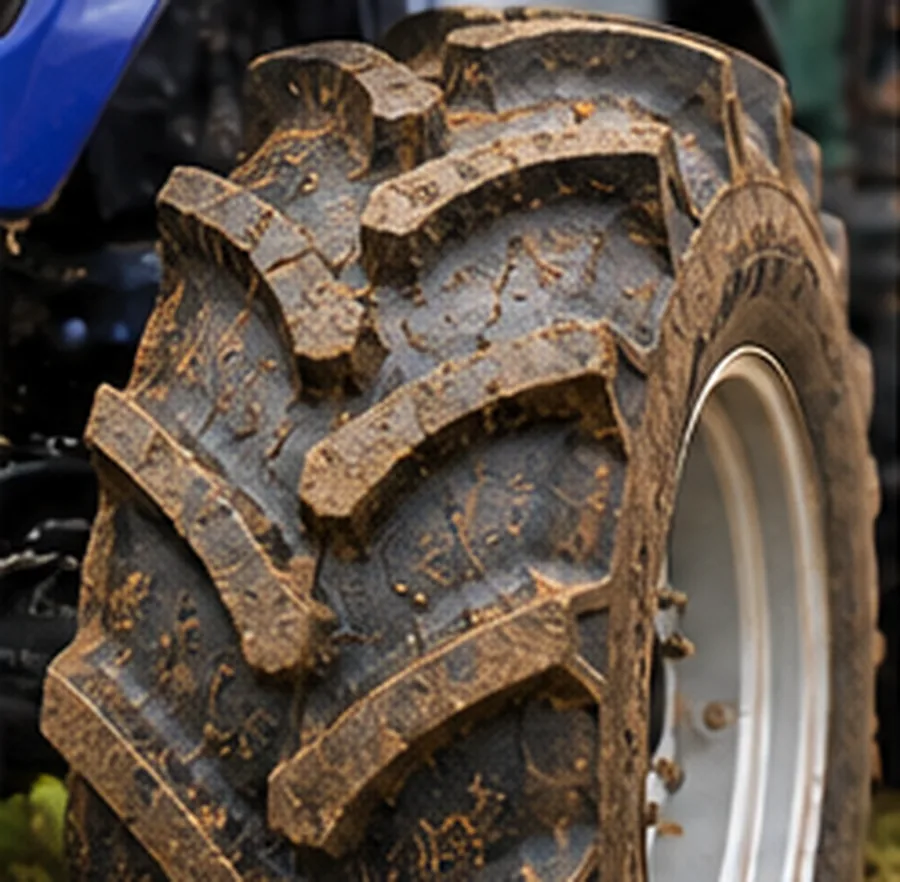
Figure 3. Agricultural lug tyres need to be assessed with the actual load, approved pressure and soil conditions.
An appropriately rated radial tyre may permit a larger working footprint at the pressure approved for its load and speed. That can help distribute load and improve traction, but the correct pressure is not one fixed value for every clay field. Weigh the tractor with the actual implement and ballast installed, check individual axle and tyre loads, then consult the tyre manufacturer’s table. Road transport may require a different approved setting.
Add ballast only when the diagnosis supports it
Ballast can help driven wheels transmit pulling force if the tractor is too light for the task. Excess ballast raises axle loads and rolling resistance and can increase compaction risk. A mounted plough also transfers load through the three-point linkage, so front-axle steering authority and the implement’s lifted transport position must be checked—not just traction when the plough is in the soil.
Use this adjustment order: soil condition → implement draft → tyre/load/pressure check → wheel-slip measurement → approved ballast changes → repeat field test. Change one variable at a time. In deep ruts or plastic soil, the correct intervention is to stop rather than load the tractor more heavily.
A practical pre-field tyre and ballast checklist
- Inspect tread wear, cuts, valve condition and mud accumulation.
- Confirm front and rear tyres match the permitted drive ratio and wheel clearances.
- Record tyre pressures when cold, laden axle loads and transport requirements.
- Check approved front ballast and safe steering with the rear implement fully lifted.
- Check that the ballast arrangement does not exceed tyre, rim, axle or gross vehicle ratings.
V. Plough Setup: Width, Depth and Alignment Under Real Clay Conditions
Start with the job the soil needs—not a furrow count
Plough working width selection for a tractor for heavy clay soil starts with the agronomic task and implement data plate. Record mouldboard or reversible design, number of bodies, width per body, actual depth, total mass, linkage category and required lift geometry. A “two-furrow” label is not a reliable indication of draft: individual bodies may cut different widths and the soil can demand very different pulling forces.

Figure 4. Plough working width and working depth must be assessed together; arrows are conceptual, not measurements.
Working depth is just as important. Increasing an illustrative depth from 18 to 22 cm raises the soil cross-section by about 22% at the same width, before considering changes in draft resistance. Plough no deeper than justified by the crop, residue and soil-profile objective. If the problem is a diagnosed compacted layer below the normal tilled zone, simply ploughing deeper is not automatically an effective remedy.
Set the plough before changing the tractor
- Check mouldboard and share wear; a blunt or damaged body may increase resistance.
- Level the plough front-to-rear and side-to-side in its operating position.
- Set the first furrow to the intended width and check the tractor wheel track against the plough manual.
- Adjust toplink, stabilisers and draft/depth controls as specified; never use a generic setting for every linkage.
- Make a short pass at a conservative depth, then assess furrow inversion, draft, slip and directional stability.
- Only increase width or depth when the tractor maintains the required work quality without excessive slip or overload.
For a broader explanation of horsepower, drawbar pull and implement capacity across soil types, see the related plough-sizing guide. The present guide focuses on the additional limitations that heavy clay creates.
VI. A European Mixed-Farm Trial: Test Productivity Rather Than Guess
Illustrative purchasing case: 15 hectares of clay and a narrow access road
Consider a hypothetical mixed farm with 15 hectares to plough after harvest, narrow gates and a rear-mounted plough whose linkage category has not yet been confirmed. The farm also needs a tractor for mowing and trailer work later in the year. The owner is considering a wider plough to make up time lost after rain.
Two test configurations are shown below strictly to explain the calculation. They are not measured OXPLO results and do not prove either configuration is compatible with a specific tractor.
Illustrative trial variable | Narrower setup | Wider setup |
Plough working width | 0.60 m | 0.72 m |
Actual forward speed | 4.8 km/h | 3.6 km/h |
Assumed field efficiency | 72% | 65% |
Effective capacity* | 0.207 ha/h | 0.168 ha/h |
Hours for 15 ha* | 72.3 h | 89.0 h |
*Using effective field capacity = width (m) × actual speed (km/h) × field efficiency ÷ 10. Assumed values are for decision-method illustration only.
The wider plough appears more productive in a catalogue but, under the assumed lower working speed and field efficiency, requires about 16.7 extra field hours over 15 hectares. At an assumed €30 per field hour, the difference is approximately €500. This is a sensitivity example, not a promised saving or a farm-specific forecast.
Build the total-cost picture around usable working days
Compare cost per hectare, not only fuel per hour. Include diesel, labour, wear parts, tyres, maintenance, depreciation and time lost on headland turns. For a dealer, the customer’s annual operating profile is critical: a tractor used for mowing, transporting feed, hauling trailers and soil preparation can justify its purchase differently from a machine used for a short seasonal ploughing window.
Before final selection, the field trial should capture actual width and depth, representative soil moisture, GPS speed, wheel slip, fuel consumption if measurable, furrow quality and the number of workable days remaining. Never let a hypothetical cost formula override poor soil structure or unsafe implement behaviour.
VII. Where OXPLO Tractor Configurations Fit Heavy-Clay Work
Compare platform requirements—not just 40, 50 or 60 HP
After the soil and implement assessment, the buyer can narrow down the OXPLO tractor range. OXPLO offers 4WD compact and utility platforms, but each candidate still needs a model-specific plough and tyre check. The figures below are published standard specifications, not verified heavy-clay drawbar-test results.
OXPLO model | OXT404 | OXT504 | OXT604 |
Rated power | 40 HP | 50 HP | 60 HP |
Drive | 4WD | 4WD | 4WD |
Transmission | 8F+8R | 8F+8R | 12F+12R |
Published width | 1,560 mm | 1,560 mm | 1,760 mm |
Published weight | 2,200 kg | 2,200 kg | 2,500 kg |
Rear tyre | 11.2-24 | 11.2-24 | 12.4-28 |
Rear linkage | Category I | Category I | Category II |
OXT404: a compact option for varied farm duties
The OXPLO OXT404 40 HP tractor is worth reviewing where gate access, Category I implements and regular mixed-farm duties matter. For heavy clay, the plough must be selected conservatively. OXPLO should not be asked to guarantee a number of furrows without the actual working width, draft and depth.
OXT504: higher rated power, still a compact Category I platform
The OXPLO OXT504 50 HP tractor retains a published width of 1,560 mm, weight of 2,200 kg and 11.2-24 rear tyres. Its additional engine power can be useful across multiple tasks, yet the published tyre size and weight are the same as the OXT404. For a heavy-clay buyer, that means 50 HP does not automatically create more available wheel grip. It is a strong candidate only when the actual plough load and Category I compatibility are confirmed.
OXT604: step up for Category II equipment and recurring heavy work
The OXPLO OXT604 60 HP tractor moves to Category II linkage, a 12F+12R transmission, a larger tyre package and a 2,500 kg published weight. This may suit a farm with compatible heavier implements or more demanding recurring work. The trade-offs are wider access requirements, potentially greater axle loading and the need to evaluate tyre and ballast choices carefully in vulnerable clay soils.
Where the same farm also has higher-power, compatible tasks throughout the year, the OXPLO OXT704 70 HP tractor may enter the shortlist. However, more horsepower is not a substitute for sufficient tyre traction, correct implement hitching or acceptable soil moisture. The sales decision should be based on annual utilisation and a verified working setup.
What OXPLO can solve—and what it cannot
OXPLO can help buyers compare 4WD tractor platforms, identify the correct rear-linkage category, discuss approved configuration choices and confirm compatible attachments before a quotation. The OXPLO tractor configuration page and OXPLO attachment and support catalogue give buyers a starting point for checking available ploughs, tyres and spare-parts support.
What OXPLO cannot responsibly promise from a catalogue is a guaranteed field capacity or zero wheel slip on an unknown clay field. A sound equipment proposal must disclose the limits of the specification, the assumptions behind the recommendation and the items requiring a real field trial.
VIII. A Better European RFQ: Avoid the Costs That Appear After Delivery
Give the supplier enough information to make a useful recommendation
European dealers and farm operators should send a complete application brief to OXPLO, not only “Please quote a 50 HP tractor.” That allows OXPLO to identify potential incompatibilities before the machine is shipped.
- Operating country and intended use:private land, road travel or a combination; local access and transport limits.
- Soil and field conditions:heavy clay type, drainage, slopes, average working window and typical wet spots.
- Existing plough:brand/model, body count, body width, mass, Category I/II hitch, hydraulic requirements and desired depth.
- Tractor duties beyond ploughing:mowing, spraying support, trailer transport, loader work and estimated annual hours.
- Tyres and ballast:preferred tyre arrangement, road-versus-field operation, axle-load assumptions and approved weights.
- Order and ownership terms:delivered specification, packaging, lead time, Incoterms, wearing parts, service procedures and warranty conditions.
Check CoC and market documents against the exact tractor version
For buyers planning to register or use agricultural tractors on public roads within the EU, vehicle type-approval and certificate-of-conformity requirements need careful checking. Regulation (EU) No 167/2013 provides the relevant vehicle-approval framework. A generic “CE certified” statement is not a substitute for confirming the precise vehicle version and required registration documents.
OXPLO describes CoC support for selected tractor versions, not every model and configuration. Request model- and destination-specific evidence in writing before paying the deposit. Buyers in Poland, the Czech Republic, Hungary, Slovakia or any other destination should also confirm local registration practice and insurance requirements with the appropriate authority.
Compare post-delivery support, not only EXW price
A lower initial price is less useful if it excludes necessary tyres, ballast, compatible implements or shipping costs. Ask OXPLO for a clearly itemised quotation and the approved parts identifiers for likely wear and service components. Review the OXPLO warranty policy and confirm which warranty term applies to the ordered tractor; coverage conditions, exclusions and local service arrangements belong in the purchase decision.
A properly specified tractor for heavy clay soil is one the farm can actually operate, maintain and document throughout its useful life. That is the difference between comparing brochure horsepower and buying a workable equipment package.
IX. Frequently Asked Questions
Q1. How much horsepower does a compact tractor need for heavy clay soil?
There is no reliable fixed HP figure. Working width, depth, clay moisture, plough geometry, tyre traction and actual speed all matter. A buyer should obtain an implement-specific compatibility assessment and test at representative field conditions before choosing a model.
Q2. Will a 4WD tractor fix excessive slip in wet clay?
No. Four-wheel drive may distribute tractive effort more effectively, but it cannot prevent smearing or deep compaction when the soil is plastic. Stop conventional ploughing when the soil is not workable.
Q3. What agricultural tyres for heavy clay should I request?
Ask about agricultural lug tread, casing construction, approved tyre sizes, load-speed ratings and pressure recommendations for the actual axle loads. The largest or widest tyre is not automatically compatible with a given 4WD tractor.
Q4. Should I increase tractor ballast for tillage when traction falls?
Only after checking soil readiness, tyre settings and implement draft. Additional approved ballast can help when insufficient driven-wheel loading is the main issue, but it can also increase axle load and compaction.
Q5. Is a two-furrow plough always safe for a 40–50 HP tractor?
No. Body width, required depth, plough weight, linkage category and soil resistance vary. OXPLO buyers should provide the plough data plate and intended field conditions before requesting a tractor recommendation.
Q6. What should European importers ask OXPLO before ordering?
Request the final specification, implement compatibility confirmation, tyre and ballast options, available CoC/type-approval documents for the actual version, applicable warranty, spare-parts information and written delivery terms. Confirm road-use requirements for the destination country separately.
X. Conclusion: Match the Whole Working System to the Clay
Choosing a tractor for heavy clay soil is not primarily a competition between horsepower figures. The effective solution starts with soil that is ready to cultivate; then comes a correctly adjusted plough, adequate traction, safe tyre pressures, appropriate ballast and a tractor that can carry the implement through the required work window.
For European mixed farms, OXPLO offers compact 4WD choices such as the OXT404 and OXT504, alongside larger Category II options such as the OXT604 and OXT704. The value of an OXPLO proposal lies in verifying which platform fits the customer’s access limits, existing implements and full-season workload—not claiming that one tractor suits every clay field.
For an OXPLO configuration recommendation, send your destination country, soil conditions, plough specifications and annual duties via the OXPLO contact page. Verify the complete package before paying for more horsepower.