
A practical B2B guide to tractor horsepower, implements, field capacity, TCO and OXPLO platform selection for small and medium farms.
OXPLO Official Website | OXPLO Tractor Configuration Guide
Selection Principle Farm area sets the workload. Implements set the minimum technical requirement. Terrain determines how much power reaches the ground. The working window determines how much reserve is economically justified. |
When buyers search for a tractor for small farm use, the first question is often, “My farm is 10 hectares. How much horsepower do I need?” The question is reasonable, but it is incomplete. A tractor does not work according to hectares alone. It pulls implements, supplies PTO power, provides hydraulic flow, moves trailers and completes seasonal jobs within a limited number of usable hours.
Two 10-hectare farms can therefore need very different machines. One may mow grass, spread fertiliser and tow a small trailer a few times per year. Another may plough, rotary till, mow, spray, handle materials with a front loader and move produce between separated plots. The area is identical; the tractor duty cycle is not.
A useful tractor horsepower guide must therefore do more than publish a hectare-to-HP chart. It should show how farm size, implement demand, PTO load, soil, slopes, access restrictions, annual working hours and future implement plans interact. Only after those variables are clear does it make sense to compare an OXPLO 25 HP, 30 HP, 40 HP, 50 HP, 60 HP or 70 HP tractor.
The core rule in this guide is simple: farm area is the first filter, not the final specification.
I. Why Farm Size Alone Often Leads to the Wrong Tractor
European agriculture makes this especially important. Eurostat data show that small agricultural holdings are common across the EU. A small farm is not a niche operating model, and a small number of hectares does not automatically mean light mechanical work.
Reference: Eurostat, Farms and Farmland in the European Union – statistics. View source
A 5 Hectare Farm Can Be Harder on a Tractor Than a 20 Hectare Farm
Consider a 20-hectare grassland property that mainly mows twice per year, spreads fertiliser once and performs light transport. Now compare it with an 8-hectare mixed farm that performs soil preparation, rotary tilling, seeding, mowing, spraying, fertiliser spreading, trailer work and front-loader handling. The smaller farm may accumulate more high-load PTO hours and more low-speed traction work even though it has less land.
The better workload measure is not simply hectares owned, but hectares worked across the year.
Annual Worked Area = Farm Area × Number of Field Passes |
Example: 20 ha × 7 recurring field passes = 140 ha-passes of annual field coverage. |
This still does not replace implement data, but it immediately separates a low-utilisation property from a farm where the tractor is expected to work repeatedly throughout the season.
The Most Demanding Recurring Job Matters More Than the Easiest Job
A small farm tractor should not be sized around the lightest task, such as spraying or moving an empty trailer. It should be tested against the most demanding job that happens often enough to matter. At the same time, it should not automatically be sized around one extreme operation that occurs once per year and could be outsourced more economically.
Practical Rule Size the tractor for the heaviest regular job, not the easiest task and not the heaviest one-off job you may perform once a year. |
II. The Five Variables That Actually Determine Tractor Horsepower
1. Start With the Implements, Then Work Backward to the Tractor
The most reliable selection process begins with the equipment the tractor must operate. Before comparing engine horsepower, list the recurring implements and record their technical requirements.
- Rotary mower or flail mower
- Rotary tiller
- Plough or disc harrow
- Cultivator
- Fertiliser spreader
- Sprayer
- Trailer
- Front loader and bale fork
For each implement, confirm working width, operating weight, minimum and recommended PTO horsepower, PTO speed, hitch category, hydraulic requirement and normal working speed. The highest-demand recurring implement is usually more useful for tractor sizing than the average job on the farm.
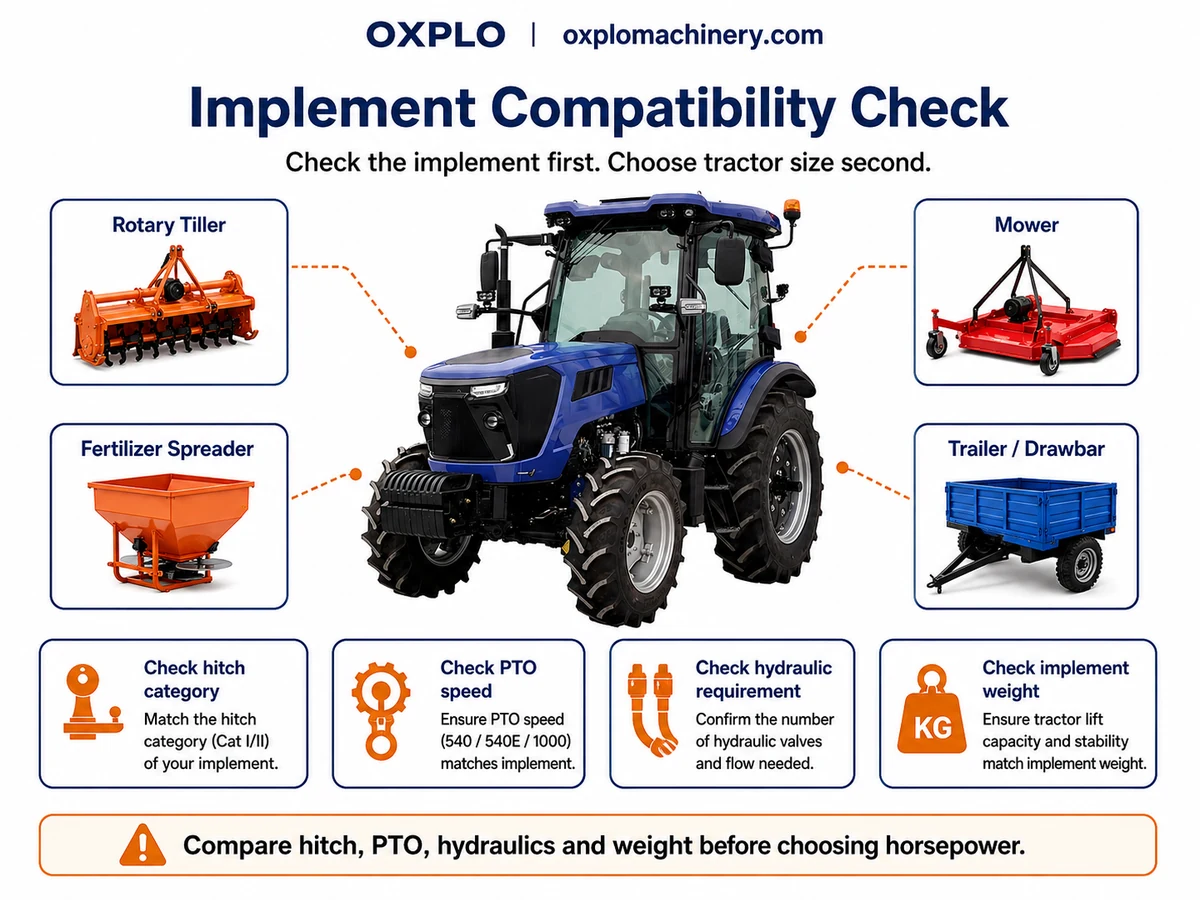 Figure 1. Implement compatibility should be checked before finalising tractor horsepower.
2. Engine HP Is Not the Same as PTO HP
A frequent buying mistake is to treat rated engine horsepower as if all of it were continuously available at the PTO shaft. It is not. Power is lost through the drivetrain, and PTO-driven equipment is limited by the power actually available at the PTO under working conditions.
If a mower, rotary tiller or other implement specifies a minimum PTO horsepower, compare that requirement with the tractor’s actual PTO capability rather than assuming that a 40 HP engine automatically satisfies a 40 HP PTO requirement.
This distinction becomes more important when the implement will run for long periods, when crop density changes, or when the tractor must maintain PTO speed on slopes or in heavier soil. A tractor that technically turns the implement but repeatedly loses engine speed has not been matched well.
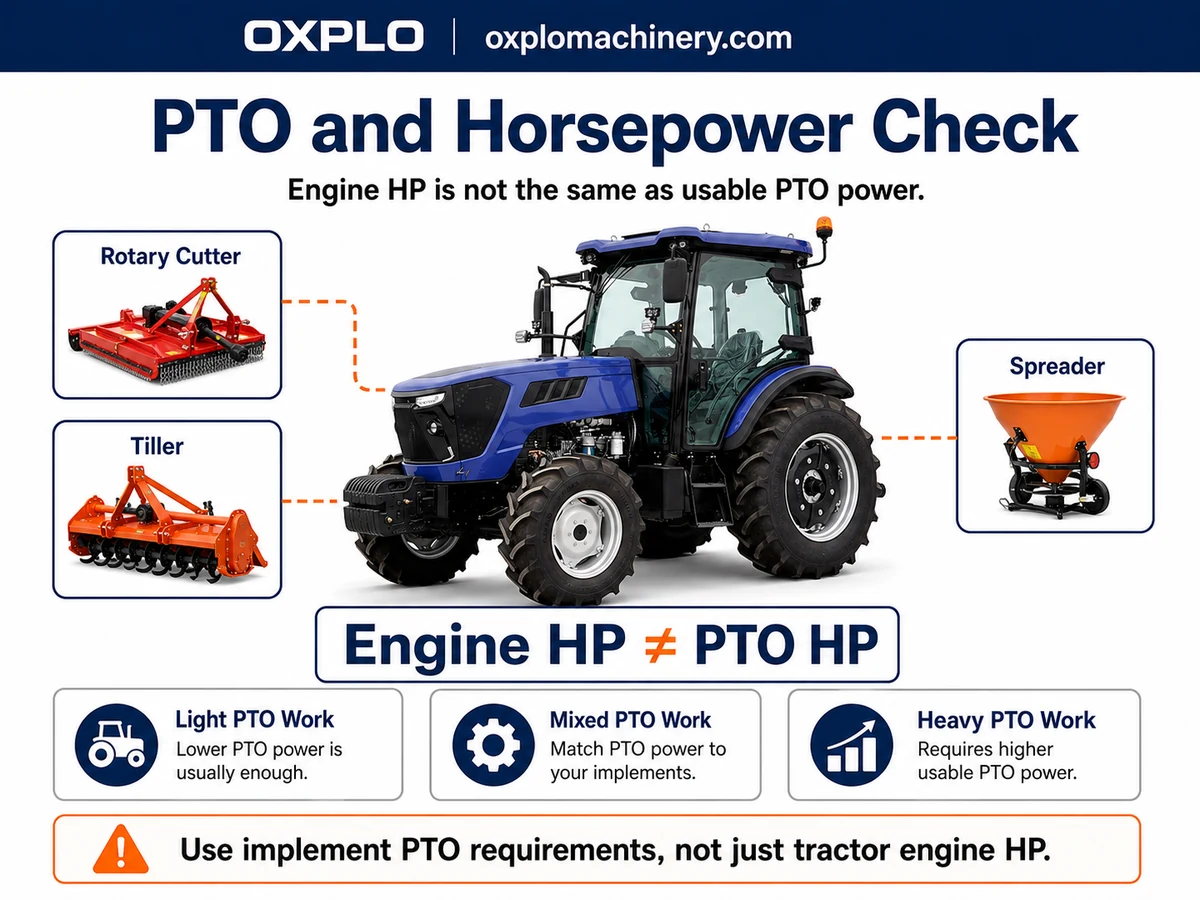
Figure 2. Engine HP and PTO HP are different specifications; the implement requirement should drive the check.
3. Soil, Slope and Traction Decide How Much Power Reaches the Ground
Engine output only creates useful field capacity when the tyres can transmit that power to the ground. Wet grass, clay soil, loose cultivated ground, slopes, incorrect tyre pressure or poor ballast can turn additional horsepower into wheel slip rather than forward movement.
This is one reason a properly configured 4WD tractor for small farm work can be more useful than simply adding another 10 HP. Four-wheel drive can improve usable traction during loader work, soil preparation, trailer operation, wet-season work and hilly applications, but tyre selection, tyre pressure and weight distribution still matter.
Machine weight also creates a trade-off. More weight can improve traction and stability, yet excessive axle load on wet soil can increase compaction. A useful tractor specification therefore balances engine power, 4WD, tyre size, ballast and ground pressure rather than treating horsepower as an isolated number.
Reference: University of Minnesota Extension, Soil Compaction. View source
4. The Working Window Determines Whether More Capacity Has Business Value
A tractor can be powerful enough to perform a job and still be too slow for the farm’s operating window. That difference matters during mowing, planting, cultivation, spraying and other weather-sensitive tasks.
For example, asking “Can a 40 HP tractor mow 20 hectares?” is less useful than asking “Can the tractor-and-mower combination finish 20 hectares before the next two days of rain?” The second question links machine capacity directly to farm operations.
This is where timeliness cost enters the decision. A slightly larger tractor and wider implement may reduce working hours enough to protect a narrow seasonal window. If the time saving is only a few hours per year, the additional purchase cost may not be justified. If the time saving is repeated across multiple field passes, the business case changes.
5. Front Loader Work and Access Restrictions Can Change the Platform Decision
Front-loader work is not just another horsepower requirement. It changes front-axle loading, hydraulic demand, ballast, steering under load, stability and tyre requirements. A tractor used every day for feed, bales, soil or materials should be evaluated as a loader platform, not only as an engine specification.
At the same time, many European farms have narrow gates, short headlands, older barns, orchard rows and public-road access between separated plots. In these environments, a physically larger tractor can lose time in manoeuvring even if it has more horsepower. Width, wheelbase, turning space and transport dimensions therefore need to be considered alongside engine output.
III. What Undersizing and Oversizing Really Cost
Undersizing: The Tractor Works, but the Farm Loses Hours
The most difficult undersizing cases are not tractors that completely fail to operate an implement. Those mistakes are obvious. The more expensive mistakes are machines that can operate the implement, but only near their limit.
- Frequent downshifting under load
- Lower working speed
- Unstable PTO speed in heavier conditions
- More wheel slip
- Longer operating hours per hectare
- Higher operator labour requirement
- Greater risk of missing a short weather window
A cheaper tractor can therefore create a higher cost per completed hectare if it repeatedly extends field time or forces the operator to use narrower implements than the workload requires.
Oversizing: More Horsepower Can Become Expensive Unused Capacity
The opposite mistake is to buy the largest tractor the budget allows “so we never have to upgrade.” The extra capacity may be useful, but it is not free. A larger tractor can bring a higher purchase price, more expensive tyres and parts, more machine weight, a larger turning envelope, greater storage requirements and potentially higher soil compaction.
This is why a 30-hectare farm that performs mostly mowing, spreading, spraying and light transport does not automatically need 70 HP. If only one annual operation needs substantially more power, outsourcing that job can sometimes produce a better return on capital than owning a larger machine for the other 90% of the year.
Capital Utilisation Question Will the larger tractor use its additional capacity often enough to earn the extra purchase price, machine size and ownership cost? |
IV. Best Tractor for 5, 10, 20 or 30 Hectares: Base HP Range + Upgrade Conditions
The following ranges are useful as an initial shortlist for a tractor for small farm use. They are not fixed hectare-to-horsepower rules. Start with the base range, then move higher only when the workload, implements, terrain or operating window justify it.
Farm Size | Base HP Range | Stay Near the Lower End When… | Move Higher When… |
5 ha | 25–30 HP | Mowing, spraying, light trailer work, orchard or estate maintenance | Frequent loader work, slopes, heavier rotary tilling |
10 ha | 30–40 HP | Grassland, orchard, light cultivation and moderate annual hours | Clay soil, frequent PTO work, more field passes, larger implements |
20 ha | 40–50 HP | Moderate mixed farming with normal working windows | Heavy cultivation, loader duty, short weather windows, higher annual hours |
30 ha | 50–60 HP | Regular mixed farming with moderate implements | Category II implements, heavy transport, slopes, contracting |
20–30 ha high-duty | 60–70 HP | — | Frequent heavy tillage, larger implements, high utilisation or one main tractor doing many jobs |
Tractor for a 5 Hectare Farm: Usually Start at 25–30 HP
For approximately 5 hectares, 25–30 HP is often a sensible starting point when the regular work is mowing, spraying, fertiliser spreading, light rotary tilling, small trailer work, orchard maintenance or general property work.
At this size, manoeuvrability can be more valuable than reserve horsepower. If the tractor must repeatedly enter an orchard, pass through a narrow gate or work around buildings, a compact chassis may save more time than a larger engine. However, a steep 5-hectare property with frequent loader work or heavy soil can justify moving into the 30–40 HP range.
Tractor for a 10 Hectare Farm: 30–40 HP Is the Main Comparison Range
For a 10-hectare farm, 30 HP can still be sufficient for lighter grassland, spraying, spreading and small transport duties. The case for 40 HP becomes stronger when rotary tillage, regular PTO work, clay soil or repeated field passes increase the annual workload.
Before deciding between 30 and 40 HP, ask what the largest regular implement is likely to be three years from now. A buyer who knows that implement width or PTO demand will increase should account for that plan before ordering the tractor.
Tractor for a 20 Hectare Farm: 40–50 HP Is Where Field Capacity Starts to Matter More
At around 20 hectares, the buying question often changes from “Can the tractor do the job?” to “How many hours will the job take?” A 40 HP tractor may be technically capable, but a 50 HP platform can become economically useful if it allows a wider implement, more stable PTO performance or higher practical working speed.
Tractor for a 30 Hectare Farm: 50–60 HP Is a Strong Starting Point, Not a Rule
For a 30-hectare mixed farm, 50–60 HP is a useful first comparison range for mowing, cultivation, spreading, transport and livestock support. Move toward 60–70 HP when the farm depends on Category II implements, frequent loader work, heavy transport, slopes, high annual utilisation, contracting or a very short seasonal window.
Do not move to 70 HP simply because the farm is 30 hectares. If the property is level, the implement fleet is modest and the annual workload is light, the larger platform may add ownership cost without producing enough additional output.
V. Three Farm Scenarios That Show Why Hectares Alone Mislead
Scenario A — 8 ha Orchard: Buy Access Before You Buy Extra Horsepower
Assume an 8-hectare wider-row orchard performs mowing, spraying and light trailer work, while the narrowest farm entrance and headland space are restrictive. A generic hectare chart might push the buyer directly toward 40 HP.
A better priority list is overall width, turning space, tractor height, PTO compatibility and implement envelope. If a 30 HP compact tractor already satisfies the mower and sprayer requirements, moving to a larger chassis only for another 10 HP may reduce manoeuvrability without improving the work that dominates annual hours.
Scenario B — 18 ha Mixed Farm: Compare Hours Saved, Not Just HP Added
Now consider an 18-hectare mixed farm running a rotary tiller, mower, fertiliser spreader and trailer across five to seven field passes per year. A 40 HP tractor may be able to complete the work, while a 50 HP tractor may support a wider implement or maintain a more useful speed under load.
The decision should be based on annual productive hours. If the larger combination saves only five hours per year, the additional CAPEX may be difficult to justify. If it saves 40–60 hours and helps the farm finish several weather-sensitive jobs on time, the economics are different.
Scenario C — 28 ha Livestock Farm: The Platform Can Matter More Than the HP Number
A 28-hectare livestock farm may use the tractor for grassland, feed handling, bale movement, trailer work and frequent front-loader operation through wet winter conditions. The first comparison might still be 50–60 HP, but the engineering checks must go further.
- Tractor mass and wheelbase
- Front axle loading
- Hydraulic response and loader compatibility
- Rear ballast and counterweight
- 4WD traction
- Hitch category and implement fleet
At this point, the buyer is no longer choosing only a horsepower rating. The buyer is choosing a tractor platform.
VI. Calculate Field Capacity Before You Pay for More Horsepower
Field capacity is one of the most useful ways to test whether a higher horsepower class produces meaningful business value. Effective field capacity depends on implement width, travel speed and field efficiency.
Effective Field Capacity (ha/h) ≈ Working Width (m) × Speed (km/h) × Field Efficiency ÷ 10 |
Field efficiency accounts for turning, overlap, refilling, adjustment and short stops. |
Reference: Iowa State University Extension, machinery capacity and selection resources. View source
For an illustrative example, assume a smaller tractor operates a 2.0 m implement at 6 km/h with 75% field efficiency. Estimated field capacity is 0.90 ha/h. If a larger, properly matched tractor can operate a 2.5 m implement at the same speed and efficiency, estimated capacity rises to 1.125 ha/h.
That is a 25% increase in theoretical effective capacity. The larger tractor only earns its extra cost if the farm can actually use that wider implement, maintain the required speed and convert the time saving into useful operating value.
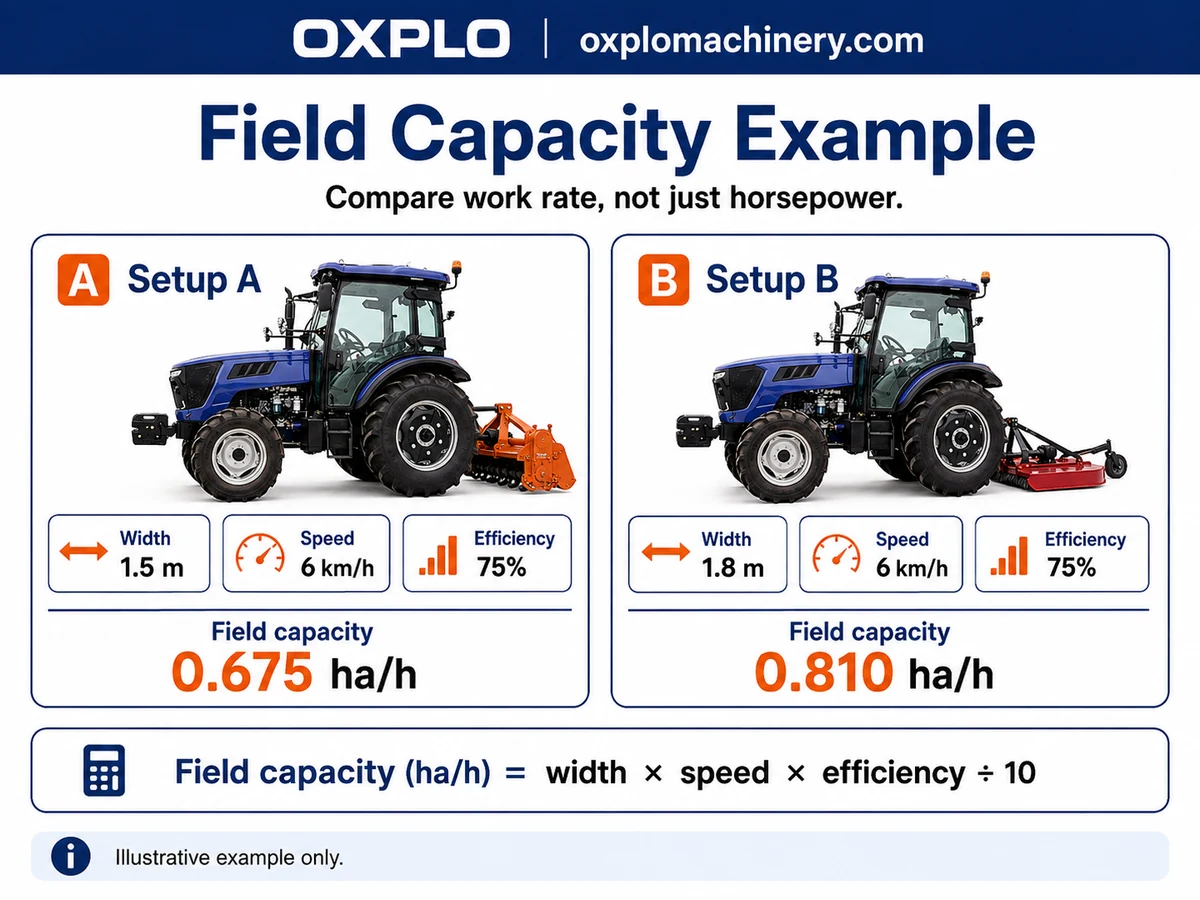
Figure 3. A field-capacity comparison shows why implement width and practical working speed matter more than horsepower alone.
Translate Field Capacity Into Annual Productive Hours
A useful TCO comparison is to estimate the total annual hours required for recurring tasks. Suppose a 40 HP tractor requires 350 operating hours per year while a 50 HP tractor, using suitably matched implements, completes the same recurring work in 280 hours. The difference is 70 hours per year, or 350 hours over five years.
The buyer can then compare the additional purchase cost of the larger tractor against operator labour, fuel, maintenance, timeliness value and the opportunity cost of those 350 hours. This is a much stronger business case than saying “50 HP is better because it is more powerful.”
If the difference is only eight hours per year, the conclusion may be the opposite. More capacity is valuable only when the farm can use it.
VII. European Small-Farm Constraints Buyers Often Miss
Measure the Narrowest Gate and Lowest Building Entrance
Do not rely only on the bare-tractor width shown in a brochure. Check tyres, mirrors, cab or ROPS, front loader and the mounted implement. The complete working envelope determines whether the tractor can enter the areas where it must work.
Separated Plots Change the Value of Transport and Manoeuvrability
A 20-hectare farm may actually consist of 5 ha + 4 ha + 6 ha + 5 ha spread across several locations. Road travel, trailer work, transport speed, braking, visibility and ease of manoeuvring can then become more important than they would be on one continuous field.
Wet Ground Changes the Trade-Off Between Traction and Machine Weight
A larger tractor can provide more traction reserve and stability, but additional axle load on wet grassland or clay soil may increase rutting and compaction. Evaluate tyres, pressure and ballast as part of the tractor system rather than adding weight by default.
Existing Implements Can Limit a Horsepower Upgrade
Before moving to a larger tractor class, list every existing implement and confirm hitch category, PTO speed, hydraulic connections, weight and working width. This is especially important when a buyer moves from a compact Category I tractor to a larger Category II utility platform. An engine upgrade can become an implement-system upgrade as well.
Confirm European Market Requirements Before Production
For a European B2B order, suitability for the farm is only the first layer. The buyer should also confirm the destination country, engine configuration, model-specific CE documents, lighting, braking, protective structure and registration requirements where applicable. Documentation should be treated as part of the purchase specification, not as a final administrative step after production.
VIII. Matching OXPLO 25–70 HP Platforms to the Work
Once the workload, implements and field-capacity requirement are defined, the buyer can compare the OXPLO tractor range. OXPLO currently provides 25, 30, 40, 50, 60 and 70 HP tractor classes for applications including orchards, grassland, soil preparation, mixed-farm transport and material handling.
The important point is that the OXPLO lineup should not be treated as a straight ladder where every farm simply buys the next higher horsepower. The OXPLO OXT254, OXT304, OXT404 and OXT504 occupy a more compact Category I-oriented range, while the OXPLO OXT604 and OXT704 move into a larger Category II utility platform. That platform distinction can matter more than the headline 10 HP step.
OXPLO Model | Power | Platform Logic | Typical Reason to Compare |
OXT254 | 25 HP | Compact / Category I | Light maintenance, orchard, mowing, small trailer |
OXT304 | 30 HP | Compact / Category I | More reserve while keeping compact dimensions |
OXT404 | 40 HP | Compact / Category I | Regular mixed-farm PTO work, mowing, tillage, transport |
OXT504 | 50 HP | Higher-output compact / Category I | More power without automatically moving to a larger chassis |
OXT604 | 60 HP | Larger utility / Category II | Larger implements, heavier mixed-farm work, more loader and transport duty |
OXT704 | 70 HP | Larger utility / Category II | High-duty mixed farming, heavy transport, larger implements and high utilisation |
OXPLO OXT254 — 25 HP: When Compact Access Is More Valuable Than Unused Reserve
The OXPLO OXT254 is a useful starting point for approximately 5-hectare light-duty farms, wider-row orchards, mowing, estate maintenance, light cultivation and small trailer work. OXPLO positions this class for buyers whose recurring implements are relatively light and whose access restrictions make a compact tractor more productive than a larger machine.
Do not automatically move higher if the OXT254 already satisfies the implement requirement and the farm has no regular loader, heavy tillage or high PTO load. Additional horsepower does not automatically produce additional productive capacity.
OXPLO OXT304 — 30 HP: More Reserve Without Leaving the Compact Class
The OXPLO OXT304 is appropriate when 25 HP is close to the requirement but the buyer expects more PTO work, more field passes or a slightly higher annual workload. For many 5–10 ha small mixed farms, OXPLO OXT304 provides useful reserve while preserving compact-farm manoeuvrability.
OXPLO OXT404 — 40 HP: When the Work Moves From Maintenance Into Regular Farming
The OXPLO OXT404 becomes relevant when mowing, light-to-medium cultivation, trailer work and PTO applications are regular rather than occasional. OXPLO OXT404 is a strong comparison point for 10–20 ha farms that need more capability than a 25–30 HP compact tractor but still value a manageable Category I platform.
Do not upgrade only because 50 HP sounds safer. If the existing Category I implement fleet already matches the OXPLO OXT404 well and access remains important, more engine output may not create enough additional field capacity to justify the change.
OXPLO OXT504 — 50 HP: Higher Output Inside a Compact Working Logic
The OXPLO OXT504 is particularly useful for buyers who need more horsepower but do not want to move immediately to a substantially larger utility tractor. OXPLO OXT504 can suit 15–25 ha mixed farms, tighter farmyards, wider-row orchards and buyers who already own Category I implements but need more PTO reserve or higher annual output.
The OXPLO OXT504 is therefore not simply a “50 HP choice.” Its commercial value is the combination of higher output and a relatively compact platform strategy.
When 10 More HP Actually Means a Different Tractor Platform: OXT504 vs OXT604
The step from 50 HP to 60 HP looks small on a specification sheet, but for OXPLO it can represent a more important platform decision. The OXT604 moves into a larger Category II utility configuration with a broader working envelope and a transmission and linkage strategy intended for larger implements and heavier recurring duty.
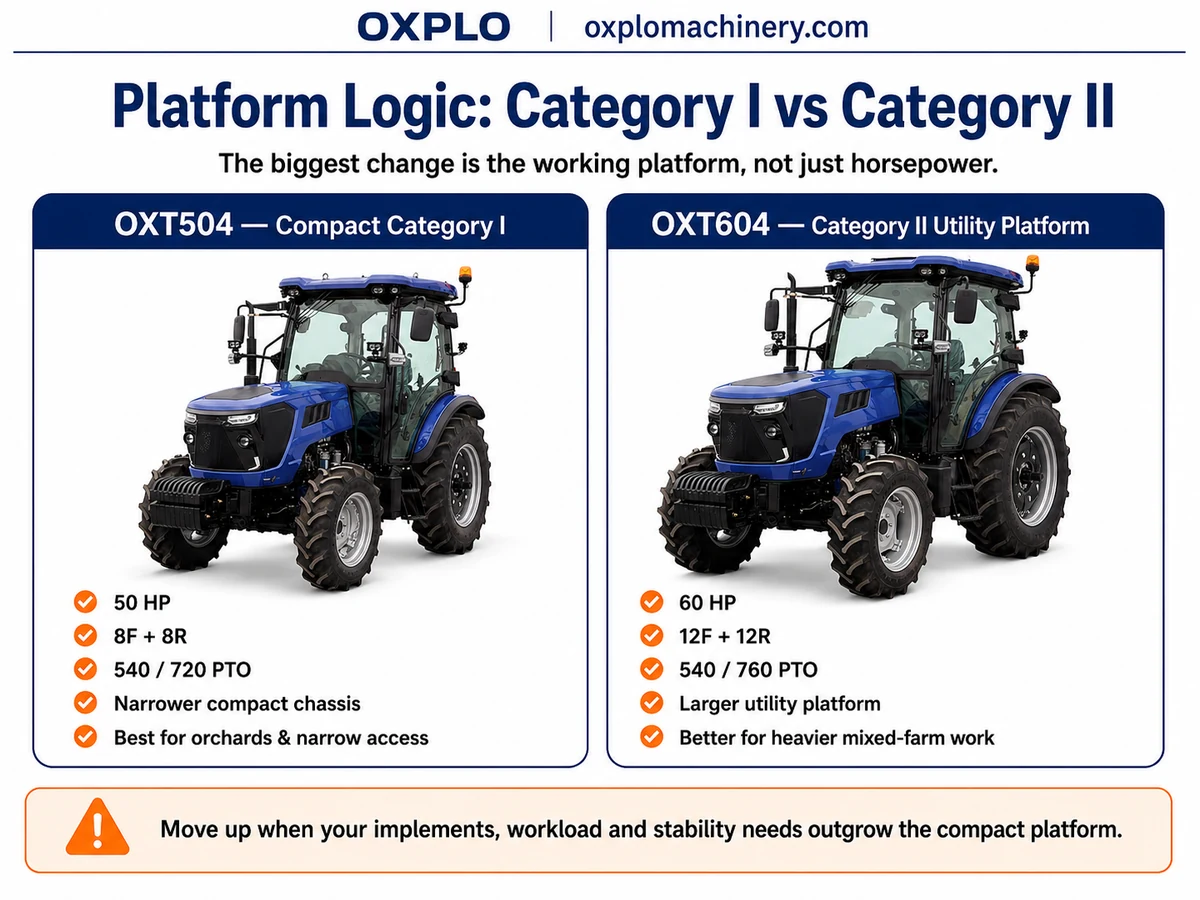
Figure 4. OXPLO OXT504 vs OXT604: the key change is the working platform, not only the 10 HP difference.
OXPLO OXT604 — 60 HP: Move Up When the Implement System Has Outgrown Category I
The OXPLO OXT604 should be compared when the farm is moving toward Category II implements, more loader work, larger cultivation equipment, heavier transport or higher annual operating hours. In these conditions, the larger OXPLO platform can provide value through stability, implement compatibility and usable working capacity rather than horsepower alone.
If the farm still depends on narrow gates, Category I implements and moderate annual workload, OXPLO OXT504 may remain the more efficient choice. OXPLO does not need to push every 20–30 ha farm into a larger utility tractor if the workload does not justify it.
OXPLO OXT704 — 70 HP: Choose It When Field Capacity Matters More Than Compactness
The OXPLO OXT704 is better suited to high-duty mixed farming, larger Category II implements, heavy transport, material handling, livestock work and applications where one tractor must cover many recurring jobs. OXPLO OXT704 makes more sense when the farm can use the additional capacity for a meaningful share of annual operating hours.
Do not choose OXPLO OXT704 simply because the farm is 30 hectares. A light-duty 30 ha grassland property may still be better served by an OXPLO OXT504 or OXT604, depending on implement size, terrain and working windows.
IX. A More Reliable Tractor Selection Workflow
A disciplined selection process reduces the risk of buying the tractor first and discovering later that the implement, access or duty cycle does not match. OXPLO recommends working through the decision in this order:
- Farm size — estimate total annual workload rather than using hectares as a final HP rule.
- Application — identify where the tractor actually spends its hours.
- Implements — find the most demanding recurring implement and its PTO, hitch and hydraulic requirements.
- Soil, slope and traction — confirm 4WD, tyres and ballast requirements.
- Field capacity — calculate whether the tractor-and-implement combination can finish work inside the available window.
- Access and stability — measure gates, buildings, rows, headlands and transport dimensions.
- Tractor platform — only now choose the horsepower class and chassis.
- TCO — compare cost per productive hour and cost per completed hectare, not purchase price alone.
This sequence is deliberately different from “choose a horsepower number, then find implements that fit it.” The application should drive the machine specification, not the other way around.
X. Pre-Purchase Checklist: What to Send OXPLO Before Requesting a Final Quotation
OXPLO can narrow the 25–70 HP range more accurately when the buyer sends operating information rather than only asking for a price on a tractor for small farm use. Before requesting a final OXPLO configuration, prepare the following:
- Farm size and farm type: orchard, grassland, livestock, crop or mixed farm.
- Terrain and soil: flat, hilly, clay, soft ground or frequent wet-season operation.
- Main recurring implements, including model or nameplate where available.
- Largest implement working width and operating weight.
- Required PTO speed and minimum/recommended PTO horsepower.
- Hitch category and hydraulic connection requirements.
- Whether front-loader work is occasional or a daily recurring task.
- Maximum trailer or transport requirement.
- Narrowest gate, lowest building entrance and any row-spacing limits.
- Estimated annual tractor hours and the months when workload is most concentrated.
- Future plan for larger implements, more land or contracting work.
- Destination country and intended road use so OXPLO can confirm the applicable model configuration and documentation before production.
Buyers can start with the OXPLO Tractor Configuration page or review the individual OXPLO product pages for OXT254, OXT304, OXT404, OXT504, OXT604 and OXT704.
Before Price, Fix the Specification Farm Size + Terrain + Main Implements + Loader Requirement + Minimum Access Width. These five inputs allow OXPLO to eliminate unsuitable tractor classes before the quotation becomes the main discussion. |
XI. Conclusion: The Right Tractor Is the One That Finishes the Work at the Right Cost
If you need a quick first-stage range, 5 hectares often starts around 25–30 HP, 10 hectares around 30–40 HP, 20 hectares around 40–50 HP, and 30 hectares around 50–60 HP. High-duty 20–30 ha farms may justify 60–70 HP when larger implements, Category II linkage, heavy loader work, slopes, short working windows or high annual utilisation make the extra capacity productive.
But these figures are only the beginning. The correct tractor for small farm use must do three things: operate the heaviest recurring implement comfortably, complete the work within the available operating window, and avoid making the owner pay for capacity that remains unused for most of the year.
This is also the logic behind the OXPLO 25–70 HP tractor range. OXPLO OXT254 and OXT304 serve compact, lower-demand applications. OXPLO OXT404 and OXT504 add useful capacity while preserving a compact-farm working logic. OXPLO OXT604 and OXT704 move into a larger utility platform for farms whose implements, workload and stability requirements genuinely need it.
For a B2B buyer, the best tractor is not the one with the largest horsepower number. It is the machine that produces the lowest practical cost per productive hour while fitting the farm, the implements and the operating environment.
To compare the OXPLO range or request a configuration based on your real workload, visit the OXPLO official website and the OXPLO Tractor Configuration Guide. Send the job data first. Choose horsepower second.