
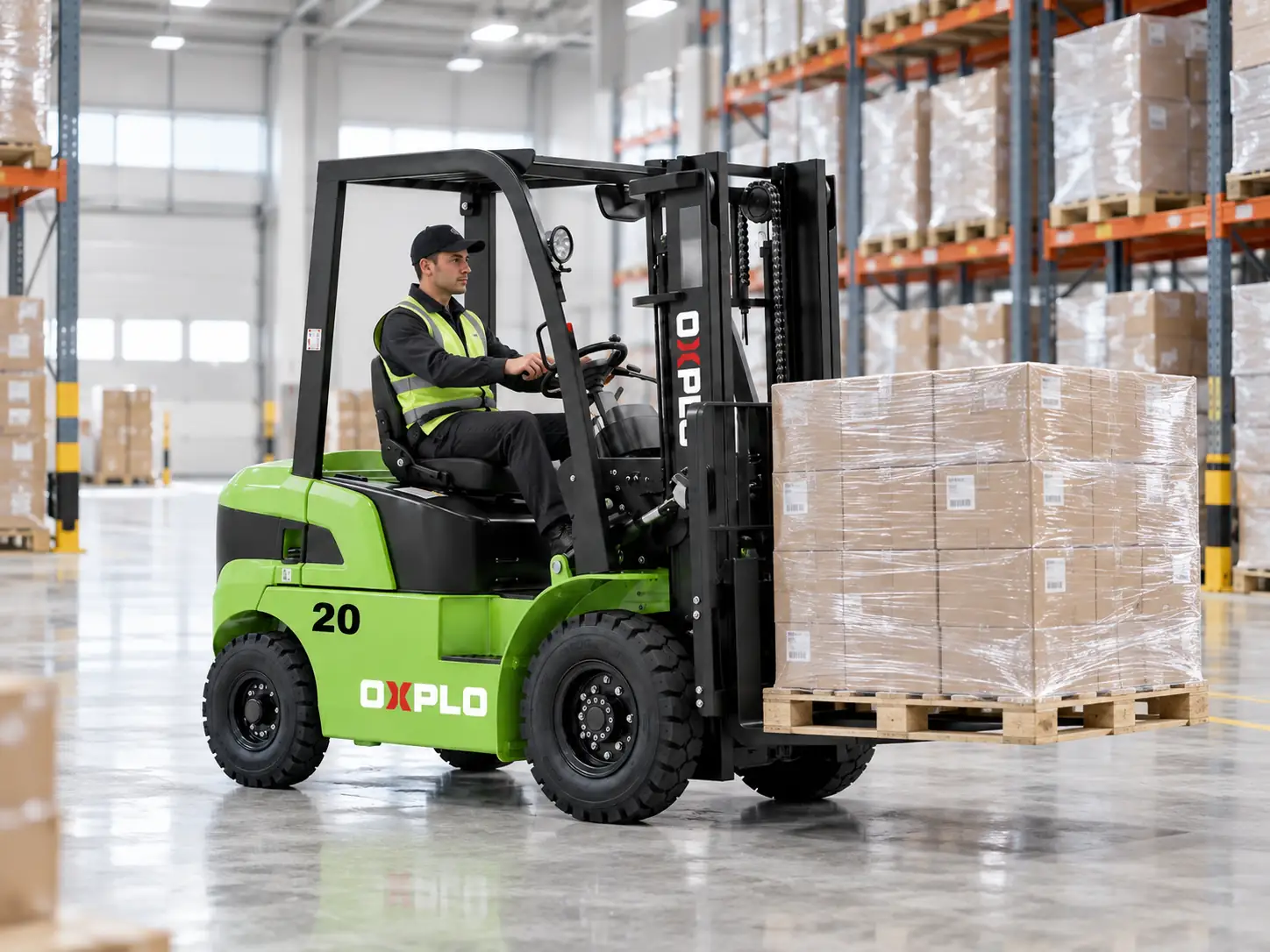
A warehouse rarely chooses between a 2 ton electric forklift and a 2.5 ton electric forklift because someone suddenly starts moving exactly 2,500 kg pallets. The harder decision is usually much less obvious: the heaviest pallet is 1,700-1,900 kg, some loads are long or uneven, a side shifter is required, the highest rack level is above the standard lift height, and purchasing wants enough capacity without buying a larger truck than the facility needs.
That is why this comparison should not start with the sentence, ‘Our maximum pallet is under two tons.’ Maximum pallet weight is only one variable. Load center, mast height, attachments, aisle width, travel route, ramp gradient, shift intensity and battery strategy can all change whether a 2 ton model is genuinely sufficient.
The commercial question is equally important. Buying too small can create operating restrictions that appear only after installation. Buying too large can tie up capital, add truck weight and solve a problem the site does not actually have. The goal is not to buy the biggest forklift available. It is to buy enough usable capacity for the work the warehouse actually performs.
Decision principle Do not choose by the single heaviest pallet. Choose by the combination of load weight, load center, lift height, attachment configuration, route geometry and how frequently demanding lifts occur during a normal shift. |
I. The Real Industry Pain Point: Rated Capacity Is Easy to Read, Usable Capacity Is Not
Many forklift buying mistakes begin with a simple spreadsheet comparison. One column says 2,000 kg. Another says 2,500 kg. The buyer compares purchase prices and assumes the difference is only 500 kg of lifting capacity. In practice, the nameplate is the beginning of the engineering discussion, not the end.
The “maximum load” question is too narrow
Suppose a distribution center reports a maximum pallet weight of 1,850 kg. A 2 ton electric forklift appears to leave 150 kg of spare capacity. That calculation is only meaningful if the load is handled at the rated load center, with the specified mast, at an appropriate lift height and without an attachment that changes the truck’s load geometry.
The problem is not that a 2 ton truck cannot ever handle a heavy pallet. The problem is that an operation can accidentally build its normal workflow around a configuration with almost no margin for real-world variation. Packaging changes. Pallets are not always loaded evenly. Operators pick loads from different rack levels. A side shifter is added after commissioning. The operating condition moves, while the original purchase assumption stays frozen.
Use load distribution, not just maximum load
A warehouse that moves one 1,900 kg pallet per week has a different requirement from a production plant that moves 1,800-1,950 kg components every hour. Both facilities may report the same ‘maximum load’, but the second site exposes the forklift to high-load work as a normal part of the duty cycle.
For equipment selection, record how loads are distributed through the shift. A useful starting profile is: percentage below 1,200 kg, percentage between 1,200 and 1,600 kg, percentage between 1,600 and 1,900 kg, and percentage above 1,900 kg. Then identify which of those loads are lifted high, carried on ramps or handled with attachments. This turns a vague capacity discussion into a repeatable engineering decision.
II. Capacity Is a System: Load Center, Mast Height and Attachments Change the Answer
Load center is where apparently safe capacity can disappear
Forklift capacity is normally stated at a specified load center. A common counterbalance-forklift rating may be expressed at a 500 mm load center. The further the load’s center of gravity moves away from the fork face, the larger the overturning moment becomes and the less capacity margin remains.
A simple load-moment calculation can explain the principle, but it should never be used as a substitute for the manufacturer’s load chart or capacity plate. Real residual capacity also depends on mast design, lift height, attachments, chassis geometry and the complete approved configuration.
Long loads can make a 1.7 ton job behave like a much harder lift
Industrial buyers often focus on weight and under-report dimensions. This is especially risky for machine parts, metal products, timber packs, long crates, moulds and production-line components. A long load may weigh well under two tons yet place its center of gravity further forward than a standard pallet.
For this type of application, the correct RFQ should include weight, overall length, width, pallet or support structure, estimated center of gravity and intended fork length. Without these inputs, a supplier can quote the nominal truck class while missing the actual stability problem.
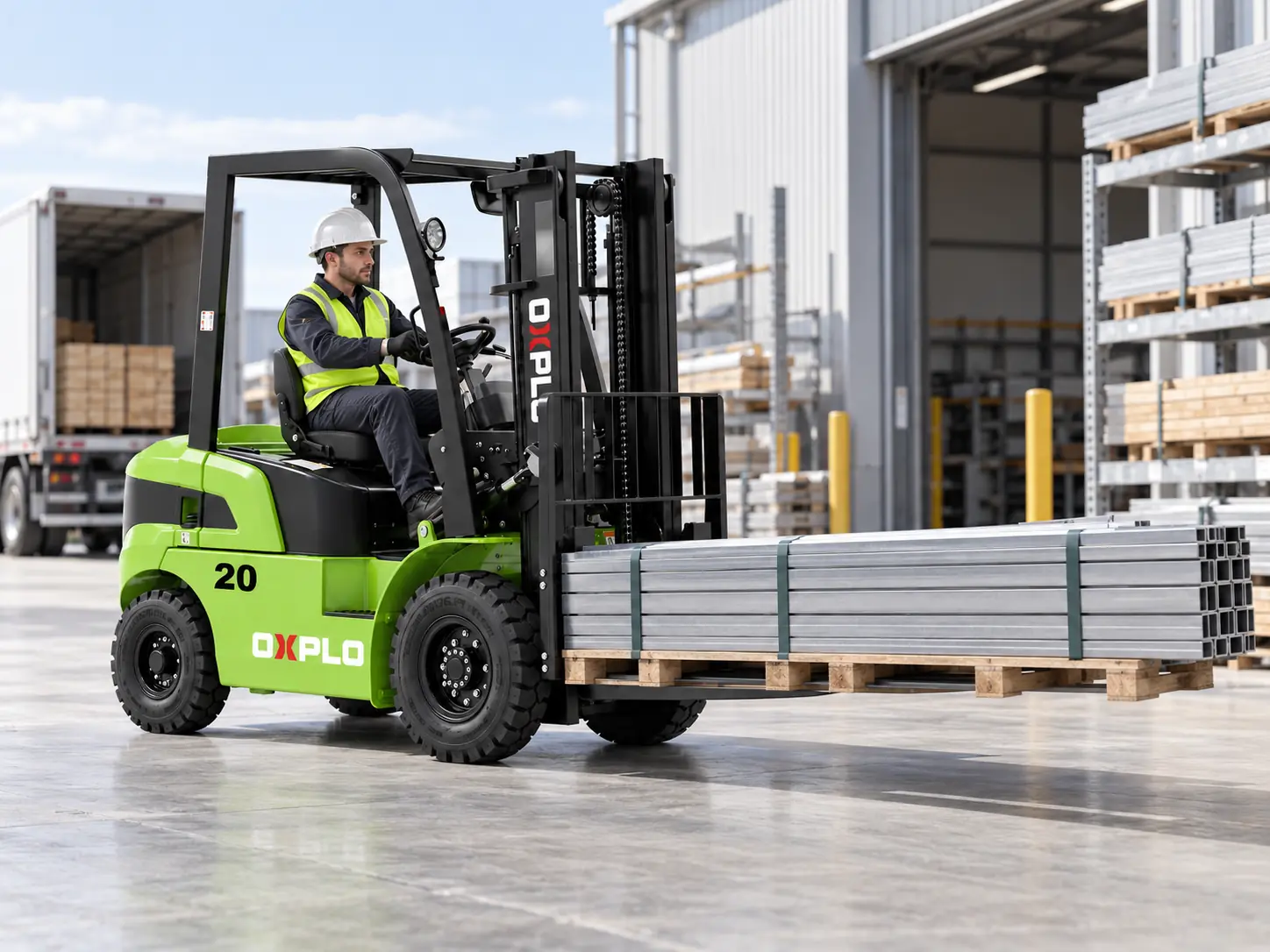
Figure 1. Long industrial loads can shift the effective load center forward even when the total weight remains below the nominal truck rating.
Mast height and residual capacity must be checked together
A forklift that is comfortable moving a pallet near floor level may not have the same usable capacity at the highest rack position. Higher lift height changes the stability conditions of the truck-load system. This is why a serious quotation should not stop at ‘2 ton’ or ‘2.5 ton’. It should confirm the required mast height and the residual capacity for the selected mast and load geometry.
The practical purchasing question is: ‘At our required lift height, with our actual load center and final attachment, what load can this configuration handle according to the approved capacity data?’ That single question eliminates many specification errors before the machine is ordered.
Attachments should be specified before the truck is finalized
Side shifters and fork positioners are valuable because they reduce repositioning and help operators align loads faster. But they also add weight and can move the load further forward. The common mistake is to select a truck first and add the attachment later as an accessory.
Reverse the sequence. Define the attachment, mast and load first. Then select the truck class. If a 2 ton electric forklift only works when every variable stays at the most favorable value, the 2.5 ton class may provide a more practical operating margin.
III. When a 2.5 Ton Electric Forklift Usually Makes More Operational Sense
1. Heavy loads are routine, not exceptional
A 2.5 ton electric forklift deserves serious consideration when normal loads repeatedly sit close to the 2 ton class limit. The important word is repeatedly. Capacity margin has more business value when demanding lifts are part of everyday throughput, because the warehouse cannot treat every heavy pallet as a special case.
If supervisors constantly need to reserve one specific truck, split loads, reduce lift height or change routes for the heaviest pallets, the nominally cheaper equipment choice can create hidden coordination cost across every shift.
2. Loads are long, irregular or frequently off-center
A machinery warehouse may handle 1,600-1,900 kg assemblies that are physically much longer than a Euro pallet. A timber or metal operation may receive bundles with variable centers of gravity. In these cases, additional rated capacity can be valuable because the application needs residual capacity, not just nominal tonnage.
3. Side shifters, fork positioners or special forks are part of normal work
If the final truck will use an attachment every day, treat the attachment as part of the base machine. A 2.5 ton electric forklift can make more sense when the 2 ton alternative becomes too tightly constrained after the attachment and mast configuration are taken into account.
4. The business expects a heavier SKU mix over the life of the truck
Forklifts are normally purchased for multiple years, while a warehouse contract, production mix or customer base may change much faster. If today’s loads already sit close to the 2 ton class and management expects heavier components or industrial customers, capacity margin can delay the need for a second equipment purchase.
This is not an argument for speculative oversizing. Future capacity only has value when there is a credible business path to use it. Ask sales and operations what is changing in the next 24-36 months, not what might happen in theory.
IV. When the 2 Ton Electric Forklift Is the More Rational Choice
Most loads are comfortably below the limit and the geometry is standard
If the normal load mix is dominated by standard pallets well below 2,000 kg, the load center is controlled, high lifts are modest and attachments do not materially reduce residual capacity, a 2 ton electric forklift may already provide the correct capacity without unnecessary oversizing.
Warehouse geometry is already tight
A larger nominal capacity is useful only if the truck still fits the physical workflow. Check overall width, turning radius and right-angle stacking aisle requirement against the real building, pallet dimensions and safety clearance. A few centimeters may be irrelevant in an open manufacturing hall and critical in a dense existing rack layout.
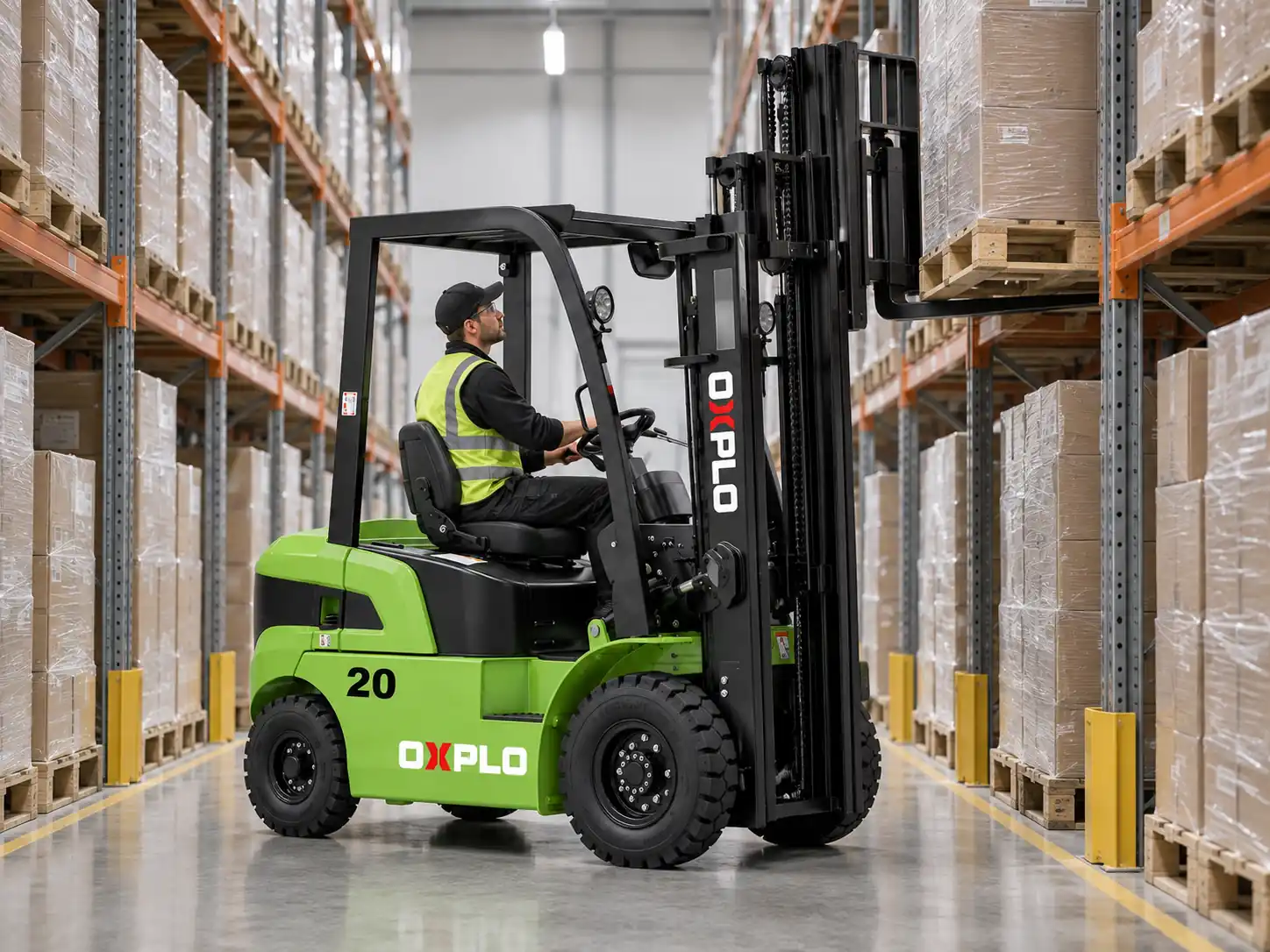
Figure 2. Aisle geometry can be as important as lifting capacity in an existing warehouse. Truck dimensions must be checked against pallet size and operating clearance.
Truck weight, ramps and floor conditions can matter more than the extra 500 kg
Higher-capacity counterbalance forklifts are generally heavier. That extra mass may matter for truck transport, mezzanine or floor loading, freight elevators and facilities with ramps. A purchasing team that looks only at rated capacity can miss these second-order constraints.
Ramp performance should also be checked with load. A heavier truck does not automatically deliver a better gradeability figure. If the working route includes dock ramps or repeated indoor-outdoor transitions, gradeability belongs in the selection sheet alongside capacity and aisle width.
V. Compare Warehouse Throughput and TCO, Not Just the Purchase Price
A cheaper truck can become expensive if it creates handling exceptions
The hidden cost of undersizing is rarely visible on the purchase order. It appears later as split pallets, waiting for another truck, attachment restrictions, reduced lift height, temporary equipment rental, extra internal moves or a second capital purchase earlier than planned.
For TCO analysis, compare the incremental purchase cost of the 2.5 ton model with the expected cost of these exceptions. Do not invent a generic payback percentage. Use the site’s own pallet volume, labor rate, equipment utilization and downtime cost.
Use an exception-cost model
A simple operational model can be more useful than a complex finance spreadsheet. Estimate how many weekly moves exceed the comfortable operating envelope of the 2 ton truck. Then estimate the additional minutes, labor, rental or production delay each exception creates. Multiply by the annual frequency. The resulting number tells you how much capacity margin is actually worth to this site.
Do not ignore the cost of oversizing
Oversizing has costs too: higher initial capital, more truck mass and potentially different maneuverability or ramp characteristics. If 98% of the workload is light and standard, a 2.5 ton electric forklift may not create enough incremental value to justify the upgrade. Good engineering means being equally willing to recommend the smaller machine when the evidence supports it.
VI. Lithium Forklift Selection: Capacity and Energy Strategy Must Be Designed Together
Battery size alone does not predict a working shift
Buyers often ask how many hours a lithium forklift will run on one charge. The answer depends on the duty cycle: average load, travel distance, lift frequency, lift height, gradients, temperature, idle time and operator behavior all affect energy consumption.
The useful procurement question is not, ‘How many hours can this battery run?’ It is, ‘Can this battery and charger support our actual shift pattern with an acceptable state-of-charge margin?’
Map the charging windows before selecting the charger
Lithium systems are well suited to operations that can use planned charging opportunities during breaks or shift changes, but the charger and electrical infrastructure must be matched to the schedule. A warehouse forklift that works one moderate shift has a different energy requirement from a production forklift that moves heavy loads across two or three shifts.
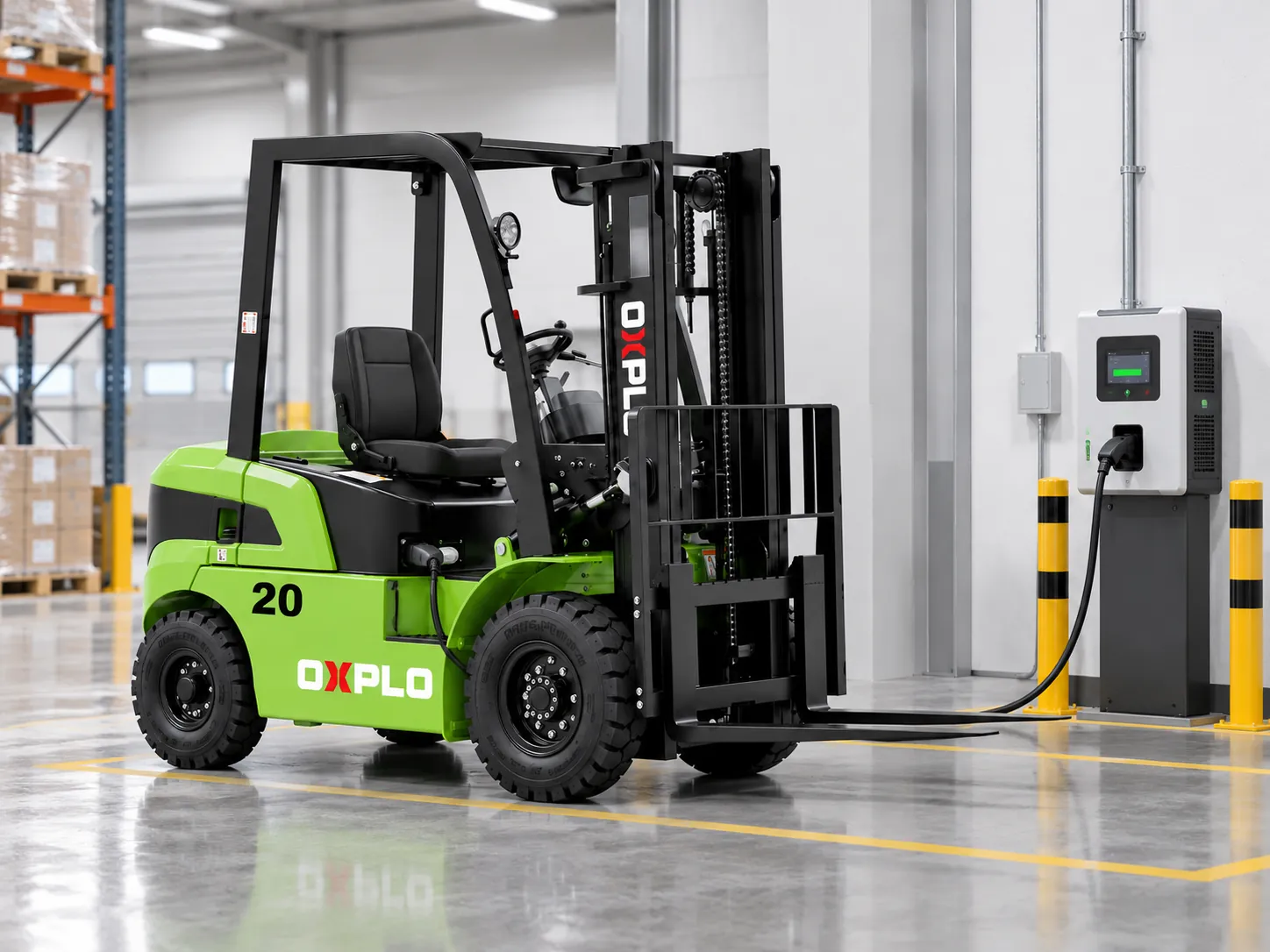
Figure 3. A lithium forklift should be specified as an energy system: truck, battery, charger, electrical supply and available charging windows all need to match the duty cycle.
VII. OXPLO CPD20 vs CPD25: What the Real Specifications Tell a Buyer
The comparison becomes more useful when it is tied to two real machines. OXPLO offers the CPD20 2 ton electric forklift and the CPD25 2.5 ton electric forklift for warehouse, logistics and manufacturing applications. The interesting point is not simply that OXPLO CPD25 lifts 500 kg more. The chassis dimensions show how much space the buyer actually gives up to obtain that additional rated capacity.
Parameter | OXPLO CPD20 | OXPLO CPD25 | Why It Matters |
Rated lifting load | 2,000 kg | 2,500 kg | CPD25 provides 25% more rated capacity. |
Load center | 500 mm | 500 mm | Direct nominal comparison uses the same load-center basis. |
Overall width | 1,164 mm | 1,164 mm | No increase in stated truck width. |
Length with forks | 3,570 mm | 3,615 mm | CPD25 is 45 mm longer. |
Minimum turning radius | 2,190 mm | 2,240 mm | CPD25 adds 50 mm. |
Right-angle aisle width | 2,230 mm | 2,280 mm | CPD25 adds 50 mm before site-specific safety clearance. |
Truck weight | 3,280 kg | 3,640 kg | CPD25 adds 360 kg of truck mass. |
Full-load gradeability | 20% | 17% | Ramp applications need a route-specific check. |
Battery | 76.8 V / 280 Ah lithium | 76.8 V / 280 Ah lithium | Same stated battery specification; actual runtime still depends on duty cycle. |
For many ordinary warehouse layouts, the OXPLO CPD25 therefore adds 25% rated capacity without increasing stated overall width and with only a 50 mm increase in turning radius and right-angle aisle width. That can be a strong argument when the site frequently handles loads near the upper end of the 2 ton class.
But OXPLO CPD25 is not a free upgrade. It is 360 kg heavier, and its published full-load gradeability is 17% versus 20% for the OXPLO CPD20. A warehouse with ramps, floor-loading limits or frequent equipment transport should include those variables in the decision. This is exactly why OXPLO recommends configuration based on the complete application rather than nominal tonnage alone.
When OXPLO CPD25 is the stronger fit
- Daily loads frequently approach the top end of the 2 ton class.
- The operation uses longer loads, attachments or higher lifts that reduce practical capacity margin.
- The existing aisle can absorb the additional 50 mm of stated turning/stacking requirement.
- Future contracts or production plans credibly point toward heavier material handling.
When OXPLO CPD20 may be the more efficient fit
- Most loads sit comfortably below 2,000 kg with standard pallet geometry.
- The warehouse values lower truck mass or has route constraints that favor the CPD20 specification.
- Heavy-load exceptions are rare enough that extra capacity would not materially improve throughput.
- The site has no credible need for the additional residual-capacity margin over the truck life.
Product links: OXPLO CPD20 2 Ton Electric Forklift | OXPLO CPD25 2.5 Ton Electric Forklift
VIII. What European Buyers Should Verify Before Ordering
Treat compliance as part of the machine configuration
For European buyers, forklift procurement is not only a performance decision. The machine also needs the correct conformity documentation, identification, instructions and technical configuration for the market in which it will be placed on the market or put into service.
As of September 2026, machinery placed on the EU market before 20 January 2027 remains under Machinery Directive 2006/42/EC. Regulation (EU) 2023/1230 becomes mandatory from 20 January 2027. Buyers sourcing equipment across this transition should confirm which conformity framework applies to the delivery date and final product configuration, and should obtain the corresponding documentation from the supplier.
The final capacity plate must match the final machine
Do not accept a capacity discussion based only on the base truck when the order includes a different mast, side shifter, fork positioner or other attachment. The relevant residual-capacity information and machine documentation should correspond to the supplied configuration. This matters operationally and also supports safer internal training and inspection.
OXPLO information to include in the RFQ
OXPLO’s forklift selection approach asks buyers to provide the inputs that actually control the recommendation. For a useful CPD20 or CPD25 quotation, send OXPLO the following information:
- Maximum load weight and typical load-weight distribution.
- Load or pallet dimensions and estimated load center.
- Required lift height and rack layout.
- Minimum aisle width, doorway clearance and turning areas.
- Indoor, outdoor or mixed route; floor condition and ramps.
- Daily operating hours, shifts and available charging windows.
- Required attachments such as side shifter or fork positioner.
- Destination country and any documentation requirements for the market.
With these inputs, OXPLO can discuss whether the CPD20 2 ton electric forklift, CPD25 2.5 ton electric forklift or another OXPLO forklift class better matches the real operating envelope. This is more useful than asking for a price based only on tonnage.
IX. A 10-Minute Forklift Selection Workflow for Procurement Teams
- Profile the load: Record maximum weight, typical weight bands, dimensions and any off-center or irregular loads.
- Define the hardest lift: Identify the highest rack position, longest load and heaviest load that can occur in the same task.
- Lock the attachment list: Decide whether side shift, fork positioning, long forks or other attachments are required before comparing capacities.
- Check warehouse geometry: Measure aisle width, turning areas, doors, floor constraints and ramps against the actual pallet size.
- Build the duty cycle: Estimate moves per hour, travel distance, lift frequency, shift length and charging opportunities.
- Request residual-capacity confirmation: Ask the supplier to confirm usable capacity for the selected mast, load center and attachments.
- Calculate exception cost: Estimate what happens if the smaller truck cannot perform the demanding lifts: waiting, split loads, rental or an additional machine.
- Choose the smallest truck that reliably covers the full operating envelope: This protects both productivity and capital efficiency.
X. FAQ: 2.5 Ton Electric Forklift vs 2 Ton Electric Forklift
Is a 2.5 ton electric forklift automatically safer than a 2 ton model?
No. Safety depends on selecting and operating the correct truck for the load, height, load center, attachment and site conditions. Extra rated capacity can provide useful margin in some applications, but it does not replace correct capacity data, operator training or route control.
If my heaviest pallet is 1.8 tons, should I buy a 2 ton electric forklift?
Possibly, but pallet weight alone is not enough. Check load center, lift height, attachment weight and residual capacity. If 1.8 ton loads are frequent or long, the 2.5 ton class may deserve comparison.
Does a side shifter reduce forklift capacity?
It can affect the effective load geometry and residual capacity. The final capacity should be confirmed for the exact mast and attachment configuration rather than assumed from the base truck rating.
Is a lithium forklift suitable for multi-shift warehouse work?
It can be, provided battery capacity, charger output, electrical infrastructure and planned charging windows match the duty cycle. High-load travel and frequent lifting increase energy demand.
What is the main difference between OXPLO CPD20 and OXPLO CPD25?
The published rated capacity rises from 2,000 kg to 2,500 kg. Both list a 1,164 mm overall width and a 76.8 V / 280 Ah lithium battery, while the CPD25 has a 50 mm larger stated turning radius and right-angle aisle width and a higher truck weight.
Where can I compare OXPLO electric forklift models?
OXPLO lists electric forklifts within its forklift product range and provides application guidance for warehousing and manufacturing. Buyers can use the OXPLO product pages as a starting point, then confirm the final configuration against their actual load and site data.
Conclusion: Buy Capacity for the Work You Actually Do
The choice between a 2 ton electric forklift and a 2.5 ton electric forklift should not be reduced to a 500 kg difference on a specification sheet. The better question is whether the site needs additional usable capacity after load center, mast height, attachments and real duty-cycle conditions are considered.
Choose the 2 ton class when the load profile is comfortably within its operating envelope and the extra capacity does not create meaningful productivity value. Evaluate the 2.5 ton class when heavy or long loads are frequent, attachments and high lifts consume capacity margin, or credible future work will push the operation closer to the 2 ton boundary.
OXPLO CPD20 and OXPLO CPD25 make this trade-off particularly clear. The OXPLO CPD25 provides 25% more rated capacity while keeping the same published overall width as the CPD20 and adding only 50 mm to the stated turning radius and right-angle aisle width. At the same time, OXPLO publishes the higher truck weight and different gradeability figure, so buyers can evaluate the complete trade-off instead of treating the larger model as an automatic upgrade.
If you are comparing an electric forklift for sale for a European warehouse, logistics center or manufacturing site, send OXPLO your load weight, load dimensions, lift height, aisle width, working hours and attachment requirements. OXPLO can use those inputs to help narrow the configuration before pricing.
Explore OXPLO Forklifts and Material-Handling Solutions
OXPLO Website | All Products | Manufacturing Material Handling