

A European dealer receives two quotations for a 50 HP 4WD farm tractor. Both suppliers promise a cab option, agricultural tyres and compatible attachments. One price is lower. The other quotation identifies the exact transmission, PTO, linkage category, inspection procedure and paperwork for the destination market.
Which offer actually protects the dealership? The answer depends on what happens after the purchase order: whether the delivered tractor matches the promised specification, whether the intended customer can use it legally and practically, and whether a replacement part can be identified when the machine needs repair.
For a European distributor, the tractor manufacturer vs trading company decision is therefore not simply about eliminating middlemen. It is about engineering control, documented conformity, consistent production, supplier accountability and a support model that works during the farming season. This guide offers a practical decision framework for dealers evaluating 25–70 HP tractors, including how to assess relevant OXPLO configurations without confusing published claims with order-specific evidence.
I. Why the Supplier Model Matters to a European Dealer
The dealer carries the customer-facing risk
An individual farmer may judge a tractor by power, handling and price. A dealership must also finance inventory, prepare machines for delivery, manage customer expectations and provide service after the sale. If a tractor arrives with an incorrect PTO arrangement or missing document, the supplier problem becomes the dealer’s customer problem.
Imagine a Polish dealer that has promised a 40–50 HP tractor for spring cultivation. The tractor reaches the warehouse, but its final tyre and lighting configuration does not match the approval documents supplied. The dealer may face storage costs, delayed handover and additional checks, even though the engine starts and the machine looks correct. This is an illustrative procurement risk, not a documented customer incident.
Manufacturer, trader and OEM: three roles, not two labels
A direct tractor manufacturer performs or controls substantial fabrication, assembly, integration and inspection activities. It may still purchase engines, axles and transmissions from specialized component suppliers. Factory ownership alone does not guarantee consistent quality; the decisive issue is whether the business manages specifications, production changes and final acceptance.
A trading company typically sources completed equipment from one or more producers. A capable trader can add value through factory screening, consolidated orders, export administration and parts inventory. The risk appears when a seller cannot trace the actual factory, authorize technical corrections or obtain reliable records.
An OEM or private-label arrangement can separate the commercial brand, contracting entity, assembly plant and approval holder. European dealers should identify all four roles. The entity described as a “manufacturer” in marketing materials is not necessarily identical to the manufacturer responsible under the applicable vehicle-approval rules.
II. Five Hidden Costs That a Low Tractor Quotation Can Miss
1. Wrong configuration: a tractor can run well and still be unsuitable
A customer buying a 50 HP tractor may already own a rotary tiller, rear mower and agricultural trailer. Horsepower alone cannot establish compatibility. The dealer must confirm PTO speed and shaft interface, three-point linkage category, permissible implement mass, hydraulic pressure and flow, and any towing or braking requirements. An incorrect match can require modifications, an exchanged implement or a different machine.
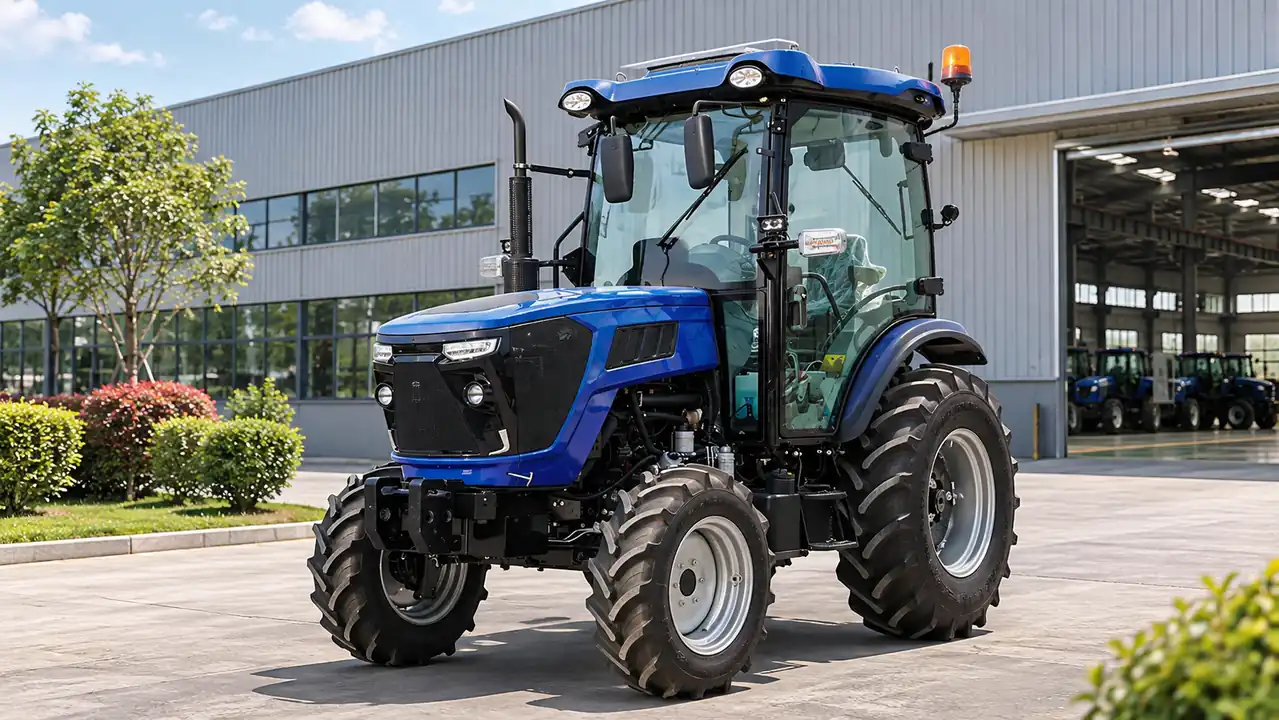
For example, OXPLO OXT504 is published with a Category I linkage, whereas the OXPLO OXT704 uses Category II. Both are 4WD tractors, but their implement interfaces and platform sizes differ. Choosing purely by engine rating overlooks the work the customer must perform.
2. Uncontrolled component substitutions
A repeat order may arrive with a revised electrical component or hydraulic fitting. Substitutions are not automatically defects; manufacturers update designs and suppliers. They become expensive when the dealer cannot identify which version was installed. A credible supplier should connect the machine identification number to the relevant build record, major component version and compatible service part.
3. Unclear EU approval and documentation
A generic certificate, a picture of a CoC or an engine-emissions document is not proof that every offered tractor configuration can be registered in the destination market. Where whole-vehicle approval and a CoC apply, the type, variant, version and actual vehicle identification must match the finished machine. Approval relevance should be resolved before a deposit or production release, not after arrival at the port.
4. Parts delays during the working season
A defective sensor or hose may be inexpensive but costly to diagnose and source. The dealer needs a parts catalogue, clear fault-reporting instructions, lead-time information and a procedure for model or component revisions. Ask whether warranty coverage includes the relevant component and which costs remain with the dealer. A one-year promise means less if repair responsibilities are undefined.
5. A small quotation gap that disappears after delivery
Suppose Supplier A quotes €350 less per tractor for a six-unit order: a €2,100 apparent saving. If unresolved documentation, additional preparation, urgent parts freight and customer-delay exposure together cost €2,200, the saving is erased. These amounts are hypothetical and illustrate the comparison method; they are not OXPLO performance or warranty data.
Dealers should compare landed acquisition cost plus expected support exposure, using their own freight quotations, inspection charges, financing assumptions, service capabilities and realistic failure scenarios. Recoverable import VAT should be handled according to the dealer’s tax position rather than automatically counted as permanent cost.
III. What to Verify Before Calling a Supplier a Manufacturer
Trace the legal seller, actual factory and technical decision-maker
Request the registered seller, production-site address, contract entity, payment beneficiary and organization responsible for engineering changes. If these are different companies, ask for the relationship in writing. There may be a perfectly legitimate export company, brand owner or OEM structure; the essential point is that responsibilities are clear.
A useful opening question is: “Who approves a change to the engine, transmission, tyres, cab/ROPS, hydraulics or implements after we sign the order?” A supplier should be able to describe approval responsibilities, not merely promise that any configuration is possible.
Test the production records, not just the showroom
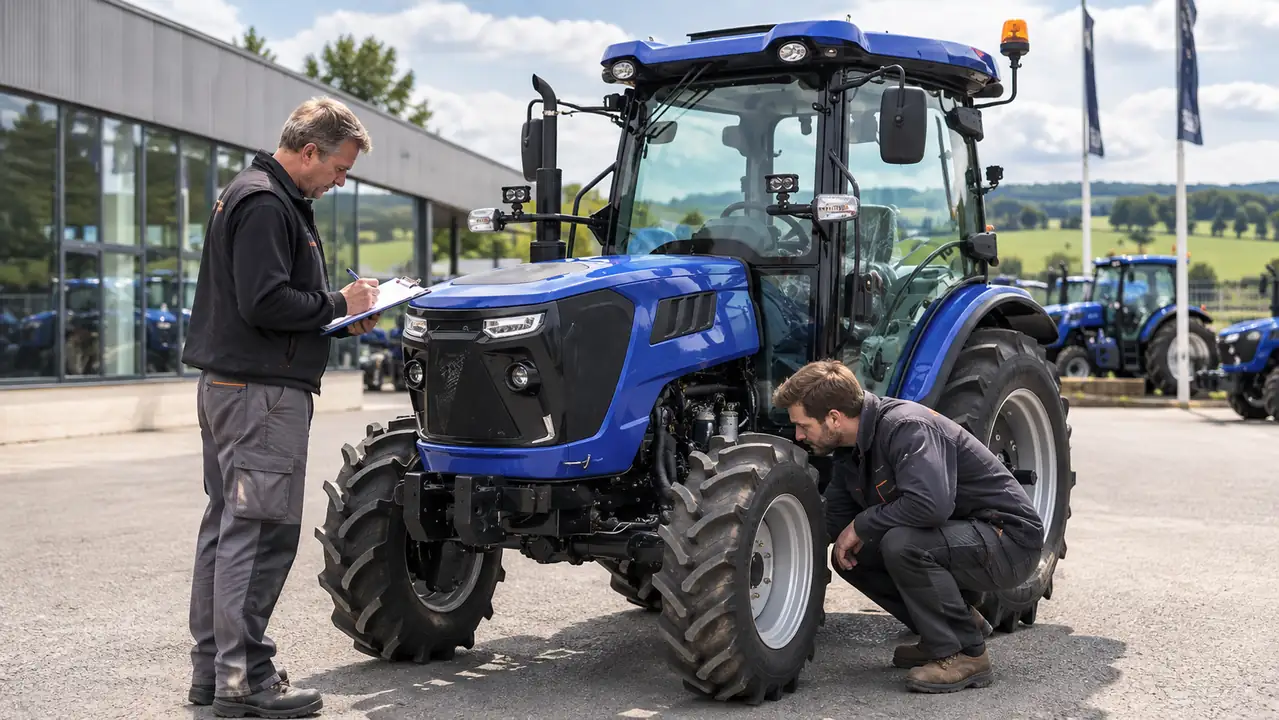
A factory visit is useful when it examines real controls: incoming component checks, assembly instructions, torque and hydraulic inspections, deviation records and final operational tests. Ask to follow one identifiable tractor from its configuration sheet through final release. Record whether the gearbox, axle, operator station and attachments correspond to the order. A professional factory should be prepared to explain which processes are internal and which are outsourced.
OXPLO describes component processing, welding, assembly inspection, function testing and pre-shipment checks in its manufacturing and quality assurance overview. These published procedures are relevant evidence to request in an enquiry, but they should not be treated as independent verification of a particular order. Dealers should agree on inspection access and machine-specific records.
Ask for a corrective-action example
Ask what happens when a hydraulic leak, incorrect tyre specification or failed brake check is discovered. The important answers are who records the nonconformity, who authorizes rework, what is retested and whether a buyer can see the closure evidence. For a first order, define the defects that prevent shipment release.
For a detailed inspection workflow rather than another generic checklist, see the OXPLO tractor factory audit guide and the related tractor PDI photo checklist.
IV. Compare Technical Suitability Before Comparing Supplier Prices
Build the specification around the farm and the implement
The most useful dealer brief starts with the work: hectares and field conditions, orchard row width, ground traction, implement list, seasonal operating hours and road-transport needs. Then define minimum engine performance, drivetrain, PTO, hydraulic connections, linkage, tyres, ballast and operator-station preferences. For loader use, verify mounting, front-axle limits, hydraulic compatibility and stability rather than relying only on advertised lifting capacity.
OXPLO lists six 4WD models from 25 to 70 HP on its tractor range page. The compact OXT254 and OXT304 are positioned for smaller farms and constrained access; OXT404 and OXT504 cover a different utility workload; OXT604 and OXT704 use a larger Category II platform. This product spread can help dealers design a rational model mix, provided each final configuration is checked.
Practical example: OXPLO OXT504 vs OXT704
Consider a dealer serving both small livestock holdings and mixed farms with heavier implements. The models below are not interchangeable simply because both use 4WD. Their published specifications help frame the customer conversation.
Published feature | OXPLO OXT504 | OXPLO OXT704 |
Rated power | 50 HP / 37 kW | 70 HP / 51.5 kW |
Drive | 4WD | 4WD |
Transmission | 8 forward + 8 reverse | 12 forward + 12 reverse |
Three-point linkage | Category I | Category II |
Published overall width | 1,560 mm | 1,760 mm |
PTO speeds listed | 540 / 720 rpm | 540 / 760 rpm |
Typical evaluation focus | Compact footprint; Category I implements | Higher power; Category II implement compatibility |
Sources: OXPLO OXT504 technical page and OXPLO OXT704 technical page. Published figures may vary with approved version or equipment; obtain a signed order specification. Higher power does not by itself prove suitable loader capacity, towing performance or compatibility with every implement.
Make configuration confirmation a condition of the order
For the intended package, ask the supplier to show PTO and spline compatibility, linkage dimensions, hydraulic flow/pressure where needed, permissible implement mass and connection requirements. When ordering a front loader, confirm the approved mounting kit, front-axle load, ballast, tyre rating and installation instructions. OXPLO provides a tractor configuration and attachment overview that can help frame those questions; availability must be confirmed for the chosen model and market.
V. EU Compliance Is a Vehicle-Matching Exercise, Not a Certificate Collection
Understand the CoC chain
Regulation (EU) No 167/2013 establishes the EU approval and market-surveillance framework for agricultural and forestry vehicles within its scope. For a relevant type-approved tractor, the dealer should connect approval identity → type/variant/version → approved equipment → vehicle identification number → vehicle-specific CoC. A brand-wide statement or unrelated sample certificate cannot replace that chain.
Article 11 sets out importer responsibilities, Article 13 addresses distributor checks, and Article 33 concerns the Certificate of Conformity. Article 15 can also impose manufacturer obligations on a business marketing a vehicle under its own name or modifying it in ways that affect conformity. For the authoritative legal framework, consult the current consolidated EU regulation. Local registration procedures and the applicable approval route should be confirmed for the specific destination.
What OXPLO documentation information actually tells you
OXPLO publishes EU whole-vehicle type-approval references for selected vehicle types and identifies CoC support for selected tractor versions on its European tractor configuration page. This is relevant for distributors screening potential suppliers, but it is not evidence that every OXPLO model, cab choice, tyre arrangement or optional attachment shares the same approval coverage. A dealer must request the approval identity and vehicle-specific documents for the exact machine proposed.
Apply the check to Poland and Hungary without guessing national rules
A dealer importing to Poland should specify intended on-road use and any trailer operation when reviewing approvals, coupling, braking and registration documents. A Hungarian distributor preparing several horsepower categories should likewise check the documentation for each distinct version rather than assuming one tractor model name is sufficient. National administrative steps should be confirmed with the competent registration channel; neither scenario permits unsupported claims about country-specific exemptions or automatic registration.
VI. A Dealer’s Three-Gate Due-Diligence Decision
Gate 1: Qualify the seller before committing funds
Check legal identity, factory relationship, responsible technical contact, reference product specifications and the route for required market documentation. A supplier that cannot identify the actual producer, relevant approval holder or final inspection responsibility presents a material unresolved risk. Ask whether a third-party inspection is acceptable and whether warranty and spare-parts terms are written into the contract.
Gate 2: Freeze the purchase specification
Make model, engine, transmission, operator station, tyres, PTO, linkage, hydraulics, attachments, documentation, packing and delivery conditions part of the signed order. Define permitted substitutions and a written process for engineering changes. If an order is made through a trading company, confirm how the factory receives and acknowledges exactly the same specification.
Gate 3: Release only the tractor that was agreed
Before shipment, match photographs and test records to the machine identification numbers. Check attachment kits, operator-station equipment, tyres, labels and paperwork; review unresolved inspection findings. Retain the agreed acceptance records for future warranty and repeat-order decisions. For critical safety or approval discrepancies, shipment should not be released until corrective action and applicable verification are complete.
Quick supplier scoring matrix
Dealer question | Why it matters | Minimum evidence |
Who controls technical changes? | Prevents incorrect machine and implement configurations | Named approver + signed revision |
Can components be traced by tractor? | Supports correct repair parts and batch investigation | Machine ID + build/parts records |
Does approval match the delivered version? | Reduces legal and registration risk | Applicable approval + specific CoC |
What happens after a failed inspection? | Prevents unresolved defects shipping | Defect log + reinspection |
Who handles warranty and parts? | Reduces downtime and cost ambiguity | Written process + parts lead times |
Do not turn the matrix into a superficial points contest. A serious compliance mismatch, missing legal identity or inability to trace the actual tractor should be treated as a stop condition rather than offset by a low price or polished sales materials.
VII. Where OXPLO Fits Into a European Dealer Procurement Plan
Choose an OXPLO model mix based on customer jobs
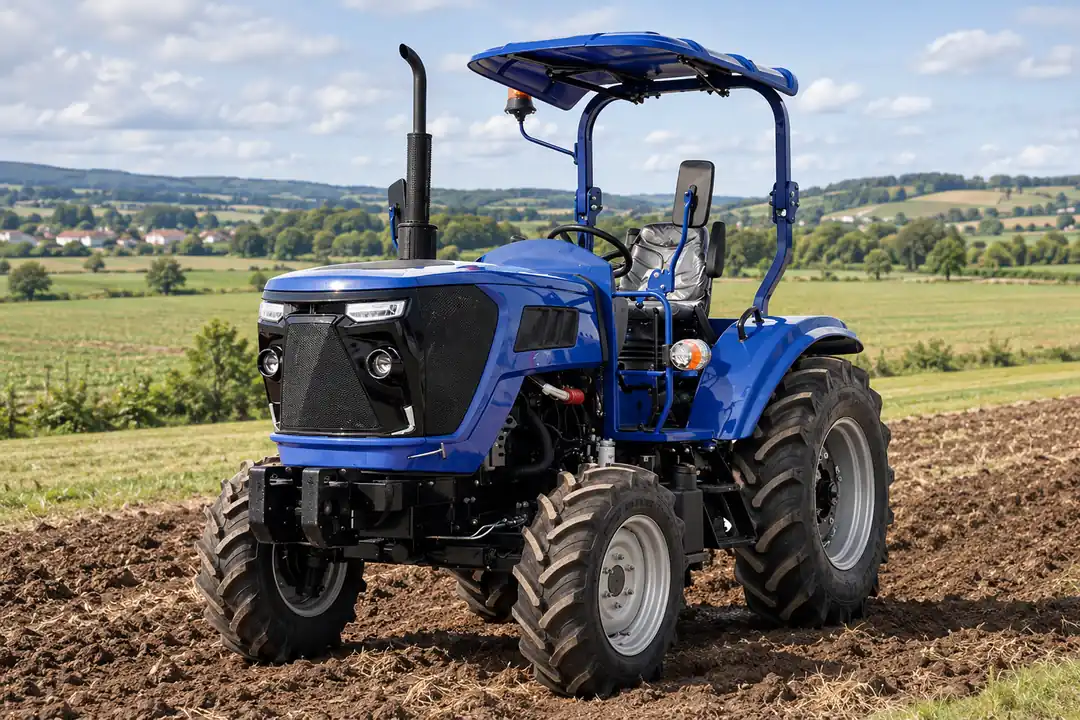
An importer does not necessarily need all six models at once. A dealer targeting smaller holdings can begin by evaluating OXPLO compact tractors against access width, grassland and implement needs. A dealer serving mixed farms may prioritize OXT404/OXT504 or evaluate OXT604/OXT704 where larger implements and higher workload justify the platform. This application-first discussion can prevent stocking tractors that are difficult to sell or costly to adapt.
Use OXPLO’s published process as the beginning of verification
OXPLO presents configuration consultation, manufacturing-quality checks, documentation support, export coordination and service-related assistance across its website. For a real dealer order, these points should become testable deliverables: written tractor specifications, available photos or videos for pre-shipment checks, documentation for the chosen version, a spare-parts proposal and clearly defined warranty procedures. OXPLO should be evaluated by the same standard as any other potential supplier.
Discuss the after-sales package before the first shipment
Ask OXPLO to review a practical starter list of filters, wear items and application-specific parts, together with how parts are identified and technical queries are escalated. The OXPLO parts and support page outlines equipment support and attachment enquiries; confirm model-specific stock, lead times and warranty terms in writing. For a dealer, being able to identify the right component quickly is often more valuable than a vague promise of “full support”.
Send an application brief rather than a vague request for prices
To make an OXPLO quotation actionable, identify destination country, customer segment, expected first-order quantity, preferred horsepower, cab/ROPS arrangement, regular implements, loader or trailer needs, road-use expectations and local service capability. OXPLO can then discuss a suitable product shortlist and what documentation or configuration checks are available. Dealers can start through the OXPLO contact page rather than committing to a model from a photograph.
FAQ: Tractor Manufacturer vs Trading Company
Is a direct tractor manufacturer always the safer supplier?
No. A factory can have weak controls, while a trading company can maintain strong manufacturing partnerships and parts support. Evaluate engineering authority, conformity evidence, production traceability and contractual responsibility. The lower-risk supplier is the one that can prove the requirements for your actual order.
How can a dealer verify whether a tractor supplier really manufactures equipment?
Identify the registered contracting company and production facility, request a live or independent audit, and inspect an identifiable tractor’s assembly and quality records. Clarify whether the business owns the facility, controls production or operates as an authorized export seller; these are different relationships.
Can a trading company provide valid EU tractor documentation?
It may supply the required documents through the appropriate manufacturer or approval holder. The key question is whether the documents are valid for the individual vehicle and approved configuration, not whether the seller itself operates a factory.
What should be checked for a 50 HP 4WD tractor intended for mixed farming?
Check PTO speeds and shaft connection, linkage category, hydraulic flow and connections, tyre dimensions, machine width, loader compatibility, towing arrangements and the applicable market-specific documentation. Compare the actual implement list with the finished tractor specification before ordering.
Which spare-parts questions are most important for a first dealer order?
Ask how parts are traced to a machine identification number, which consumables should be stocked locally, how component revisions are handled and what lead times apply to urgent replacements. Include responsibility for labor, transport and warranty claims in the commercial agreement.
Can OXPLO support different tractor configurations for European dealers?
OXPLO publishes a 25–70 HP 4WD range with configuration and attachment discussions, support information and documentation guidance for selected European-market versions. Availability and regulatory suitability must still be confirmed for the exact OXPLO tractor version and destination country before the order is finalized.
Conclusion: Choose a Supplier That Can Prove Its Capabilities
The tractor manufacturer vs trading company decision is not a competition between a factory signboard and an intermediary margin. A European dealer needs the right machine for the farmer, a documented and traceable specification, lawful market access where applicable, dependable parts identification and an accountable support relationship.
A direct manufacturer can offer valuable configuration and production access; a competent trading company can reduce sourcing and logistics complexity. Neither model is a substitute for evidence. Compare total delivered cost, insist on machine-specific technical and conformity checks, and make inspection and after-sales responsibilities contractual.
For dealers considering a 25–70 HP tractor line, OXPLO offers a published 4WD range and a starting point for application-based configuration, documentation and parts discussions. To evaluate whether OXPLO fits your planned inventory, share your destination market, farmer applications, implement list, target horsepower and expected order quantity through the official OXPLO website. A more specific enquiry makes it easier to identify a suitable tractor and the checks required before purchase.