
A practical B2B procurement guide for importers, warehouse managers and industrial buyers
Primary keyword: forklift for sale Europe | Supporting keywords: CE forklift, forklift supplier Europe, forklift import Europe, forklift safety
Searching for a forklift for sale Europe often starts with a familiar comparison: capacity, lift height, power type, delivery time and price. Those numbers matter, but they are rarely where an international forklift purchase becomes expensive.
The costly failures usually appear later. A higher mast reduces usable capacity more than expected. A side shifter moves the load centre forward. A lithium forklift arrives with a charger that does not match the site power supply. A CE label is present, but the Declaration of Conformity, machine model and operator manual do not match the unit that was actually shipped. Or the truck is technically capable of lifting the load but cannot stack it efficiently in the available aisle.
For European buyers, the correct question is therefore not simply, “Which forklift is cheaper?” It is: “Can this exact forklift, in this exact configuration, be imported, put into service, operated safely and maintained economically at my site?”
This guide follows the same logic an experienced procurement team should use: define the job first, freeze the configuration, verify the compliance package, check the safety concept, inspect the actual machine and only then release it for shipment.
Core procurement rule Do not select a forklift first and then try to make the site fit the machine. Define the load, height, aisle, duty cycle, ground conditions and destination requirements first. Then make the forklift configuration and documentation fit that job. |
I. Why a “CE Forklift” Can Still Become an Expensive Procurement Mistake
The machine can be compliant on paper and still be wrong for the job
A forklift is not a commodity with one meaningful specification. Rated capacity is only valid under defined conditions, normally including a stated load centre, mast configuration and lift condition. Once those variables change, the usable capacity can change as well.
That is why a 2.5-ton forklift should not automatically be treated as a 2.5-ton solution for every 2.5-ton load. A longer pallet, a clamp, a fork positioner, a high mast or an elevated load can alter the stability margin. The buyer needs the manufacturer’s residual-capacity information for the final configuration, not only the nominal capacity printed on the brochure.
The hidden risk is configuration drift
Configuration drift happens when the quotation, engineering confirmation and finished truck are not perfectly aligned. It often begins innocently: the customer asks for a taller mast, the supplier proposes a different attachment, the charger specification changes, or a local option is added late in production. If each change is not reflected in the final technical file, the machine, paperwork and purchase order can slowly diverge.
The commercial consequence is simple: correction becomes much more expensive after the forklift has been completed, paid for and loaded into a container. The purchasing process must therefore control the configuration before it controls the price.
II. Start With the Job: Load, Height, Aisle and Duty Cycle
Load weight alone is not enough
A serious forklift inquiry should describe the load, not just the tonnage. The supplier needs the maximum and typical load weight, pallet or load dimensions, load centre, unusual load shape and required attachment. Long timber packs, machinery components, coils, crates and standard Euro pallets do not create the same load geometry.
A simple load-moment calculation is useful for understanding why geometry matters: load moment increases as either load weight or load-centre distance increases. But that equation is not a substitute for the manufacturer’s actual residual-capacity chart, because mast design, attachment weight, truck geometry and lift height also affect stability.
Working lift height is different from building height
If the highest rack beam is 5.5 m, the forks may need to travel above that level to place a pallet safely. At the same time, the buyer must check the mast’s lowered height, free lift and overhead-guard height against doors, trailers, mezzanines and other obstructions. A “5 m mast” can therefore create both a capacity problem and a clearance problem if it is selected from a catalogue without checking the site.
Aisle geometry determines real warehouse productivity
Turning radius is not the same as right-angle stacking aisle requirement. A truck may be able to turn in the aisle but still need additional room to align the pallet squarely with the rack. For a warehouse handling hundreds of pallet moves per shift, an extra manoeuvre at every location becomes a productivity cost, not a minor inconvenience.
Duty cycle decides whether the power system is adequate
Daily operating hours, shift pattern, travel distance, lift frequency, gradients, cold-store use and opportunity-charging windows all influence power-system selection. A battery that looks adequate from amp-hour capacity alone may still be unsuitable for a high-intensity, multi-shift application. Conversely, oversizing the battery and truck can increase acquisition cost and machine weight without improving the customer’s actual throughput.
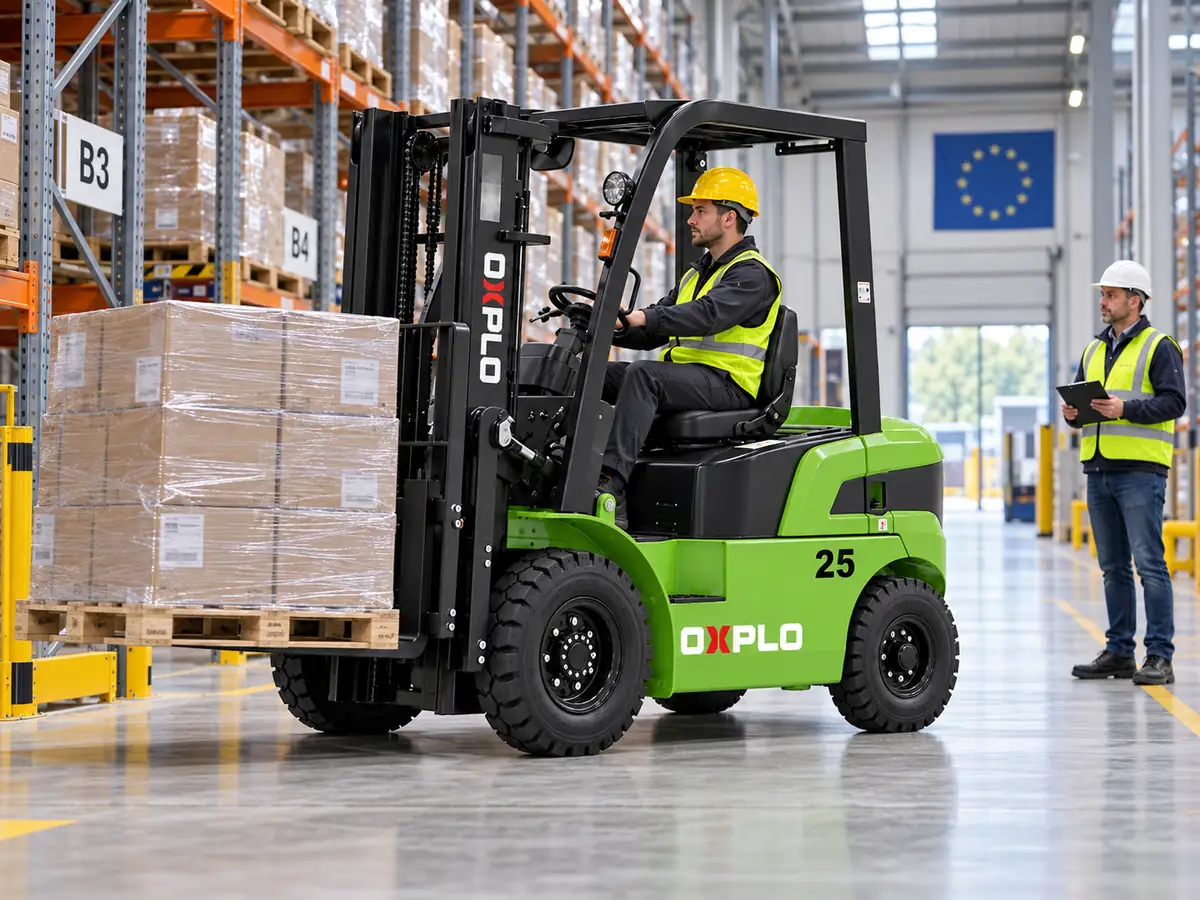
Figure 1. Forklift selection should begin with the real warehouse task: pallet geometry, aisle space, lift height, traffic pattern and duty cycle.
III. Documents European Buyers Should Verify Before Paying a Deposit
Do not ask only, “Do you have CE?”
For a forklift import Europe project, CE should be treated as a conformity process, not a sticker. The buyer should review the machine identification, Declaration of Conformity, applicable legislation and standards, operator instructions and the actual model that will be supplied. A document package that refers to a different model or configuration should be investigated before production begins.
For machinery placed on the EU market before 20 January 2027, the Machinery Directive 2006/42/EC remains the principal machinery framework. From 20 January 2027, Regulation (EU) 2023/1230 applies. Orders that may be delivered around the transition period deserve an explicit compliance discussion rather than a generic “CE available” statement.
Official EU reference: Machinery Regulation (EU) 2023/1230
Check four-way consistency
A practical document audit is to compare four items side by side: quotation model, machine nameplate model, Declaration of Conformity model and operator-manual model. Serial numbers and major configuration details should also remain traceable. This simple check catches many problems before they become customs, commissioning or warranty problems.
Electric forklifts need a battery-and-charger document review
For a lithium forklift, verify battery voltage and capacity, battery identification, charger output, charger input voltage and frequency, connector type and relevant lithium-battery transport documentation. The UN 38.3 test summary is particularly important in international transport. “Lithium battery included” is not a complete technical specification.
Diesel forklifts need an engine-specific review
For internal-combustion forklifts, confirm the actual engine manufacturer, model, rated power, emissions configuration and associated identification. European buyers commonly use the phrase “Euro 5” informally, but non-road mobile machinery is governed by the EU Stage V framework. The safer purchasing instruction is to request the exact engine model and its applicable Stage V information, rather than accepting vague wording such as “European emission engine.”
The importer has responsibilities too
A European importer cannot assume that all compliance responsibility ends with the overseas manufacturer. The importer should confirm that the required conformity procedures and documentation exist and that the manufacturer can be identified and contacted. This is one reason why documentation discipline is an important criterion when evaluating a forklift supplier Europe, not merely an administrative afterthought.
Official EU reference: European Commission guidance for importers and distributors
IV. Safety Configuration: What the Forklift Needs vs What the Workplace Needs
Machine compliance and workplace safety are not the same thing
A compliant forklift can still be operated in an unsafe traffic system. Forklift safety depends on the truck and the site: pedestrian segregation, traffic direction, crossing points, rack visibility, loading-dock rules, operator training, speed control and supervision all matter. Buyers should therefore separate two questions: “What safety functions should be configured on the truck?” and “How will the truck be managed in this workplace?”
Warehouse risks are mainly interaction risks
In a busy warehouse, the highest-frequency risks often come from interaction with pedestrians, racking, dock edges and other vehicles. Depending on the site risk assessment, useful equipment may include a horn, warning beacon, work lights, reversing warning, mirrors or cameras, pedestrian warning lights, operator-presence functions and speed-management features. The right combination should follow the traffic plan, not an accessories checklist.
Mixed indoor-outdoor operation changes the specification
Tyres, ground clearance, rain exposure, gradients, surface contamination, lighting, low-temperature performance and charging location all become more important when the same truck works inside and outside. A machine selected only for smooth indoor concrete may become inefficient or difficult to control on broken yards, ramps or winter surfaces.
Rough ground may require a different platform
A standard counterbalance warehouse truck should not be forced into an agricultural, construction or unpaved-yard role simply because it is cheaper. When loose gravel, potholes, mud and severe surface variation are normal, a dedicated rough-terrain forklift can provide a more appropriate combination of ground clearance, tyres and traction. The trade-off is usually a larger machine envelope and different indoor manoeuvrability.
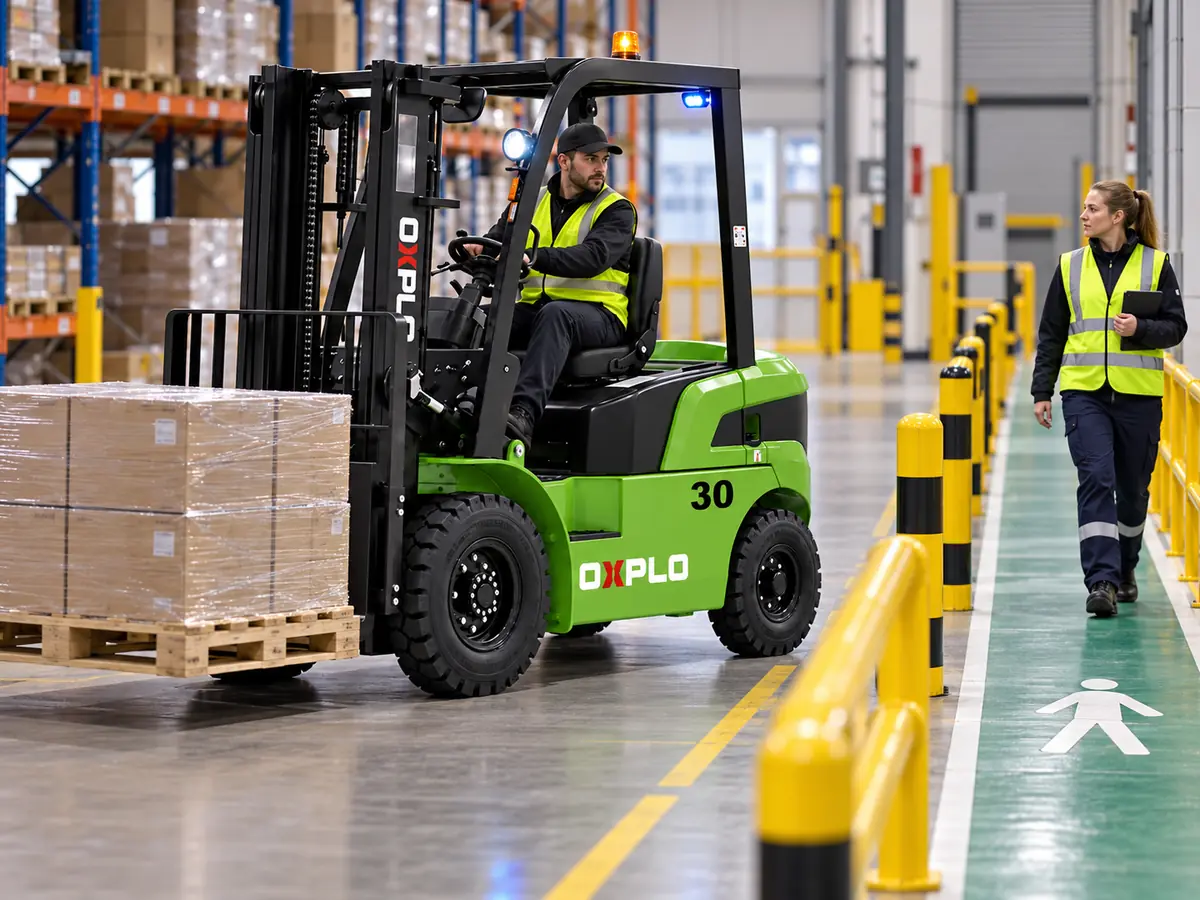
Figure 2. Forklift safety is a system: truck configuration, operator behaviour, pedestrian segregation and warehouse traffic design have to work together.
V. Electric, Diesel or Rough-Terrain? Choose by Operating Environment
Electric forklifts: strong for controlled material flow
Electric forklifts are well suited to warehouses, factories and logistics operations where low local emissions, lower noise and predictable charging windows are valuable. But the buyer still needs to validate battery capacity, charging infrastructure, shift pattern, floor quality and cold-temperature requirements. The best electric truck is not the one with the largest battery; it is the one that completes the required work within the available charging strategy.
Diesel forklifts: useful where operating intensity and outdoor work dominate
Diesel forklifts remain practical for many outdoor yards, building-material operations and applications where long continuous duty and rapid refuelling are important. European buyers should place extra attention on the engine configuration, emissions documentation, ventilation conditions and noise. Indoor use can be restricted by the operating environment even when the machine itself is technically capable.
Rough-terrain forklifts: when the ground is the problem
If the job regularly involves soft ground, uneven farmyards, construction access roads or broken outdoor surfaces, tyre size, traction and chassis geometry can be more important than compact turning radius. A rough-terrain machine may cost more than a basic warehouse truck, but repeated loss of traction, underbody contact or unstable travel is also a cost.
VI. The Hidden Cost of Choosing the Wrong Forklift
Purchase price is only the first line of TCO
A useful procurement model is: Real Forklift Cost = Purchase Price + Import Cost + Modification Cost + Energy + Maintenance + Spare Parts + Downtime + Productivity Loss. The last three terms are often underestimated because they do not appear on the supplier quotation.
Oversizing can be expensive too
Many buyers add capacity “for safety” and automatically choose the next larger truck. A larger forklift can provide capacity margin, but it also tends to increase turning space, tyre cost, machine weight, energy use, shipping weight and purchase price. If the real requirement is a moderate pallet load in a tight warehouse, oversizing can reduce throughput rather than improve it.
Under-specification creates rework and downtime
The opposite problem is more obvious: insufficient residual capacity, an unsuitable mast, wrong tyre type, inadequate battery endurance or missing hydraulic functions can force modification after delivery. When parts must be ordered internationally, the real cost is not only the component—it is the lost operating time while the machine is waiting.
Parts support should be discussed before the first breakdown
Ask the supplier which wear parts and service parts are routinely available, how parts are identified, what information is required for remote troubleshooting and how quickly common parts can be dispatched. This is a stronger test of a long-term forklift supplier Europe than a generic warranty statement.
VII. Pre-Shipment Acceptance: Turn the Purchase Order Into a Test Plan
A factory video is not a pre-shipment inspection
A forklift driving forward, lifting an empty mast and sounding the horn proves very little. A useful pre-shipment inspection should verify the exact configuration against the agreed purchase order. The inspection record becomes evidence that the machine supplied is the machine ordered.
1. Identity and document check
- Machine model and serial number match the commercial documents.
- Rated-capacity plate is legible and corresponds to the configuration.
- Battery or engine identification is recorded.
- Declaration and operating documents refer to the correct machine family and model.
- Attachments and optional functions are identified before packing.
2. Dimensional and configuration check
- Mast lowered height and maximum lift height are verified.
- Fork length, fork spacing and required attachment are checked.
- Overall width, overhead-guard height and critical clearances are measured where they matter to the site.
- Tyre type and hydraulic functions match the technical confirmation.
3. Functional test
- Forward and reverse travel, steering, service brake and parking brake.
- Lift, lower and mast tilt; side shift or other hydraulic attachment functions if ordered.
- Horn, lights, alarms, display and operator-presence functions where fitted.
- Repeated mast operation followed by inspection of hoses, cylinders and fittings for leakage.
4. Power-system check
For electric trucks, photograph the battery plate and charger plate and verify charger input requirements, connectors and charging function. For diesel trucks, photograph the engine plate and confirm the installed engine against the agreed technical information. These photos are far more useful than a single beauty shot of the finished forklift.
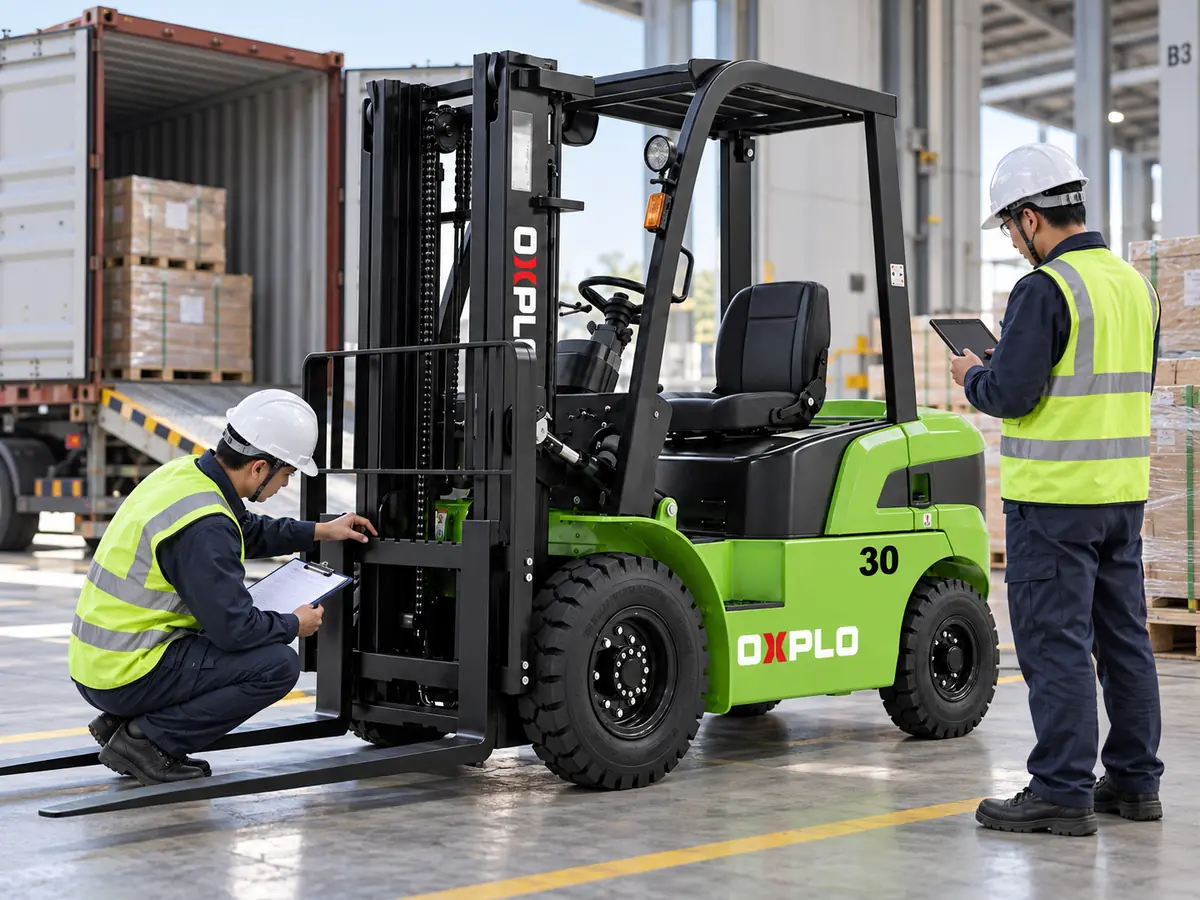
Figure 3. A pre-shipment inspection should verify the exact forklift, its identifiers, functions and agreed configuration before final release.
VIII. How OXPLO Builds a Forklift Order Around the Application
This is where the supplier’s engineering and communication process becomes visible. OXPLO does not need a customer to begin with a perfect model number. A more useful starting point is the job: load, lift height, aisle, operating hours, surface, attachment and destination country.
OXPLO product selection starts from the operating scenario
OXPLO’s forklift portfolio includes electric, diesel and rough-terrain configurations for warehouse, manufacturing, yard and outdoor material-handling work. The practical value of that range is not simply having multiple models; it is being able to move the discussion from “Which 2-ton forklift is cheapest?” to “Which truck architecture fits this site?”
Explore: OXPLO forklift and equipment range
For warehouse customers, OXPLO should confirm the geometry first
For an indoor electric forklift, OXPLO can use the customer’s pallet size, load centre, maximum load, rack height, aisle width and shift pattern to discuss capacity class, mast, battery and attachment. This prevents a common mistake: selecting an apparently suitable forklift and discovering later that the mast, attachment or truck length changes the real warehouse fit.
For outdoor customers, OXPLO should confirm the surface and duty cycle
For a factory yard or mixed indoor-outdoor site, OXPLO can also consider tyre type, ground clearance, gradients, rain exposure and daily running time. Where the ground itself becomes the main constraint, OXPLO can discuss whether a rough-terrain platform is more appropriate than a conventional counterbalance truck.
For European orders, OXPLO can make the compliance package part of the technical confirmation
A strong OXPLO quotation should not end with capacity and price. The order confirmation should state the final mast, forks, attachment, battery or engine, charger or power configuration, destination-country requirements, safety options and documentation expectations. Once those items are frozen, OXPLO’s pre-shipment inspection can verify the same baseline.
IX. OXPLO European Order Workflow: From Requirement to Shipment
Gate 1 — Before the deposit: define the job
The buyer sends OXPLO the maximum and typical load, load dimensions, lift height, aisle width, doorway or height limits, indoor/outdoor conditions, daily working hours, required attachments and destination country. OXPLO uses that information to narrow the configuration before the buyer commits money.
Gate 2 — Before production: freeze the configuration
OXPLO and the buyer confirm the model, mast, forks, attachment, tyres, battery and charger or engine, hydraulic functions, safety options and required documentation. Late changes should be recorded formally because they may affect capacity, dimensions, cost or lead time.
Gate 3 — Before final payment: review evidence
The buyer reviews the OXPLO machine identifiers, key documents, configuration photos and agreed inspection results. If a technical detail does not match the order, this is the time to correct it—while the machine is still at the factory.
Gate 4 — Before container loading: verify everything that can disappear
OXPLO should photograph the complete forklift, nameplates, battery or engine, forks, charger, accessories, spare parts, manuals and final packing. The shipment record should also show how loose components are secured. This matters because a missing charger cable or attachment pin can stop commissioning just as effectively as a major mechanical fault.
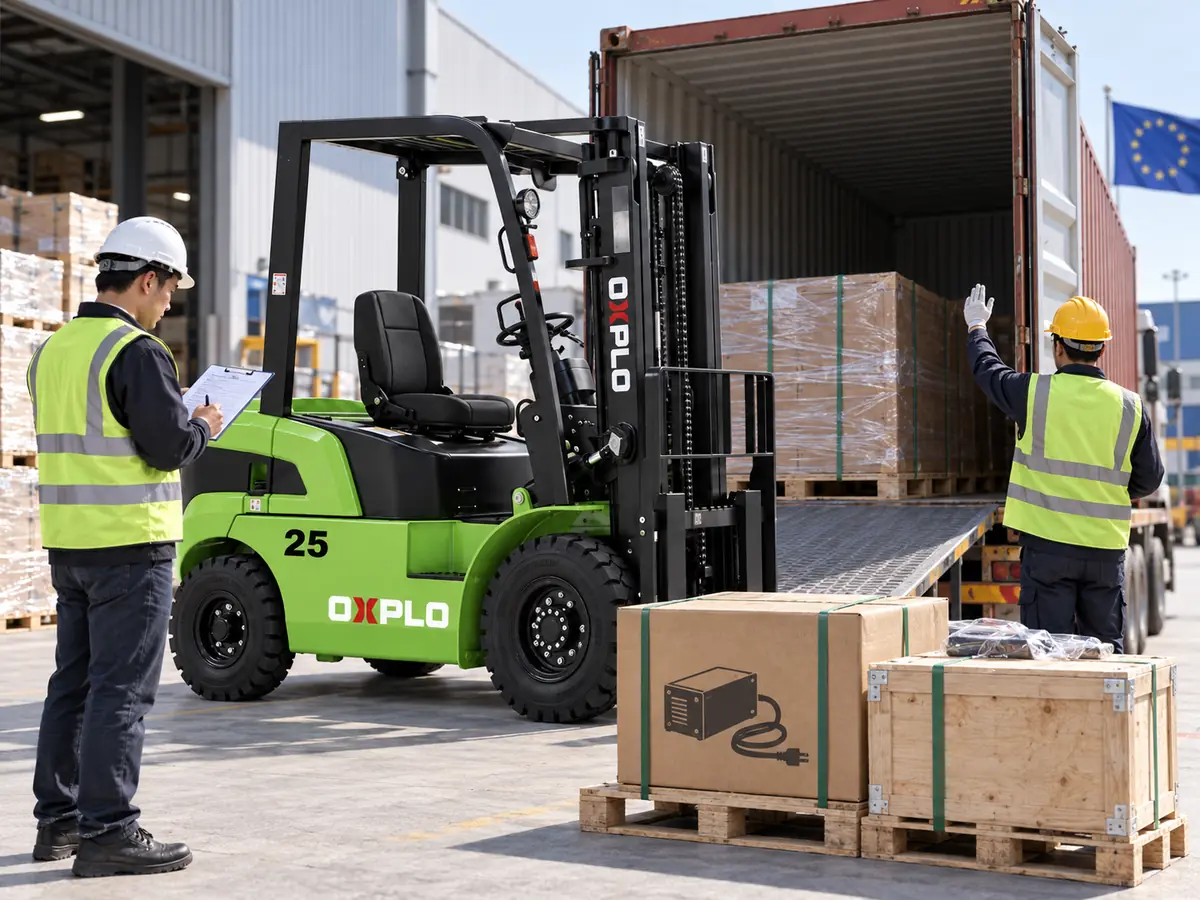
Figure 4. Final export control should document the forklift, accessories, charger or spare parts, packing condition and container loading before shipment.
Gate 5 — After arrival: commission against the same baseline
The receiving team should compare the delivered OXPLO forklift with the same purchase-order baseline used at the factory. Check transport damage, fluid or battery condition, charger compatibility, document set and all shipped accessories before normal operation starts. Keeping one configuration record from inquiry through commissioning reduces disputes and makes later spare-parts support much easier.
OXPLO website: https://oxplomachinery.com/
X. Final Procurement Checklist for a Forklift for Sale Europe
Area | What the buyer should verify |
Application | What will the truck lift, how often, and in what environment? |
Load | Maximum and typical weight, dimensions, load centre and unusual geometry confirmed? |
Capacity | Residual capacity checked for the final mast, lift height and attachment? |
Mast | Lift height, lowered height, free lift and building clearances verified? |
Aisle | Right-angle stacking requirement checked against the real pallet and aisle? |
Power | Electric, diesel or rough-terrain platform selected from duty cycle and site conditions? |
Battery / Charger | Voltage, capacity, charger input, connector and charging strategy confirmed? |
Engine | For diesel: exact engine model and applicable Stage V information confirmed? |
Safety | Truck options match the site risk assessment and traffic-management plan? |
Documents | Nameplate, declaration, manual and commercial model descriptions consistent? |
Inspection | Serial numbers, dimensions, functions and power system verified before shipment? |
Packing | Forks, charger, accessories, spare parts and manuals photographed before loading? |
Service | Wear parts, troubleshooting process and spare-parts identification agreed? |
XI. Frequently Asked Questions
Is a CE mark enough when importing a forklift into Europe?
No. A CE forklift should be reviewed as a complete conformity package. The buyer should also verify machine identification, the applicable declaration, required instructions and consistency between the documents and the actual forklift. The importer’s own obligations should also be understood before the product is placed on the EU market.
What documents should I request before shipment?
At minimum, request the final technical specification, machine identification details, Declaration of Conformity where applicable, operating instructions, maintenance information and the power-system documents relevant to the truck. For lithium batteries, verify the applicable transport documentation. For diesel trucks, confirm the actual engine and its emissions information.
Does every European forklift need the same safety equipment?
No. Mandatory machine requirements and workplace risk controls are related but not identical. A high-traffic logistics centre, a quiet factory aisle and an outdoor construction yard have different interaction risks. Configure alarms, lighting, visibility aids and speed-management features to the site’s risk assessment rather than fitting every available option automatically.
Should I buy a larger forklift than my maximum load?
Not automatically. Extra capacity can be useful, but a larger truck may need more aisle width, consume more energy, cost more to ship and use more expensive tyres. The better approach is to calculate the requirement from load weight, load centre, lift height and attachments, then keep a sensible engineering margin.
What should I send OXPLO before asking for a quotation?
Send OXPLO the maximum and typical load, pallet or load dimensions, required lift height, minimum aisle width, doorway or overhead restrictions, indoor/outdoor use, surface conditions, daily operating hours, required attachments and destination country. The more precise the operating data, the more useful the OXPLO configuration discussion becomes.
How should I compare two forklift supplier Europe quotations?
Normalize the quotations before comparing price. Make sure both include the same capacity condition, mast, forks, attachment, tyres, battery and charger or engine, safety options, documentation, spare parts, warranty scope and shipping basis. A lower quotation is not truly cheaper if it omits equipment that must be added later.
XII. Conclusion: Buy the Configuration, Documentation and Process — Not Just the Forklift
The biggest mistake when searching for a forklift for sale Europe is treating the truck as a finished commodity. In practice, it is a configured industrial machine whose real performance depends on load geometry, mast, attachment, power system, site layout and operating environment.
European procurement adds another layer: the machine and its documentation must remain consistent from quotation to delivery. A technically capable forklift can still become a poor purchase if the charger is wrong, the engine documentation is unclear, the mast does not fit the building, the attachment reduces residual capacity too far, or the warehouse traffic plan was never considered.
OXPLO’s role should therefore begin before production, not after the buyer has already selected a model. By discussing load, lift height, aisle width, daily working hours, surface conditions, attachment and destination requirements, OXPLO can help turn a generic forklift request into a defined technical configuration. The same configuration can then be used as the baseline for documentation review, OXPLO pre-shipment inspection and final delivery acceptance.
For an OXPLO forklift for sale Europe inquiry, the most useful first message is not simply “Please quote a 2.5-ton forklift.” Send the job conditions. That gives OXPLO enough information to discuss the truck that fits the work rather than only the truck that fits a price list.
Recommended sequence Define the job → lock the OXPLO configuration → verify compliance documents → inspect the exact machine → document packing → ship → commission against the same baseline. |
Learn more about OXPLO forklifts and material-handling equipment: oxplomachinery.com
Product range: OXPLO Products | OXPLO Support