
European vineyards, roadside maintenance teams and landscape contractors do not lose time on slopes simply because the grass is tall. They lose time when access is restricted, soil becomes slippery, operators must work close to unstable ground, or a machine is unsuitable for the conditions in which it is expected to cut.
A tracked remote-controlled mower changes the way the work is organised: the operator no longer has to walk immediately behind the cutting deck. But remote operation does not remove ejected-object hazards, machine slide risk or the need for a verified stop system. A remote control mower for slopes should therefore be purchased against a defined job, not one impressive gradient or radio-range figure.
This guide explains how to assess traction, establish a defensible operating position, question emergency-stop and loss-of-signal behaviour, and compare effective output. It then shows how two cutting-width configurations can serve different European customers—without treating an advertised maximum as a universal safety limit.
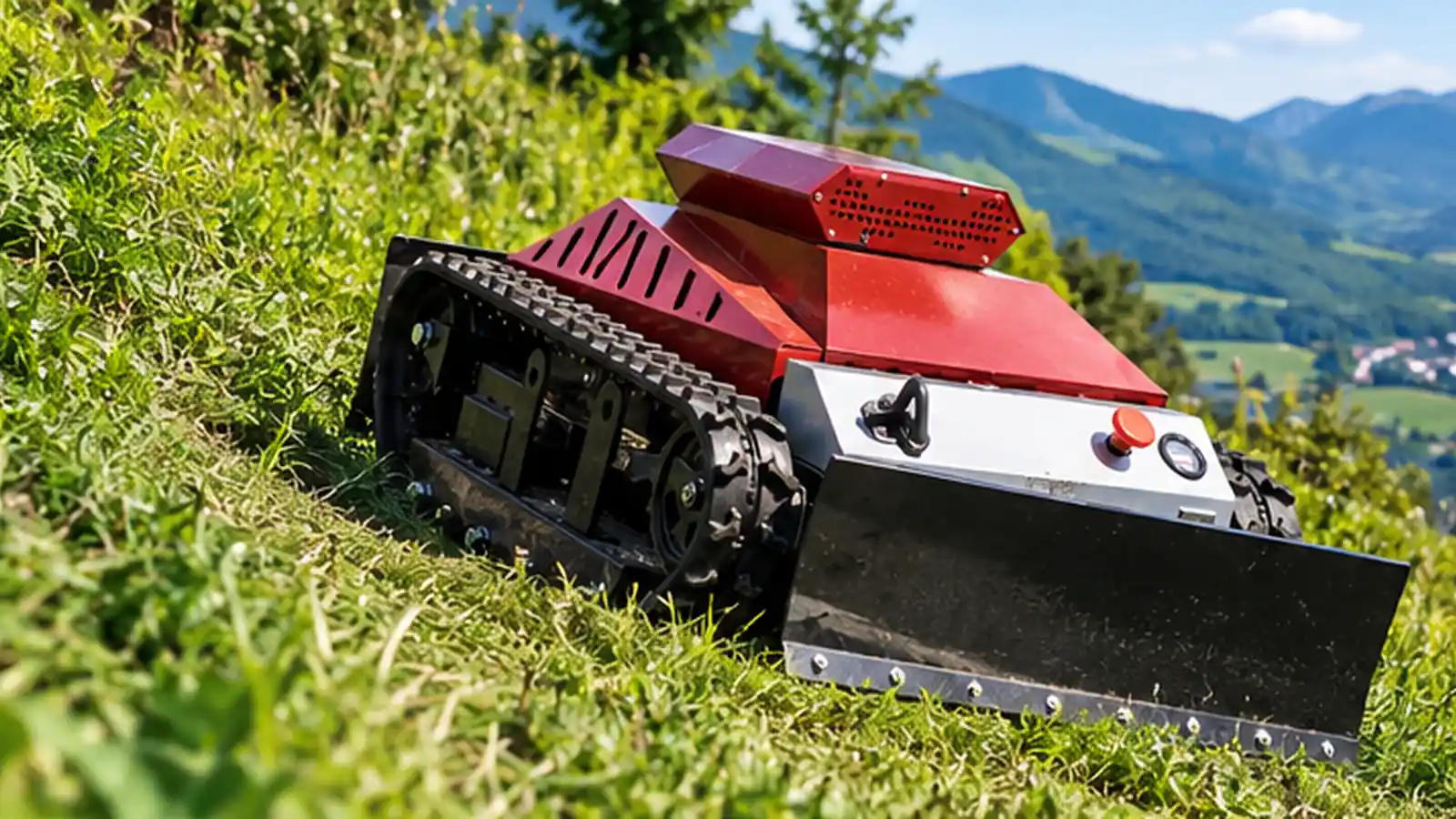
Figure 1. Concept illustration based on OXPLO reference photographs: tracked mowing on a European hillside. Not a field-test photograph.
I. The Real Costs of Mowing European Hillsides
A vineyard, a municipal verge and a contractor have different constraints
A hillside vineyard in Italy or France may have narrow rows, retaining edges, irrigation pipes and turning space controlled by the planting layout. A garden-maintenance contractor in Ireland or the United Kingdom may face wet ground, changing clients and multiple transport cycles in a week. A municipal team clearing a roadside embankment has an additional problem: drivers, pedestrians and property must be protected from moving machinery and thrown material.
All three might search for a remote controlled mower for steep slopes, but their purchasing criteria differ. The vineyard owner values access between rows and reduced walking on difficult ground. The contractor values repeatable daily coverage and manageable transport. The municipality needs site-specific exclusion zones, clear operating procedures and documented safety functionality.
The cost is often hidden in the second work process
A mower may finish the open ground but leave narrow corners and steep shoulders to handheld brush cutters. That produces a second mobilisation: operators change tools, relocate barriers, refuel or recharge, and revisit areas already partly completed. A low-priced machine that cannot reach critical sections can therefore increase total labour hours rather than reduce them.
Before selecting equipment, identify the 10–20% of the site that creates most access or safety difficulty. Measure its steepest section, narrowest gate and least stable ground. Those conditions—not average property size—often determine whether a mower is genuinely useful.
II. Slope Rating, Soil Grip and Tracked Mower Traction
Do not confuse climbing capability with approved mowing gradient
An advertised climbing figure is not automatically an approved continuous working gradient. Climbing uphill, travelling downhill, traversing across the slope and turning under cutting load impose different demands on a machine. A 45° angle is equivalent to a 100% grade, not a 45% grade; confusing those units can produce a serious specification error.
The manufacturer should provide model-specific operating limits, including permitted slope orientation, ground conditions and work functions. If those limits are not verified, a published maximum must not be treated as permission to mow at that angle.
Why tracks help in some conditions—and fail in others
The main downhill component of gravitational force is F = m × g × sin(θ), where m is machine mass, g is gravitational acceleration and θ is slope angle. As the angle grows, the downslope component increases. A simplified static friction model suggests μ ≥ tan(θ) to prevent sliding on a uniform surface, but real tracked machines also interact with soil shear strength, track-lug engagement, machine geometry, motion and cutting loads.
This distinction matters for tracked slope mower traction. A track can spread load and offer useful contact on uneven terrain, yet a mat of wet grass over clay can shear away. Loose stones can shift beneath the track. Neither a wide track nor a heavy chassis guarantees grip on all hillsides.
Three questions should appear on the field survey: What is beneath the vegetation? What changes after rain? And what happens if the machine stops or turns at the least favourable point? Where the answers indicate insufficient stability, select a different working method or defer the job.
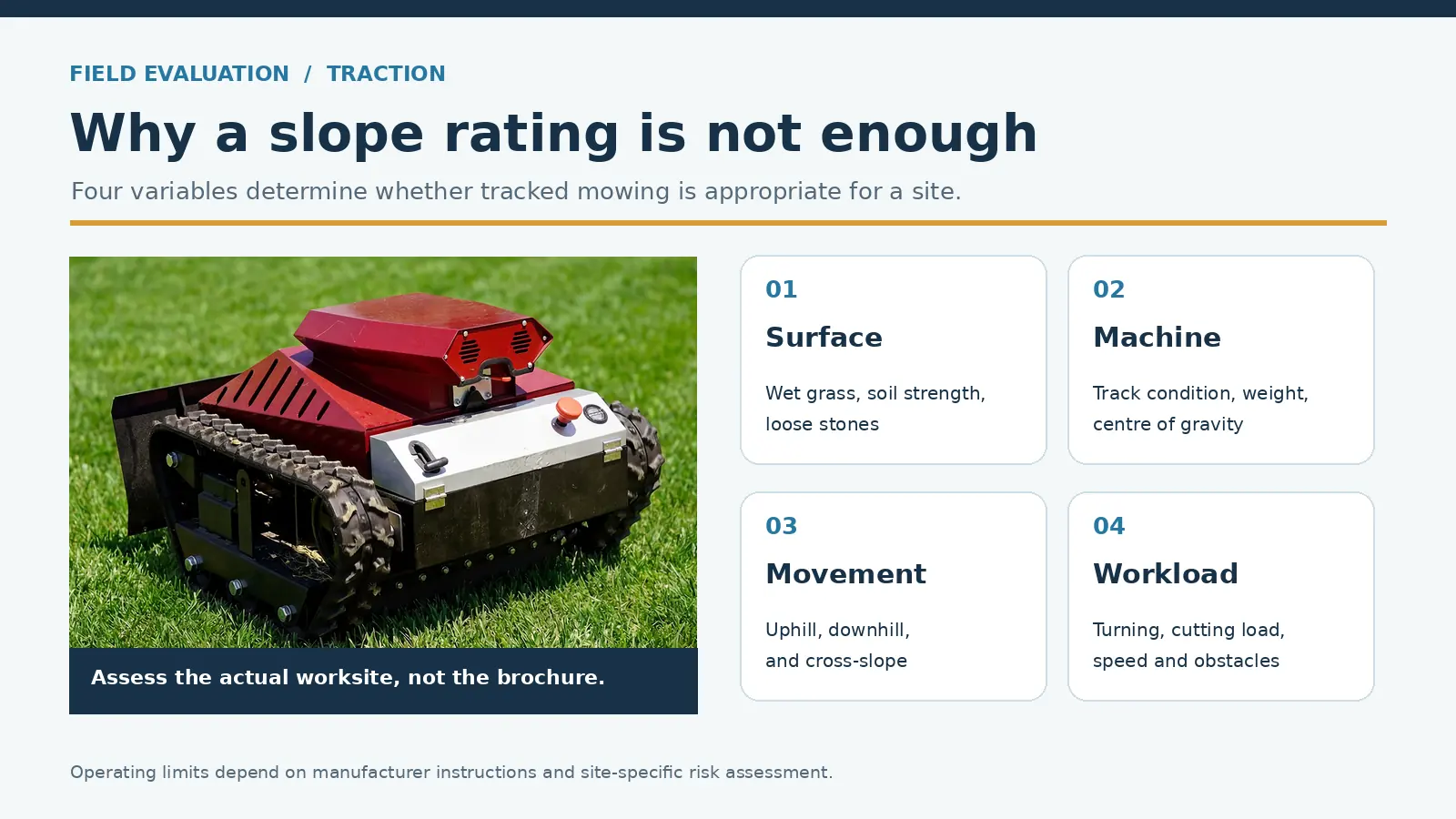
Figure 2. Key traction variables, illustrated with an actual OXPLO mower reference photo.
Trade-off: larger working width versus manoeuvrability
A wider cutting path is attractive on an open estate. In a vineyard, the same machine may lose its advantage while reversing around posts or approaching narrow headlands. Machine mass also changes the transport and recovery requirements. Choosing the smaller mower is not automatically safer; it is justified when access geometry and the manufacturer’s operating envelope support that choice.
III. Safe Operating Distance Is a Site Decision, Not a Radio Specification
Where should the operator stand?
The operator needs a stable position with adequate line of sight to the machine, the travel route and the surrounding exclusion area. Avoid positions directly above or below a working machine where a slide or overturning event could carry it toward the operator. A remote control mower safe operating distance is determined by the model instructions, projected debris, site geometry, third-party exposure and risk assessment—not by the maximum wireless transmission range.
The British Association of Landscape Industries’ 2025 slope-mowing guide notes that some machines commonly specify around 5 m for operators and around 15 m for third parties. These are examples, not universal safe distances; the actual manufacturer’s instructions and the site risk assessment take precedence. The guide also highlights the greater traction risk in wet weather.
Why signal coverage cannot replace visibility
A controller may maintain a connection behind trees or a bank even when the operator cannot see a drainage ditch, pedestrian or unstable section of ground. Work should stop if the required view or exclusion zone can no longer be maintained. Moving farther away simply to use the available radio range can reduce, rather than improve, situational awareness.
For public parks and roadsides, barriers, signage, access control and suitable working windows may be essential. When the public cannot be kept out of the relevant hazard area, the cutting operation must be changed or postponed. This is particularly important for hillside vegetation maintenance equipment used near live traffic or occupied property.
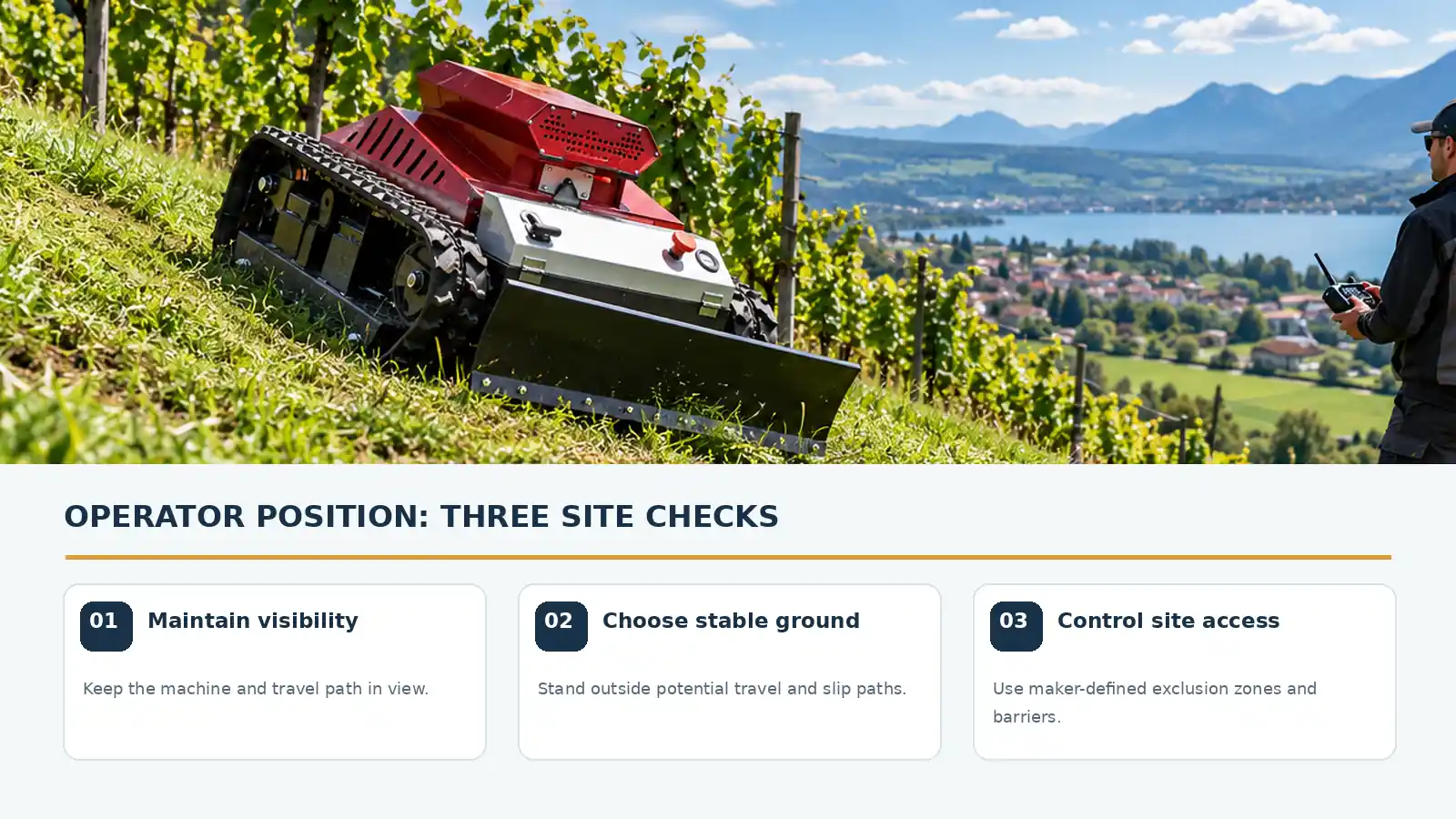
Figure 3. Concept illustration: maintain line of sight, a stable operator position and site access controls.
IV. Emergency Stop, Brake Behaviour and Lost-Signal Protection
An emergency-stop button is not a complete functional-safety explanation
Buyers should distinguish a normal stop, an emergency stop and the system response to a communication failure. Under EN ISO 13850 principles, an emergency-stop function is a complementary measure, must take priority over ordinary commands, and resetting it must not itself restart the machine. However, that standard does not establish that any particular mower has passed the necessary validation.
For a slope mower emergency stop review, ask what happens to three different hazards: blade rotation, powered travel and unpowered downhill movement. A blade may coast after power is removed. A stationary motor does not guarantee a tracked machine will hold position on slippery ground. The braking or holding behaviour must be supported by the specific model’s technical information.
Four failure cases to question before ordering
Scenario | What the buyer needs confirmed |
Emergency stop pressed | Travel and cutting-system response; blade stop method; restart interlock |
Controller signal lost | Defined fault response for drive, cutting system and braking |
Drive power interrupted on a slope | Behaviour of holding / braking system under the approved conditions |
Signal or controller restored | Whether an intentional reset and separate start command are required |
Ask for the relevant instructions and verification records. Any functional tests should be performed in a controlled environment and within the manufacturer’s test procedure. Never deliberately disconnect control on a hazardous slope to “see what happens”. If a supplier cannot explain the stopping sequence, treat that as an unresolved procurement requirement rather than assuming the feature is present.
Where the safety boundary remains
No emergency-stop arrangement can create traction where the ground has none. If a stopped machine might slide downhill under gravity, the risk must be controlled through terrain selection, approved work method, machine design and exclusion zones. This is why stop systems and traction should be reviewed together rather than in separate boxes on a quotation sheet.
V. A Practical Job-Based Workflow for Orchard and Verge Work
Start with the difficult section—not the average field
A useful pre-work survey records maximum measured gradient, direction of travel, slope transitions, soil type, drainage, vegetation density, stones, roots, ditches, minimum entrance width, available turning space and access for recovery. For orchard sites, add posts, low branches and irrigation components. For public verges, identify traffic exposure and access-control responsibilities.
An inclinometer or calibrated survey method is more useful than an estimated slope from a photograph. Separate areas into approved routine work, areas requiring additional control, and no-go zones. Reassess after significant rain because previous dry-weather performance is not evidence of safe operation on wet ground.
A six-stage operating sequence
- Define the task.Record area, expected vegetation type, required finish, terrain and permissible work window.
- Match the machine.Compare documented operating slope, physical dimensions, surface suitability and access route—not only motor rating.
- Establish controls.Confirm operator position, third-party exclusion, signage, sightlines and the manufacturer’s required stand-off distance.
- Inspect before use.Check tracks, guards, blades, controller, fault indicators and stop functions using the approved procedure.
- Cut in controlled zones.Use only approved driving directions and speeds; adjust cutting method as the ground or load changes.
- Record the job.Log completed area, setup time, stoppages, damaged blades, track wear and sections finished with other tools.
When operators record the causes of delay, the team can improve its next bid. For example, repeated stoppages at a narrow gate point to an access problem rather than inadequate engine power. A high frequency of thrown stones points to a site-preparation and cutting-control problem, not a reason to move personnel closer to the machine.
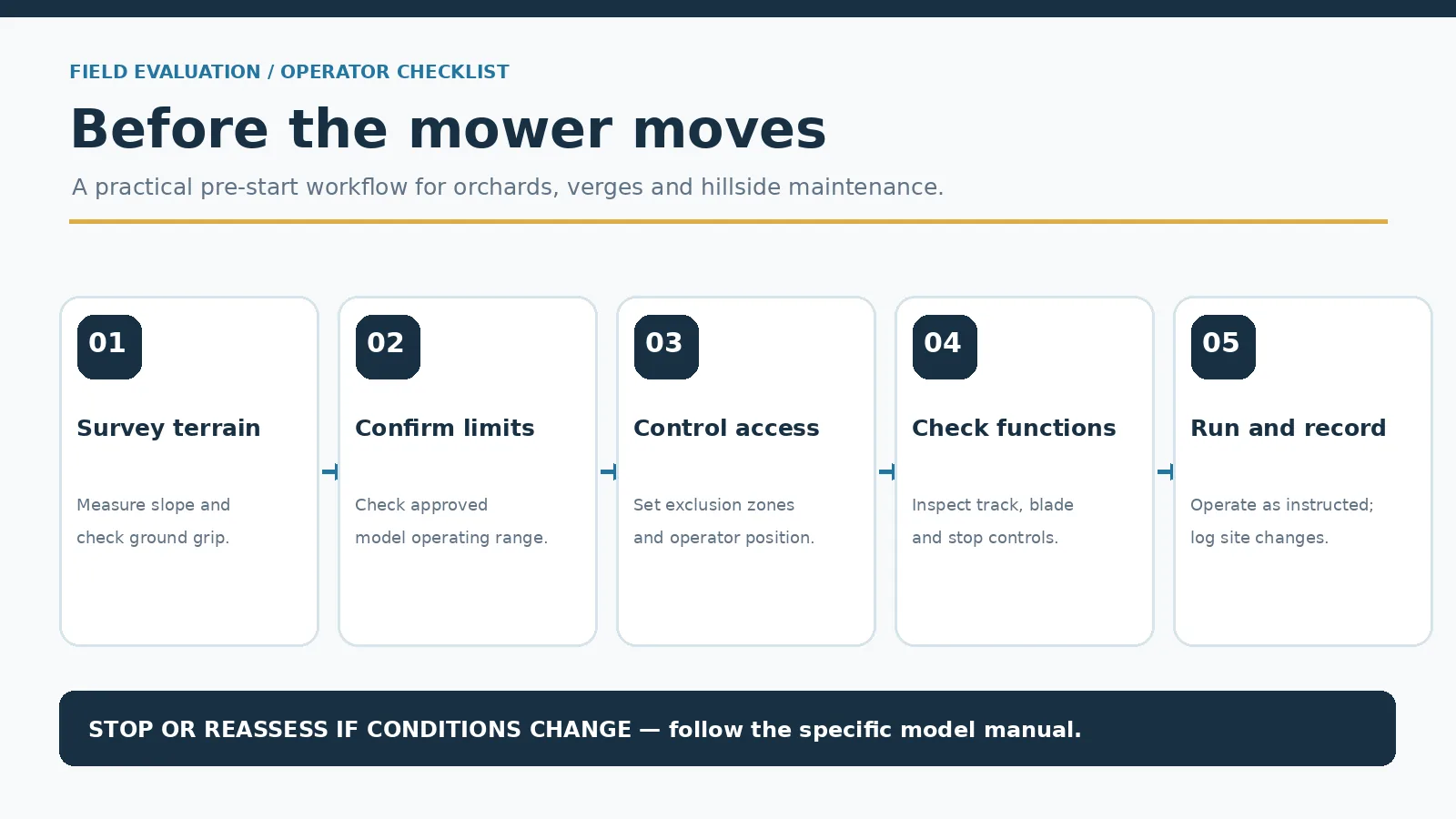
Figure 4. A pre-start workflow covering ground assessment, operating limits, exclusion zones, checks and records.
VI. Output and Total Cost: Compare Completed Area, Not Brochure Speed
Convert cutting width into a realistic productivity estimate
A simple estimate is effective coverage (ha/hour) = cutting width (m) × actual mowing speed (km/hour) × field-efficiency factor ÷ 10. The factor accounts for turning, overlap, obstacles, interrupted cutting and route changes. Travel-speed figures from a product page should not be silently substituted for measured mowing speed under load.
Consider a hypothetical narrow orchard where both machines cut at 2 km/hour. If a 1.0 m mower achieves only 30% field efficiency because it must reverse at short headlands, its effective output is 0.060 ha/hour. A 0.55 m mower operating at 65% efficiency reaches 0.0715 ha/hour. For a 0.5 ha section, the idealised cutting-only times become about 8.3 and 7.0 hours respectively. These are illustrative assumptions, not OXPLO test results or performance promises.
Reverse the setting to an open field with equal efficiency factors and the wider cut generally becomes more productive. Therefore, neither width wins everywhere. Ask the contractor to collect job-level timings before choosing a fleet standard.
What belongs in the ownership calculation?
Total cost of ownership includes purchase, shipping, operator hours, consumables, energy, replacement blades, track wear, maintenance, downtime, transport between sites and residual value. A useful metric is annual actual ownership and operating cost ÷ annual completed hectares. Measure finished hectares including the manual touch-up needed around obstructions—not just the area the machine travelled across.
Buyers researching a broader range of equipment can first compare farm and grounds-maintenance equipment categories and review practical machinery buying guides. The important principle is the same across equipment types: specify the job and the difficult site constraints before selecting a machine.
VII. How OXPLO Fits Real European Mowing Requirements
Two mower configurations for different worksite geometry
After defining the job, the OXPLO remote control mower range provides a useful starting comparison. OXPLO currently publishes two cutting widths for its tracked remote-control crawler mower: 100 cm and 55 cm. Both use a crawler-style chassis, dual rotary manganese-steel blades and adjustable 30–150 mm cutting height. The range helps buyers weigh area coverage against physical access rather than assuming one machine size suits every orchard and estate.
The detailed OXPLO crawler lawn mower specification lists the following figures:
Published specification | 100 cm version | 55 cm version |
Cutting width | 100 cm | 55 cm |
Cutting-height setting | 30–150 mm | 30–150 mm |
Listed motor power | 600 W | 350 W |
Battery capacity | 20 Ah | 12 Ah |
Listed working time | 360 minutes | 300 minutes |
Machine weight | 350 kg | 180 kg |
Overall dimensions | 1250 × 1450 × 800 mm | 1100 × 920 × 700 mm |
Listed travel speed | 3–5 km/h | 3–4 km/h |
Maximum climbing ability | ≤45° | ≤45° |
Unobstructed control range | Up to 800 m | Up to 800 m |
These are published configuration values, not independently verified continuous performance guarantees. OXPLO’s 45° figure concerns maximum climbing ability; it does not establish an approved 45° working gradient for every direction, cutting load or surface. Similarly, 800 m describes unobstructed radio range, not a recommended safe stand-off distance. Battery capacity in Ah alone does not establish energy in Wh without voltage, and the listed operating time should be interpreted alongside its test conditions.

Figure 5. Actual OXPLO mower photographs: red metal hood, silver control panel, black tracks and front cutting guard.
Where the 100 cm OXPLO model makes commercial sense
The wider OXPLO model is more relevant when rows, gateways and headlands are generous enough to preserve its theoretical coverage advantage. Examples include open estate grassland and wider orchard lanes where the mower can complete long, controlled passes. Its 350 kg published weight also requires a suitable transport and recovery plan, particularly where soft ground may be encountered.
For this buyer group, OXPLO’s most useful selling point is not simply a bigger deck: it is the ability to evaluate greater cut width against daily work volume. The OXPLO product details provide the dimensions needed for an initial access check, but the exact orientation of dimensions and required clearance should be confirmed before ordering.
Where the 55 cm OXPLO model may be the stronger choice
OXPLO’s 55 cm version offers a smaller published overall envelope and an 180 kg listed machine weight. It deserves consideration for tighter orchard rows, garden entrances, short passes and dispersed private-property jobs. In such settings, fewer reversals and less manual touch-up can outweigh the benefit of a wider cutting path.
A 55 cm cutting width should never be confused with a 55 cm overall machine width. Buyers must compare the entire machine envelope with the narrowest passage, leaving adequate clearance for safe operation. OXPLO can compare the two specifications, but neither model should be recommended for a particular steep slope until the allowable operating conditions are confirmed.
What European distributors should ask OXPLO to document
For EU placing-on-the-market requirements in October 2026, the applicable machinery framework remains Directive 2006/42/EC; Regulation (EU) 2023/1230 becomes generally applicable on 20 January 2027. An importer must check the compliance route for the exact supplied model and configuration rather than assuming certificates displayed for unrelated equipment apply to the mower. UK requirements should be checked separately for the intended market.
A worthwhile OXPLO request therefore includes: the appropriate conformity declaration and technical documentation, instructions in the relevant destination language, confirmed working-slope limits, emergency-stop and loss-of-signal explanations, approved blade/track spare parts, and delivery-specific commercial terms. For wider agricultural equipment planning, OXPLO’s agricultural operations overview and company background provide further context; they are not substitutes for mower-specific safety records.
For servicing decisions, review OXPLO support information and the published warranty policy, then request the warranty terms for the specific mower in writing. OXPLO’s shipping guidance explains why destination, quantity and address are needed for a usable landed quotation.
VIII. Frequently Asked Questions
Q1. Is a remote control mower for slopes safe to mow continuously at 45°?
A1. Not automatically. A 45° maximum climbing figure is not a guarantee of continuous cutting on that slope. Confirm the approved working gradient, surface condition, slope orientation and other operating restrictions for the exact mower.
Q2. Do tracks always provide better safety than wheels on wet hillsides?
A2. No. Tracks can offer useful contact on some uneven surfaces, but wet grass, loose soil and ground shear can undermine traction. Stability depends on the whole machine and work method, not undercarriage type alone.
Q3. How far should the operator stand from a tracked remote mower?
A3. Follow the model-specific safety distance and site risk assessment, retain adequate sightlines and stay clear of likely slide or thrown-object paths. The maximum wireless range is not a safety-distance instruction.
Q4. What should happen if a mower loses its remote-control signal?
A4. Its validated fault response should address drive, cutting and braking functions, and specify the restart procedure. Ask OXPLO for the applicable model’s actual loss-of-signal documentation; do not infer it from general descriptions of remote control.
Q5. Which OXPLO version should a vineyard or landscaping contractor choose?
A5. Start with measured row spacing, access, work area and terrain. The 100 cm and 55 cm OXPLO specifications allow comparison of cut width and overall size, while job-specific constraints determine whether the wider or more compact configuration is useful.
Q6. What is needed for an accurate European B2B quotation?
A6. Send the destination country, measured maximum slope, soil and vegetation condition, total area, minimum gate or row clearance, anticipated operating hours, preferred cut width and required quantity. Include whether the machine will operate beside roads, occupied property or public paths. Ask OXPLO’s sales team to identify information still requiring verification before a final configuration is agreed.
IX. Conclusion: Specify Controlled Mowing, Not a Headline Gradient
The most effective remote control mower for slopes is not necessarily the machine with the largest advertised angle, radio range or cutting deck. It is the machine whose approved operating envelope matches the soil, gradient, access, vegetation and people around the job. Traction, operator position and stop-system behaviour must be considered as one system.
For European orchards, private estates, contractors and municipal teams, this approach also makes the commercial comparison more meaningful: measure completed work, remaining manual trimming, downtime and annual cost per hectare. OXPLO offers two tracked cutting-width options that can be assessed against those requirements without overstating what their published ratings prove.
To evaluate an OXPLO mower, review the remote control mower category, then contact OXPLO with your site measurements and destination requirements. The discussion should confirm a suitable configuration and any outstanding safety, documentation or service questions before ordering.