

A Bulgarian orchard can be easy to mow in its open rows and surprisingly expensive to maintain along the steep edges. A landscaping contractor may finish a flat section with a ride-on mower, then spend hours returning with handheld brush cutters to clear banks, narrow entrances and irregular corners. On a roadside verge, the problem becomes more serious: cutting productivity matters, but operators must also manage passing traffic, hidden debris and public access.
These are the practical reasons to evaluate a remote control mower Bulgaria buyers can use on difficult ground. Remote operation can reduce the need to walk directly behind a cutting machine on rough or sloped terrain. It does not, however, remove the risk of sliding, blade-thrown objects or unsuitable vegetation. The purchase decision must begin with the worksite, not a large advertised slope angle.
This OXPLO guide compares conventional mowing methods with tracked remote-controlled equipment, explains how to judge traction and cutting conditions, and helps Bulgarian farms, maintenance contractors and machinery dealers choose between the 55 cm and 100 cm OXPLO Remote Control Crawler Lawn Mower configurations. It also identifies the safety and documentation questions to settle before purchasing.
I. Why Slope Mowing Becomes Expensive for Bulgarian Buyers
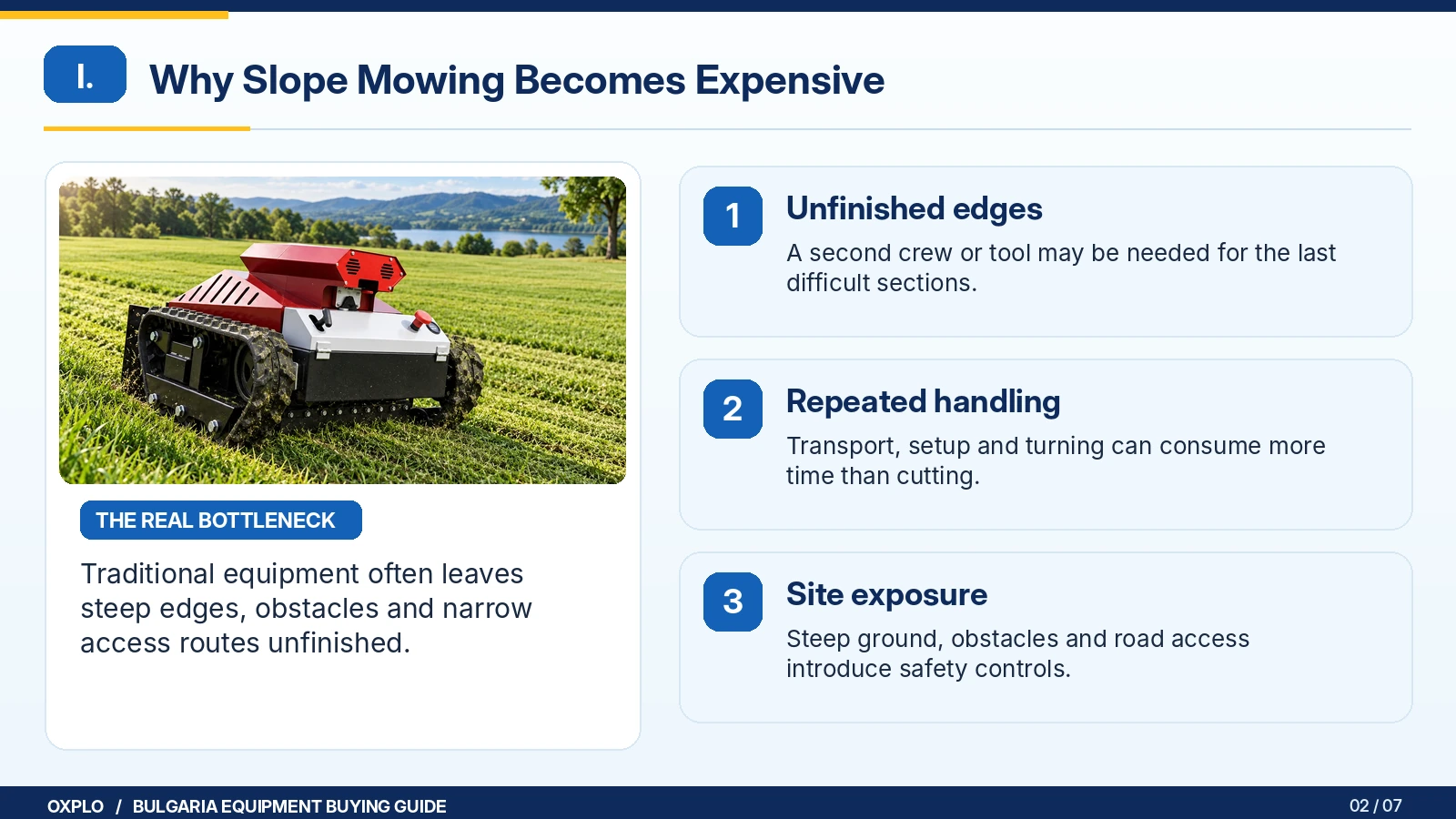
Figure 1. Why Difficult Mowing Zones Create Extra Labour and Site Costs
The cost is often in the unfinished sections
When a conventional mower handles most of a property but cannot reach its steep boundary or narrow access route, the team needs a second work process. Workers change tools, reposition vehicles, protect the work area again and finish the difficult strips by hand. On repeat contracts, this additional mobilisation can matter more than the mower’s theoretical cutting speed.
For an orchard owner, the remaining work may be around tree trunks, irrigation lines and sloping headlands. For a municipal or roadside contractor, it may be a drainage bank where a seated operator cannot work within the machine’s approved limits. For a rural-property manager, the problem may be a neglected slope containing stones and dense weeds that cannot be seen from above.
A tracked remote-controlled mower is worth evaluating when it can complete a greater share of these difficult zones while keeping the operator in a permitted, visible position. OXPLO’s remote-control approach changes where the operator stands; whether it improves a particular operation still depends on the approved machine limits and site controls.
Match the alternative to the problem
A handheld brush cutter can remain appropriate for small corners, isolated obstacles and specialist trimming. A ride-on mower or tractor-mounted mower may be more economical on broad, accessible, firm land. A remote-controlled machine becomes more relevant when repetitive walking, restricted access or uneven ground is causing a measurable problem. It is not a universal replacement for all three.
Before calling suppliers, list the jobs that your current equipment cannot complete efficiently: the inaccessible area, the additional worker-hours, the transport between sections and any areas that require specialist clearance rather than normal grass mowing. This gives the buyer a concrete reason to invest rather than relying on claims about convenience alone.
II. Three Bulgarian Worksites That Require Different Mowing Decisions
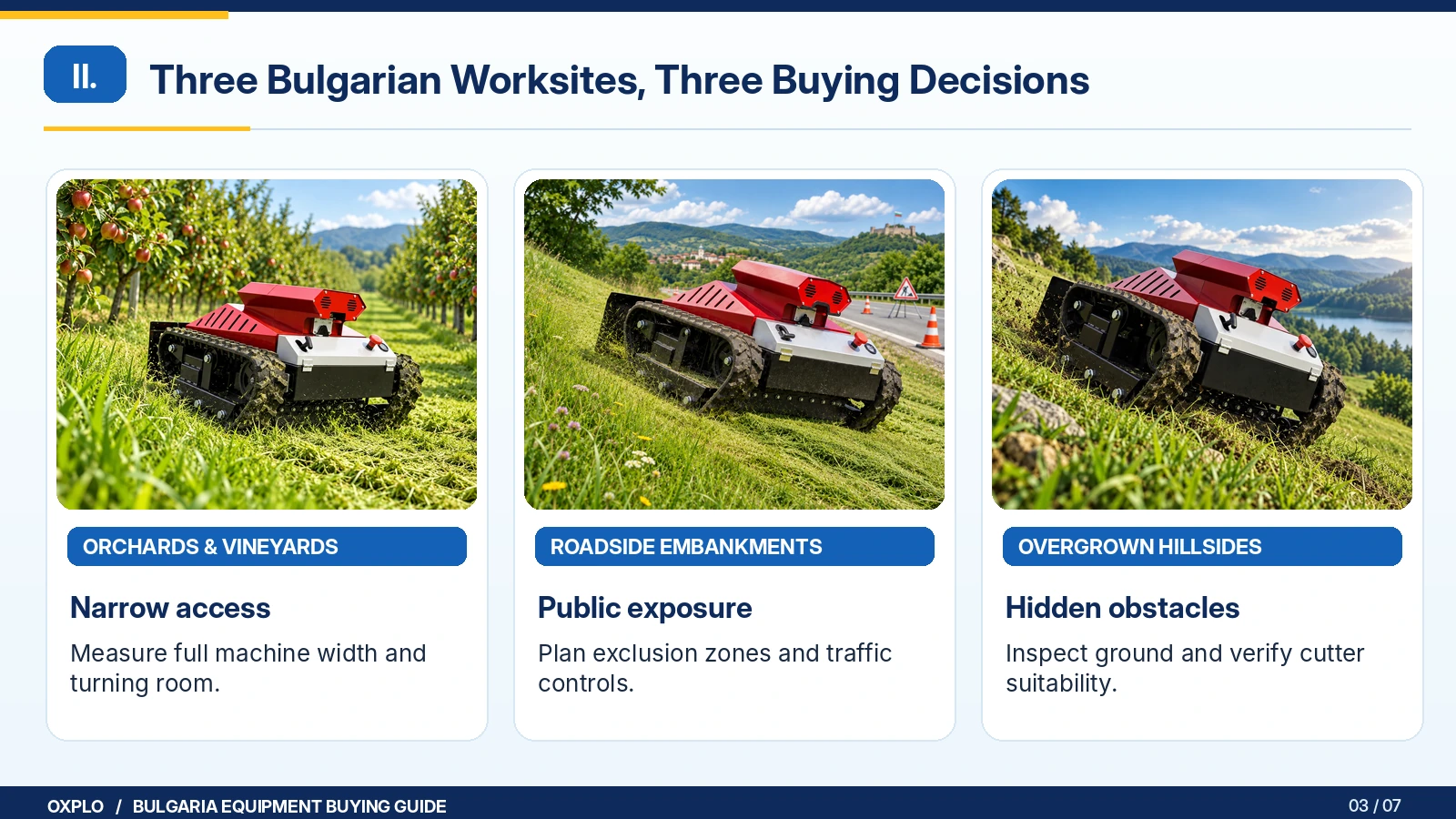
Figure 2. Three Application Scenarios for Bulgarian Equipment Buyers
Orchard and vineyard rows: narrow geometry drives the selection
In an orchard or vineyard, measure the tightest usable corridor after considering trunks, trellis posts, irrigation pipes and seasonal branches. The planned row spacing can differ from the actual clear passage. Record headland dimensions, turning points and any cross-slope sections where a small steering correction could bring a track close to a tree or post.
A remote controlled mower Bulgaria orchard operators consider should be judged by its overall machine width and maneuvering envelope, not cutting width alone. A narrower mower may finish more of the property without repeated hand-trimming, even if its theoretical area coverage is lower. OXPLO has a separate vineyard remote-mower buying guide for more detailed row-clearance calculations.
Roadside embankments: public exposure changes the job
A roadside bank may have a manageable grass height yet be an unsuitable job because of loose stones, traffic, limited operator sightlines or a machine’s potential sliding route. Vehicle movement and thrown debris demand a site-specific exclusion plan, suitable signage or barriers and any necessary road-authority coordination.
For this buyer, a remote mower’s value is not simply that it works at a distance. It is the possibility of designing a work method that avoids having an operator continuously walk on the bank. If the area cannot be segregated, visibility is inadequate or the operating gradient is not approved, the job should be changed or postponed—not forced through with the mower.
Overgrown hillsides: inspect vegetation beneath the canopy
A neglected hillside may contain soft grass, tangled weeds, woody stems, wire, branches and hidden stones in one area. These materials cannot be treated as one cutting load. A mower designed for grass maintenance may require slower work or a higher initial cut in dense vegetation, while heavier woody growth may call for a specialist brush cutter or flail machine rated for that material.
Ask for the permissible vegetation type and any cutter limitations, not just a promotional video showing tall grass. For a mower for overgrown grass hills, the number of clean, safe passes and the amount of manual finishing determine the real result. When land is protected or subject to environmental management conditions, confirm local mowing restrictions before work begins.
III. Choosing Tracks and Assessing Real Slope Conditions
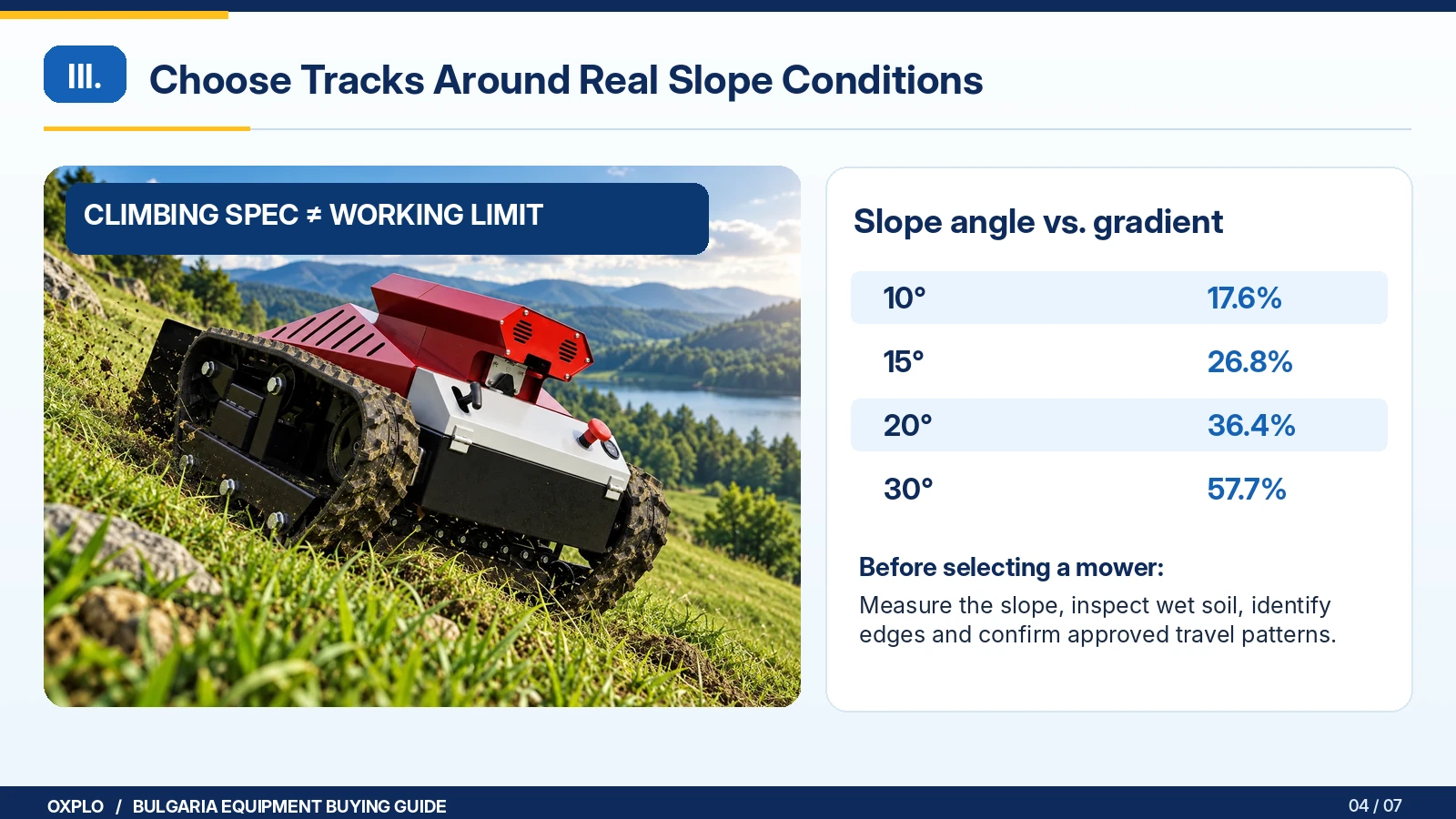
Figure 3. Slope Angle, Ground Conditions and Tracked Mower Traction
Published climbing capacity is not continuous working permission
The OXPLO crawler mower product page publishes a maximum climbing ability of up to 45 degrees for both listed configurations. That is a product specification, not evidence that continuous mowing is permitted on every 45-degree slope. Ascending, descending, turning and cross-slope mowing produce different traction and stability demands, especially with the blades working in dense vegetation.
An angle of 45 degrees is a 100% grade, not a 45% grade. Buyers should measure the maximum worksite angle with an appropriate tool and ask OXPLO to confirm the approved working gradient, travel orientation and surface conditions for the delivered machine. A wet bank cannot be evaluated as though it were the same dry bank visited during the sales demonstration.
Where crawler tracks help—and where they do not
Tracks can distribute the machine’s load across a larger contact area and maintain useful contact on some uneven ground. OXPLO uses a tank-style crawler undercarriage, which makes it relevant to the initial evaluation of orchard and hillside work. But remote mower traction still depends on soil strength, moisture, track condition, slope orientation and machine behavior during turns.
Wet grass over clay may slide as a layer. Loose stones can shift. Repeated skid turns can disturb soft topsoil. A tracked chassis cannot provide grip where the ground itself fails. Request an approved operating method and avoid work on surfaces that fall outside documented limits.
The British Association of Landscape Industries slope-mowing safety guidance highlights model-specific gradient restrictions and the greater risk of operating on wet surfaces. For a deeper explanation of traction, operating distance and stop-system questions, see OXPLO’s existing technical slope-mowing article. This Bulgaria-focused guide concentrates on using those checks to make the purchasing decision.
A five-measurement field survey
Record (1) the steepest measured angle, including short transitions; (2) the normal and wet-weather soil condition; (3) the narrowest gate or row; (4) space to turn and recover the machine; and (5) the path a machine could take if it lost traction. These measurements expose unsuitable sites before an expensive machine is ordered.
IV. What the OXPLO 55 cm and 100 cm Versions Actually Solve
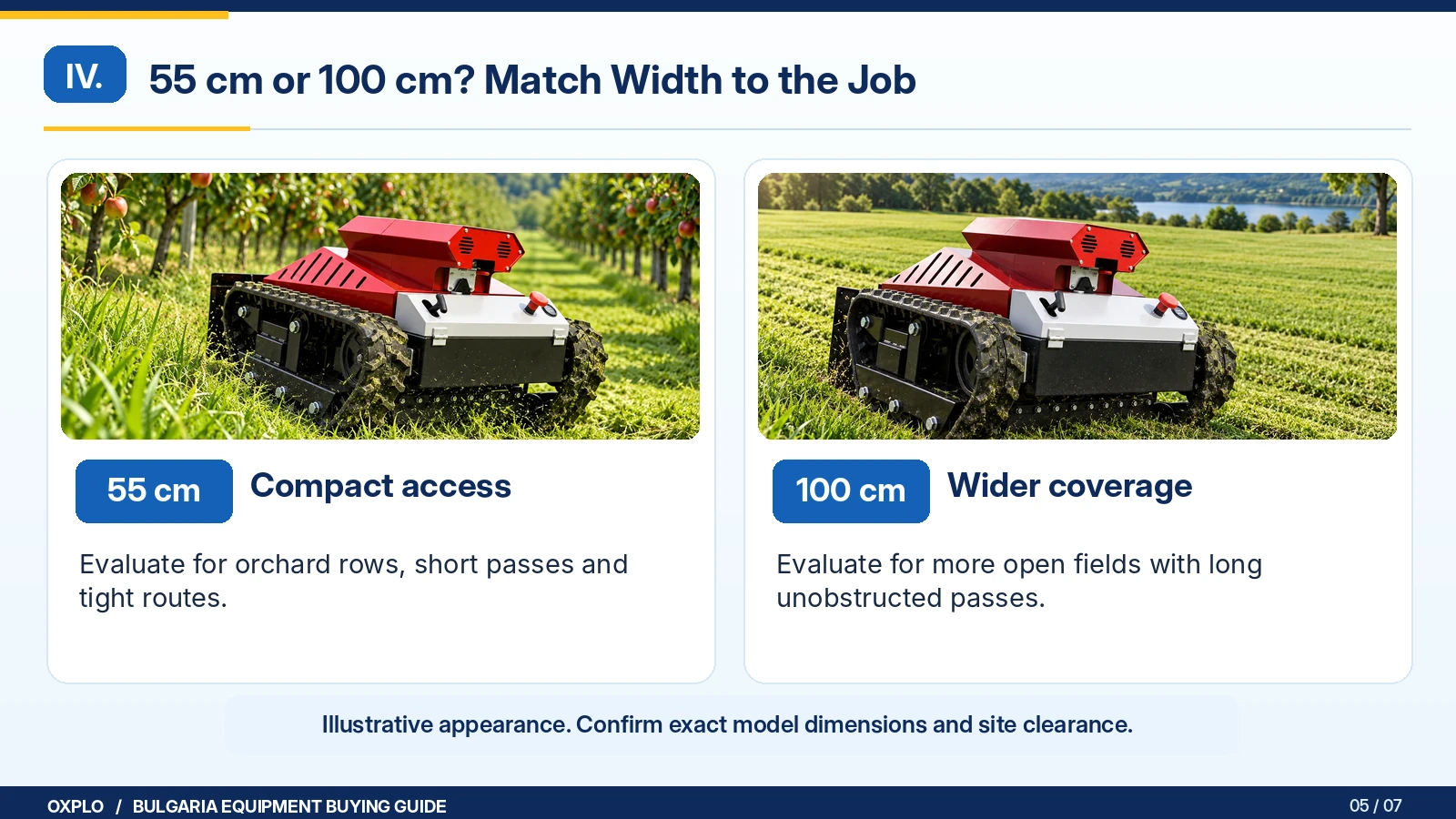
Figure 4. Comparing OXPLO 55 cm and 100 cm Cutting-Width Configurations
Compare jobs, not just cutting widths
OXPLO lists two versions of its Remote Control Crawler Lawn Mower. Both publish a 30–150 mm adjustable cutting-height range, two rotary manganese-steel blades and a tracked undercarriage. The meaningful differences involve cutting width, equipment dimensions, mass and the operating requirements of the destination site.
Published specification | 100 cm version | 55 cm version |
Cutting width | 100 cm | 55 cm |
Cutting height | 30–150 mm | 30–150 mm |
Machine weight | 350 kg | 180 kg |
Overall dimensions | 1250 × 1450 × 800 mm | 1100 × 920 × 700 mm |
Listed motor rating | 600 W | 350 W |
Listed battery capacity | 20 Ah | 12 Ah |
Listed operating time | 360 minutes | 300 minutes |
Maximum climbing ability | ≤45° (not an operating slope guarantee) | ≤45° (not an operating slope guarantee) |
The figures above are OXPLO’s published specifications, not independently verified results under Bulgarian field conditions. The listed operating time of 360 or 300 minutes also needs clarification of test conditions and cutting load. Battery capacity expressed only in Ah is not enough to calculate stored energy without battery voltage, and a motor rating by itself does not establish cutting capacity in woody material.
When the compact OXPLO version is the better investment
The 55 cm OXPLO version is the more useful starting point when a buyer handles multiple small properties, tight orchard corridors or frequent loading between jobs. Its smaller published dimensions and 180 kg weight may simplify planning, although transport, lifting and recovery must still be designed for the actual machine.
Do not confuse a 55 cm cutting path with the machine’s overall width. For every site, compare the narrowest access point with the actual equipment envelope plus appropriate operating clearance. A compact machine that can reach more of a property may reduce the amount of manual follow-up work and deliver better total project efficiency.
When the 100 cm OXPLO version earns its width
For long passes on relatively open ground, the 100 cm OXPLO mower offers greater theoretical coverage per pass. That can be valuable for larger agricultural properties, parks or broad hillside sections where access and turning space are adequate. Its 350 kg listed mass, however, makes loading arrangements, ground conditions and safe recovery more important.
Choose the wider model because the worksite permits sustained use of its cutting path, not because a larger number appears better in a catalogue. For both versions, ask OXPLO to verify the operating gradient, cutter suitability and safe procedures for the specific application.
Match adjustable cutting height to the actual finish
The 30–150 mm published adjustment gives buyers a choice of cutting settings. On uneven ground, a higher setting may help reduce exposure to some surface irregularities, subject to the manual, while routine finishing may call for a lower setting on appropriate ground. It does not mean the blades can safely process stones, wire or heavy woody stems. Inspect and prepare the work area first.
V. Safe Operation Must Be Designed Before the First Job
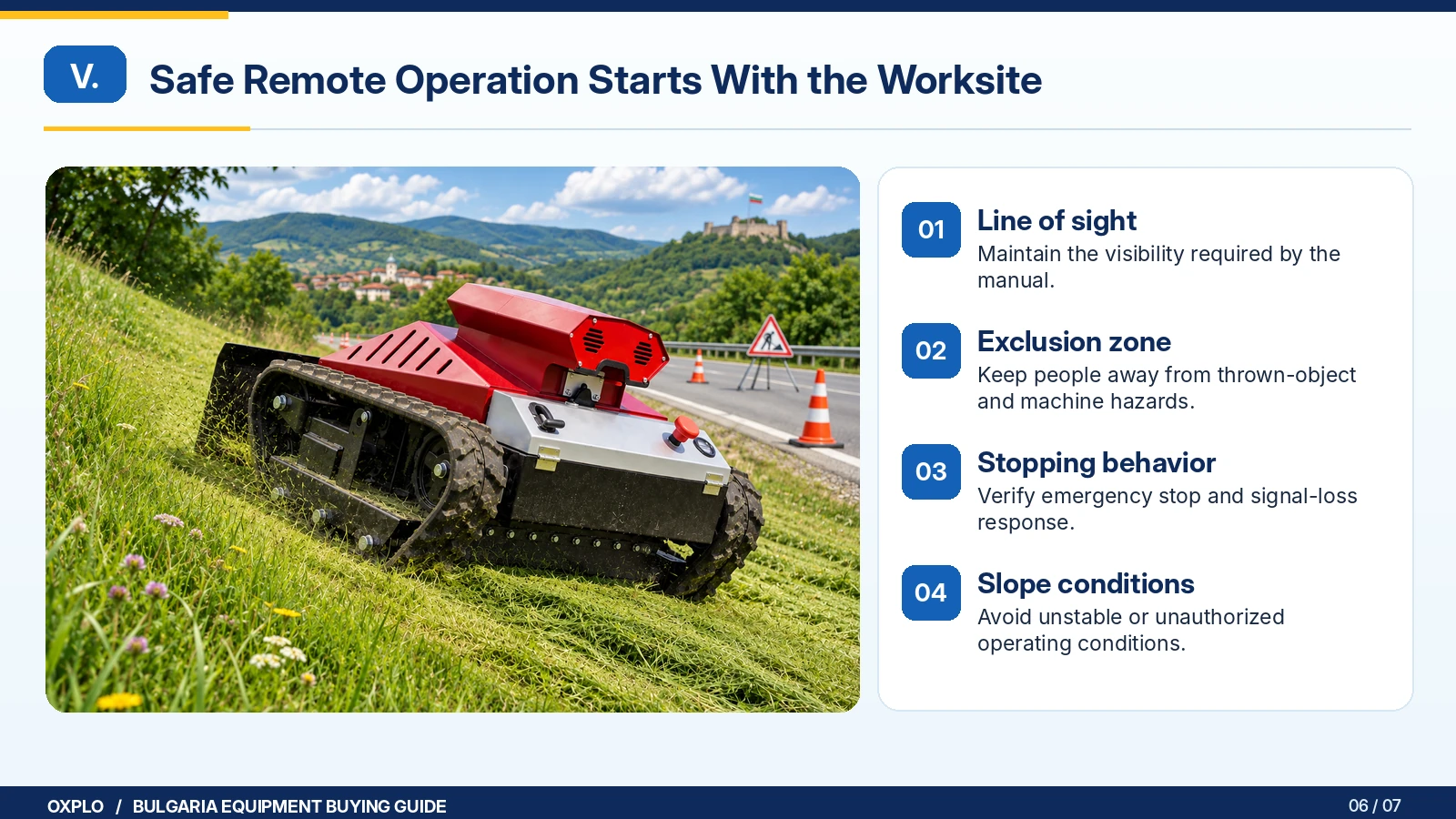
Figure 5. Remote Mower Operating Safety and Worksite Controls
Radio range is not a stand-off distance
OXPLO specifies up to 800 m remote-control range without obstruction, but a long communication range is not a remote mower safe operating distance. The operator needs the line of sight, position and separation required by the model instructions and the site risk assessment. Trees, banks and buildings can block the view of a ditch, bystander or machine even while the controller remains connected.
Keep people outside the relevant machine and thrown-object hazard areas. Never stand in a likely slide or rollover path, including directly above or below the machine on a slope. Where access by third parties cannot be controlled, do not mow until suitable measures are in place.
Verify stopping behavior instead of assuming it
Ask how powered travel stops, how quickly the blades cease rotating, what happens after signal loss and whether restoring communication can cause unexpected movement. On a slope, a stopped motor does not guarantee the mower will stay stationary on slippery soil. OXPLO buyers should request model-specific instructions and safety-function information; do not assume the existence of a particular loss-of-signal safeguard from general marketing text.
Before each job, follow the approved pre-use inspection for tracks, guards, cutting components, controller and stop functions. Never deliberately disconnect control on a dangerous slope to test the machine. If the operator loses visibility or encounters unexpected sliding, stop and reassess under the prescribed procedure.
Work in controlled zones
Divide the site into routine areas, zones requiring additional controls and areas that must not be entered. Define the permitted travel pattern for each zone using the manufacturer’s instructions, rather than assuming cross-slope or uphill passes are always safer. Remove visible debris, secure the area, complete a controlled initial pass and record any places that still need another method.
VI. Calculate the Cost of a Finished Job, Not Just Mowing Speed
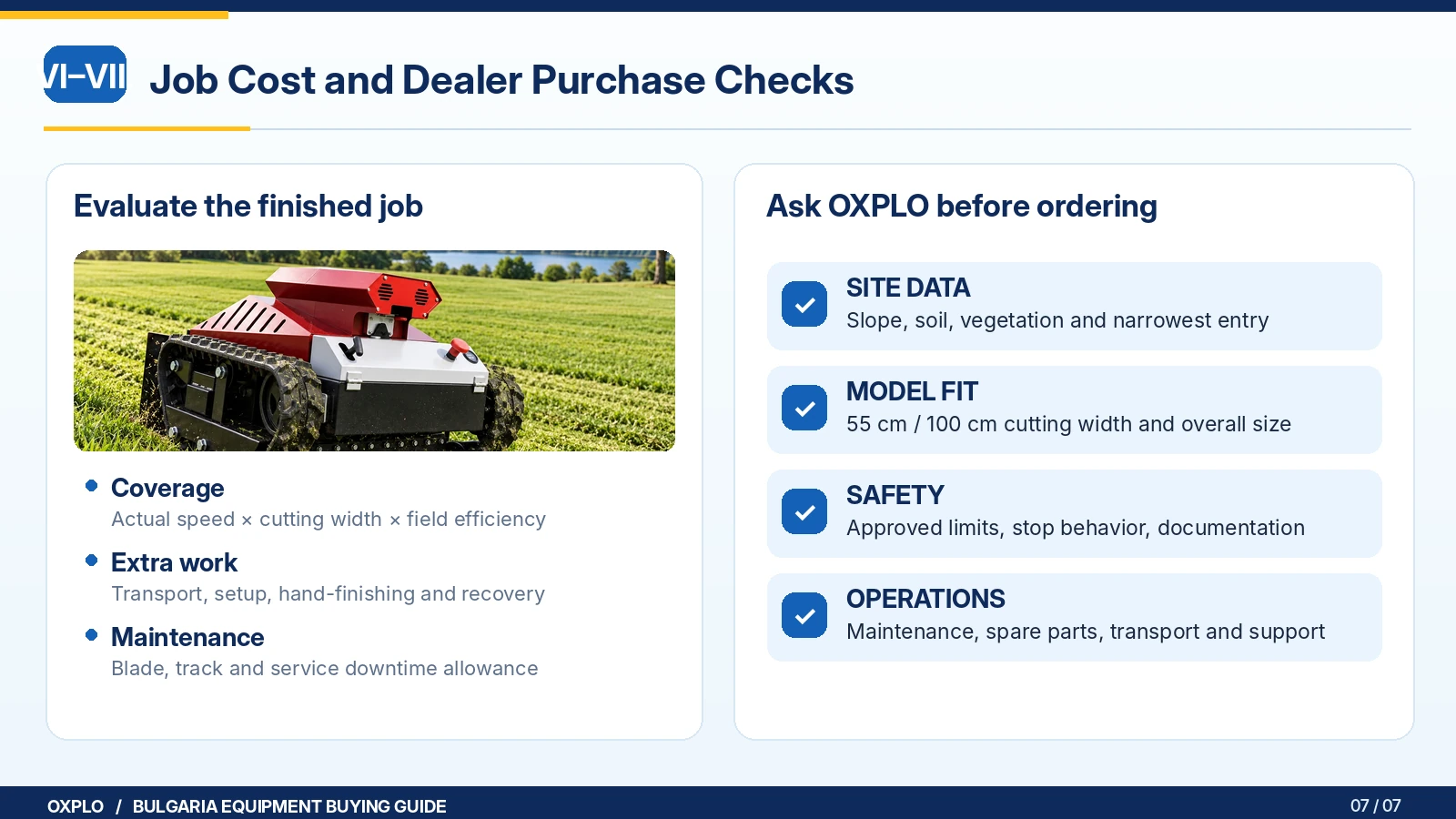
Figure 6. Evaluating Mowing Job Cost and Dealer Purchasing Requirements
Why the widest deck does not always win
Theoretical field capacity can be estimated as cutting width (m) multiplied by actual travel speed (km/h), then divided by 10 to obtain hectares per hour. Effective field capacity further multiplies that result by field efficiency, which reflects turns, overlap, obstacles and repositioning.
For an illustrative orchard—not an OXPLO field-test result—consider two options mowing at 1.5 km/h. A 1.00 m deck at 35% field efficiency produces approximately 0.0525 ha/h. A 0.55 m deck at 70% field efficiency produces approximately 0.0578 ha/h. The smaller machine wins this particular calculation only because the hypothetical layout allows it to spend much less time turning and avoiding obstacles. A large open field could reverse the result.
A contractor should replace those assumed efficiency values with timed trials or records from comparable jobs. A specification sheet cannot tell the operator how many minutes will be lost at each orchard entrance.
Include the cost of the second crew or second tool
A practical job-cost model is:
Total job cost = setup and transport + operator labour + energy or fuel + consumables and maintenance allocation + hand-finishing + downtime and recovery allowance.
Then divide the full cost by hectares actually completed to calculate cost per maintained hectare. If the OXPLO mower finishes 80% of a bank but the remaining 20% requires extensive hand cutting, that finishing work belongs in the comparison. The 80% figure here is a hypothetical accounting example, not an OXPLO performance claim.
For machinery dealers, this approach also reveals what end users need. A municipal customer may value documented safety procedures and predictable service support; a vineyard customer may prioritise access; a landscaping business may prioritise turnaround time across mixed sites. Stocking decisions should follow those customers, not one generic best-selling specification.
VII. A Purchase Checklist for Bulgarian Importers and Contractors
Confirm the EU documentation for the exact mower
As of November 2026, machinery first placed on the EU market before 20 January 2027 is subject to Machinery Directive 2006/42/EC; Machinery Regulation (EU) 2023/1230 generally applies from 20 January 2027. The European Commission’s machinery guidance explains this transition. Buyers should verify the applicable conformity declaration, identification, marking, instructions and importer obligations for the exact mower configuration. Certificates for unrelated OXPLO equipment do not establish conformity for a mower.
For Bulgarian end users, ask for the appropriate Bulgarian-language operating and safety information, approved working conditions, emergency and signal-loss behavior, spare-parts documentation and a clear support contact. Any protected-area management conditions, worksite permissions or road-traffic controls must be evaluated separately.
Ask OXPLO for a complete procurement package
In an equipment quotation, request the exact mower configuration and dimensions; cutter and track replacement parts; transport and unloading requirements; applicable warranty terms; technical documents; and the conditions under which the advertised slope and running-time values were determined. OXPLO’s warranty policy provides a general policy, but the supplied machine’s exact warranty coverage should be confirmed in writing.
Buyer question | What to verify before ordering |
Site fit | Maximum slope, surface condition, minimum access width and recovery route |
Cutting capability | Vegetation types, blade restrictions and adjustable cutting settings |
Safety | Operating gradient, signal-loss response, stop behavior and required exclusion zone |
Commercial operation | Hours/day, transport, hand-finishing, spare blades and tracks |
EU delivery | Model-specific conformity, Bulgarian instructions and importer responsibilities |
Send a site brief that makes the quotation useful
A productive inquiry to OXPLO should state: Bulgaria as the destination; customer type; total mowing area; steepest measured gradient; normal and wet-weather ground conditions; vegetation type and typical height; minimum entry width; preferred 55 cm or 100 cm configuration; expected hours per day; quantity; and whether people, roads or property are close to the mowing zone.
Include photographs of the most difficult parts of the site and the access route. Photos support the discussion but cannot replace measured slopes or model-specific technical validation. You can compare current options in the OXPLO remote mower category and submit the brief through the OXPLO contact page.
VIII. Frequently Asked Questions
Is a tracked slope mower Bulgaria buyers select automatically safer than a wheeled mower?
No. Tracks can improve mobility on some uneven or soft surfaces, but wet grass and weak soil can still cause sliding. Compare the documented working limits, entire machine geometry and work method rather than assuming tracks alone make a hillside safe.
Can OXPLO’s 45-degree climbing specification be used as a continuous mowing limit?
No. The published maximum climbing ability is not a universal safe mowing gradient. Confirm permitted operating angles and directions, vegetation load, surface conditions and any limits specific to the model supplied.
Which OXPLO mower is better for narrow orchards?
The 55 cm cutting-width version is the more compact starting point, while the 100 cm version may produce higher coverage on wider lanes. Measure the whole machine width, clearance and headland turning space before deciding.
How far should a remote mower operator stand from the machine?
Use the distance and position required by the manufacturer and risk assessment, with adequate line of sight and protection from thrown material or a machine slide. The published 800 m unobstructed radio range is not a safety instruction.
Can an OXPLO rotary mower cut dense brush or woody stems?
Do not assume it can. OXPLO publishes a twin rotary-blade cutting system, but the buyer should obtain the permitted vegetation and cutting limits for the specific configuration. Specialist brush-clearing equipment may be needed.
What information should a Bulgarian equipment dealer request before a first order?
Ask for the exact product specification, destination-market compliance documentation, safety instructions, recommended wear parts, expected parts lead times, written warranty conditions, transport requirements and confirmed working limits. A sample order should still be based on the needs of the dealer’s end customers.
IX. Conclusion: Buy the Mower That Fits the Difficult Part of the Job
The right remote control mower Bulgaria farms, contractors and dealers purchase is not necessarily the machine with the biggest cutting deck, longest radio range or most impressive advertised climbing angle. It is the equipment that can access the real worksite, maintain a permissible operating method, cut the intended vegetation and reduce the amount of unfinished manual work.
OXPLO’s two tracked mower configurations offer a useful choice between compact access and wider cutting coverage. Their value becomes clear only when the purchaser compares actual orchard corridors, slope measurements, ground conditions, safety arrangements and total cost per completed job. For roadside or unstable slopes, documented operating limits and site controls remain essential.
Review the OXPLO Remote Control Crawler Lawn Mower and contact OXPLO with your Bulgarian worksite details, expected workload and preferred configuration. A specific site brief enables a more useful technical and commercial discussion than a quotation based on cutting width alone.
SEO PUBLISHING METADATA
Focus keyphrase: remote control mower Bulgaria
Keyphrase synonyms: remote controlled mower Bulgaria; tracked slope mower Bulgaria; crawler mower Bulgaria; slope mower for orchards; hillside remote mower
SEO title: Remote Control Mower Bulgaria: Tracks and Safety | OXPLO
Meta description: Choose an OXPLO remote control mower for Bulgaria. Compare tracked traction, slope safety, 55 cm vs 100 cm models and total mowing costs.